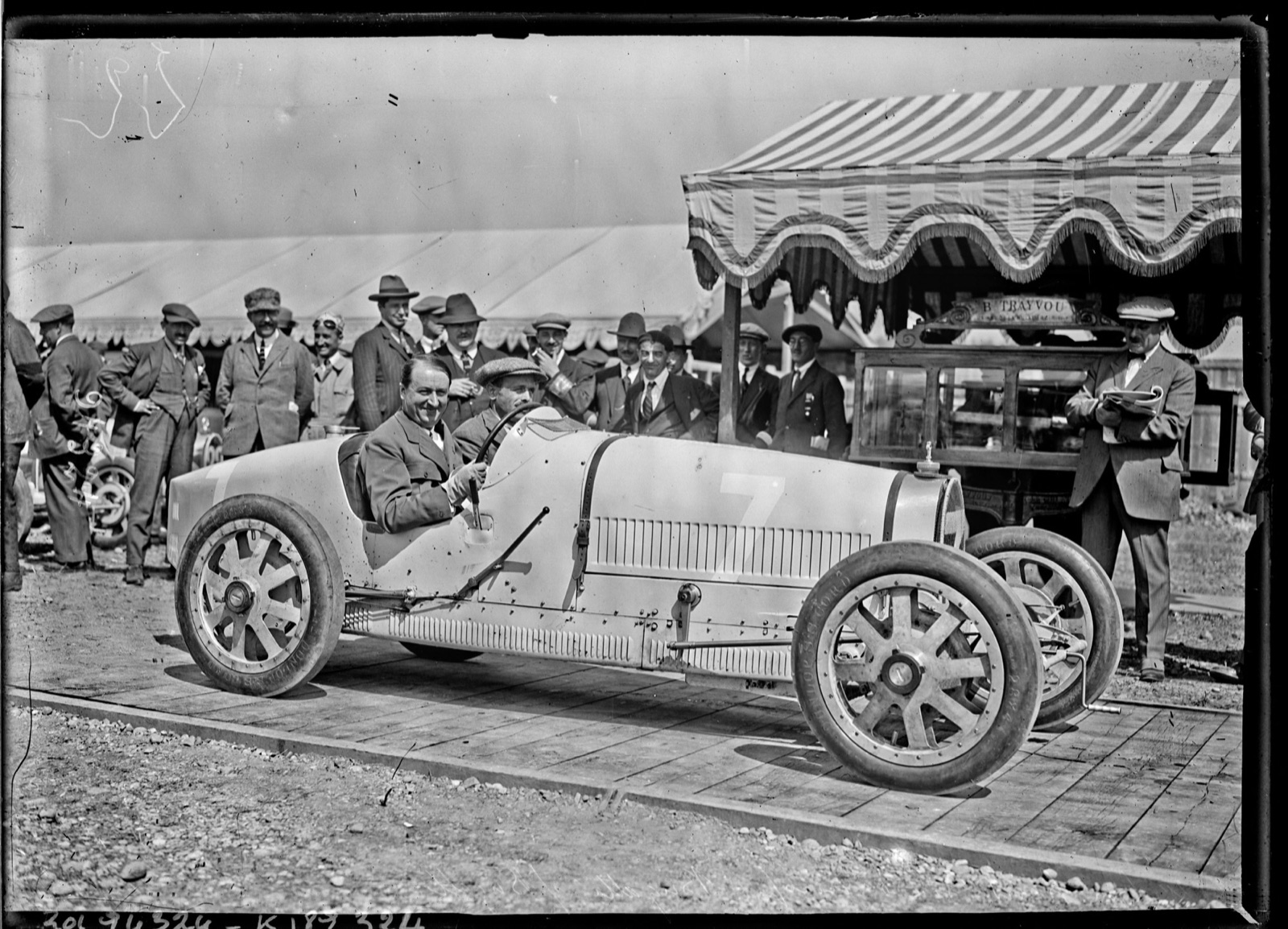
The Bugatti Type 35 is the eight-cylinder Grand Prix racing car Ettore Bugatti built at his factory at Molsheim, in Alsace, France, from 1924 to 1930, raced with his works team and sold to private drivers. The Bugatti Type 35 won the Targa Florio in Sicily five years running from 1925 to 1929 and the first Monaco Grand Prix in 1929, and with its 1.5-litre offshoot, the Type 39, it took the 1926 Grand Prix World Championship for manufacturers. The factory puts production at 340 cars and the Type 35's race victories at over 2,000 (its 2019 figure) or some 2,500 (its 2024 figure).
Who designed the Bugatti Type 35, and why?
Ettore Bugatti designed the Bugatti Type 35 himself, for the two-litre Grand Prix formula, and built it in series so that private owners could buy the same car his works team raced. The Bugatti Trust holds the earliest known sketch of the car, drawn by Ettore in a letter to the Czech racing drivers Čeněk and Elisabeth Junek to explain the idea; Elisabeth Junek gave it to the Trust's founder, Hugh Conway, in 1968, and the Trust also holds what is believed to be the first blueprint of the body.
Ettore's Grand Prix cars of 1922 and 1923, the "barrel" and the "upturned ink-blotter", were clever, eccentric and off the pace, as Paul Fearnley put it in Motor Sport in July 2004. Fearnley credits the Type 35's success as much to production as to design: interchangeable parts let Ettore build more than 350 and sell them to wealthy amateurs as well as professionals.
The two-litre Grand Prix formula
The rules for Grand Prix racing from 1922 to 1925 limited engines to two litres and set a minimum weight of 650 kg and a minimum body width of 80 cm, wide enough for the riding mechanic every car still carried, according to the company's account of the Lyon debut (5 August 2024). The Type 35's 1,991 cc straight-eight sat just inside the limit.
The debut at Lyon
Five Type 35 racing cars started the Grand Prix of Europe, run as the Automobile Club de France's Grand Prix at Lyon on 3 August 1924, and a sixth was kept back to show the press. Ettore had the race cars driven from Molsheim to Lyon on public roads and back again. The race was 35 laps of a triangular road circuit of about 14 miles, close to 500 miles in all, and Giuseppe Campari won it for Alfa Romeo in 7 hours 5 minutes at 70.4 mph, as Motor Sport's report of August 1924 recorded.
The Type 35s were slowed by a tyre problem. The French manufacturer's 2019 history says the tyres had not been vulcanised properly and could not take the speeds; Motor Sport's report of November 1974 blamed Dunlops "of another size, on which Ettore had unwisely insisted". The 2024 account says a Type 35 set the race's fastest lap; Motor Sport's 2004 history of the race gives it to Henry Segrave's Sunbeam.
| Number | Driver | Result |
|---|---|---|
| 7 | Jean Chassagne | 7th |
| 13 | Ernest Friderich | 8th, after a crash during the race |
| 18 | Pierre de Vizcaya | Did not finish |
| 21 | Léonce Garnier | 10th in the 1924 report; 11th in the 2004 account |
| 22 | Bartolomeo Costantini | Did not finish |
Numbers from the Trust's photograph of the line-up; results from Motor Sport (August 1924 and July 2004) and the National Motor Museum's record of Friderich's car.
At the next race, at San Sebastián in Spain, a Type 35 finished second, according to the company's 2019 history of the Bugatti Type 35.
Bugatti Type 35 design and engineering
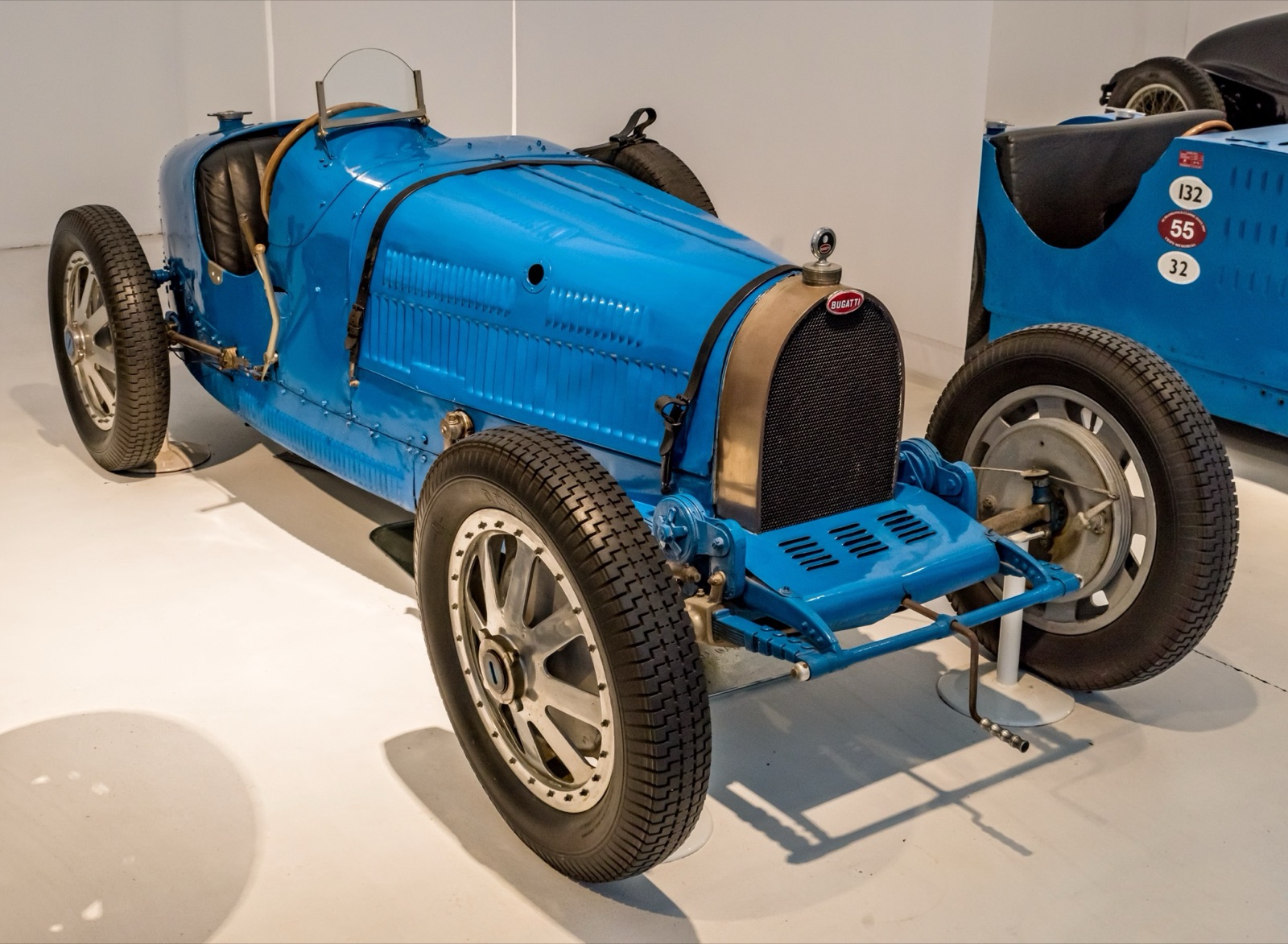
The Bugatti Type 35 is a light two-seater with a single overhead cam straight-eight running on roller and ball bearings, a hollow front axle and cast aluminium alloy wheels with the brake drums cast in. It weighs about 750 kg, on a wheelbase of 2.4 m with a track of 1.2 m, according to the Bugatti Trust's data sheet for the Type 35, 35B, 35C and 35T.
The straight-eight engine
The engine has eight cylinders of 60 mm bore and 88 mm stroke, a displacement of 1,991 cc, cast as two blocks of four in iron on a common crankcase (Fearnley). A single overhead camshaft, driven by bevel gears at the front, works three valves per cylinder, two inlet and one exhaust. The crankshaft runs in three ball races and two roller bearings, with roller big ends; ignition is by a magneto mounted on the dashboard, and the firing order is 1, 5, 2, 6, 3, 7, 4, 8 (the Trust).
The factory's 2019 history says the bearings let the engine run to 6,000 rpm and that two carburettors gave around 95 PS. The Trust gives 90 bhp and a "prudent" limit of 5,500 rpm. Fearnley lists what Ettore refused: welded steel water jackets, two camshafts, the hemispherical head and, at first, the supercharger. Under the bonnet the engine is squared off at every edge, which Fearnley called Art Deco.
Chassis, suspension, alloy wheels and brakes
Each wheel is cast aluminium with eight flat spokes, a detachable rim and an integral brake drum, and a ring held the tyre on the rim; the factory says they were made to cut unsprung weight. The front axle is forged hollow with sealed ends, weighs about 10 kg and sits on semi-elliptic leaf springs; the manufacturer, which pursued lightweight construction throughout the car, says broken axles were rare on the Type 35, unlike on its competitors' cars. The rear springs are reversed quarter-elliptics, a Molsheim arrangement noted in Motor Sport's "Racing car evolution" of April 1943. The brakes are cable-operated drums on all four wheels, the clutch is a wet multi-plate, and the four-speed gearbox is a separate unit in the middle of the car, with its lever outside the body (the Trust). The original tyre size was 710 × 90. The factory built the Type 35 as a racing car and fitted wings and lamps for customers who wanted to use it on the road.
What is a Bugatti Type 35 like to drive?
Paul Fearnley drove Mike Preston's car up the Prescott hill climb for Motor Sport in 2004. He found top gear usable from 1,200 rpm, a reversed right-hand gate ("first towards you and pull, top away and push"), steering of about one turn from lock to lock and cable brakes that were "more than up to the task of hauling down this 750kg machine". The gearbox sits by the driver's left thigh, "looking like a large screw-top tea caddy". The dashboard clock is a Jaeger with Roman numerals, and Fearnley noted that every Grand Prix car from Molsheim has one. Preston's car began life in Argentina in 1926 as a supercharged four-cylinder Type 37A and had since been brought up to 35B specification.
Stirling Moss road-tested chassis 4564, a 35A rebuilt in 1958 with a 2.3-litre 35T engine, for Ford Times: "I reached speeds of 100 mph with the Bugatti without pressing myself or the car", according to Bonhams' catalogue for the car.
Bugatti Type 35 specifications
All the versions share the Type 35's chassis, body, wheelbase and four-speed gearbox; they differ in engine size, supercharging and bearings. The Type 37 and Type 39 use the same chassis and body with different engines.
| Version | Cylinders | Bore × stroke | Capacity | Supercharger | Power (approx.) | Prudent rev limit | Carburettors |
|---|---|---|---|---|---|---|---|
| 35 | 8 | 60 × 88 mm | 1,991 cc | None | 90 bhp | 5,500 rpm | 2 Solex |
| 35A | 8 | 60 × 88 mm | 1,991 cc | None | 70 bhp | 4,000 rpm | 2 Solex or Zenith |
| 35C | 8 | 60 × 88 mm | 1,991 cc | Roots | 120–130 bhp | 5,500 rpm | 1 Zenith |
| 35T | 8 | 60 × 100 mm | 2,262 cc | None | Not given | 5,000 rpm | 2 Solex |
| 35B | 8 | 60 × 100 mm | 2,262 cc | Roots | 120–130 bhp | 5,000 rpm | 1 Zenith |
| 37 | 4 | 69 × 100 mm | 1,496 cc | None | 60 bhp | 4,500 rpm | 1 Zenith or Solex |
| 37A | 4 | 69 × 100 mm | 1,496 cc | Roots | 80–90 bhp | 5,000 rpm | 1 Zenith or Solex |
| 39 | 8 | 60 × 66 mm | 1,493 cc | None | 80–90 bhp | 5,500 rpm | 1 Zenith |
| 39A | 8 | 60 × 66 mm | 1,493 cc | Roots | 110–120 bhp | 5,500 rpm | 1 Zenith |
Source: the Bugatti Trust's data sheets for the Type 35A, the Type 37 and 37A and the Type 39 and 39A, with the Type 35 sheet above. Common to all: four-speed gearbox, cable brakes, wheelbase 2.4 m, weight about 750 kg (720 kg for the Type 37).
How much horsepower did the Bugatti Type 35 have?
Power figures differ by source. The factory's 2019 history gives about 95 PS for the first cars, 75 PS for the 35A and up to 140 PS for the supercharged 35B. Gooding & Company's catalogue for chassis 4487 gives 95 hp at 5,000 rpm for a Type 35, and its catalogue for the 35C chassis 4871 gives 125 bhp at 5,500 rpm. RM Sotheby's quotes 130 bhp for a 35B.
How fast was the Bugatti Type 35?
The factory says the first Type 35s could pass 190 km/h (118 mph) and that the 35B exceeded 215 km/h (134 mph). RM Sotheby's catalogue for 35B chassis 4948 gives the 35B 0–60 mph in six seconds and a top speed of 125 mph. J. Lemon Burton, in a talk to the North London E.C.C. on 24 March 1949 reported by Motor Sport in May 1949, said a 35C "could do its 130 m.p.h.".
Bugatti Type 35 versions: 35A, 35T, 35C and 35B
There were five versions of the Type 35: the original two-litre car, the cheaper 35A, the 2.3-litre 35T, the supercharged two-litre 35C and the supercharged 2.3-litre 35B.
Type 35A
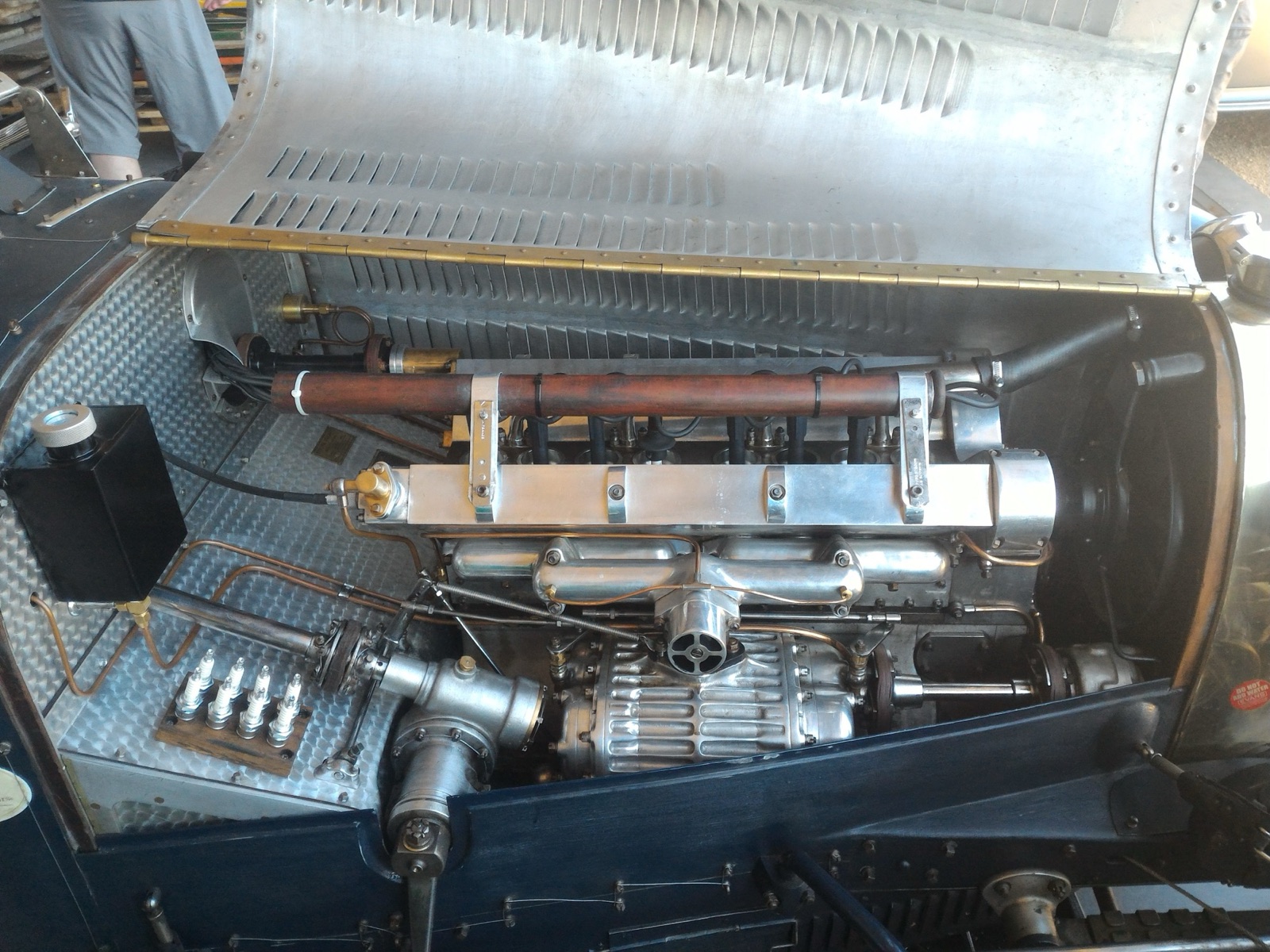
The 35A is the simpler, cheaper model of the Type 35: plain big-end bearings, coil ignition, a smaller radiator and wire wheels, with about 70 bhp. The Trust dates it to about 1926–29 and counts 130 built; its engine number carries an "A" suffix. Bonhams says the 35A was nicknamed "Tecla" and that early cars kept magneto ignition, with coil ignition coming later to save cost. Burton told his 1949 audience it was known as the "Artificial G.P.".
Type 35T
The 35T was made for the 1926 Targa Florio, the T standing for Targa, with the stroke lengthened to 100 mm for 2,262 cc. Ettore left it unsupercharged because he thought a supercharger unfair, according to Bugatti's Targa Florio history (2 May 2019). Costantini won the 1926 Targa in one. Burton had seen only one 35T in Britain.
Type 35C
The 35C is the two-litre engine with a Roots supercharger and a single Zenith carburettor, giving 120–130 bhp by the Trust's figures. The National Motor Museum dates the 35C to 1926; Motor Sport's 1943 history gives 1927. Hagerty puts 35C production at 50.
Type 35B
The 35B is the 2.3-litre 35T engine with a supercharger, and the factory called it the Type 35TC, a 35T with a compressor, by Bugatti's Targa Florio history (2019). The National Motor Museum dates its release to 1927. According to Bill Boddy's 1999 profile of Louis Chiron for Motor Sport, Chiron bought the first supercharged 35B to leave Molsheim, in 1927. RM Sotheby's describes the Type 43 as the 35B's road-going form.
Type 37 and Type 39
The Type 37 is the Type 35's chassis and body with a 1,496 cc four-cylinder engine on plain bearings, made from about 1926 to 1930; the Trust counts 290, of which 67 were the supercharged 37A. Burton said the works seldom raced it. The Type 39 has the Type 35 engine with a short 66 mm stroke for 1,493 cc. Motor Sport's 1943 history says it was built for the 1.5-litre formula of 1926 and 1927 and won the 1926 European championship; the Trust counts only 10. Malcolm Campbell won the 1928 Boulogne Grand Prix in a Type 39, a race Historic Racer's preview of the Campbell family history The Unobtainable picks out.
Bugatti Type 35 racing history
From 1925 to 1930 the Bugatti Type 35 and its versions won Grands Prix, road races, sand races and hill climbs, and in 1928, when Grand Prix racing was run to free rules, drivers of Molsheim's cars won 23 of the 26 top international races, according to the company's 2024 history of the Type 35's races.
The Targa Florio: five wins in a row
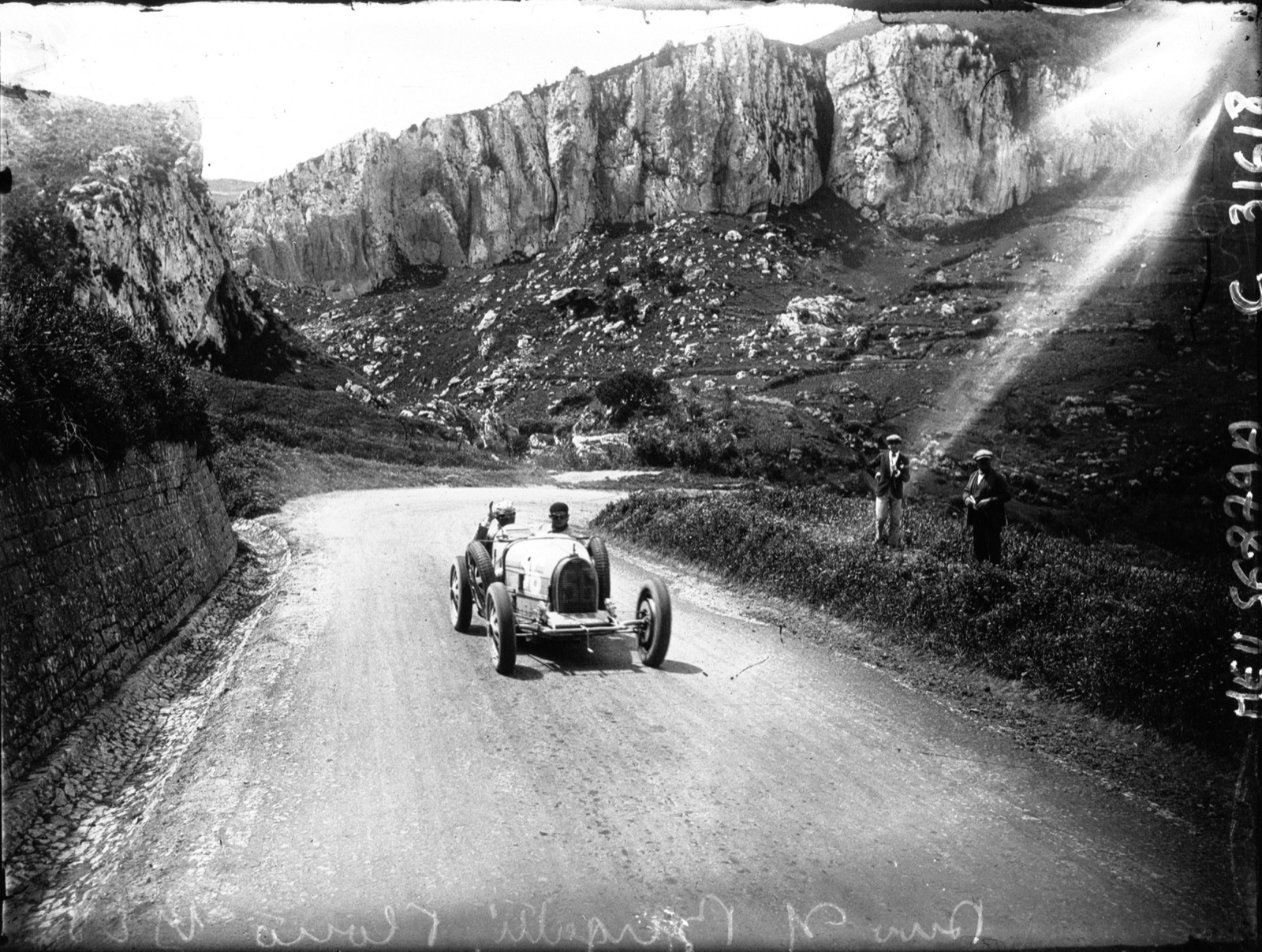
The Bugatti Type 35 won the Targa Florio, on the Madonie mountain roads of Sicily in Italy, every year from 1925 to 1929. A lap was about 108 km and the race five laps, some 540 km, and the works team was based at Polizzi during the race, according to Bugatti's Targa Florio history (2019).
| Year | Winner | Car | Behind the winner |
|---|---|---|---|
| 1925 | Bartolomeo Costantini | Type 35 | Pierre de Vizcaya (Bugatti) second |
| 1926 | Bartolomeo Costantini | Type 35T | Ferdinando Minoia and Jules Goux (Bugattis) completed a one-two-three |
| 1927 | Emilio Materassi | Type 35 | Conelli (Bugatti) second; Ernesto Maserati third, 20 minutes behind |
| 1928 | Albert Divo | Type 35B | Giuseppe Campari (Alfa Romeo) behind Divo; Elisabeth Junek (Bugatti) fifth |
| 1929 | Albert Divo | Type 35C | Ferdinando Minoia (Bugatti) second |
Source: Bugatti's Targa Florio history (2 May 2019), which does not name the version Materassi drove in 1927.
Divo's 1929 win took 7 hours 15 minutes 41.7 seconds at 74.4 km/h, half an hour quicker than his 1928 time, and he set a new lap record. In 1930 the run ended: Divo retired after an accident caused by a deformed axle, and Louis Chiron, leading, went into the ditch on the last lap.
Grand Prix wins and the Grand Prix World Championship
For 1926 the formula changed to 1.5 litres and a minimum of 600 kg, and only three works Bugattis started the French Grand Prix at Miramas; Jules Goux was the only classified finisher. Goux then won the European Grand Prix at Lasarte, Costantini won the Spanish Grand Prix in a Type 35 with Goux second, and the little-known "Sabipa" led Costantini home at Monza. Those results won the company the second manufacturers' world championship, according to Motor Sport's database entry for the 1926 season. The database's 1926 French Grand Prix page records Goux's car as a Type 39A.
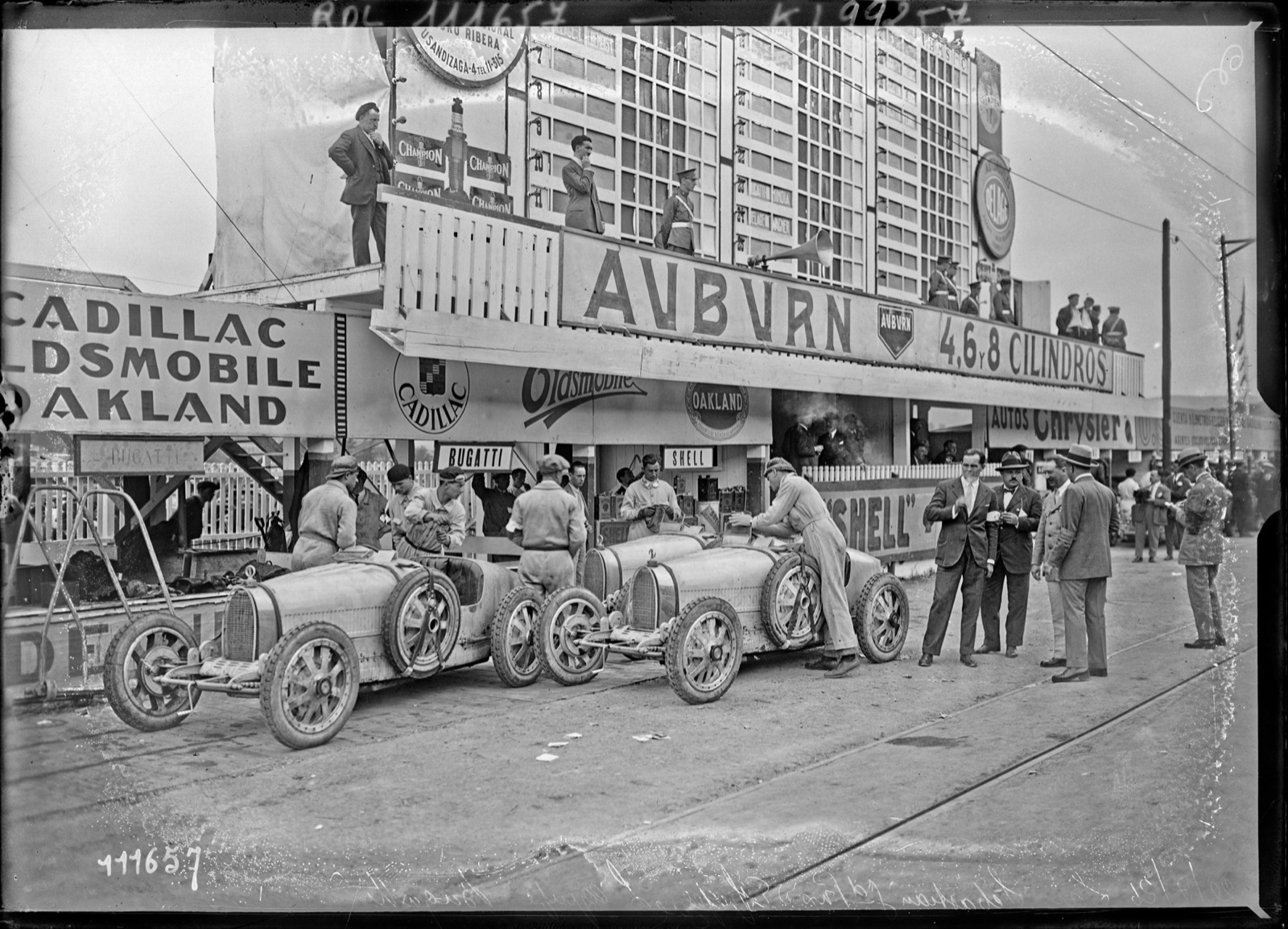
In 1927 Bugatti did not start the French Grand Prix, which Delage won. From 1928 Grand Prix racing was run to free rules, and Motor Sport's 1943 history calls the 1929 season "practically entirely a series of Bugatti benefits".
| Year | Race | Driver | Car |
|---|---|---|---|
| 1925 | Rome Grand Prix | Count Masetti | Type 35 |
| 1926 | French Grand Prix, Miramas | Jules Goux | Type 39A |
| 1926 | Spanish Grand Prix, Lasarte | Bartolomeo Costantini | Type 35 |
| 1928 | French Grand Prix, Saint-Gaudens (sports car rules) | William Grover-Williams | Type 35 |
| 1929 | Monaco Grand Prix | William Grover-Williams | Type 35B |
| 1929 | French Grand Prix, Le Mans | William Grover-Williams | Type 35 |
| 1929 | German Grand Prix, Nürburgring (sports cars) | Louis Chiron | Type 35C |
| 1930 | Monaco Grand Prix | René Dreyfus | Type 35B |
Sources: Fearnley; Motor Sport's database; the factory's 2024 history; Motor Sport's 2002 profile of Grover-Williams; Motor Sport's 1999 profile of Chiron, which gives Dreyfus a 2.3-litre car, and Bonhams' catalogue for 4914, which credits him with the 1930 Monaco win in a 35B.
Chiron's German Grand Prix win at the Nürburgring took 4 hours 46 minutes for 508.77 km, with Georges Philippe second in another 35C, 12 minutes behind, as the 2024 history records. At Monaco in 1930 René Dreyfus's 2.3-litre car beat Chiron's works 35C by seconds, and Guy Bouriat was third in 35B chassis 4948 (RM Sotheby's). At Spa that year Chiron, Bouriat and Divo finished first, second and third in the European Grand Prix, with Bouriat stopping short of the line on team orders to let Chiron win, Boddy wrote.
The first Monaco Grand Prix
The first Monaco Grand Prix was run on 14 April 1929, 100 laps of the streets of Monte Carlo, after Prince Pierre had opened the course in a Voisin, as Motor Sport reported in May 1929. "Williams", the British driver William Grover-Williams, led from early on in a green 35B and fought Rudolf Caracciola's seven-litre supercharged Mercedes-Benz SSK until the pit stops: the Mercedes needed more fuel and two rear wheels. Georges Bouriano's 35C finished second and Caracciola third, and eight of the 16 starters were Bugattis, by Bonhams' count. Motor Sport in 2002 described Williams's car as privately owned; Bonhams' 2005 catalogue for it, chassis 4914, says it was still registered to the factory and painted green for the race. The winner's prize was 100,000 French francs (factory history, 2024).
Hill climbs and the beach at La Baule
The 2024 history says a hill-climb win earned the same acclaim as a circuit win in the 1920s; René Dreyfus won the La Turbie climb in a 35B in 1930. On the beach at La Baule, where the race also had to beat the Atlantic tide, Captain George Eyston won in 1927 by more than six minutes in a 35B, and Pierre Blaque-Belair won in a Type 35 in 1928 (factory history, 2024).
How many races did the Bugatti Type 35 win?
Bugatti's own counts differ. The factory's 2019 history says over 2,000 Type 35 race victories between 1924 and 1930; its 2024 history says some 2,500, and an average of 12 wins a month at the car's peak. Fearnley noted that the company claimed 577 victories in 1926 and 806 in 1927, and counted "more than 60 important races" won between 1926 and 1931: five Targa Florios, four French Grands Prix, three at San Sebastián, two each at Monaco and in the Spanish and Italian Grands Prix, and one each in Belgium and Germany.
Who drove the Bugatti Type 35?
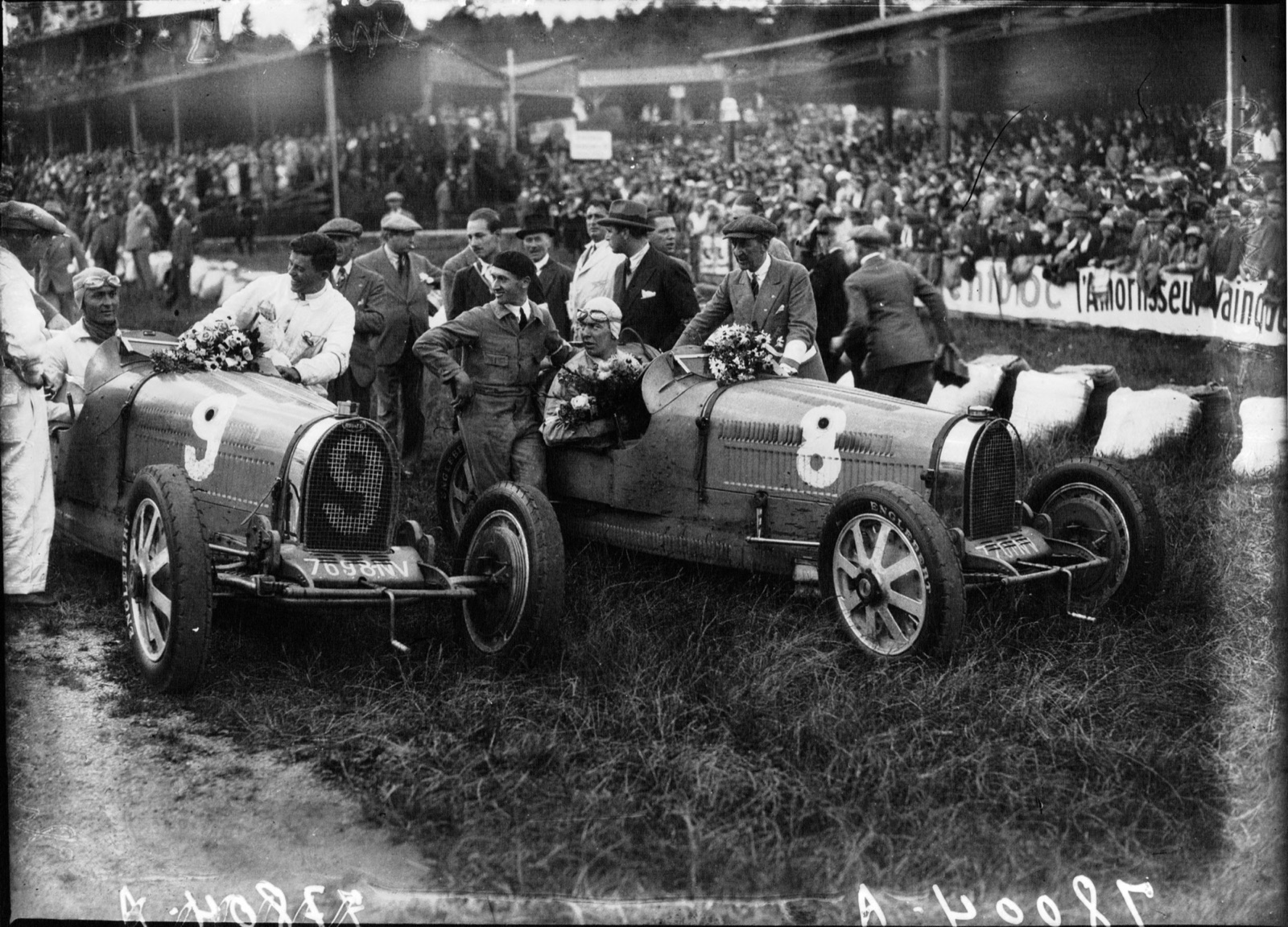
Albert Divo, Tazio Nuvolari, Louis Chiron and "Williams" raced the Type 35, and so did Hellé Nice and Elisabeth Junek, according to the factory's 2019 history.
The works team
After the 1924 five, Costantini, Goux, Minoia and the de Vizcaya brothers drove the works cars in 1925 and 1926. Albert Divo joined in 1928, when Delage stopped racing, after winning the 1923 Spanish Grand Prix for Sunbeam and driving for Delage from 1924; Bugatti's Targa Florio history says he stayed until 1933 as driver and development engineer. The company's Chiron and Divo models are named after Louis Chiron and him.
Chiron, from Monaco, traded a Brescia Bugatti for a Type 35 and won his first race in it, the 1926 Comminges Grand Prix. In 1928 he won the Marne Grand Prix at Reims and the Rome, San Sebastián and Antibes Grands Prix, and in 1929 Ettore made him number one in a team with Bouriat and Divo (Motor Sport, 1999).
Privateers
The Type 35 was built to be sold, and most of the people who raced one in period were amateurs, "a couple of divisions below" Varzi or Chiron in Fearnley's words. William Grover-Williams won seven Grands Prix between 1928 and 1933, all in Bugattis, the 1929 Monaco Grand Prix among them. He later worked for the Special Operations Executive in Paris, was captured, and was executed by the Gestapo in 1945; Richard Day, curator of the Bugatti Trust, told Motor Sport in 2002 that stories of his survival were "pure fantasy".
Women who raced the Type 35
Elisabeth Junek, whose letter from Ettore holds the first sketch of the car, retired from the 1927 Targa Florio with a steering fault. In 1928 she led in her 35B until Campari's Alfa Romeo took the lead from her after four of the five laps, and finished fifth with a leaking water pump (factory history, 2019). Hellé Nice, called the "Bugatti Queen", owned and raced chassis 4863, which Gooding & Company sold at Pebble Beach in August 2014.
How many Bugatti Type 35s were built?
The factory puts the total at 340 Bugatti Type 35s and says the exact figure is no longer known. The Trust's data sheets give 210 for the Type 35, 35B, 35C and 35T together, counting the ten Type 39s, and 130 Type 35As, which also comes to 340. Fearnley wrote "more than 350"; Hagerty, "around 340 Type 35s in all", 50 of them 35Cs.
| Type | Years made (approx.) | Number made |
|---|---|---|
| 35, 35B, 35C, 35T (including the 39) | 35 from 1924, the others from about 1926, to 1931 | 210, of which 90 supercharged |
| 35A | 1926–29 | 130 |
| 39 and 39A | 1926–29 | 10 (counted in the 210 above) |
| 37 and 37A | 1926–30 | 290, of which 67 supercharged (37A) |
Where are the Bugatti Type 35s now?
"Very few remain intact", says the factory's 2019 history: many Type 35s were modified or converted over years of racing, and the survivors are divided between museums and private owners who still race them. Hagerty adds that some were destroyed and many restored with parts from other cars of the marque.
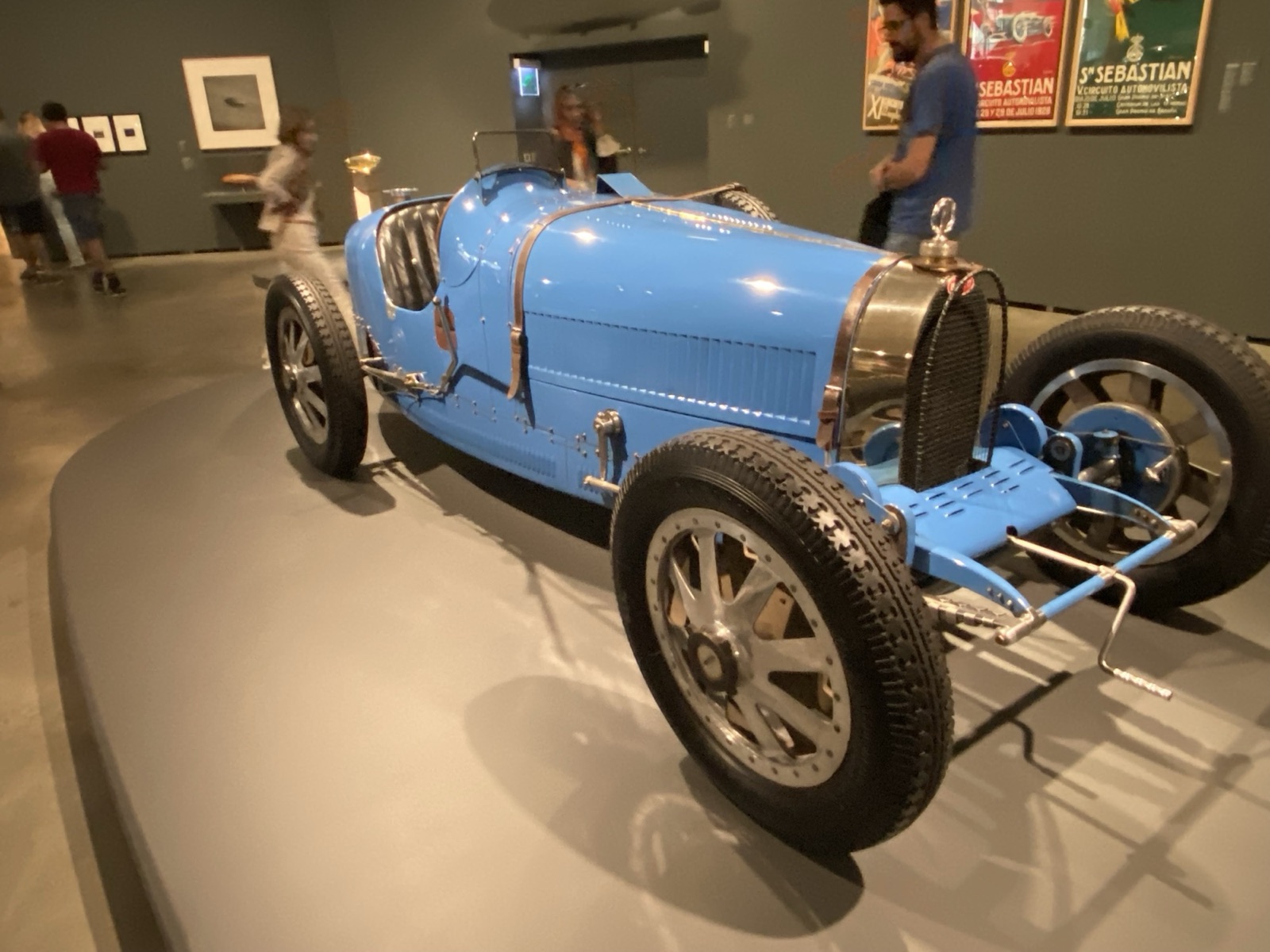
In museums
The National Motor Museum at Beaulieu owns the car Friderich drove to eighth place at Lyon; Ferdinand de Vizcaya then drove it at San Sebastián in September 1924, finishing sixth in the Spanish Grand Prix. It went on show at the Trust's museum at Prescott for the centenary in 2024, as the National Motor Museum's news page recorded. In 1974, when the marque's owners' clubs met at Lyon for the fiftieth anniversary, the same car was shared on the Limonest hill climb by Sandford-Morgan and Louis Giron, who had worked at the factory when it was built (Motor Sport, November 1974).
The Musée National de l'Automobile at Mulhouse holds Fritz Schlumpf's collection, which the French state classified as historic monuments on 14 April 1978. The Palissy register of protected objects lists its two-seaters one by one: Type 35s numbered 4492, 4565, 4612, 4807 and 4934, Type 35As 4611 and 4753, the 35B 4933 and 35Cs including 4815.
The Monaco winner and other famous chassis
The Monaco winner, 4914, spent 51 years with one French owner before Bonhams offered it at Goodwood in September 2005 as "the most original surviving Grand Prix winner from the 1920s". The catalogue says the factory invoiced it in May 1929 for FFr 110,000 to its Nice agent, Ernest Friderich, who sold it to Baron Albert de Bondeli for René Dreyfus to race; Dreyfus won the first Dieppe Grand Prix in it that July.
The Indianapolis Motor Speedway Museum held 35B chassis 4947 from 1960 until RM Sotheby's sold it at Miami in 2025.
Still racing
Type 35s still race in historic events and hill climbs, Prescott among them. Historic Racer's report from the 2014 Remparts races at Angoulême describes local driver Gregory Romouna beating the previous year's winner, Jean-Marc Laffont, in a damaged Type 35. RM Sotheby's catalogue for 4948 says its original frame rails are believed to have been sold to another collector after the car reached the United States in pieces.
How much is a Bugatti Type 35 worth?
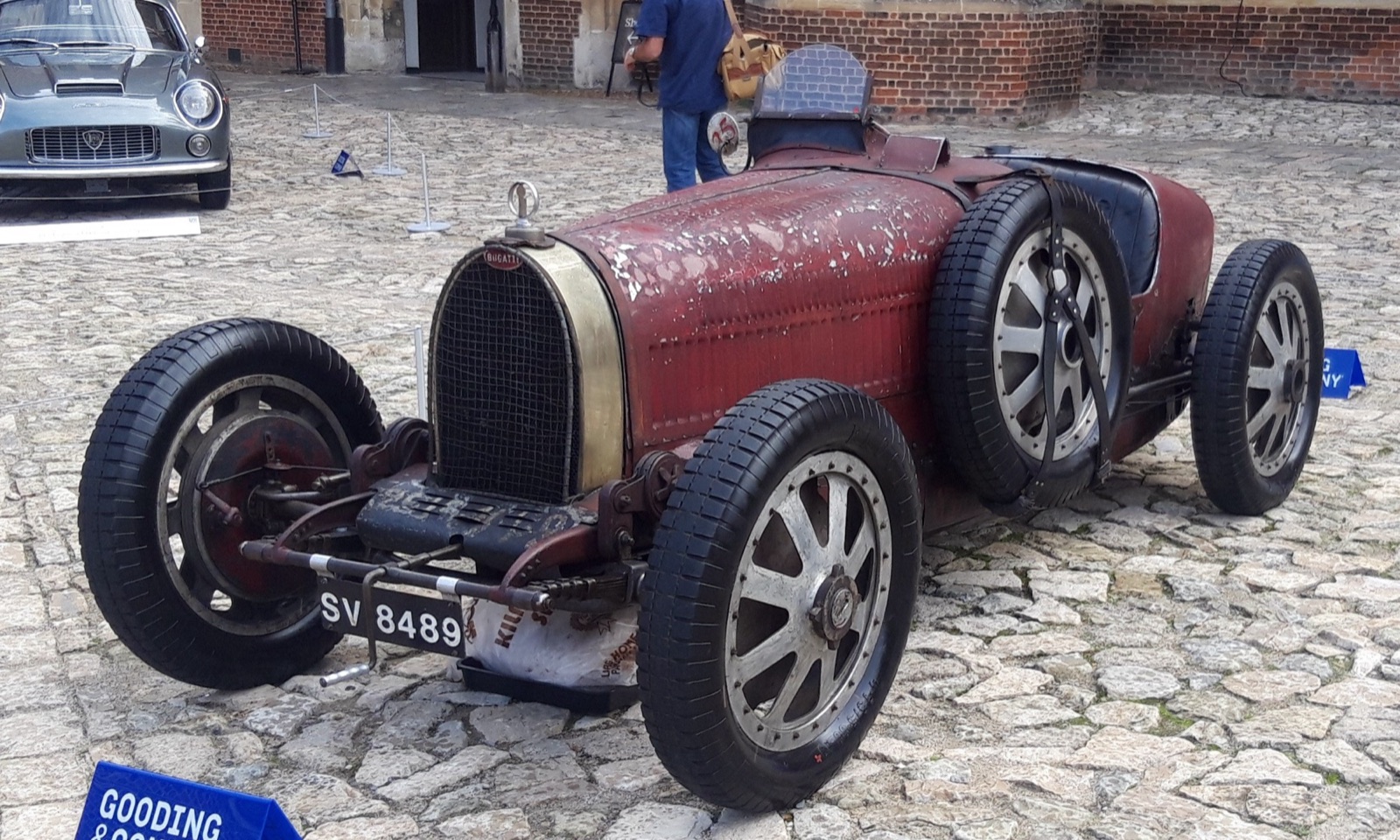
At auction a Bugatti Type 35 has sold for between $176,000, for a car assembled from original and reproduction parts, and £3.9 million, depending on version, originality and racing history. The highest price is the £3,935,000 Gooding & Company took for 35C chassis 4871 at Hampton Court Palace in September 2020, which Hagerty called "the most expensive Bugatti Type 35 ever sold at auction". Hagerty put the price down to originality and history: the car still wears the red paint applied for its Italian owner Ricardo Bernasconi in 1932.
| Chassis | Version | Sale | Price | Catalogue notes |
|---|---|---|---|---|
| 4871 | 35C | Gooding & Company, Passion of a Lifetime, London, September 2020 | £3,935,000 | Works entry in the 1928 Targa Florio; three owners since 1958 |
| 4487 | 35 | Gooding & Company, Scottsdale, January 2017 | $3,300,000 | Early Lyon-type car; three owners from new; original body |
| 4863 | 35 (2.3-litre, supercharged) | Gooding & Company, Pebble Beach, August 2014 | $2,970,000 | Owned and raced by Hellé Nice; period upgrades |
| 4564 | 35A with 35T engine | Bonhams, Bond Street, London, 12 December 2024 | £552,000 | Delivered new to Florence Gould in Paris; owned by Hugh Conway, founder of the Bugatti Trust, and his son for 46 years; raced by Kay Petre |
| 4947 | 35B | RM Sotheby's, Miami, 2025 | $1,380,000 | Indianapolis Motor Speedway Museum from 1960; original frame, engine and rear axle |
| 4948 | 35B | RM Sotheby's, Arizona, 2014 | $638,000 | Third at Monaco in 1930; original frame rails missing |
| BC 167 | 35A, assembled | RM Sotheby's, Hershey, 2024 | $176,000 | Reproduction frame and body with original parts |
Sources: the auction houses' lot pages for 4871, 4487, 4863, 4564, 4947, 4948 and BC 167.
The 4487 that Gooding sold for a "world record price" of $3.3 million in January 2017, by its results announcement, is an unsupercharged two-litre car whose catalogue leads on three owners and its original body; Historic Racer's notes from RM's 2014 Monaco sale called the €728,000 paid there for a Type 35 "assembled from various sources" cheap.
Bugatti Type 35 replicas and recreations
Pur Sang, a workshop at Paraná in Argentina founded by Jorge Anadón, builds Bugatti Type 35 recreations by hand, with its own foundry and wooden body bucks. It makes 25 to 30 cars a year, half of them for the United States; about 400 of its Bugattis are on the road worldwide, most of them Type 35 Grand Prix copies with an eight-cylinder engine of nearly 2.3 litres, and more than 600 cars counting its other models, according to La Nación (22 May 2023).
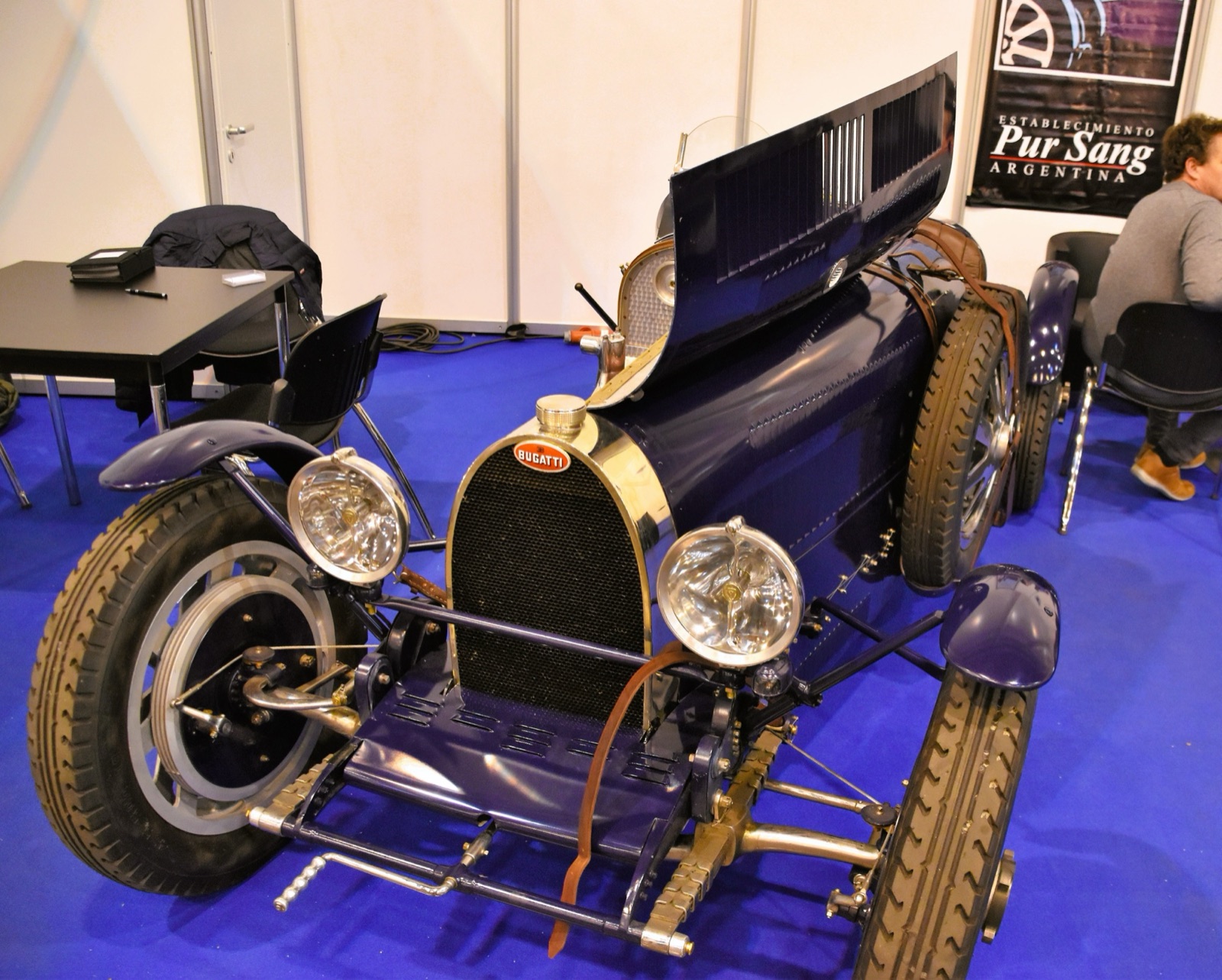
In Britain, the Bugatti Owners' Club gives its own chassis numbers, prefixed BC, to cars built up from a mix of original and reproduction parts: BC 167, sold by RM Sotheby's in 2024, has a reproduction frame, crankshaft and cam box and a body copied by Tula Engineering, with an original Type 38 lower crankcase, hubs, brakes and steering box. The company itself made the Baby II, an electric Type 35 at 75 per cent scale, with The Little Car Company in a run of 500, priced from $36,600 to $71,400 with a top speed of 42 mph, as its November 2020 announcement set out. It is modelled on the original Bugatti Baby of 1926.
Bugatti Type 35 rivals and successor
The Type 35's main Grand Prix rivals were the Alfa Romeo P2, Delage, Sunbeam and Fiat in its first two seasons, then Delage and Talbot under the 1.5-litre formula, then Mercedes-Benz, Alfa Romeo and Maserati as the 1920s ended. Motor Sport's history of March 1943 ranked the 1926 cars "Talbot, Delage and Bugatti in an ascending order of reliability and a descending order of speed".
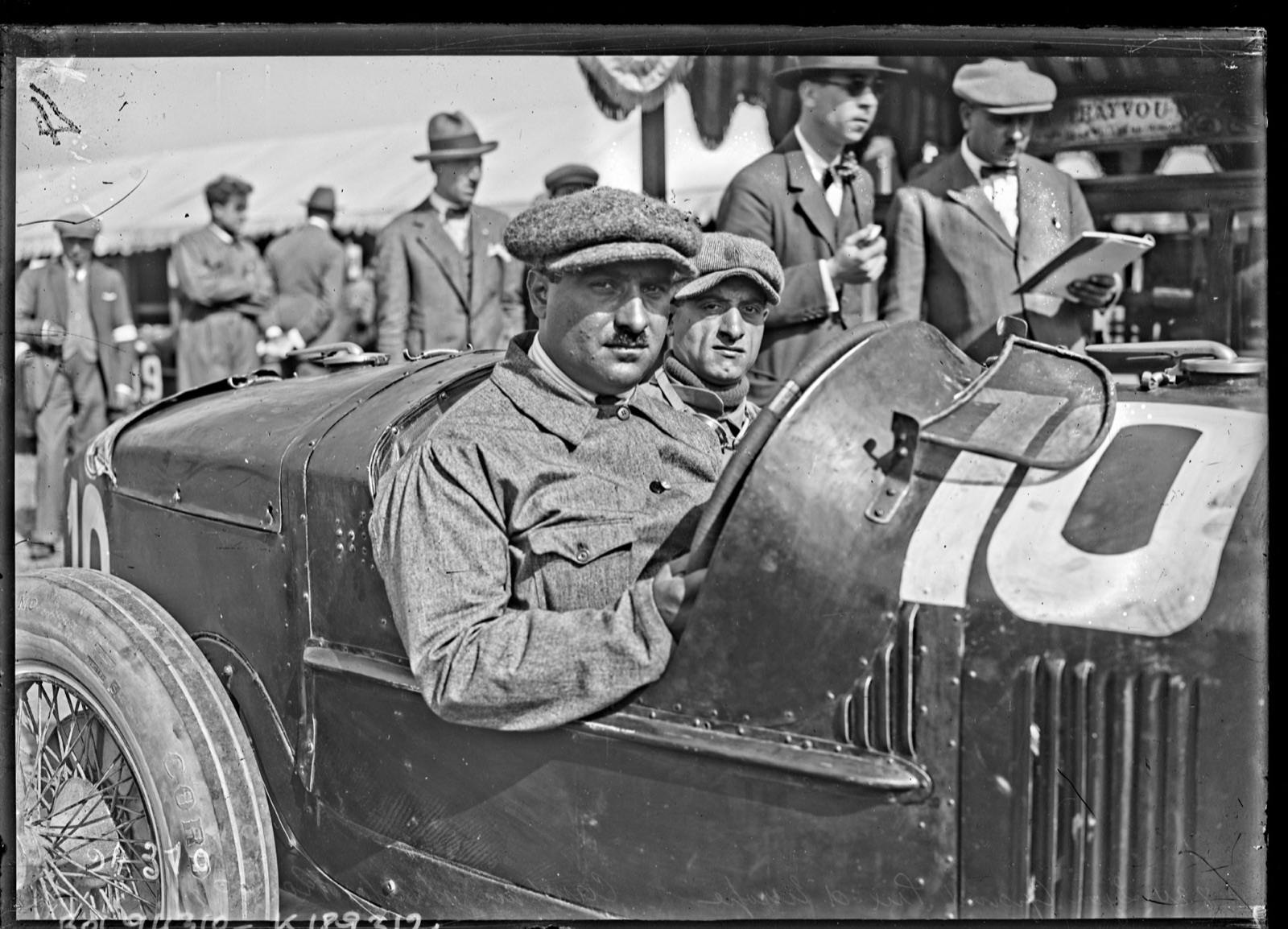
The Alfa Romeo P2, Vittorio Jano's first design for Alfa Romeo, won the Type 35's first race at Lyon (Motor Sport, 2004). In 1926 the 1.5-litre Delage was faster than the Type 35 derivatives but cooked its drivers' feet with an exhaust that ran beside the pedals; rebuilt for 1927, it proved "quite invincible" (Motor Sport, March 1943). At Monaco in 1929 Caracciola's Mercedes-Benz SSK passed Williams's 35B before losing time in the pits for fuel and tyres, and Motor Sport's April 1943 history judged the SSK family "probably the fastest cars racing" up to 1932.
The Type 35's successor is the subject of two accounts. The factory's 2019 history names the Type 54 as the replacement in 1931. Motor Sport's 1949 report of Burton's talk says the 35B "re-emerged as the supercharged Type 51", with twin overhead camshafts, and Chiron won the 1931 Monaco Grand Prix in one (Motor Sport, 1999).
Questions and answers
Is the Bugatti Type 35 the most successful racing car of all time?
Bugatti calls it the world's most successful racing car, and RM Sotheby's says it holds that record by total number of victories. The counts behind the claim are Bugatti's own: over 2,000 wins in its 2019 history and some 2,500 in its 2024 history.
Where was the Bugatti Type 35 built?
At Bugatti's factory at Molsheim in Alsace, then in France. The five cars for the 1924 Grand Prix at Lyon were driven there from Molsheim on public roads.
Was the Bugatti Type 35 a road car?
It was built as a racing car, but the factory fitted wings and lamps for customers who wanted to use one on the road, and Motor Sport's Paul Fearnley rode to the Prescott hill climb in a road-equipped car in 2004. RM Sotheby's calls the Type 43 the road-going form of the 35B.
What does the B in Type 35B mean?
The factory's own name for the car was Type 35TC: the 2.3-litre engine of the Targa (35T) car with a compressor added. Bugatti's history of its Targa Florio wins says it became generally known as the Type 35B.
Why does the Bugatti Type 35 have aluminium wheels?
To cut unsprung weight. Each cast wheel has eight flat spokes, a detachable rim and the brake drum cast in, with a ring to hold the tyre on the rim.
Who won the first Monaco Grand Prix?
William Grover-Williams, racing as "Williams", in a green Type 35B on 14 April 1929; Motor Sport has called the car privately owned, while Bonhams says it was still registered to the factory. Georges Bouriano's Type 35C was second and Rudolf Caracciola's Mercedes-Benz SSK third.
Can you still race a Bugatti Type 35?
Yes. Type 35s run in historic races and hill climbs, including Prescott, home of the Bugatti Owners' Club, where Motor Sport drove one in 2004.
Sources
- Bugatti Automobiles, "The legendary Bugatti Type 35: the world's most successful racing car", press release, 6 May 2019: design, power, top speeds, weight, the Lyon tyres, production of 340, over 2,000 wins, the drivers, Junek's 1928 Targa Florio.
- Bugatti Automobiles, "90th anniversary of the Targa Florio victory: Bugatti wins fifth consecutive title", press release, 2 May 2019: Targa Florio results 1925–1930, the 35T and 35TC, Divo's career.
- Bugatti Automobiles, "Bugatti Type 35: the race where it all began exactly 100 years ago", press release, 5 August 2024: the 1922–25 rules, the Lyon debut, some 2,500 wins.
- Bugatti Automobiles, "Bugatti Type 35: epic races and victories that created a legend", press release, 11 September 2024: 1928's 23 wins from 26 races, the Nürburgring, Monaco prize, La Turbie and La Baule.
- Bugatti Automobiles, "Bugatti Baby II arrives in North America", press release, 23 November 2020: the Baby II's scale, run, prices and speed.
- The Bugatti Trust, data sheets for the Type 35, 35B, 35C and 35T, Type 35A, Type 37 and 37A and Type 39 and 39A: specifications, dates and numbers made.
- The Bugatti Trust, "Celebrating 100 years of the Grand Prix Bugatti, Lyon, August 3rd, 1924", 2024: the Junek sketch, the first body blueprint, the Lyon car numbers.
- National Motor Museum, Beaulieu, collection record, Bugatti Type 35: Friderich's Lyon car, its 1924 races, the dates of the 35C and 35B.
- National Motor Museum, Beaulieu, "Our Bugatti cars have gone on tour", 2024: the Lyon car's loan to the Bugatti Trust.
- Motor Sport, "The Grand Prix", August 1924: the Lyon race and its placings.
- Motor Sport, "The first Grand Prix of Monaco", May 1929: the race and the Williams–Caracciola duel.
- Motor Sport, "Racing car evolution, part IV: 1928–1933", April 1943, and part III (continued): 1926–1927, March 1943: the formulas, rivals, the Type 39, Bugatti's 1928–29 seasons.
- Motor Sport, "Sorting out the Bugatti types", May 1949: Burton's talk on the 35A, 35C, 35T, 35B, 37 and Type 51.
- Motor Sport, "International Grand Prix Bugatti, Lyon", November 1974: the 1924 tyres, the National Motor Museum car at Limonest.
- Motor Sport, Bill Boddy, "Louis Chiron: idol of France", September 1999: Chiron's Type 35 career, the first 35B, Monaco and Spa in 1930.
- Motor Sport, Bill Cash, "Racer, dancer, soldier, spy", June 2002: Grover-Williams's wins and fate.
- Motor Sport, Paul Fearnley, "Blue bloodline", July 2004: Ettore's earlier cars, production, win claims, the engine, the drive at Prescott.
- Motor Sport, "The Lyons that roared", July 2004: the 1924 race, the Bugatti finishes, Segrave's fastest lap, the P2.
- Motor Sport database, 1926 World Championship and 1926 French Grand Prix: the 1926 rules, results and title, and the cars at Miramas.
- Gooding & Company, lot pages: 1928 Type 35C, chassis 4871 (Passion of a Lifetime, 5 September 2020), 1925 Type 35, chassis 4487 (Scottsdale, January 2017), 1927 Type 35, chassis 4863 (Pebble Beach, August 2014): prices, specifications, provenance.
- Bonhams, lot pages: 1928 Type 35B, chassis 4914 (Goodwood, 16 September 2005), and 1925 Type 35A/35T, chassis 4564 (Bond Street, 12 December 2024): the Monaco winner's history, the 35A, Moss's road test, the 4564 sale.
- Gooding & Company, "Gooding & Company garners more than $33.4 million from the finest collector cars at the Scottsdale Auctions", 22 January 2017: the record price for 4487.
- RM Sotheby's, lot pages: 1930 Type 35B, chassis 4947 (Miami 2025), 1930 Type 35B, chassis 4948 (Arizona 2014), 1926 Type 35A, BC 167 (Hershey 2024): prices, histories, the 35B's performance.
- Hagerty, "Sales that teach: a test for the top of the market amidst the pandemic", 2020: the sale of 4871, 35C production.
- Ministère de la Culture, Plateforme ouverte du patrimoine, Palissy notice PM68001674 and its companion notices PM68001632 and PM68001660 to PM68001675: the Schlumpf collection's Type 35 family, classified 14 April 1978.
- Pablo Epifanio, "Así es la fábrica argentina desconocida donde se hacen réplicas de autos clásicos que llegan al mundo", La Nación, 22 May 2023: Pur Sang's workshop and output.