The Mercedes-Benz SSK is the short-wheelbase version of Daimler-Benz's supercharged 7.1-litre S-series sports car, built from 1928 to 1932 for hill climbs and sports-car races. Mercedes-Benz Classic's specification of the SSK gives 33 built, the lightened SSKL included. Rudolf Caracciola won the 1930 Irish Grand Prix in an SSK, and the 1931 Mille Miglia and German Grand Prix in the SSKL.
How the Mercedes-Benz SSK came about
The Mercedes-Benz SSK was made by shortening the S-series chassis for hill climbs. Mercedes-Benz Classic's history of the SSK says the 3,400 mm wheelbase of the Type S and SS gave stability, but on the mountain courses popular at the time the cars "lacked manoeuvrability and agility". At Untertürkheim the frame was cut by 450 mm to 2,950 mm. The running boards, wings, lamps and hood could be taken off, so the same car could run in sports-car and racing-car classes.
Ferdinand Porsche and the Model K, S and SS
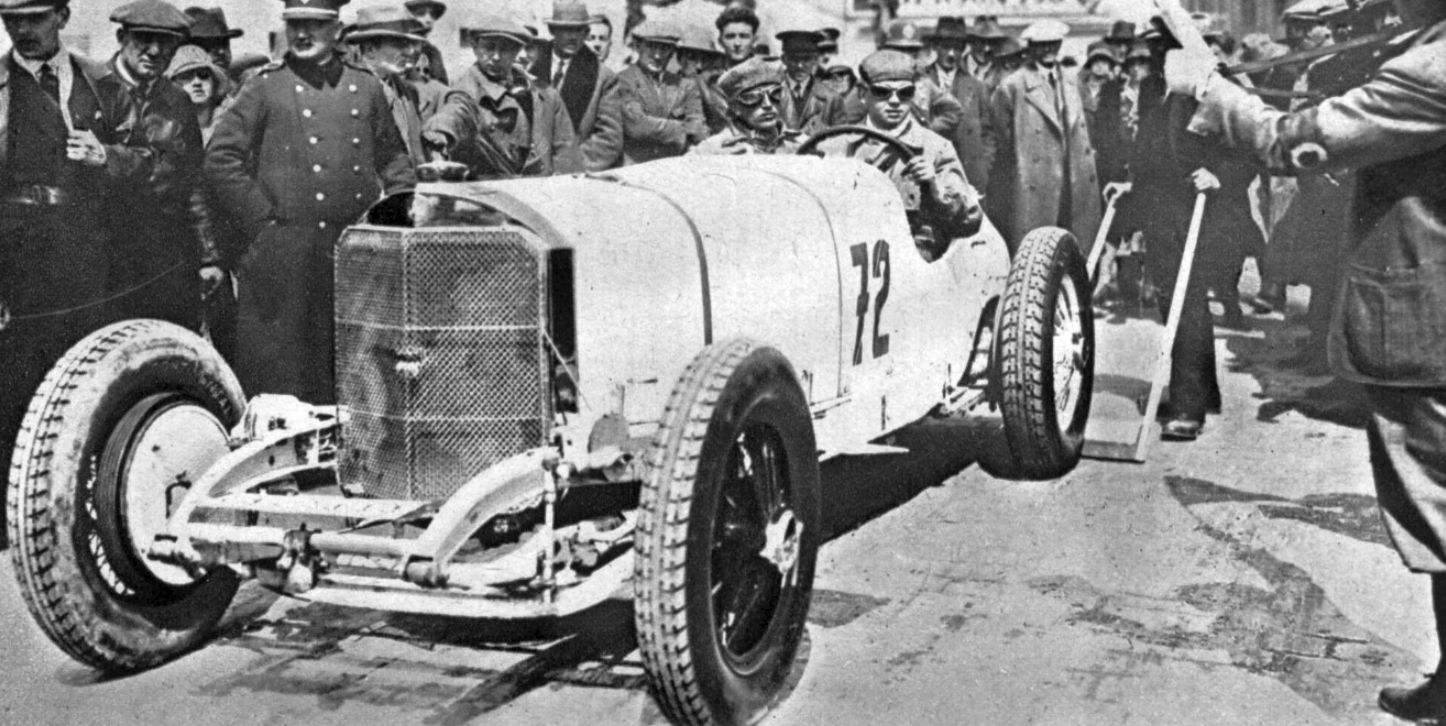
Ferdinand Porsche became head of the design office at Daimler-Motoren-Gesellschaft on 30 April 1923, succeeding Paul Daimler. Daimler-Motoren-Gesellschaft and Benz & Cie. merged in June 1926 to form Daimler-Benz, and the S-series models helped the new Mercedes-Benz brand "to achieve the highest reputation", by the maker's Type S history. The SSK was the fourth step in a line of supercharged six-cylinder cars. The Model K of 1926 took 350 mm out of the 6.2-litre Mercedes 24/100/140 hp. The Type S of 1927 kept the K's wheelbase but had a lower frame, an engine set 300 mm further back and 6.8 litres; Caracciola won the first race at the Nürburgring in one on 19 June 1927, and 146 were built. The SS of 1928 had its bore widened to 100 mm for 7,069 cc and a taller radiator for a more comfortable touring body; 111 were built between November 1928 and September 1933.
The Porsche Newsroom's account of 1928 lists the K, S, SS and SSK among the cars of Porsche's Daimler years. By that account he resigned after a row over the Mercedes-Benz Type 8/38 in the winter of 1928, and Hans Nibel was sole chief engineer of Daimler-Benz from 1 January 1929. Nibel's office then built the SSKL.
What does SSK stand for?
SSK stands for Super Sport Kurz, "Super Sport Short", in the maker's own account. Its history of the S, SS, SSK and SSKL points out that a short S should strictly have been an "SK", but the car had the SS's larger engine. The Porsche Newsroom expands the name as "Super-Sport-Kompressor"; the maker's Model K history says the K "stood for 'kurz' (short) and not for 'Kompressor'". The SSKL added Leicht (light). The factory catalogued the model as the SSK 27/140/200 hp, the last two figures its power without and with the supercharger, and in Britain the S family's 7.1-litre cars were the "38/250" (Motor Sport, 1952).
Mercedes-Benz SSK design and engineering
The Mercedes-Benz SSK is a Type S frame, shortened, with the SS's 7.1-litre engine and a larger supercharger. It used the low radiator of the Type S, 42 mm lower than the SS's, for a lower bonnet line (S-series history).
Chassis and body
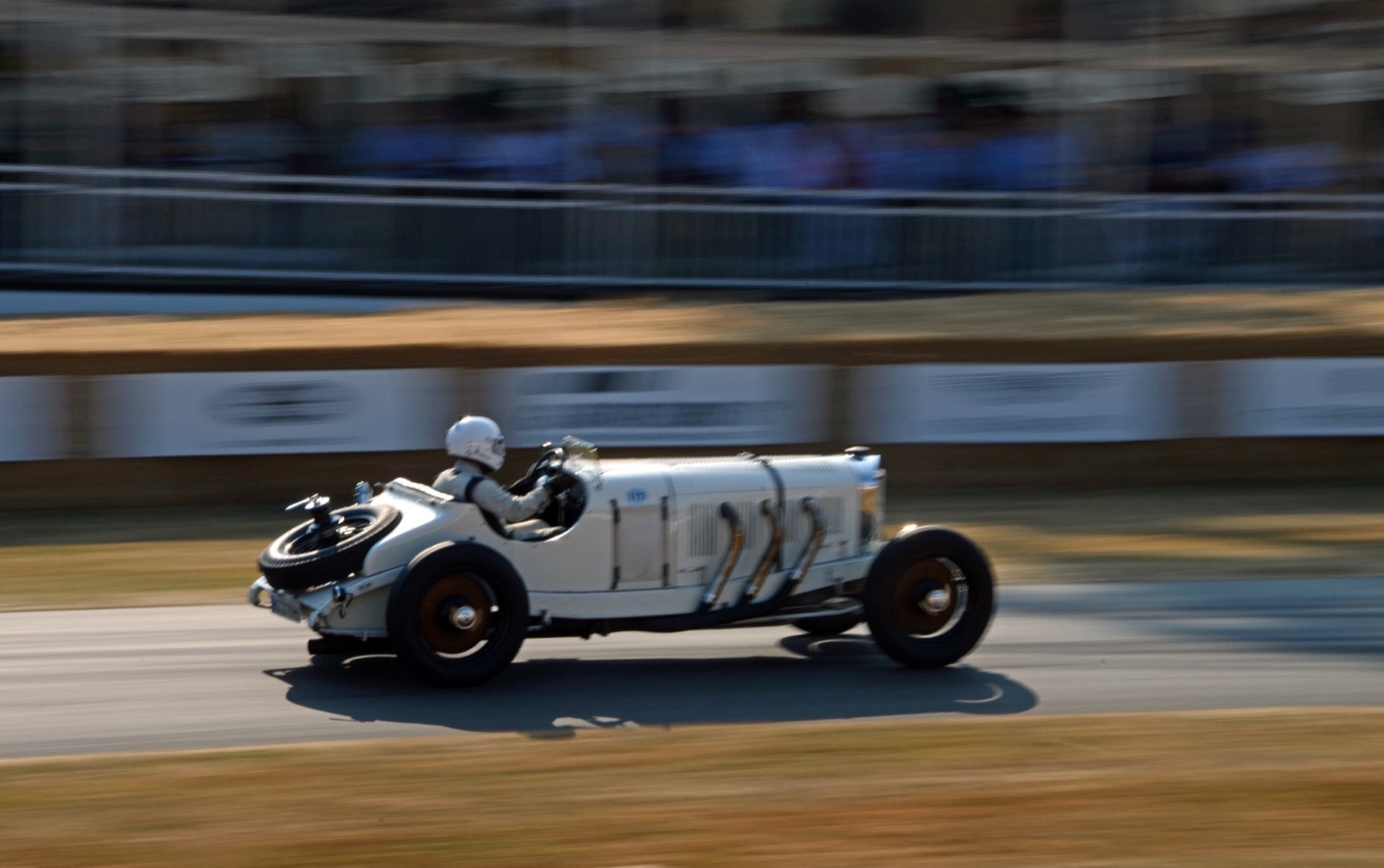
The technical data for the works SSK list a U-section pressed-steel frame, rigid axles on semi-elliptic springs (underslung at the rear), hydraulic dampers in front and friction dampers behind, a four-speed gearbox, worm-and-nut steering and mechanically operated drum brakes on all four wheels with finned grey-iron drums. R. H. Johnson, writing in Motor Sport in February 1952, described most SSKs as having stark competition two-seater bodies with low sides and no doors, the passenger's seat set slightly behind the driver's, and a chassis weighing 24 cwt. The factory history adds that a few were bodied by outside coachbuilders as high-performance touring cars.
The M 06 engine
The engine is a six-cylinder of 100 × 150 mm and about 7.1 litres. The factory data describe a block of silumin, an aluminium alloy, with wet cast-iron liners, a removable cast-iron head, one overhead camshaft driven by a vertical shaft at the back of the engine, two valves and two spark plugs per cylinder (one set fired by a Bosch magneto, the other by coil), two pressurised updraught carburettors, a 120-litre fuel tank and a pump that topped up the sump with fresh oil. Johnson gave the maximum safe speed as 3,200 rpm and noted that the instruction manual required a benzole mixture of about 50/50 whenever the supercharger was used.
How the supercharger (Kompressor) works
The Roots supercharger stands at the front of the engine and normally idles. Johnson's 1952 description: pressing the throttle hard down past a stop engages a multi-plate clutch, and the blower then forces air through the carburettors, where British systems sucked mixture from them. He gave its speed as three times engine speed and 15 to 20 seconds at a time as long enough. Doug Nye, who navigated an SSK on the 2010 Mille Miglia Retro, gave 2.8 times engine speed, up to 7 lb of boost, a clutch pack of 45 steel discs and bursts of 10 to 15 seconds, and quoted David Burgess-Wise on the sound: "a keening wail like a bandsaw cutting concrete" (Motor Sport, August 2010). Bonhams' catalogue for an SS in 2010 traces the idea to Mercedes' supercharged aero engines of the First World War.
The "Elephant" supercharger
The "Elephant" is the largest of the Mercedes-Benz SSK's superchargers. The S-series history says the works had two competition blowers: the smaller gave 275 hp, and the larger, "referred to within the company as the 'elephant'", gave 310 hp on the test bench and could run continuously, switched in and out by a lever under the steering wheel. Johnson gave the boost as 8½ lb/sq in for the SS's standard blower, 10 lb for the SSK and 12 lb for the "Elephant", 317 mm tall, and wrote that many cars said to carry one had the medium size. The maker's biography of Caracciola calls the S-series cars themselves the "White Elephants".
What is the Mercedes-Benz SSK like to drive?
Phil Hill, "America's first Formula 1 World Champion" in Bonhams' words, drove an SSK for Automobile Quarterly (volume 7, number 1), quoted in Bonhams' 2004 catalogue for chassis 36045: "I hadn't heard anything until I put my foot in it and brought the blower into operation… It makes a heck of a racket", and the handling and braking were "absolutely superb for a car with solid axles and half-elliptics all round". Nye, navigating for Mercedes' Michael Bock, found the rear tyres "hardly ever broke adhesion" on dry, damp and icy roads, but the short car was "far more sensitive in pitch than yaw": a raised pedestrian crossing at night lifted him out of his seat.
Mercedes-Benz SSK specifications
The Mercedes-Benz SSK's figures depend on the version: the catalogue road car, the works racing car or the 1931 SSKL.
| Item | SSK, catalogue | SSK, works racing car | SSKL (1931) |
|---|---|---|---|
| Engine | M 06, six in line, single overhead camshaft | MS 06 | M 06 RS |
| Bore × stroke | 100 × 150 mm | 100 × 150 mm | 100 × 150 mm |
| Capacity | 7,065 cc | 7,100 cc | 7,065 cc |
| Compression ratio | 5.2:1 | 5.4:1 | 7.0:1 |
| Power without / with supercharger | 140 hp (160 hp from 1929) / 200 hp at 3,300 rpm | 180 hp / 250 hp at 3,300 rpm | 240 hp / 300 hp at 3,400 rpm |
| Torque | 45.9 mkg (about 450 Nm) at 1,920 rpm | 57.3 mkg (about 562 Nm) at 1,900 rpm | 70.2 mkg (about 688 Nm) at 2,000 rpm |
| Gearbox | Four-speed manual | Four-speed manual | Four-speed manual |
| Wheelbase | 2,950 mm | 2,950 mm | 2,950 mm |
| Track, front and rear | 1,425 mm | 1,420 mm | 1,420 mm |
| Length | 4,250 mm | 4,250 mm | 4,250 mm |
| Weight | 1,700 kg kerb (chassis 1,400 kg) | 1,520 kg | 1,352 kg |
| Tyres | 6.50 or 7.00-20 | 5.00 × 30 high-pressure | 5.00 × 30 high-pressure |
| Top speed | 180 km/h (2.76 axle) or 185 km/h (2.50 axle) | 192 km/h | 235 km/h |
| Price new | RM 29,000 chassis; RM 33,000 sports two-seater | Not given | Not in the sales programme |
How much horsepower did the Mercedes-Benz SSK have?
The catalogue Mercedes-Benz SSK had 200 hp with the supercharger engaged, and the works racing SSK 250 hp, in the factory figures. Its S-series history adds that the catalogue figure was certainly exceeded, that 275 hp came with the smaller racing blower and 310 hp with the "Elephant" on the test bench. The SSKL had 300 hp. Johnson (1952) gives the same 250 bhp for the SSK, and "close on 300" for the SSKL.
How fast was the Mercedes-Benz SSK?
The factory gives 180 to 185 km/h (112 to 115 mph) for the catalogue SSK, depending on the axle ratio, 192 km/h (119 mph) for the works car and 235 km/h (146 mph) for the SSKL; its model history says "just under 200 km/h, depending on the gearing". Phil Hill wrote of a car "that will do over 120mph". Motor Sport's 1931 Mille Miglia report put Caracciola's SSKL at "nearly 130 m.p.h.".
Mercedes-Benz SSKL and the Avus streamliner
The Mercedes-Benz SSK's last developments were the lightened SSKL of 1931 and a streamlined SSKL that won the Avus race in Berlin in 1932.
The SSKL of 1931
The SSKL was conceived at the end of 1930 under Hans Nibel to answer the lighter Alfa Romeo and Bugatti racing cars, by the maker's SSKL history. Its frame and body were drilled with holes and the frame's walls thinned, with plates added to the side members by the engine and at the rear spring mountings; the history puts the saving at 125 kg, though the factory weights, 1,352 kg against 1,520 kg, differ by 168 kg. The engine designer Albert Heess changed the blower's drive ratio, made it run continuously, enlarged the valves by 4 mm to 56 mm and fitted a crankshaft with larger counterweights. Four were built, entered in the order books as "SSK, 1931 Model"; the press coined "SSKL" a year later. The S-series history adds that some SSKs may have been converted later, and that the conversions were not always recorded.
The streamlined SSKL of 1932
Reinhard von Koenig-Fachsenfeld designed a streamlined aluminium body for Manfred von Brauchitsch's SSKL for the Avus race of May 1932, and Vetter of Cannstatt built it, according to the maker's history of the streamliner. It had 25 per cent less drag than a standard SSKL and a design speed 20 km/h higher. Von Brauchitsch called it the "cucumber"; Motor Sport's Graham Keilloh wrote in 2019 that spectators called it the "gherkin". On 22 May 1932 von Brauchitsch passed Caracciola's Alfa Romeo near the end of the 294.4 km race and won at 194.4 km/h, 3.6 seconds ahead in the Motor Sport database's times. The radio reporter Paul Laven called it a "silver arrow". A second streamliner was built for Otto Merz in 1933; Merz, 44, was killed practising in it on the wet Avus on unsuitable tyres, and that ended the streamlined SSKL. The Mercedes-Benz W25 Grand Prix car followed in 1934.
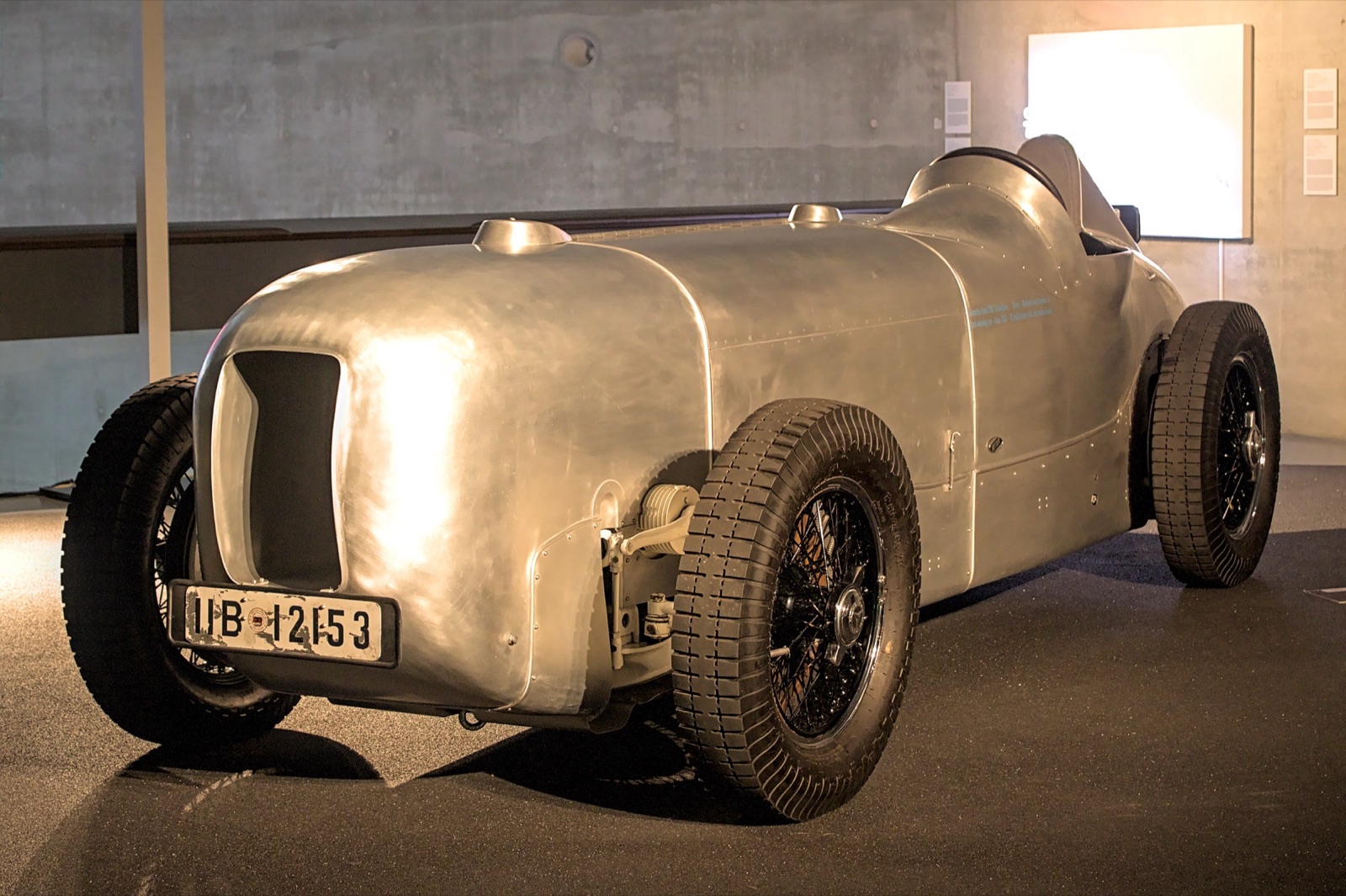
Mercedes-Benz Classic has built a reconstruction, with the lightening holes made to the original drawings; Motor Sport reported on 9 August 2019 that it would make its first public-road run on the Tour d'Elegance of the Pebble Beach Concours d'Elegance on 15 August.
Mercedes-Benz SSK racing history
The Mercedes-Benz SSK raced from July 1928, when Caracciola won the Gabelbach hill climb with a course record on its debut, and the SSKL was still winning hill climbs in 1932. The SSK history lists Caracciola's racing-class wins at Schauinsland, Ratisbona, Mont Ventoux and Semmering, and the SSK went on sale with the SS in October 1928.
| Date | Event | Driver | Car | Result |
|---|---|---|---|---|
| End of July 1928 | Gabelbach hill climb | Rudolf Caracciola | SSK | Won, course record (MB) |
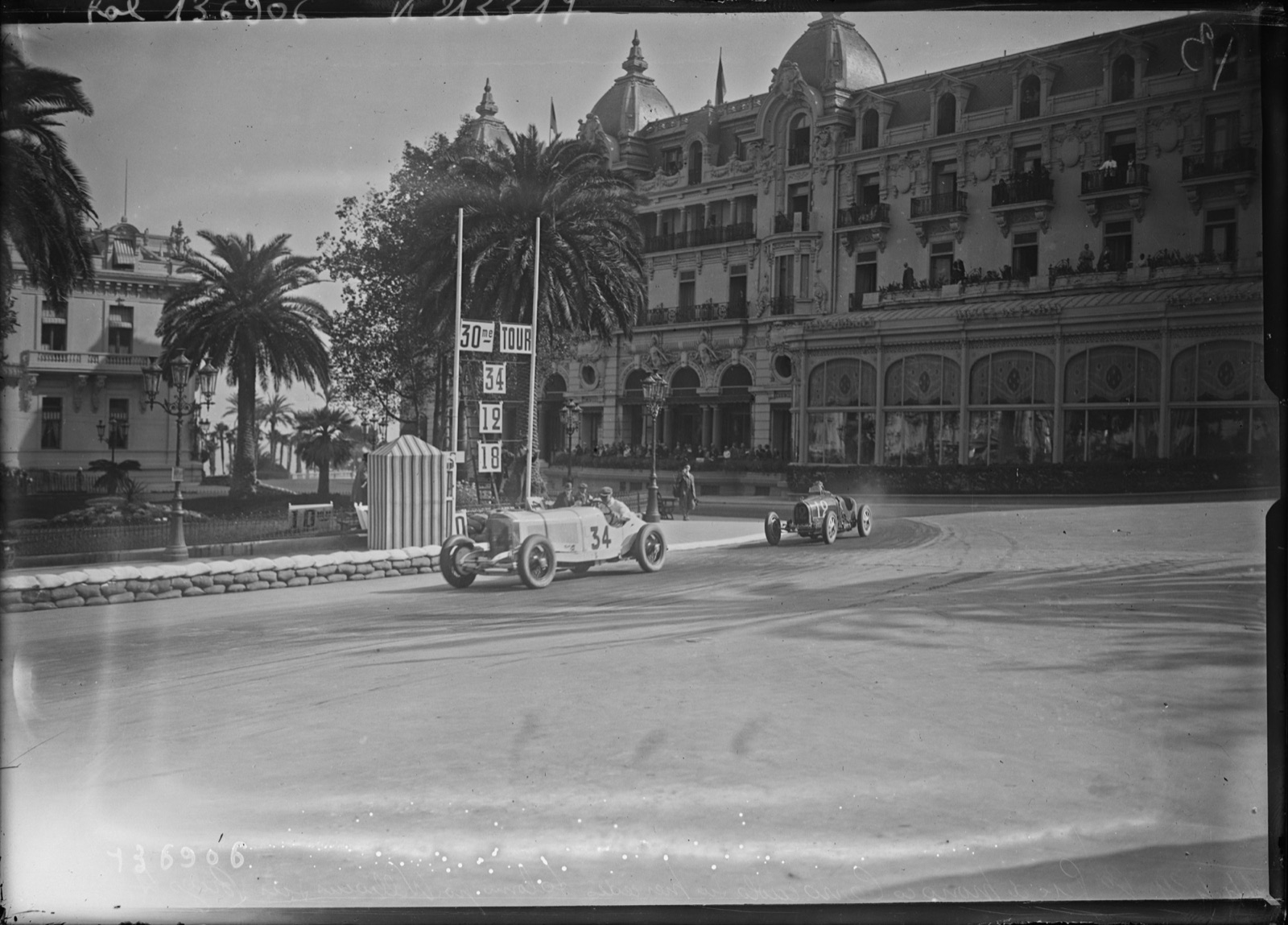
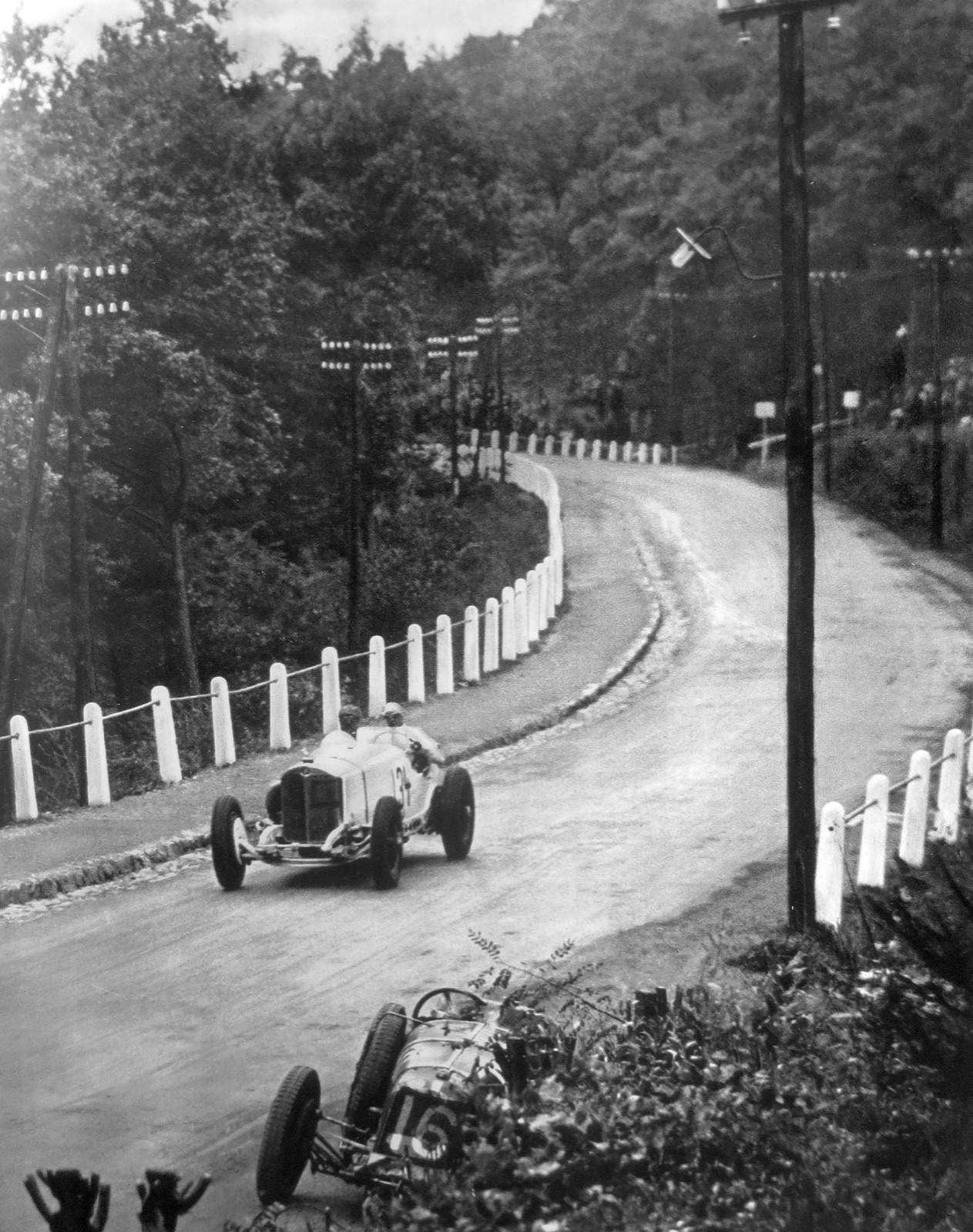
| 14 April 1929 | Monaco Grand Prix | Caracciola (No. 34) | SSK | 3rd |
| 14 July 1929 | German Grand Prix, Nürburgring | August Momberger and Max Arco-Zinneberg | SSK | 3rd |
| 12–13 April 1930 | Mille Miglia | Caracciola and Christian Werner | SSK | 6th (MB) |
| July 1930 | Shelsley Walsh hill climb | Caracciola | "38-250 h.p. Mercedes" | Fastest sports car, 46⅘ sec (MS, August 1930) |
| 19 July 1930 | Irish Grand Prix, Phoenix Park | Caracciola | SSK | Won, 85.88 mph (MS, August 1930) |
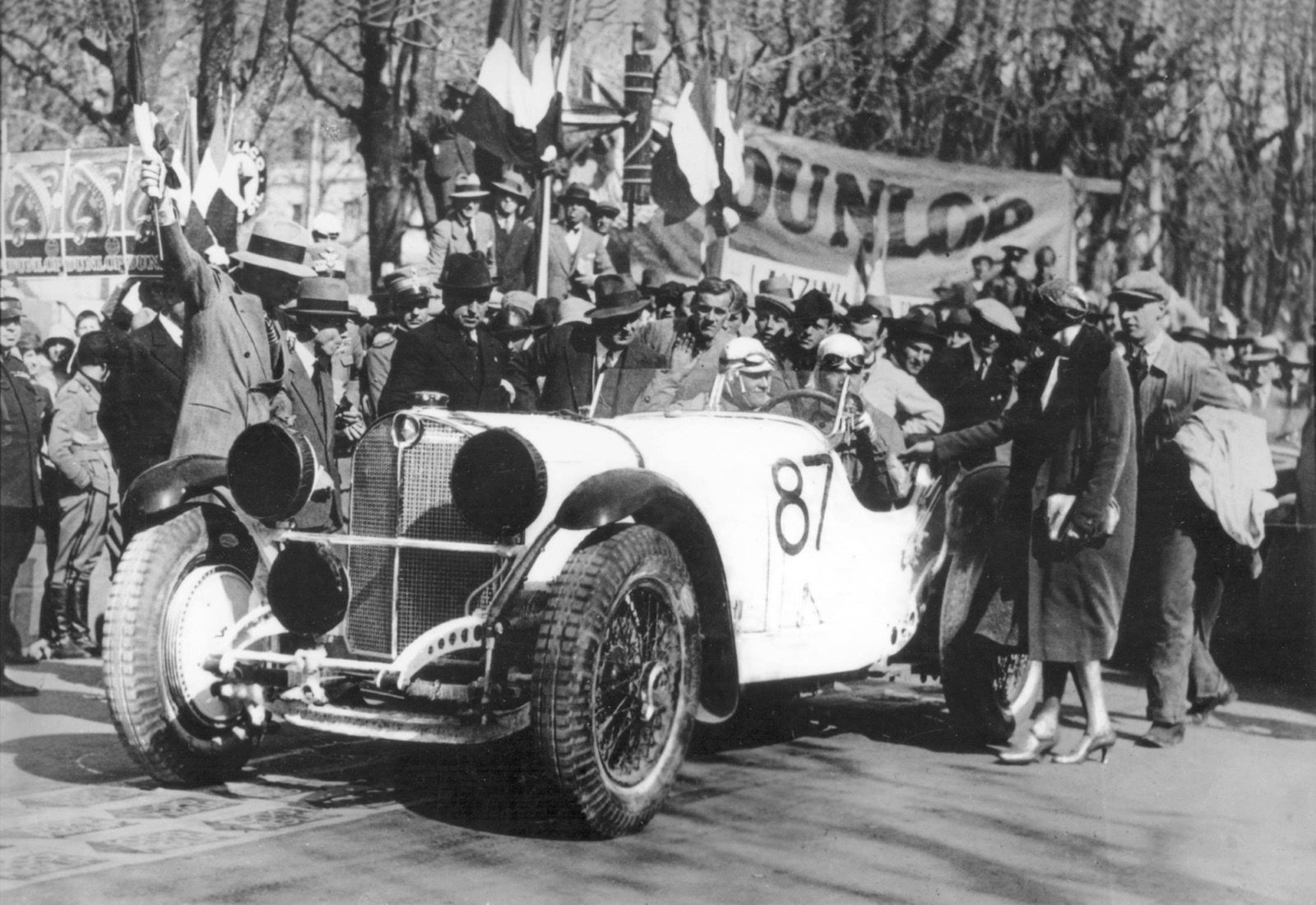
| 11–12 April 1931 | Mille Miglia | Caracciola and Wilhelm Sebastian (No. 87) | SSKL | Won, 16 h 10 min 10 sec |
| 7 June 1931 | Eifelrennen, Nürburgring | Caracciola | SSK; SSKL (MB) | Won |
| 19 July 1931 | German Grand Prix, Nürburgring | Caracciola | SSKL | Won by 1 min 18 sec from Louis Chiron's Bugatti |
| 2 August 1931 | Avus race, Berlin | Caracciola | SSKL | Won, 185.7 km/h average (MB) |
| 27 September 1931 | Masaryk Grand Prix, Brno | Hans Stuck (No. 34) | SSKL | 2nd |
| 22 May 1932 | Avus race, Berlin | Manfred von Brauchitsch | SSKL, streamlined | Won |
| 28 August 1932 | Stelvio hill climb | Stuck | SSKL | Won sports cars up to 8 litres (MB) |
1929: the Monaco Grand Prix
At the first Monaco Grand Prix, on 14 April 1929, Caracciola's 7-litre Mercedes-Benz SSK fought William Grover-Williams's 2.3-litre Bugatti over 100 laps, by Motor Sport's report of May 1929. Caracciola passed Williams on lap 36 and led again when Williams stopped on lap 50, but his own stop on lap 51 was long "owing to its heavy petrol consumption", and both rear wheels were changed. Georges Bouriano's and Georges Philippe's Bugattis got by; Caracciola repassed Philippe and finished third, 2 min 22.6 sec behind Williams in the database's times.
Was the 1929 Tourist Trophy won by an SS or an SSK?
RM Sotheby's 2012 catalogue lists Caracciola's win in the RAC Tourist Trophy at Ards on 17 August 1929 with the SSK's successes, but Motor Sport's writers and the Racing Sports Cars database name an SS. Bill Boddy wrote in Motor Sport in September 1975 of "Caracciola's victory in the 1929 TT in a l.h.d. SS", averaging 72.82 mph on a rain-soaked course with a lap at 77.81 mph. Racing Sports Cars' results list the winner, No. 70, as a Mercedes-Benz SS, and Johnson (1952) called the car Earl Howe later raced the "1929 Irish TT winning car" and an SS. The maker's biography of Earl Howe instead calls the car he bought from Caracciola an SSK. Giuseppe Campari's Alfa Romeo was second.
1930: Le Mans against the Blower Bentleys
One Mercedes started the 1930 Le Mans 24 Hours, for Caracciola and Christian Werner, against Bentley's three Speed Sixes and the two supercharged 4½-litre "Blower" Bentleys of Dorothy Paget's team. Bentley's heritage page for the Blower UU 5872 calls it an SSK; the Motor Sport database's results list an SS, and C. Walsh, in a letter to Motor Sport in April 1976, called it a 1930-model SS. The Mercedes led for three laps; Tim Birkin broke the lap record in his Blower on the third and led on the fourth (Motor Sport, July 1930). At about 2.30 in the morning it came in with "scarcely a glow showing from its headlamps": the dynamo had failed, the battery was flat, and the rules allowed a restart only on the starter, which could not turn the engine. The database records its retirement after 83 laps. Birkin, in Full Throttle as quoted by Johnson, wrote that the Mercedes had "run alone for 10 hours" against five Bentleys. Both Blowers also retired, and Woolf Barnato and Glen Kidston won in a Speed Six.
1930: Irish Grand Prix win and the Tourist Trophy ban
Caracciola won the 1930 Irish Grand Prix at Phoenix Park in a Mercedes-Benz SSK, at 85.88 mph, with Campari's Alfa Romeo second at 78.00 mph, by Motor Sport's report of August 1930. Birkin's Bentley started with two laps' credit on handicap, and Caracciola's second lap, at 90.8 mph, was a course record; later he was cutting the blower in and out past the stands at "some 120 m.p.h. or more". Walsh wrote in 1976 that the engine of the SS that had raced at Le Mans, blower included, had been put into the SSK chassis for this race. A few weeks later at Ards the same blower got the car thrown out of the Tourist Trophy: Motor Sport's report of September 1930 says it was "fitted with a non-standard supercharger, larger than that on Campbell's and Howe's Mercedes", and Caracciola watched the race as a spectator. Boddy (1975) identified it as the "Elephant" and said Malcolm Campbell had drawn attention to it; Walsh named the scrutineer, H. P. McConnell, and wrote that Caracciola and his wife spent the race in the Alfa Romeo pits.
1931: the Mille Miglia
The SSKL's first race, by its history, was the 1931 Mille Miglia, and Caracciola won it with Wilhelm Sebastian as riding mechanic, "for the first time in the history of the event … on a foreign car", as Motor Sport's report of May 1931 put it. Caracciola reached Bologna, the first 128 miles, at 95.7 mph, eight minutes inside the record. In the dark Tazio Nuvolari passed him before Rome, and by Spoleto he was sixth. At dawn he passed Campari and Luigi Arcangeli and led again at Padua; Arcangeli and Baconin Borzacchini crashed on the wet streets of Verona. He finished in 16 h 10 min 10 sec, 11 minutes ahead of Campari's 1,750 cc Alfa Romeo, at 62.85 mph; 57 of the 98 starters finished. Nye gives 63.2 mph and sets it against the 97.9 mph Stirling Moss averaged when he next won for Mercedes, in 1955.
1931 and 1932: the Nürburgring, the Avus and the mountains
In 1931 Caracciola also won the Eifelrennen in June, the German Grand Prix in July, beating Chiron's and Achille Varzi's Bugatti Type 51s and Nuvolari's Alfa Romeo 8C 2300, and the Avus race in August, and became European hill-climb champion for sports cars. The SSKL history says Daimler-Benz then had to give up motor racing for economic reasons and Caracciola moved to Alfa Romeo, while von Brauchitsch and Hans Stuck went on winning hill climbs in SSKLs in 1932 and 1933.
Who drove the Mercedes-Benz SSK?
The Mercedes-Benz SSK's works drivers were Rudolf Caracciola, Hans Stuck, Manfred von Brauchitsch and Otto Merz, and private owners from Earl Howe in Britain to Carlos Zatuszek in Argentina raced it too.
Rudolf Caracciola
Caracciola, born in Remagen in 1901, joined Daimler-Motoren-Gesellschaft as a works driver in 1923, and his win in the wet 1926 German Grand Prix at the Avus was his breakthrough, by the maker's biography. It credits him with the European hill-climb championship from 1930 to 1932. After two seasons with Alfa Romeo and his own team, he returned to win the European championship for Mercedes-Benz in 1935, 1937 and 1938.
Hans Stuck
Hans Stuck, born in Warsaw in 1900, was the Austro-Daimler works hill-climber from 1927 to 1930 and European mountain champion in 1930, then drove for the Mercedes-Benz works in 1931 and 1932, by the maker's biography. In 1932 his SSKL made him Brazilian mountain champion and International Alpine champion, with class or outright wins at the Kesselberg, Lückendorf, Würgau, Gaisberg, Klausen, Schauinsland, Stelvio and Mont Ventoux. The SSKL history says he succeeded Caracciola as European hill-climb champion that year; the Caracciola biography gives Caracciola the title for 1932 as well. He drove for Auto Union from 1934.
Manfred von Brauchitsch and Otto Merz
Von Brauchitsch was third in the 1931 Eifelrennen and Avus race before his 1932 Avus win in the streamliner, and Merz was fifth in an SSKL in the 1931 German Grand Prix, in the database's results. Merz had been a works driver for Mercedes and Mercedes-Benz for many years.
Private owners
Earl Howe was third in the 1930 Irish Grand Prix in the car he bought from Caracciola and fifth the next year in an SS, by his biography. Malcolm Campbell raced Mercedes in Ireland and at Brooklands. Eugen Winter of Chemnitz was fifth in the 1931 Eifelrennen in chassis 36040. In Argentina Julio Berndt and Carlos Zatuszek raced chassis 36246, and Johnson (1952) lists Zatuszek as winner of the 1931 Argentine Grand Prix in an SSK.
How many Mercedes-Benz SSKs were built?
Mercedes-Benz Classic's official figure is 33 Mercedes-Benz SSKs, SSKLs included, built from 1928 to 1932, 20 of them in 1929; other published counts run as high as 45 SSKs and seven SSKLs. Its S-series history warns that chassis were shortened and given different engines even at the time, so "the production statistics cannot be regarded as a definitive and irrefutable statement of fact".
| Source | SSK | SSKL |
|---|---|---|
| Mercedes-Benz Classic, SSK specification and S-series history | 33, SSK and SSKL together, 1928–32 (20 in 1929) | Four in the order books (SSKL history); "just a few" (S-series history) |
| RM Sotheby's, 2012 catalogue | 33, 1927–32 | Not given |
| The Classic Car Trust, 2020 | 42 | Not given |
| Bonhams, 2010 catalogue | Some 45 | 7 |
RM Sotheby's 2012 catalogue adds that at least half the SSKs were raced, so "attrition was high", and that "only about four or five genuine examples are believed to have survived". The figures in Bonhams' 2010 catalogue for an SS also give about 170 Type S cars and 173 SS cars, against the factory's 146 and 111.
Where are the Mercedes-Benz SSKs now?
Mercedes-Benz SSK survivors with published histories include Ralph Lauren's "Count Trossi" roadster, the George Milligen car, Eugen Winter's car and Carlos Zatuszek's Rennwagen, each known by its chassis number.
36038, the "Count Trossi" SSK
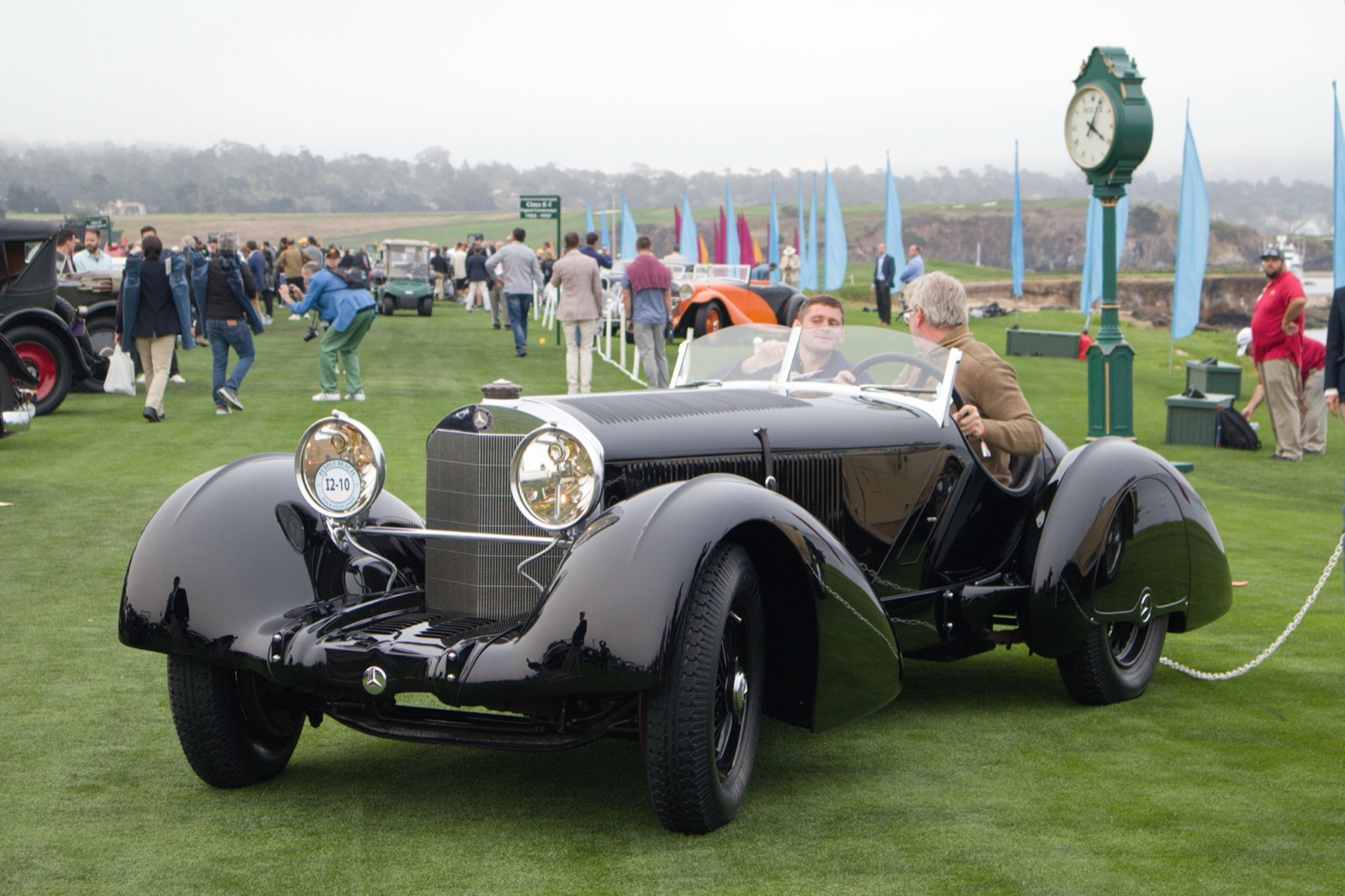
Chassis 36038 was shipped to Japan as a bare chassis in February 1930, came back unsold, and went through the Milan dealer Carlo Saporiti to Antonio Maino with a Touring spyder body; it raced, the 1931 Mille Miglia included, until Count Carlo Felice Trossi bought it in June 1933, by The Classic Car Trust's account of the restorer Paul Russell's research. Motor Sport's report of the 1931 race says Strazza had agreed to drive Maino's Mercedes with its owner. Its black body was completed in 1934. The Musée des Arts Décoratifs' 2011 exhibition text (as published by Art Blart) credits it to the coachbuilder Willy White, to a design suggested by Trossi; The Classic Car Trust says no one knows for certain who designed it. Ralph Lauren has owned it since the 1980s, and it won Best of Show at the Pebble Beach Concours d'Elegance in 1993. The model maker CMC named its 1:18 model of the car the "Black Prince".
36045, the Milligen SSK
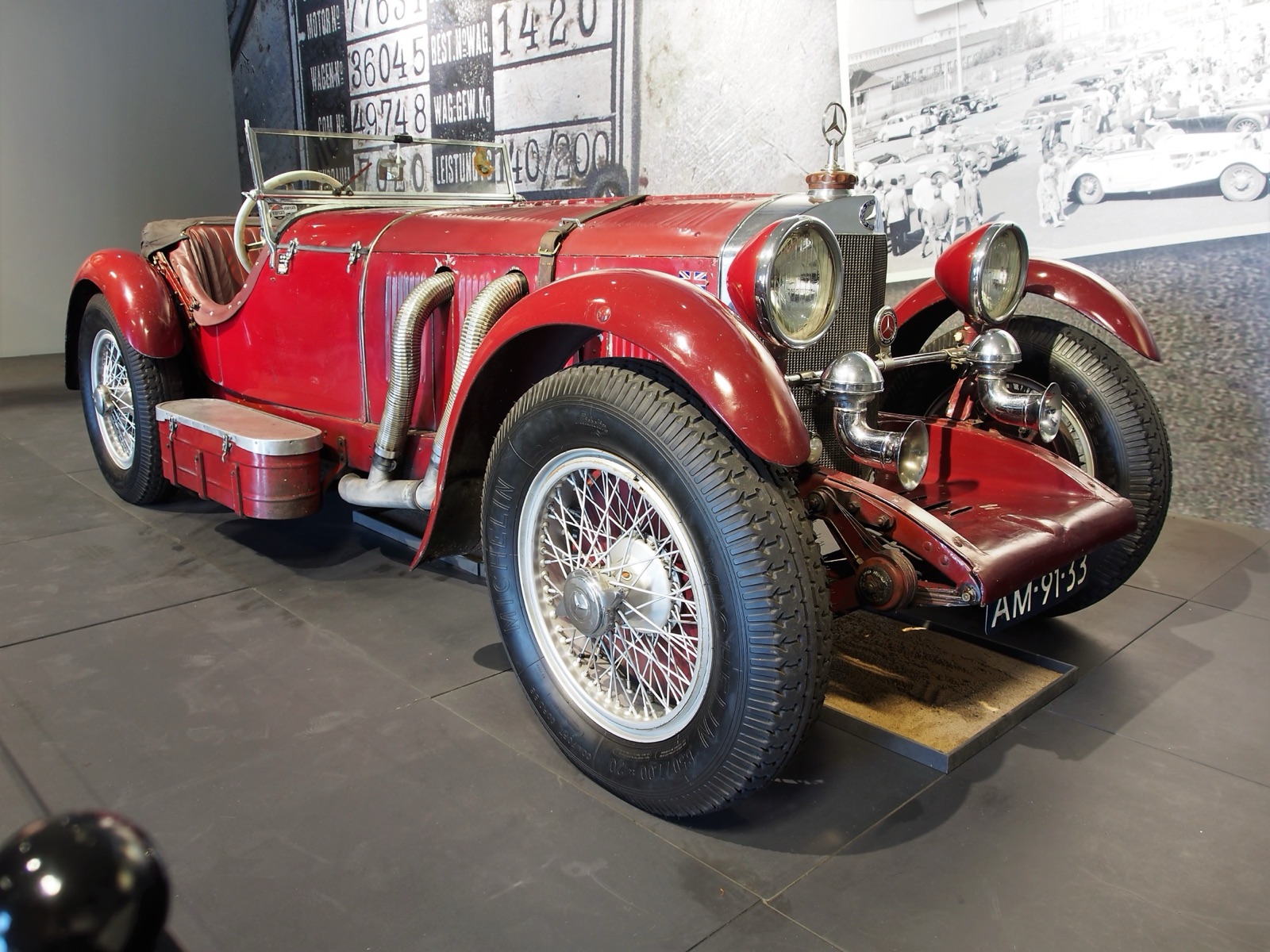
Chassis 36045 was supplied through Car Mart of London to Major John Coats, of the J. & P. Coats cotton firm, unbodied; the Carlton Carriage Company of Willesden built its body, and it was first registered GC 96 on 11 January 1930, by Bonhams' 2004 catalogue. After nine further owners, George Milligen of Stalham, Norfolk, registered it on 10 June 1941, having paid £400. In 1953–54 he rebuilt its engine with parts from a second 38/250, an SS he called "the Black Car"; the block it now has, 76110, is presumed to come from that car, while the original engine was 77631. Milligen kept it until it was sold in 2004.
36040, Eugen Winter's SSK
Chassis 36040 was delivered new to Germany with a Sindelfingen factory body and was first owned by Dr Eugen Winter of Chemnitz, who raced it and emigrated to the United States in 1933, by RM Sotheby's 2024 catalogue. It was in New York by 1939, in Chicago with Edward Trager until 1979, and joined the Aumann Collection in December 1994 for 565,000 Deutsche Mark.
36246, Carlos Zatuszek's Rennwagen
Chassis 36246 was built in 1928 as a Rennwagen, the competition version, and delivered to Argentina, where Julio Berndt and Carlos Zatuszek entered it in the 1929 500 Miles of Argentina; it raced in South America until 1958, by the Concours of Elegance's 2026 report. Reifen-Wagner restored it in 1995–96 for Rolf Meyer's collection, which sold it at auction in Paris, and in 2026, at its first event in the UK, it won Best in Show at Hampton Court Palace.
How much is a Mercedes-Benz SSK worth?
Mercedes-Benz SSKs with documented histories have sold at public auction for £4,181,500 and €1,580,000: Bonhams sold the Milligen car, chassis 36045, for £4,181,500 including premium on 3 September 2004, and RM Sotheby's sold chassis 36040 for €1,580,000 on 23 November 2024. Cars RM Sotheby's catalogues as recreations or replicas have sold for between US$9,075 and £1,210,000.
| Sale | Car | Result |
|---|---|---|
| Bonhams, Goodwood Revival, 3 September 2004, lot 144 | 1929 SSK, chassis 36045, Carlton body (the Milligen car) | £4,181,500 including premium |
| RM Sotheby's, Munich, 23 November 2024, lot 159 | 1929 710 SSK Sports/2 by Sindelfingen, chassis 36040 | €1,580,000 |
| RM Sotheby's, Automobiles of London, 2007, lot 238 | "1928 Mercedes-Benz 710 SSK Sports/2 Recreation", from Bernie Ecclestone | £1,210,000 |
| RM Sotheby's, Aalholm collection, 12 August 2012, lot 113 | "c. 1927 Mercedes-Benz 710 SSK Recreation" | DKK 1,456,000 |
| RM Sotheby's, Auburn Fall 2016, lot 2084 | "1929 Fiberfab Mercedes-Benz SSK", a Fiberfab factory-built replica | US$9,075 |
Mercedes-Benz SSK replicas and recreations
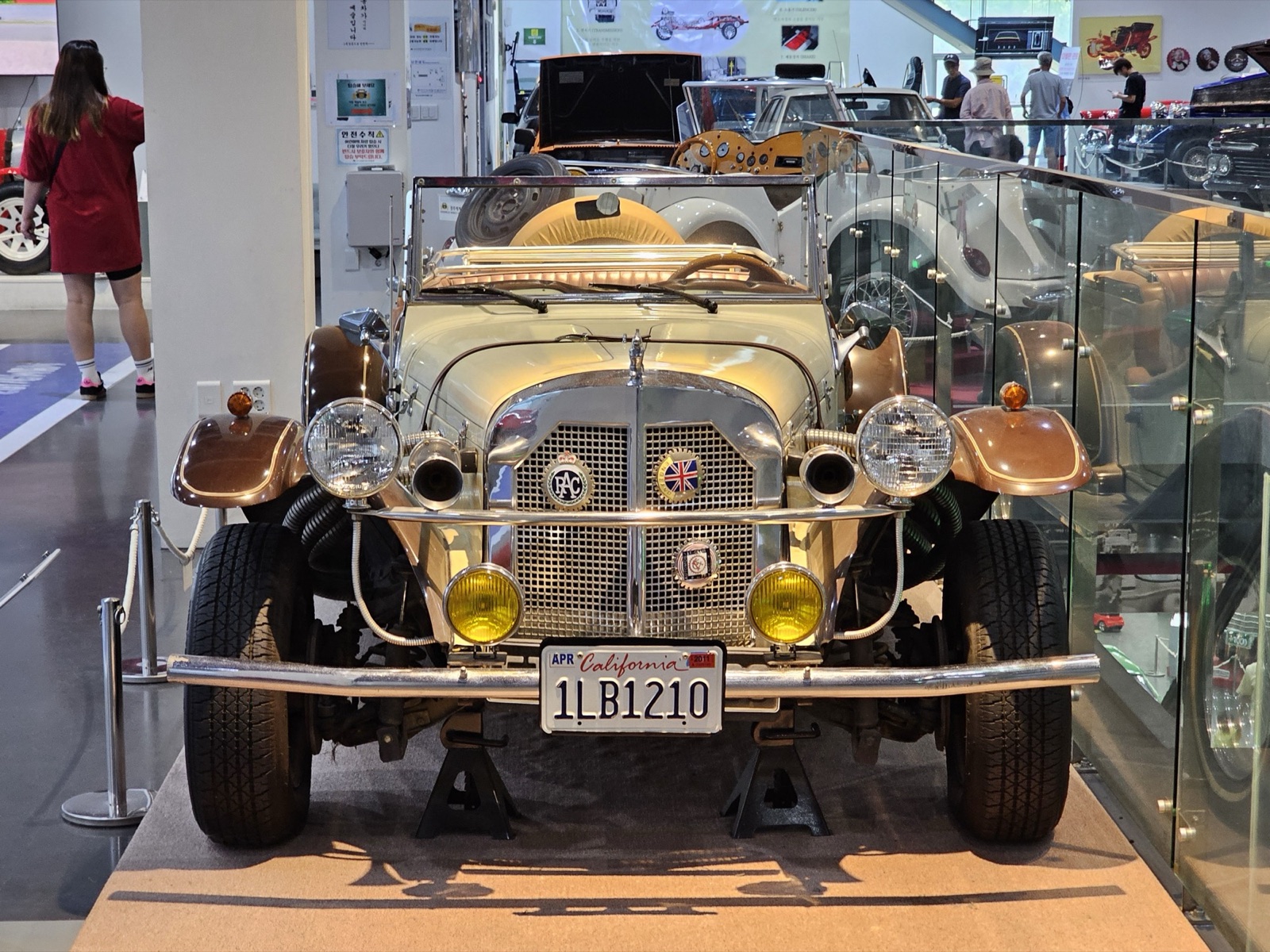
Mercedes-Benz SSK replicas range from cars built round genuine parts to factory-built replicas with Ford engines. RM Sotheby's wrote in 2012 that "the construction of replicas has become almost a cottage industry", many of them with "parts scavenged from original cars". The Aalholm car it sold that year had a Mercedes-Benz Type 400 engine in a shortened Type 400 chassis. The SSK that RM Sotheby's sold from Bernie Ecclestone's collection in 2007 is now listed on its lot page as a recreation. At the other end, the Fiberfab SSK RM sold in 2016 had a Ford four-cylinder engine. RM Sotheby's 2024 catalogue says the engine block and gearbox of 36040 are original-type SSK parts, but its chassis "is believed to have been replaced".
Mercedes-Benz SSK rivals
The Mercedes-Benz SSK's rivals were Bentley's 4½-litre and Speed Six, Bugatti's Type 35 and Type 51 and Alfa Romeo's 6C 1750 and 8C 2300. Johnson (1952) counted only three international races where the Mercedes and Bentley teams met, the 1929 Tourist Trophy, the 1930 Irish Grand Prix and Le Mans in 1930; Mercedes won the first two and Bentley the third. Bugattis beat the SSK at Monaco in 1929 and won the 1929 German Grand Prix, where Momberger's SSK was third behind two of them in the database's results. By 1932 Caracciola himself was beating SSKs in an Alfa Romeo 8C 2300: Albert Broschek's SSK was second to him in the Lwów Grand Prix that June, 14 min 28 sec behind, in the database.
Questions and answers
What is the difference between the Mercedes-Benz SS and SSK?
The SSK is an SS engine in a Type S frame shortened by 450 mm, to a 2,950 mm wheelbase, with the lower Type S radiator. The SS kept the 3,400 mm wheelbase and was meant more as a fast touring car (Mercedes-Benz Classic).
Did Ferdinand Porsche design the Mercedes-Benz SSK?
The SSK was developed in 1928 from the Type S, while Porsche shared Daimler-Benz's design office with Hans Nibel, and the Porsche Newsroom lists it among the cars of his Daimler years. Porsche left at the end of 1928, and the SSKL was developed under Nibel (Mercedes-Benz Classic).
Was the Mercedes-Benz SSK called the White Elephant?
Mercedes-Benz Classic's biography of Rudolf Caracciola calls the S-series cars, the SSK among them, the "White Elephants", without saying why. In period they were "the great white Mercedes" (Bonhams, 2004), Motor Sport's 1931 Mille Miglia report called Caracciola's car a "giant white Mercedes", and the largest works supercharger was the "elephant" (Mercedes-Benz Classic).
Who owns the Count Trossi Mercedes-Benz SSK?
Ralph Lauren has owned chassis 36038, the black "Count Trossi" roadster, since the 1980s, by The Classic Car Trust's account. It won Best of Show at Pebble Beach in 1993.
How much did a Mercedes-Benz SSK cost new?
Mercedes-Benz Classic gives RM 29,000 for the chassis and RM 33,000 for the sports two-seater.
What replaced the Mercedes-Benz SSK in racing?
Mercedes-Benz returned to Grand Prix racing in 1934 with the W25, after the streamlined SSKLs of 1932 and 1933 (Mercedes-Benz Classic).
Sources
- Mercedes-Benz Classic, "SSK 27/140/200 hp, from 1929: SSK 27/160/200 hp (W 06 II), 1928–1932", specification, read 30 October 2026: catalogue figures, 33 built, prices.
- Mercedes-Benz Classic, "Mercedes-Benz SSK, 1928–1931", model text and technical data, read 30 October 2026: the shortened frame, the works car's figures, the 1928 hill climbs, sales from October 1928.
- Mercedes-Benz Classic, "S, SS, SSK, SSKL, 1927–1933", read 30 October 2026: the name, the "elephant" supercharger, 20 built in 1929, the caveat on production figures.
- Mercedes-Benz Classic, "Mercedes-Benz SSKL, 1931", model text and technical data, read 30 October 2026: the SSKL's development, four built, the 1931–32 seasons.
- Mercedes-Benz Classic, "Mercedes-Benz SSKL streamliner, 1932–1933", read 30 October 2026: the 1932 Avus win, Laven, Merz in 1933.
- Mercedes-Benz Classic, model histories of the Model K, Type S and SS, read 30 October 2026: the predecessors.
- Mercedes-Benz Classic, chronicle entries "Ferdinand Porsche succeeds Paul Daimler" (30 April 1923) and "Ferdinand Porsche goes, Hans Nibel stays" (1 January 1929).
- Mercedes-Benz Classic, biographies of Rudolf Caracciola, Hans Stuck and Earl Howe; race pages for the 1930 Mille Miglia, the 1931 Avus race and the 1932 Stelvio hill climb, read 30 October 2026.
- Mercedes-Benz Classic, "Mercedes-Benz Grand-Prix racing car W 25, 1934", read 30 October 2026: the car that followed.
- Porsche Newsroom, "The Porsche story 3: 1928, the moment of transformation", read 30 October 2026: Porsche's Daimler cars and his departure.
- Motor Sport, "The first Grand Prix of Monaco", May 1929: the 1929 Monaco race.
- Motor Sport, "The Grand Prix d'Endurance", July 1930: Le Mans 1930.
- Motor Sport, "The second day's race" (Irish Grand Prix), August 1930, and "Shelsley Walsh", August 1930.
- Motor Sport, "The R.A.C. Tourist Trophy Race", September 1930: the disqualification.
- Motor Sport, "Mercedes wins '1,000 Miles'", May 1931: the 1931 Mille Miglia.
- R. H. Johnson, "The 38/250 Supercharged Super Sports Mercedes-Benz", Motor Sport, February 1952: the supercharger, the "Elephant", bodies, the Bentley meetings, Birkin's Full Throttle.
- Bill Boddy, "Re-acquaintance with the 36/220", Motor Sport, September 1975: the 1929 TT car, the 1930 TT ban.
- C. Walsh, "We stand corrected", letter, Motor Sport, April 1976: the Le Mans and Phoenix Park cars, the scrutineer.
- Doug Nye, "Taking flight in a SSK", Motor Sport, August 2010: driving an SSK, the supercharger, the 1930 and 1931 Mille Miglia.
- Graham Keilloh, "Legendary Mercedes racing cars to appear at Pebble Beach", Motor Sport, 9 August 2019: the streamliner reconstruction.
- Motor Sport database, race results: Monaco 1929, German GP 1929, Le Mans 1930, Irish GP 1930, Mille Miglia 1931, Eifelrennen 1931, German GP 1931, Avus 1931, Masaryk GP 1931, Avus 1932, Lwów GP 1932, read 30 October 2026.
- Racing Sports Cars, "Tourist Trophy 1929", results, read 30 October 2026: the winning car listed as an SS.
- Bentley Motors, "1929 Team Blower UU5872", heritage collection, read 30 October 2026: the Le Mans Mercedes called an SSK.
- Bonhams, The Goodwood Revival, 3 September 2004, lot 144: chassis 36045, its history, Phil Hill's account, the price.
- Bonhams, Quail Lodge, 13 August 2010, lot 640 (1930 SS, chassis 36257): production estimates, aero-engine supercharging.
- RM Sotheby's, lot pages: Munich, 23 November 2024, lot 159 (chassis 36040); Automobiles of London 2007, lot 238; Aalholm, 12 August 2012, lot 113; Auburn Fall 2016, lot 2084, read 30 October 2026.
- The Classic Car Trust, "The mystery of the Mercedes Benz SSK 'Count Trossi'", 27 November 2020: chassis 36038, 42 SSKs.
- Musée des Arts Décoratifs, exhibition text for "The Art of the Automobile: Masterpieces of the Ralph Lauren Collection", 2011, published by Art Blart, 26 August 2011: Willy White and Trossi's design.
- Pebble Beach Concours d'Elegance, "Past Best of Show winners", read 22 October 2026: the 1993 award.
- Concours of Elegance, "1928 Mercedes-Benz SSK Roadster takes Best in Show at Concours of Elegance 2026", read 22 October 2026: chassis 36246.
- CMC, "CMC Mercedes SSK Trossi, 1932 'Black Prince'", product page, read 30 October 2026: the "Black Prince" name.