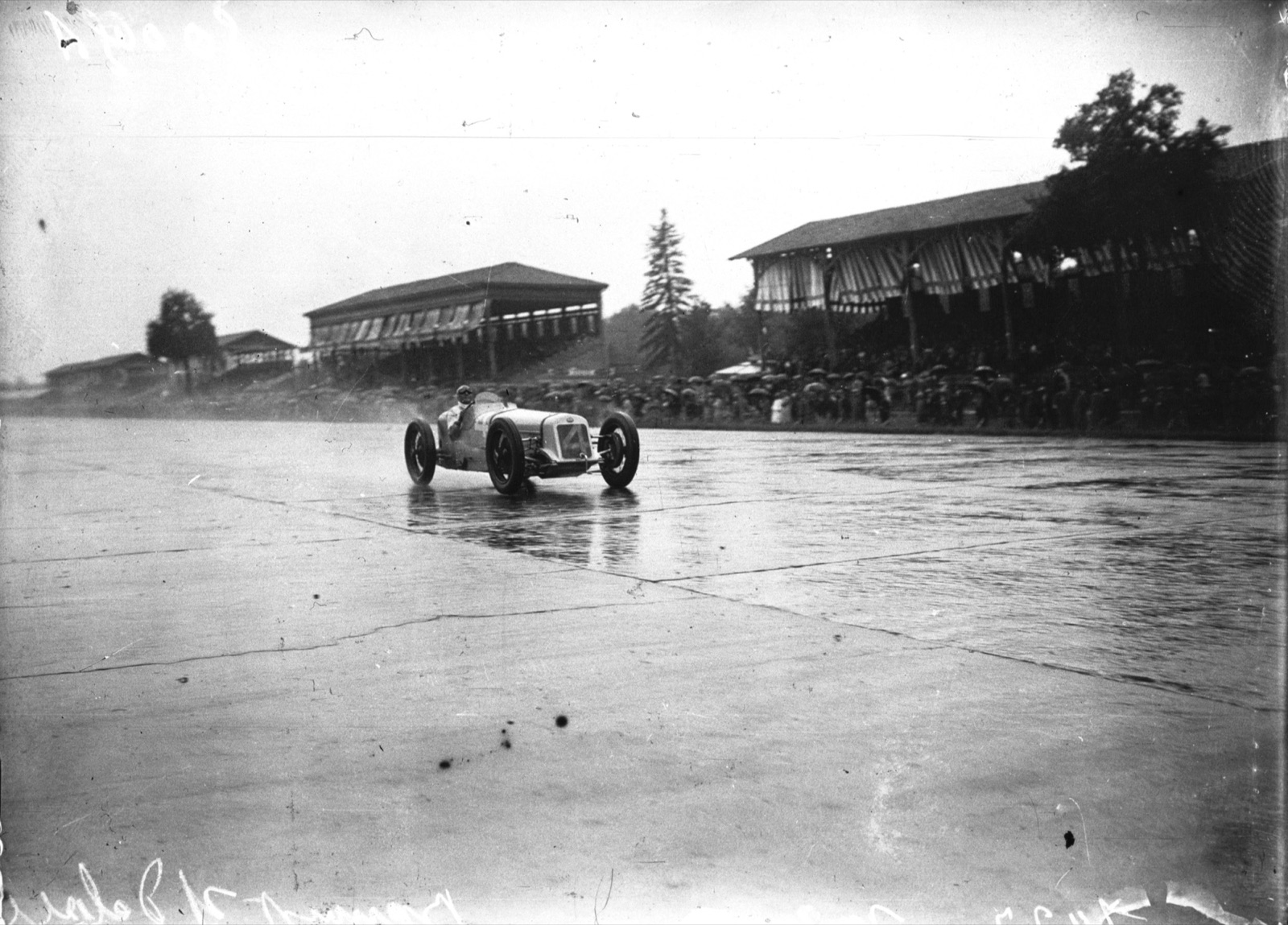
Albert Lory designed the Delage 15 S8, a 1½-litre supercharged straight-eight Grand Prix car, in 1926; its 1,488 cc twin-cam engine gave 170 bhp at 8,000 rpm. In 1927 Robert Benoist won the French, Spanish, European and British Grands Prix in it, and the 15 S8 won the World Manufacturers' Championship for its maker, which then withdrew from racing. Nine years later Richard Seaman and Giulio Ramponi rebuilt Earl Howe's car and beat the new ERAs with it, and all four 1927 team cars survive.
Who designed the Delage 15 S8?
Albert Lory designed the Delage 15 S8 for the 1½-litre Grand Prix formula of 1926 and 1927. Louis Delage had raced Grand Prix cars since before the First World War, and Lory had taken over from Charles Planchon, who designed the company's 2-litre V12 of 1923, according to RM Sotheby's catalogue for chassis 4, sold at Monterey in 2021.
The 1½-litre formula
The new regulations limited engines to 1,500 cc, supercharged or not, and set a minimum weight of 600 kg, raised to 700 kg for 1927; bodies had to be at least 80 cm wide, 85 cm from 1927, as Bill Boddy set out in Motor Sport's account of the 1927 season in July 1991. Riding mechanics had not been carried since 1925, so a designer could offset the drive line and sit the driver low beside it. The French Grand Prix of 1926 at Miramas was a walk-over for Bugatti, the only maker ready, wrote Laurence Pomeroy in Motor Sport's "Racing Car Evolution" series in March 1943.
From Planchon's V12 to Lory's straight-eight
Planchon's V12, the 2LCV, was supercharged for 1925, gave nearly 200 bhp and won the French and Spanish Grands Prix that year (Motor Sport, 1991). Pomeroy wrote that Lory's straight-eight was "a direct development from the previous year's 2-litre cars so far as the engine was concerned": a single iron casting for block and head, the same layout and drive of the valves, the same crankshaft and connecting rod details. Motor Sport's 1991 account names a M. Gauthier as Lory's assistant. The cost was large. Pomeroy put the leading makers' spending in these years at £50,000 to £100,000 a year each on "entirely special racing cars", and the 1991 account put Louis Delage's programme at about £800,000 in that year's money.
Delage 15 S8 engine and chassis
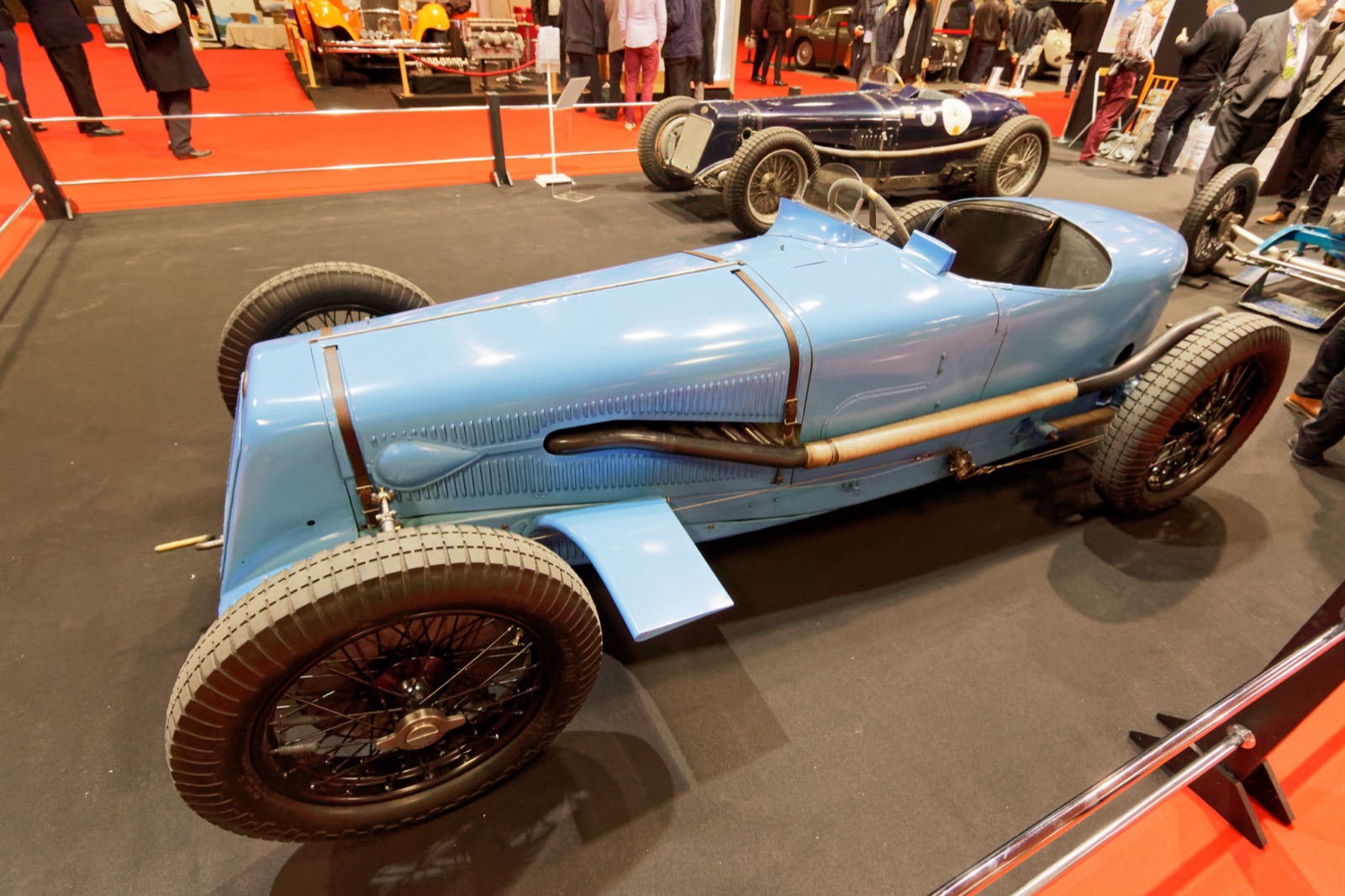
The Delage 15 S8 had a 1,488 cc straight-eight with twin overhead camshafts, a Roots supercharger and roller bearings almost throughout, in a light and flexible channel-section frame with beam axles and a five-speed gearbox.
A straight-eight on 62 ball and roller races
Bore and stroke were 55.8 × 76 mm, for a displacement of 1,488 cc. The two camshafts were driven by a train of gears and worked two valves per cylinder at an included angle of 100 degrees, with triple valve springs and dry-sump lubrication (Motor Sport, 1991). Pomeroy counted the bearings: the crankshaft ran on ten roller bearings with eight roller big-ends, each camshaft on eight more, and with the blower and magneto the engine had "a grand total of 62 races of one sort or the other". The 1991 account gives nine crankshaft roller bearings and the same total of 62. Pomeroy added 21 gears, 48 valve springs and 32 piston rings.
The result was 170 bhp at 8,000 rpm in 1927, or 112 bhp per litre, against 68 bhp per litre for the Alfa Romeo Monoposto five years later. Pomeroy judged that "for a decade no one was able to produce a more powerful engine of its size". The engine could run up to 8,000 rpm and hold 7,000 rpm for long periods, with a maximum piston speed of 4,500 ft a minute.
Chassis, brakes and gearbox
The engine and its five-speed gearbox made a long unit, 4 ft 7 in from the front to the rear universal joint, and the engine and transmission were set at an angle so that the driver sat low, the top of the scuttle 2 ft 11 in from the ground (Motor Sport, 1991). Frontal area was about 9.5 sq ft, against just under 11 sq ft for a 1924 Sunbeam (Pomeroy). The frame was channel-section steel, with a beam front axle and half-elliptic springs, underslung only at the back. Pomeroy called it "about the weakest frame that can ever have been put into any racing model". The brakes were cable-operated, applied through a friction servo driven from the back of the gearbox.
Delage 15 S8 specifications and performance
The table gives the 1927 works car as Motor Sport's writers described it, with the 1936 Seaman car where it differed.
| Item | 1927 works car | Seaman car, 1936 |
|---|---|---|
| Engine | Straight-eight, twin overhead camshafts, two valves per cylinder | Same, valve timing reset, boost raised |
| Bore × stroke | 55.8 × 76 mm | Same |
| Capacity | 1,488 cc | Same |
| Supercharging | One Roots blower at the front, 7 lb/sq in (two blowers in 1926) | Boost raised by 4½ lb/sq in |
| Power | 170 bhp at 8,000 rpm | 185 bhp at 7,500 rpm |
| Gearbox | Five-speed | Five-speed, from a 2-litre V12 Grand Prix car |
| Brakes | Cable, with friction servo | Hydraulic |
| Suspension | Beam axles, half-elliptic springs | Same, front springs moved outside the frame |
| Weight | 15.8 cwt unladen, 19.3 cwt on the start line | About 750 kg (Motor Sport, 1995); just over 14 cwt (Motor Sport, 1936) |
| Top speed | Nearly 130 mph at 7,500 rpm in fourth gear | 130 mph over a timed kilometre at Pescara |
| Fuel | Petrol, benzole, alcohol and ether; about 10 mpg at Brooklands | About 9 mpg; enough carried to run 200 miles without a stop |
How fast was the Delage 15 S8?
The Delage 15 S8 reached nearly 130 mph at 7,500 rpm in fourth of its five gears, according to Motor Sport in 1991, whose writer had also seen a theoretical top speed of 162 mph quoted. Pomeroy put the 1926 and 1927 cars at about 130 mph, a little slower than the 2-litre cars before them on fast circuits. In practice for the 1927 British Grand Prix the 15 S8s lapped the Brooklands outer circuit at 120 mph, and in the race Benoist was timed at 102.61 mph over a kilometre at a slow part of the track. W. B. Scott lapped Brooklands at 122.37 mph in a 15 S8 in 1931 (Motor Sport, 1991), and Earl Howe set the Class F outer-circuit lap record in one at 127.05 mph, according to Motor Sport's profile of Earl Howe, June 1998.
Delage 15 S8 versions
There were three main versions of the Delage 15 S8: the 1926 car with two superchargers and its exhaust on the driver's side, the 1927 car rebuilt with one supercharger and the exhaust moved away, and the two cars with independent front suspension built for Prince Chula in the later 1930s.
The 1926 car and its exhaust
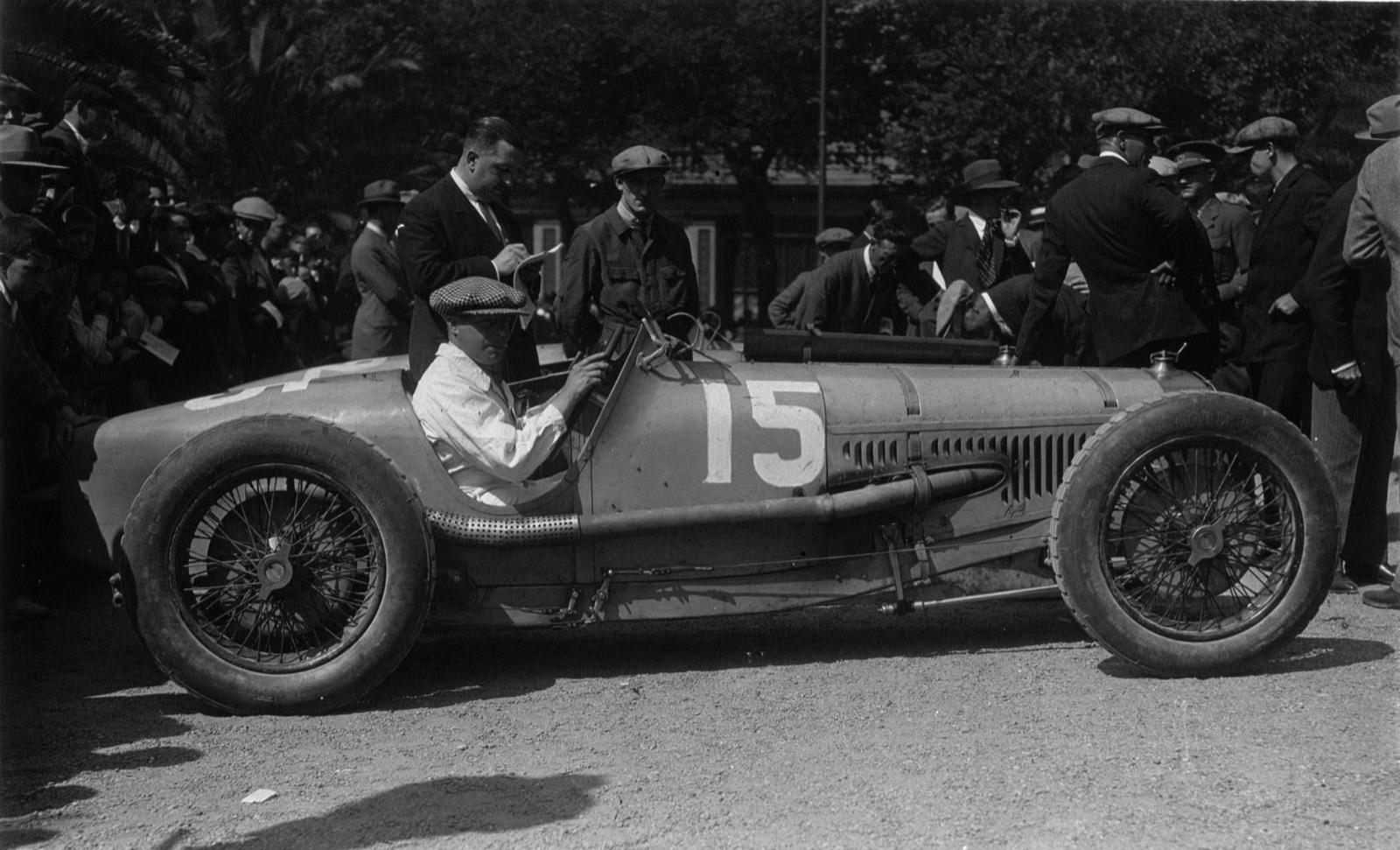
In 1926 the two superchargers sat in the middle of the crankcase on the near side, driven by a long shaft inside it, each feeding four cylinders. The exhaust system had to run along the off side, where the driver sat, and "the offtake pipe of No. 8 cylinder formed a tube of red-hot metal but a few inches from the pedals", Pomeroy wrote. In the Spanish sun at San Sebastián every 15 S8 had to stop at one time or another to let its driver recover.
The 1927 rebuild
For 1927 Lory turned the cylinder block round and moved the exhaust to the near side. The twin blowers would no longer fit, so he made one Roots supercharger with the same rotor forms, twice as long, mounted high at the front of the engine, for a boost of 7 lb/sq in. He also enlarged the camshafts, stiffened the steering connections and added more than half a hundredweight (Motor Sport, 1943 and 1991). RM Sotheby's catalogue adds that the 1927 team cars used many parts of the 1926 cars and that the engine was moved four inches to the left to lower the driver further.
Chula's cars with independent front suspension
After Seaman's 1936 season Prince Chula Chakrabongse bought 15 S8s and spares and had Lory design two new chassis with independent front suspension. The new frames were box-section where the originals were channel-section, and they rose from the rear spring anchor without the originals' 24 inches of level frame, Alan Burnard explained in his history of the cars in Motor Sport, June 1964. Damien Smith, in Motor Sport in January 2023, says Rubery Owen built them and that the first, numbered 5 and known as WMG 101, used the best parts of chassis 4 and the engine of chassis 2. Rob Walker, who later owned the other, wrote in Motor Sport in November 1951 that "it was always said" the extra strengthening "made the car too heavy and it would never again go as fast as it did with Seaman".
Delage 15 S8 racing history
The Delage 15 S8 won the 1926 British Grand Prix and every race the works team entered in 1927, then raced for privateers in Grands Prix, voiturette races and Brooklands events until the early 1950s. In 1926 and 1927 the works 15 S8s started seven races and won six of them, finishing first, second and third in two.
Second on debut, first at Brooklands
The 15 S8 first raced in the European Grand Prix at Lasarte, San Sebastián, on 18 July 1926, where Jules Goux won in a Bugatti Type 39A and Edmond Bourlier and Robert Sénéchal shared the second-placed 15 S8, according to the Motor Sport database. Pomeroy thought the 15 S8s "vastly superior in speed" to the Bugatti competition and that the burnt feet cost them the victory. A week later the team ran its old 2-litre V12s in the Spanish Grand Prix on the same circuit. At Brooklands on 7 August, in the first British Grand Prix, Sénéchal and Louis Wagner won in a 15 S8 shared between them, and Benoist and André Dubonnet were third. Only Bugatti ran in the Italian Grand Prix that autumn, and won the season's championship (Pomeroy).
Benoist's unbeaten season
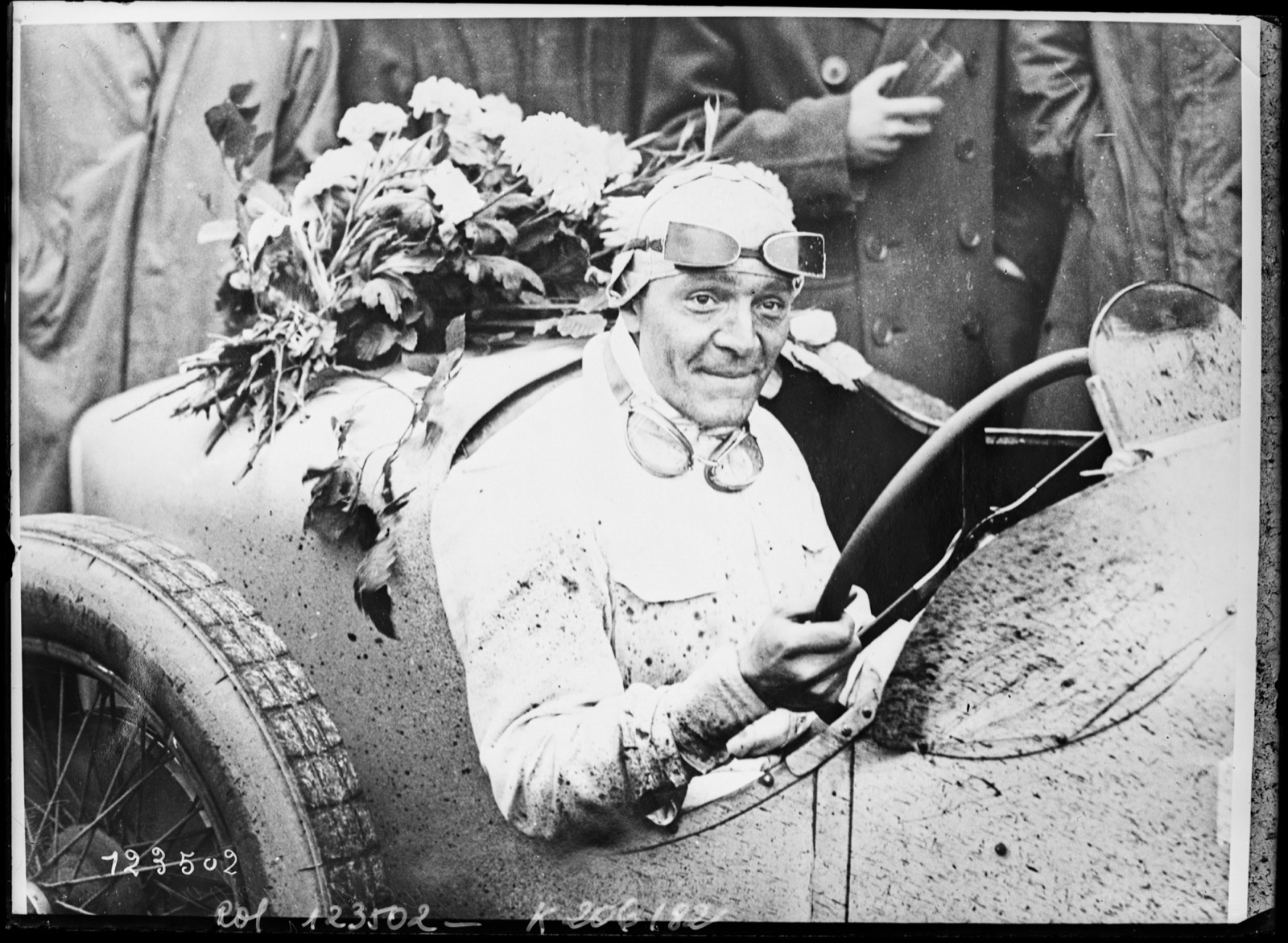
In 1927 Benoist won the Grand Prix de l'Ouverture and then the four championship Grands Prix, five races in a row, and the team's only retirement of the year was André Morel's in Spain; the race details below are from Motor Sport's 1991 account unless another source is named. The 15 S8s covered some 3,600 racing miles that season by the same count.
Grand Prix de l'Ouverture
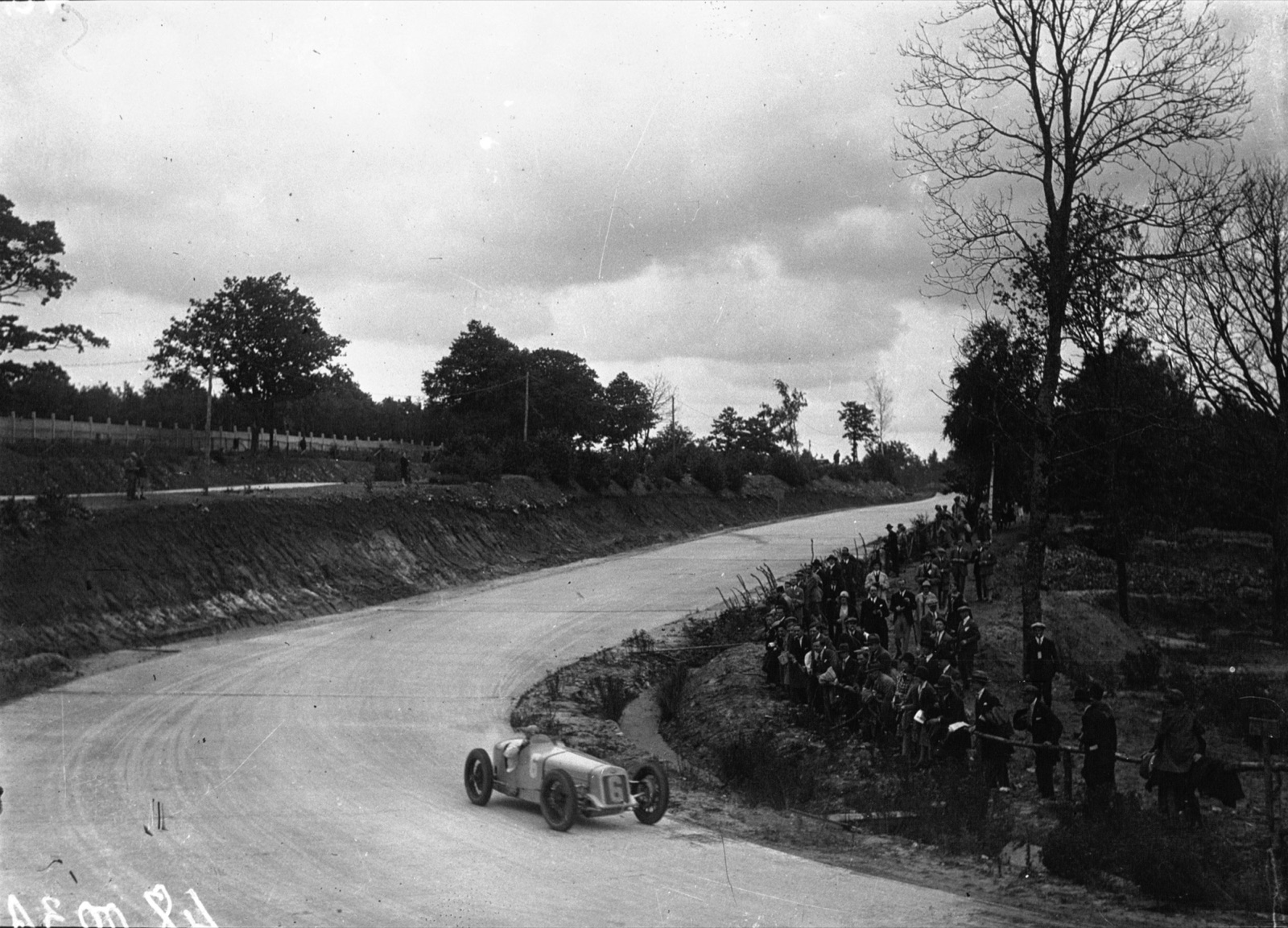
The season opened at Montlhéry in March with the Grand Prix de l'Ouverture, a 155-mile race for 2-litre cars. Albert Divo's 1½-litre Talbot did not start, and in the rain Benoist's lone 15 S8 finished two laps ahead of a 1½-litre Bugatti.
French Grand Prix
Bugatti withdrew from the French Grand Prix at Montlhéry on 3 July, leaving the 15 S8s against the Talbots. Divo's Talbot led Benoist at first, Benoist went ahead after four laps, and when the last Talbot retired the 15 S8s ran first, second and third: Benoist, Bourlier and Morel. Benoist averaged 77.24 mph for 372.7 miles on a fuel of petrol, benzole, alcohol and ether.
Spanish Grand Prix
At Lasarte on 31 July Emilio Materassi's Bugatti led Benoist by as much as 3 min 30 sec, then hit a wall nine laps from the end. Benoist spun in the dust, continued, and won at 80.5 mph for 430 miles from Count Conelli's Bugatti, with Bourlier third, and set a lap record of 85.41 mph.
European Grand Prix at Monza, Italy
Louis Delage at first meant to miss the Italian Grand Prix at Monza on 4 September, which was also that year's European Grand Prix, but let Benoist take one car. Six cars started in heavy rain, Benoist's against two Miller-engined Marmon Specials, a Duesenberg and two OMs, and he won at 90.04 mph for 311 miles with a best lap of 94.31 mph, then declined to start the 50 km Milan Grand Prix the same day.
British Grand Prix at Brooklands
Eleven cars started the 325-mile British Grand Prix at Brooklands on 1 October 1927, in drizzling rain: three Delage 15 S8s, six Bugattis and two Thomas Specials. Motor Sport's report in October 1927 said the race "continued monotonously" and credited "the superb reliability of the Delage team, none of whom suffered any involuntary stops throughout". Divo and Bourlier led for long spells, and Benoist, "evidently according to plan", took the lead in the last laps and won at 85.59 mph, with Bourlier second, Divo third and Louis Chiron's Bugatti fourth. The 15 S8s ran at 6,800 rpm instead of their usual 7,500 and used about 10 mpg. Delage's London concessionaires, J. Smith & Co., had hung an advertising banner across the bridge over the Finishing Straight, to help sell the new 15.7 hp and 31 hp production Delages at the Olympia show later that month (Motor Sport, 1991).
| Race | Date | Winner | 15 S8 results |
|---|---|---|---|
| European Grand Prix, Lasarte | 18 July 1926 | Goux (Bugatti) | 2nd Bourlier/Sénéchal; 4th Morel/Bourlier/Wagner; Benoist/Sénéchal not classified |
| British Grand Prix, Brooklands | 7 August 1926 | Sénéchal/Wagner (15 S8) | 1st Sénéchal/Wagner; 3rd Benoist/Dubonnet; Wagner retired (engine) |
| French Grand Prix, Montlhéry | 3 July 1927 | Benoist (15 S8) | 1st Benoist; 2nd Bourlier; 3rd Morel |
| Spanish Grand Prix, Lasarte | 31 July 1927 | Benoist (15 S8) | 1st Benoist; 3rd Bourlier; Morel retired |
| Italian and European Grand Prix, Monza | 4 September 1927 | Benoist (15 S8) | 1st Benoist (the only 15 S8 entered) |
| British Grand Prix, Brooklands | 1 October 1927 | Benoist (15 S8) | 1st Benoist; 2nd Bourlier; 3rd Divo |
The Motor Sport database's account of the 1927 World Championship records that the four wins "clinch[ed] the constructors' world championship for Delage" and that the works team withdrew from the sport at the end of the year.
Chiron, Campbell and Earl Howe: the privateer years
After the works team withdrew, the cars were sold to private owners: Louis Chiron and Robert Sénéchal in France, and Malcolm Campbell and then Earl Howe in Britain.
Louis Chiron at Indianapolis
Chiron bought a car from the factory and finished seventh in the Indianapolis 500 on 30 May 1929 (Motor Sport database), on the lead lap and the first non-American car home, according to RM Sotheby's. RM Sotheby's and Smith identify it as chassis 4. The newspaper Le Populaire of 28 May 1929 said Chiron had bought it personally from the factory and that it was the car with which Benoist had become champion. Sénéchal then raced chassis 4 to sixth in the 1930 French Grand Prix and fifth in 1931, before selling it to Earl Howe in the winter of 1931, RM Sotheby's says. Burnard's account differs: he wrote in 1964 that the car which went to Indianapolis stayed in America, in the Briggs Cunningham collection, which is chassis 1 (below).
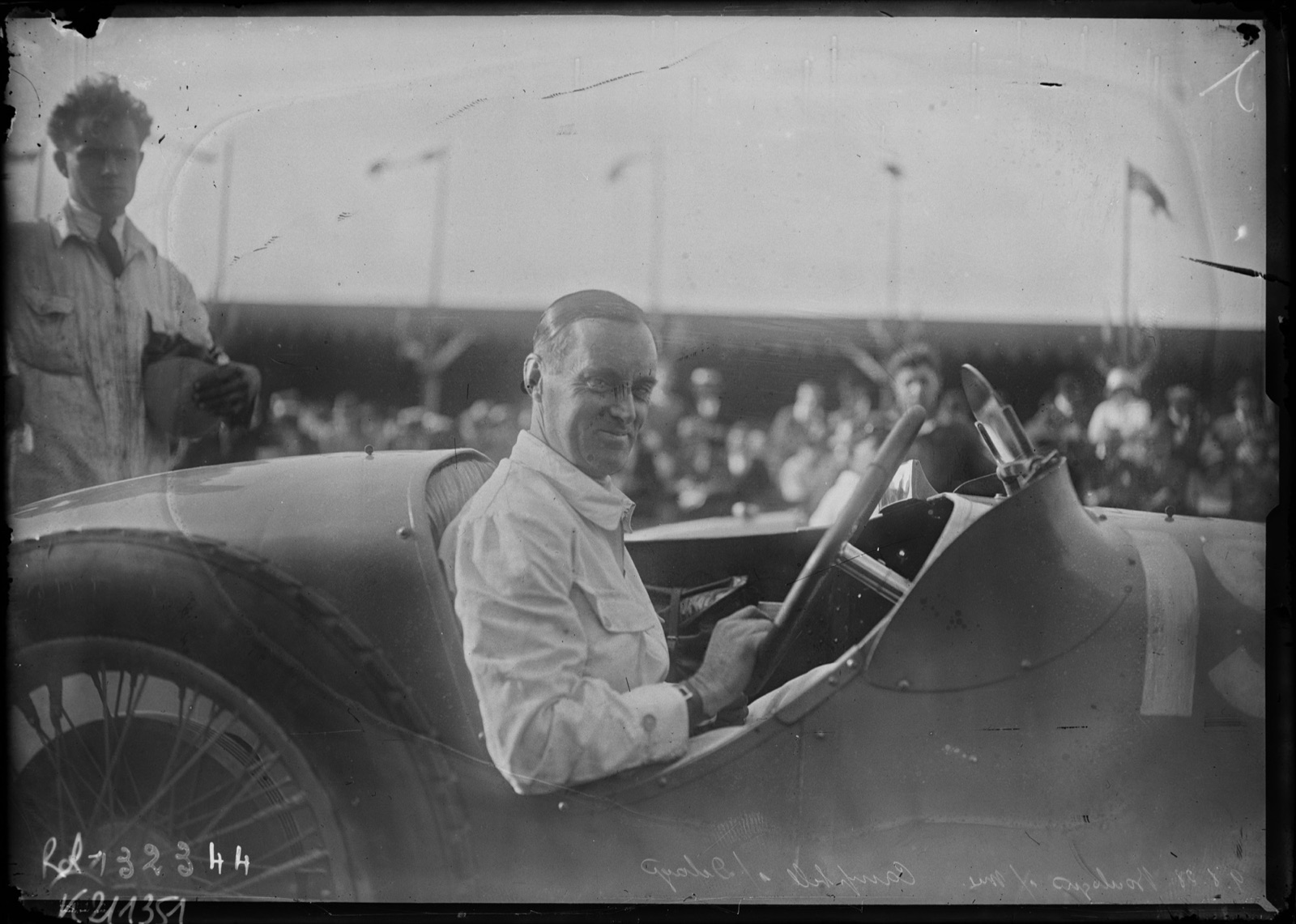
Malcolm Campbell at Brooklands
Campbell won the Junior Car Club's 200 Miles Race at Brooklands on 21 July 1928 in a Delage 15 S8, at 78.34 mph and seventeen miles ahead of the next car, and Motor Sport's August 1928 report found it afterwards "as clean and polished as ever". Burnard wrote in 1964 that Campbell sold one of his 15 S8s to W. B. Scott, from whom Captain J. C. Davis bought it; the Brooklands Museum's history of its car follows the same line from Campbell to Scott.
Earl Howe's 15 S8s
Howe bought Campbell's 15 S8 for 1931; it won the Gold Star Handicap at Brooklands by 2.8 sec from John Cobb's 10½-litre V12 (Motor Sport, 1998). In 1932 it was third in the British Empire Trophy against far bigger cars, fourth at Avus with Howe pumping up fuel pressure by hand for 326 miles, and first of the 1½-litre cars in the Coppa Acerbo, before Howe "wrapped the Delage round a tree" at Monza. His mechanic Percy Thomas told Motor Sport in November 1994 that the chassis had to be cut in half to salvage the wreck, and that he put its engine in the ex-Sénéchal 15 S8 that Howe had also bought. The 1998 profile has the car "resuscitated by buying Campbell's second car and spares" instead; RM Sotheby's says Howe bought chassis 4 from Sénéchal and owned it alongside chassis 3.
At Avus in 1933 the rebuilt car won the 1½-litre class after a race-long duel with Veyron's Bugatti, by Thomas's account; the 1998 profile has it second behind two Bugattis and RM Sotheby's third. The 15 S8 won its class in the Eifel race at the Nürburgring at 64.29 mph over 212 miles (Motor Sport, 1998). In 1935 Howe made fastest practice time at Albi, where RM Sotheby's has him second, and was third in the Prix de Berne behind the ERAs of Seaman and Bira, according to Motor Sport's survey of 1½-litre racing, August 1940. Howe had fitted a four-speed self-changing gearbox with an overdrive that gave four more ratios (Motor Sport, July 1936). For 1936 he had an ERA on order and let the 15 S8 go.
Dick Seaman's Delage 15 S8 and Giulio Ramponi
Richard "Dick" Seaman bought Earl Howe's Delage 15 S8 for 1936 on the advice of Giulio Ramponi, the former Alfa Romeo test driver and riding mechanic, who rebuilt it over the winter, and with it Seaman won the Isle of Man race, the Coppa Acerbo junior race, the Prix de Berne and the JCC 200 Mile Race.
Why Seaman bought a ten-year-old car
Seaman had won at Berne and Brno in 1935 in his own ERA, but decided it would not be fast enough against the new foreign 1½-litre cars, according to "Three in a row" in Motor Sport, November 1995. When he announced that Ramponi had advised him to buy Howe's 1927 car, "He is a misguided optimist" was the usual response, and some just said "He is mad". Seaman himself had been doubtful. Ramponi and a small team spent the winter of 1935 to 1936 on the car in a London mews, according to the Federation of British Historic Vehicle Clubs' report of September 2022.
What Ramponi changed
Ramponi took about 250 lb out of the car: he replaced Howe's E.N.V. pre-selector with a five-speed gearbox from one of the 2-litre V12 Grand Prix cars, and fitted alloy wheels and a lighter fuel tank. He reset the valve timing, which by one account took some three weeks of shimming the tappets, and raised the boost by 4½ lb/sq in. The 1995 article gives 185 bhp at 7,500 rpm for the result and about 750 kg, against about 180 bhp at 6,500 rpm and 738 kg for a B-type ERA. The fuel tank was enlarged so that the car, at about 9 mpg, could run through a race without refuelling. For the Coppa Ciano at Livorno Ramponi fitted the engine from the car Howe had crashed at Monza and claimed 195 bhp for it (Motor Sport, 1995).
The brakes became hydraulic (Lockheed, by the 1995 article's list of the car's suppliers). Burnard found in 1964 that the front springs had been moved outside the frame and the shock absorbers forward of the axle, and that wood filled the frame between the front dumb-irons. Smith calls these "two baulks of timber" fitted to stiffen the chassis. Motor Sport's columnist wrote in "Rumblings", July 1936, that the car now weighed just over 14 cwt, only 56 lb more than the ERAs, and that the engine gave "very little power below 4,500 r.p.m."; Seaman told him the chassis was more whippy than the English cars' and followed the ground "rather in the style of a dachshund". The 1940 survey estimated it at about 200 bhp and added that it used a lower compression ratio than the ERAs and Maseratis.
Seaman's season in the 15 S8
The 15 S8, painted in Seaman's black, began by winning two short 1½-litre races at Donington Park (1940 survey). In the RAC's 200-mile race for 1½-litre cars in the Isle of Man it led Howe's ERA within five laps and won non-stop at 69.76 mph, lapping at 72 mph, according to Motor Sport's preview of the 1937 race; ten ERAs, the four-car works team among them, were among the twenty cars sent to the island, and eighteen started (1940 survey; Motor Sport, May 1937). After four races without a win the 15 S8 "returned to form" at Pescara (1940 survey).
| Race | Result | Detail |
|---|---|---|
| Two 1½-litre races, Donington Park | Won both | The car's first races for Seaman |
| RAC International Light Car Race, Douglas, Isle of Man | 1st | 69.76 mph, non-stop; ten ERAs entered |
| Eifelrennen, Nürburgring | Retired | Led away, then ran off the road on the first lap |
| Grand Prix de Picardie, Péronne | Won heat, crashed in final | Seaman admitted the error |
| Albi | Did not start | After the Péronne crash |
| Coppa Ciano, Livorno | Fell to sixth | Led the first three laps; fuel feed trouble |
| Coppa Acerbo junior race, Pescara | 1st | 77.1 mph, 39¼ sec ahead of Trossi's Maserati |
| Prix de Berne, Bremgarten, 23 August | 1st | Lap record 91.15 mph on lap 3 |
| JCC 200 Mile Race, Donington Park, 29 August | 1st | 69.28 mph, 52 sec ahead of Howe's ERA, no fuel stop |
At Berne it was Seaman's third win in a row in the 1½-litre race, after an MG Magnette in 1934 and an ERA in 1935, and Motor Sport's report in September 1936 called the car "the sensation of the season". The JCC 200 at Donington was open to cars of any size. Howe's works ERA led for long spells but lost 39 sec at its fuel stop on lap 50 with an 8.4 sec lead, as Motor Sport's report of the race timed it, while "the veteran Delage, carrying sufficient fuel for the distance", ran on; behind them Austin Dobson's Alfa Romeo P3 lost a front wheel at about 100 mph. Seaman won £350 for a £15 entry and the André Gold Cup, and later called it his most enjoyable race of 1936 (Motor Sport, 1995).
From the 15 S8 to Mercedes-Benz
Seaman's 1936 season brought him to the notice of the Mercedes-Benz team manager Alfred Neubauer, who signed him for 1937, according to RM Sotheby's and Smith. Seaman drove the Mercedes-Benz W125 that year, won the 1938 German Grand Prix in a W154 on 24 July, and died after crashing in the Belgian Grand Prix at Spa on 25 June 1939 (Motor Sport database).
Who drove the Delage 15 S8?
Robert Benoist was the Delage 15 S8's lead driver, with Edmond Bourlier, André Morel, Albert Divo, Robert Sénéchal and Louis Wagner in the works team; in private hands it was driven by Chiron, Campbell, Earl Howe and Dick Seaman, and after the war by Reg Parnell's customers and Rob Walker's drivers.
| Driver | Years | Best result in the 15 S8 |
|---|---|---|
| Robert Benoist | 1926–27 | Won the French, Spanish, European and British Grands Prix, 1927 |
| Robert Sénéchal | 1926, 1930–31 | Won the British Grand Prix with Wagner, 1926 |
| Louis Wagner | 1926 | Won the British Grand Prix with Sénéchal, 1926 |
| Edmond Bourlier | 1926–27 | Second in the French and British Grands Prix, 1927 |
| André Morel | 1926–27 | Third in the French Grand Prix, 1927 |
| Albert Divo | 1927 | Third in the British Grand Prix, 1927 |
| Louis Chiron | 1929 | Seventh in the Indianapolis 500, 1929 |
| Malcolm Campbell | 1928–30 | Won the JCC 200 Miles Race, Brooklands, 1928 |
| Earl Howe | 1931–35 | Won the 1½-litre class of the Eifel race, 1933 |
| Dick Seaman | 1936 | Won the Isle of Man race, Coppa Acerbo junior race, Prix de Berne and JCC 200 |
| Barry Woodall | 1947–48 | Second in the Ulster Trophy, 1947 |
| Tony Rolt | 1950–51 | Won a Formule Libre race at Boreham, 1951 (ERA engine) |
How many Delage 15 S8s were built?
Four Delage 15 S8s were built for the works team in 1926 and 1927, and two more chassis were made for Prince Chula in the later 1930s, so six cars in all, and all six survive. Burnard wrote in 1964 that "there seems no doubt there were four cars built in 1926/27", and RM Sotheby's describes "a small series" for 1926 whose parts went into the four works cars of 1927.
How the identities became tangled
Chula bought the Seaman car with all its spares and the car Captain Davis had bought from Scott (Burnard, 1964); Smith names these as chassis 4 and chassis 2. Early in the war Reg Parnell bought four frames and all the parts from Chula, and told Burnard "there were no complete cars, only parts thereof". By 1946 or 1947 Parnell had built three 15 S8s: one on a Chula frame for Dick Habershon, one on a Chula frame for Barry Woodall, and one on an original 1927 frame, with beam front axle, for David Hampshire. Woodall's car was second in the 1947 Ulster Trophy behind Bob Gerard's ERA (Motor Sport, 2023). Hampshire raced his at Albi and in the Grand Prix des Nations at Geneva in 1946 (RM Sotheby's).
Which car did Seaman race?
Walker bought both the Habershon and the Hampshire cars. George Monkhouse told him the Hampshire car was "definitely the Seaman chassis, proved by pieces of wood between the front dumb irons" (Walker, 1951), and Burnard reached the same view from the blocked-up holes of the cable brakes and Ramponi's spring mountings. The editor's note to Burnard's 1964 article says the car Seaman bought from Howe had won the British Grand Prix in 1926; Smith and RM Sotheby's call it chassis 4, the car Morel drove to third at Montlhéry in 1927 and Divo to third at Brooklands. RM Sotheby's added a note to its 2021 catalogue that the chassis "was found to be stamped number 2 instead of number 4", while still holding that it was the frame Seaman raced. Parnell had fitted much of engine number 3, from Howe's crashed Monza car, to it (RM Sotheby's).
Where are the Delage 15 S8s now?
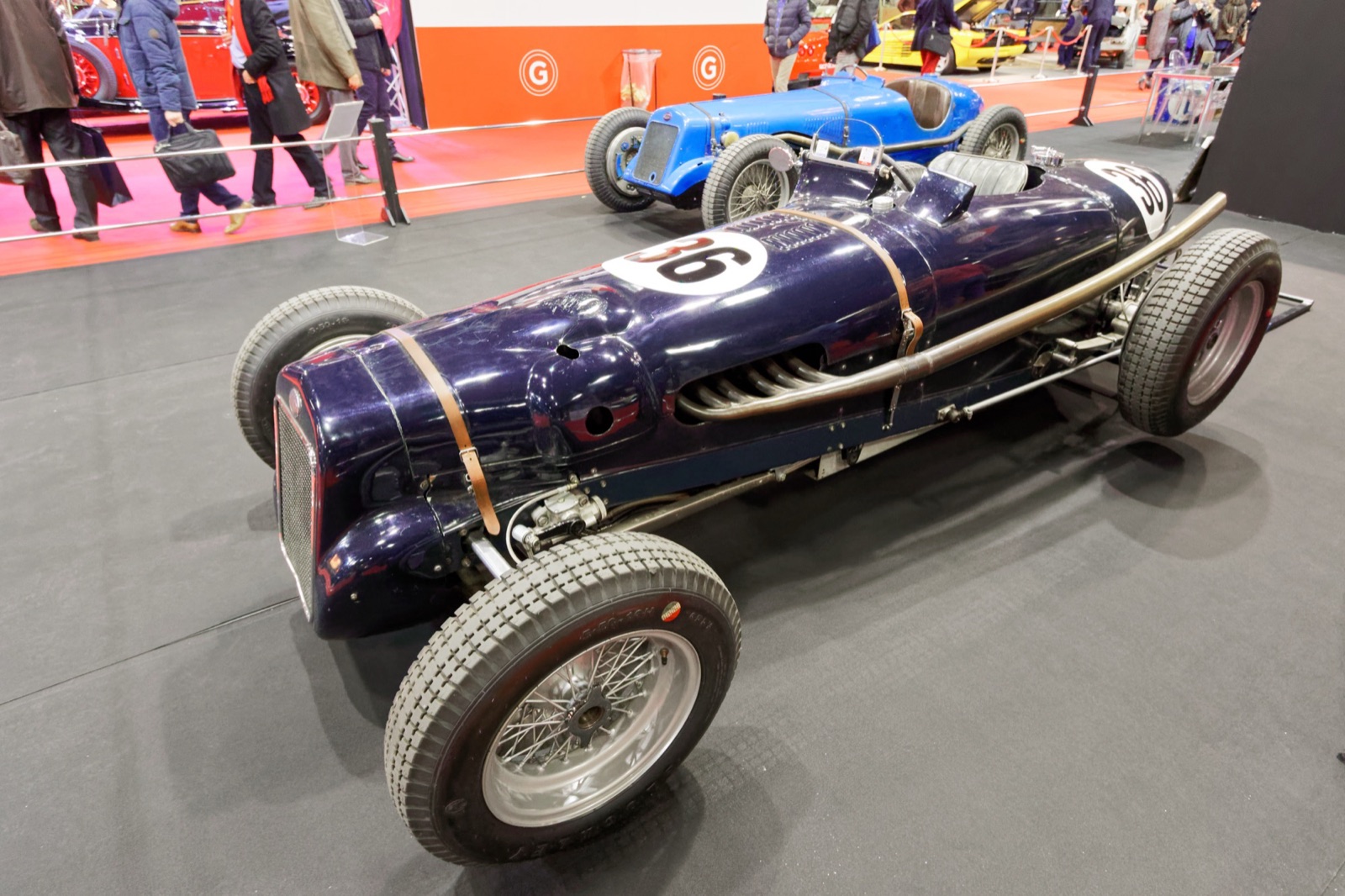
All six Delage 15 S8s survive. In 2022 the four 1927 team cars were at the Revs Institute in Florida, at the Brooklands Museum, under restoration in France and with the collector Abba Kogan, and chassis 5 belonged to Paul-Emile Bessade (Motor Sport, 2023; FBHVC). The six were brought together for the first time at Rétromobile in Paris in February 2017, ninety years after the championship, as L'argus announced in September 2016.
Chassis 1, the Revs Institute car
Chassis 1 is in the Collier Collection at the Revs Institute in Naples, Florida (Motor Sport, 2023). Burnard wrote in 1964 that the Cunningham car was "the only car which is entirely original and unmodified". L'argus records that chassis 1 ran in the first Monaco Grand Prix in 1929.
Chassis 2, the Brooklands car
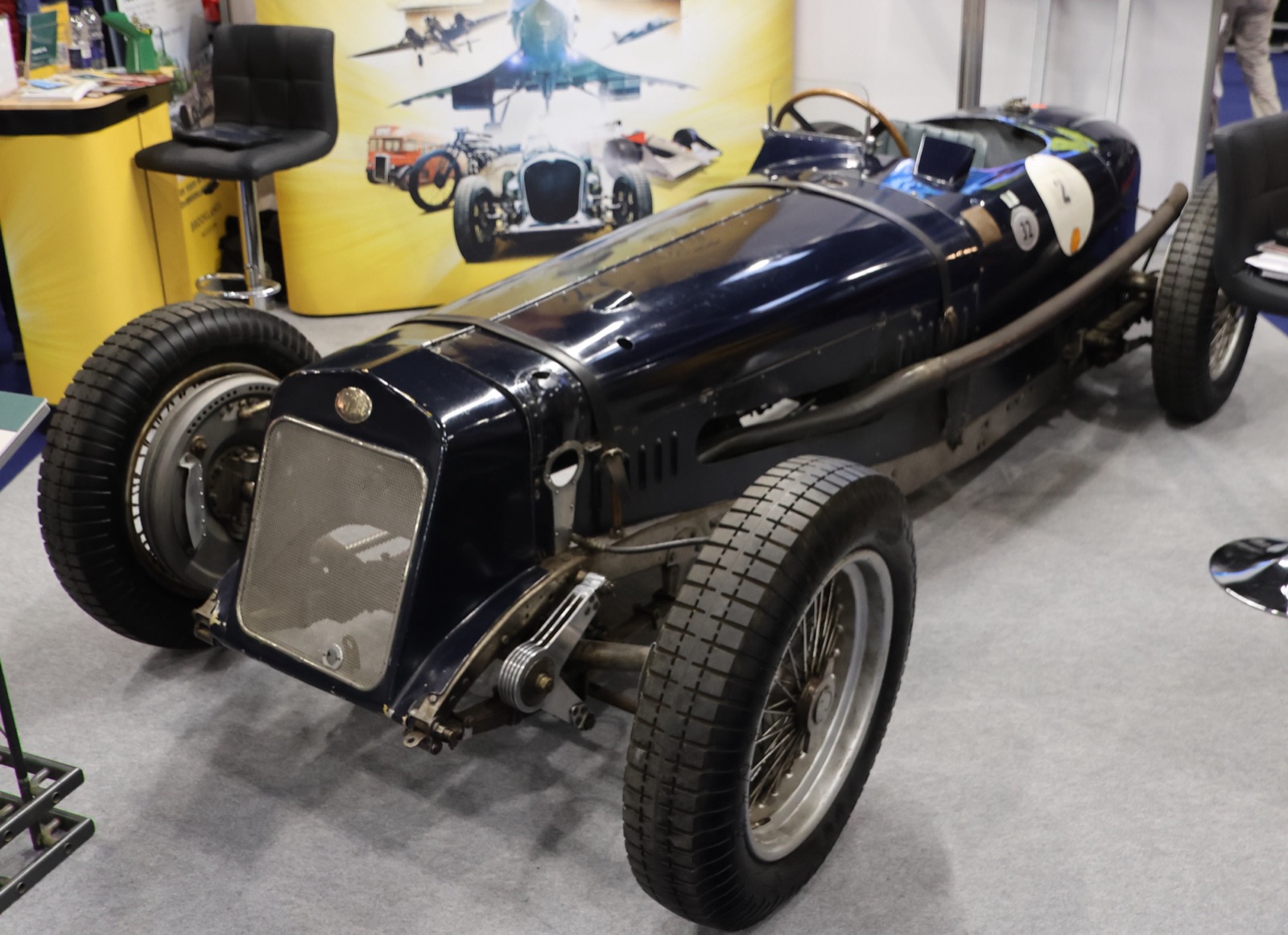
Chassis 2 belongs to the Brooklands Museum, which Alan Burnard left it in his will in 2012 after some fifty years restoring it to its 1927 form (FBHVC, 2022). The museum's own history says it was the spare car at the 1926 British Grand Prix and that Campbell bought it, and Smith has Bourlier driving it to second in the 1927 race. In 2022 its engine was "in pieces", according to the museum's vice-president, Allan Winn (Motor Sport, 2023).
Chassis 3
Chassis 3 was being restored in France in 2022 (Motor Sport, 2023). Smith and RM Sotheby's identify it as the car Howe crashed at Monza in 1932, and Smith gives it as Benoist's winning car at Brooklands in 1927; L'argus says Benoist won his four 1927 Grands Prix in chassis 2 and 3.
Chassis 4, the Seaman car
Walker's mechanic John Chisman had the Seaman car almost restored by the mid-1960s when fire swept Walker's Dorking garage in March 1968. It destroyed the car's original body (RM Sotheby's) and, among Walker's other belongings, one of Stirling Moss's worn tyres from the 1958 Argentine Grand Prix (Smith). The straight-eight still turned over, Chisman rebuilt the car with parts made new or given by suppliers (Bosch sent a magneto from its museum), and the local undertaker replaced Ramponi's timber with coffin oak. It returned to public view at a racing car show in Brussels in 1970. Walker sold it in 1984 to the French collector and publisher Serge Pozzoli. After Pozzoli's death Kogan bought it and had it restored to 1936 form by Auto Restorations in New Zealand, by Smith's account; RM Sotheby's dates the death to 1992 and calls that buyer "a prominent Brazilian collector". Peter Giddings bought the car in 2012, and Kogan bought it back at the 2021 sale (RM Sotheby's; Smith). On 22 September 2022 Kogan drove it on the Brooklands banking, the first time he had driven it, alongside chassis 2 and chassis 5 (FBHVC; Smith).
Chassis 5 and 6, the Chula cars
Chassis 5 was built for Prince Bira, Chula's cousin, and the FBHVC report calls it "a disappointment" for all its more advanced suspension; it belonged to Paul-Emile Bessade in 2022. Chassis 6 is the Habershon car. Walker bought it for the 1950 season after his first choice, a Mercedes-Benz W165 in a sale Rudolf Caracciola had brokered, was stopped by "military red tape" (Motor Sport, 2023). Its straight-eight cracked its block three times in the 1950 season, and for 1951 Walker fitted the 1½-litre supercharged engine of the E-type ERA wrecked in the Isle of Man; Tony Rolt then won a Formule Libre race at Boreham in it (Walker, 1951). Burnard bought it from Walker in 1954 and sold it in 1957 to Joe Goodhew, who sold it to Geoffrey Kerr.
How much is a Delage 15 S8 worth?
A Delage 15 S8 is worth about a million dollars on the evidence of the 2021 sale: chassis 4, the Seaman car, sold for $1,000,000 as lot 261 at RM Sotheby's Monterey auction of 12 to 14 August 2021, from the Peter Giddings collection. Smith (2023) gives the price as "a bargain £750,000" and notes that Kogan paid much less than he had sold it for. Walker had sold the same car to Pozzoli for £130,000 in 1984 (Motor Sport, 2023).
Delage 15 S8 rivals
The Delage 15 S8's rivals were Bugatti's Type 39A and the Talbot straight-eight in 1926 and 1927, with Fiat's 12-cylinder car, the American Millers and the OMs at Monza in 1927; in 1936 they were the ERA and the six-cylinder Maserati. Pomeroy ranked the 1926 cars "Talbot, Delage and Bugatti in an ascending order of reliability and a descending order of speed". He thought the Talbot, with its offset engine and stiff double-channel frame, "just as fast" as the 15 S8, and gave Fiat's 12-cylinder car, with two crankshafts, about 160 hp; it lapped Monza at 96.56 mph in the short 1927 Milan Grand Prix, against the 15 S8's best of 94.1 mph in the long race by Pomeroy's figure (the 1991 account gives 94.31 mph). The six-cylinder Maserati of 1936 gave 175 bhp at 6,550 rpm, according to the 1940 survey.
Questions and answers
Why was Seaman's Delage 15 S8 black?
Black with silver was Dick Seaman's racing colour. His ERA of 1935 was "painted black with silver wheels, Seaman's colours", and the 15 S8 ran in black and silver in 1936, Bill Boddy wrote in Motor Sport in November 1995.
Did the works team race the 15 S8 after 1927?
No. The works team withdrew at the end of 1927 (Motor Sport database), and from 1928 the cars raced only for private owners such as Malcolm Campbell, Louis Chiron and Earl Howe.
How much did the Delage 15 S8 cost to race?
Bill Boddy wrote in 1995 that the 1927 cars "had cost £100,000 each to race". In 1991 he put Louis Delage's racing programme at about £800,000 in that year's money.
Where can you see a Delage 15 S8?
Chassis 1 is in the Revs Institute in Naples, Florida, and chassis 2 belongs to the Brooklands Museum in Surrey, where three of the cars ran on the banking in September 2022. Chassis 4 and 5 ran there too, and all six were shown together at Rétromobile in Paris in 2017.
Was the 15 S8 the last World Manufacturers' Championship winner?
Yes. Damien Smith wrote in Motor Sport in January 2023 that the 1927 title crowned "the French company as what turned out to be the last Manufacturers' World Champion".
What is the Delage 155B?
It is the same car. L'argus, announcing the 2017 Rétromobile display, called it the "Delage 1500, type 155B", the 1½-litre straight-eight that won the 1927 championship.
Sources
- Motor Sport, "The British Grand Prix", October 1927: the 1927 race at Brooklands.
- Motor Sport, "The J.C.C. two-hundred mile race", August 1928: Campbell's 1928 win.
- Motor Sport, "Rumblings", July 1936: Seaman on the car's weight, engine and chassis; Howe's gearbox.
- Motor Sport, "Richard Seaman wins again!", September 1936: the 1936 JCC 200 at Donington Park.
- Motor Sport, "Good racing in Switzerland", September 1936: the 1936 Prix de Berne.
- Motor Sport, "Car-racing in the I.O.M. next month", May 1937: the 1936 Isle of Man race.
- Motor Sport, "1½-litre racing from 1935", August 1940: Howe's 1935 races and Seaman's 1936 season.
- Laurence Pomeroy, "Racing Car Evolution Part III (continued): 1926–1927", Motor Sport, March 1943: the formula, the engine and frame, the 1926 exhaust and the 1927 rebuild, rivals.
- R. R. C. Walker, "The E.R.A.-Delage", Motor Sport, November 1951: the Habershon and Seaman cars, the ERA engine.
- Alan Burnard, "The 1,500-c.c. Grand Prix Delage cars", Motor Sport, June 1964: number built and the chassis histories.
- Bill Boddy, "Veteran to classic: Delage domination", Motor Sport, July 1991: specification and the 1927 season.
- Bill Boddy, interview with Percy Thomas, Motor Sport, November 1994: Howe's Delages and the Monza crash.
- Bill Boddy, "Three in a row: a Delage achievement", Motor Sport, November 1995: Seaman's purchase, Ramponi's changes and the 1936 season.
- Bill Boddy, "Earl Howe", Motor Sport, June 1998: Howe's Delage results, 1931 to 1933.
- Damien Smith, "Delage à trois: 1927 British GP winners reunited", Motor Sport, January 2023: chassis histories, the Walker years and the 2021 sale.
- Motor Sport database: race results for 1926 and 1927, the 1929 Indianapolis 500, the 1938 German Grand Prix and the 1939 Belgian Grand Prix, and the 1927 World Championship, read 31 October 2026.
- RM Sotheby's, Monterey, 12–14 August 2021, lot 261, "1927 Delage 15-S-8 Grand Prix": chassis 4's history and sale price, read 31 October 2026.
- Federation of British Historic Vehicle Clubs, "Trio of Delage Grand Prix cars returns to the Brooklands banking", 26 September 2022: chassis 2, 4 and 5 and their owners.
- L'argus, "Rétromobile 2017 : un hommage à Delage avec six modèles exposés", 21 September 2016: the six cars at Rétromobile 2017.
- Le Populaire, 28 May 1929, page 4: photograph caption on Chiron's Delage for Indianapolis.