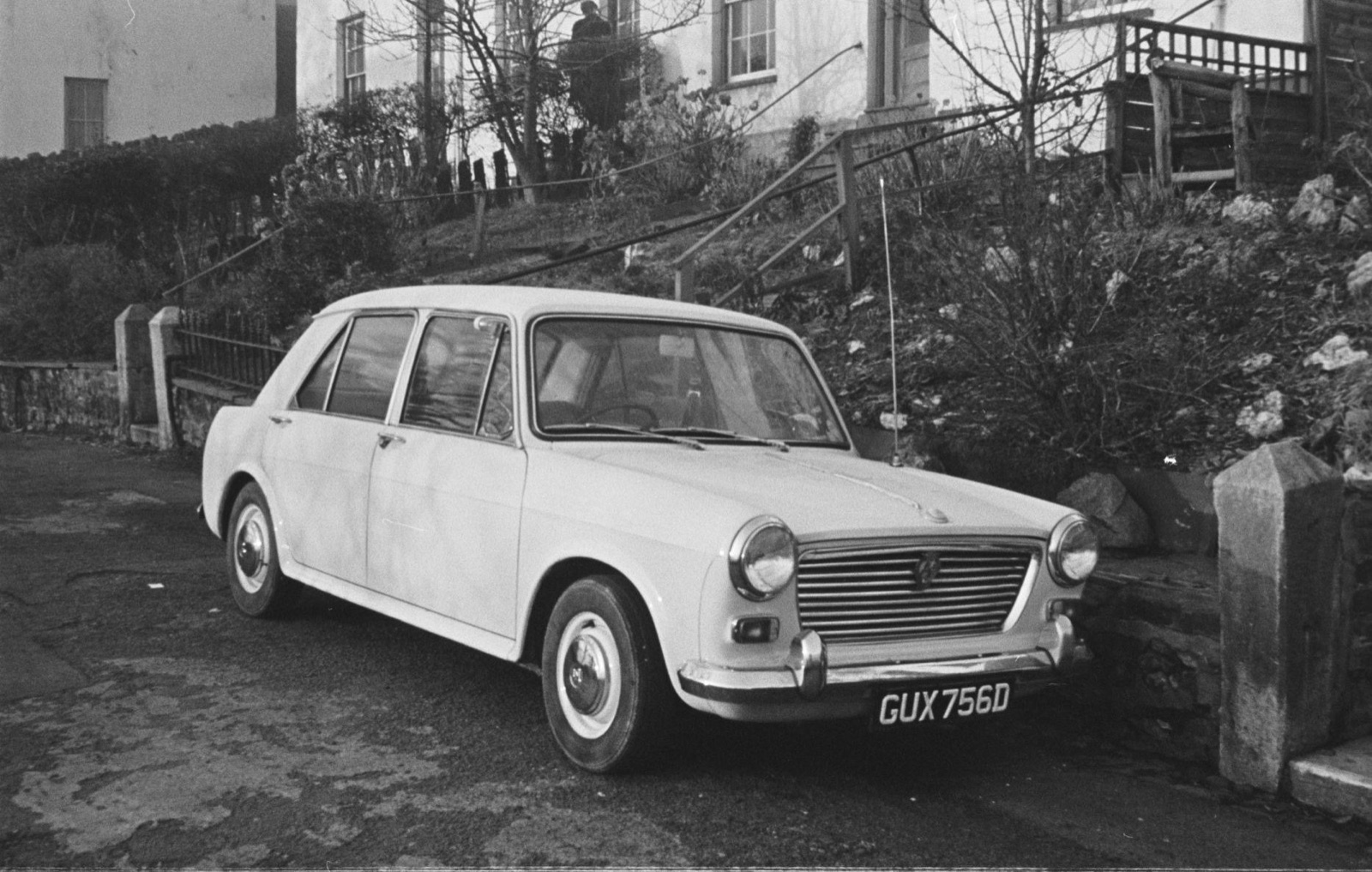
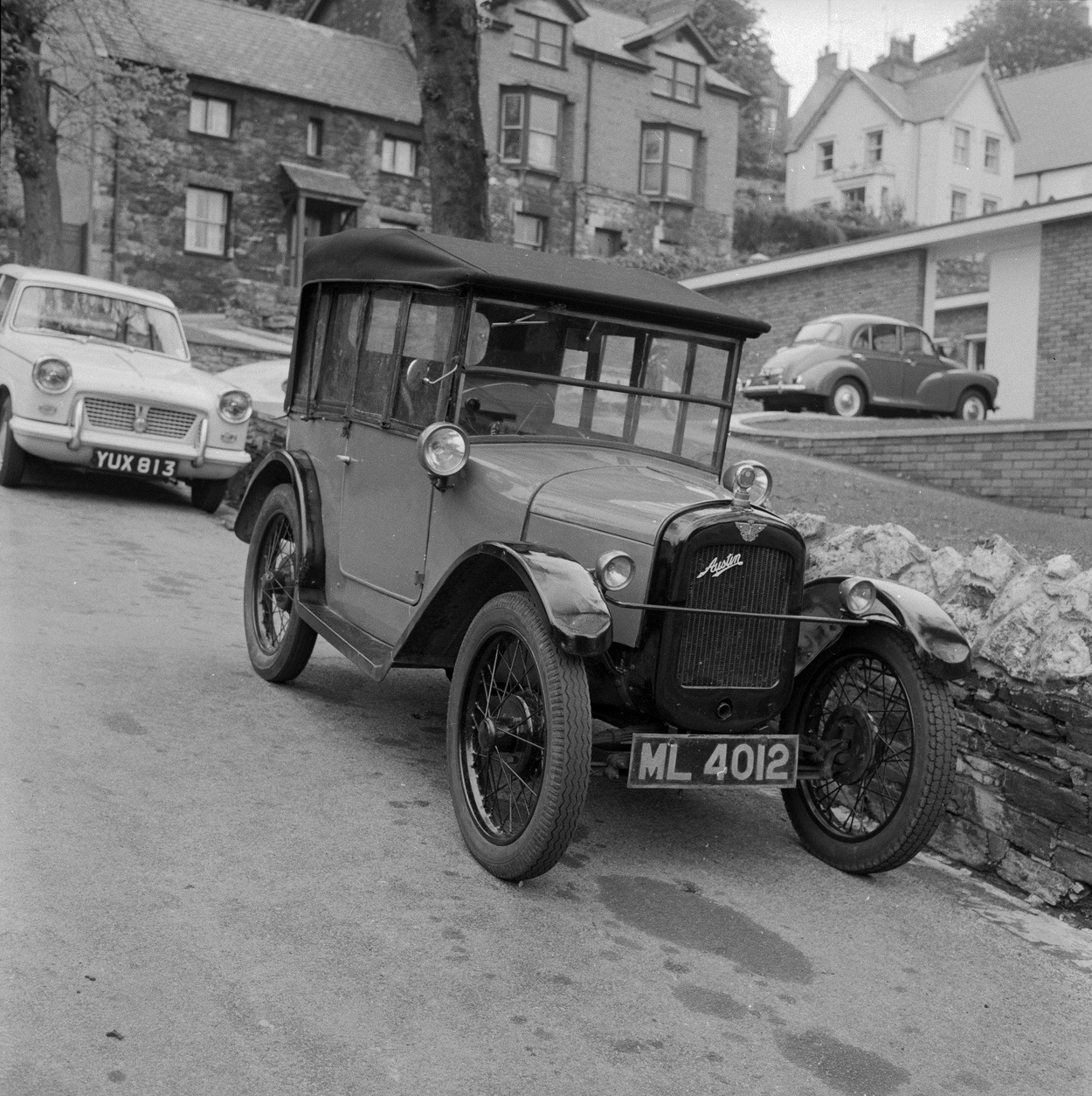
Old car registration area codes are the letters on a British or Northern Irish number plate issued between 1903 and 2001 that name the council, and from October 1974 the local vehicle licensing office, that first registered the car. On ML 4012 the code is ML, a Middlesex code; on GUX 756D it is UX, Shropshire's, and the D at the end says the car was first registered in 1966. All 586 codes are listed below with every authority that held each one, and the lookup reads a plate for you.
How old car registration area codes worked, 1903 to 2001
Each council that registered motor vehicles had its own letters, and every car it registered carried them. The Motor Car Act 1903 said that "every motor car shall be registered with the council of a county or county borough", that each council "shall assign a separate number to every car registered with them", and that the car must carry a mark "indicating the registered number of the car and the council with which the car is registered". Registration cost twenty shillings, and the Act came into operation on 1 January 1904.
1903: one code for each county and county borough
The codes were set out in the First Schedule to the Motor Car (Registration and Licensing) Order 1903, as Walter Long, who issued the order, told the Commons in May 1904 when an MP asked which letters belonged to which county. A reader's letter in Motor Sport in October 1987 explained the order: the English and Welsh counties and county boroughs were ranked by population at the 1901 census and given one code each, from A (London) to Y (Somerset), then AA (Hampshire) to FP (Rutland). Combinations with S went to Scotland, counties first and then burghs, in alphabetical order, and combinations with I to the counties and cities of Ireland.
According to Warwickshire County Record Office, the first number was A 1, issued in London in 1903 to the second Earl Russell, who queued overnight for it. Warwickshire's own first registration, AC 1, went on a red six-horsepower Regal De Dion two-seater owned by Henry George Hawkes, a Leamington Spa solicitor.
New codes as councils ran out of numbers
Each code was followed by a number, in practice up to 9999, and a busy council needed more codes, which the Local Government Board assigned by regulation. Orders laid before the Lords in February 1905 gave codes to the county boroughs of Blackpool and Tynemouth; in August 1905 London County Council got a second code and Northampton a new one. By January 1913 London was on its ninth, and Barnsley, Dewsbury and Wallasey had their first. Worcestershire's registers show the pattern: AB from 1903, NP from 1921, UY from 1927 and WP from 1931, each run through from 1 to 9999, according to the Worcestershire Archive and Archaeology Service handlist.
Until 1921 a car could be registered with any council in the country, not necessarily its owner's, says Gloucestershire Archives; from 1921 it had to be registered with the local council. By January 1932 about 3.5 million vehicles had been registered in England and Wales, 700,000 of them in London, a correspondent calculated in Motor Sport in February 1964.
Three-letter marks from 1932
In May 1931 The Commercial Motor reported that the two-letter combinations were "rapidly being exhausted" and that three letters followed by no more than three figures were being discussed; one objection was that combinations such as ASS and FAT would appear. The magazine also complained that there was "no definite plan for the allocation of letters. For example, GD is Glasgow and GO London." In 1932 councils began to issue three-letter, three-figure marks, Worcestershire's handlist records. The council put a serial letter in front of its own code, so AAB 1 to AAB 999 and then BAB 1 were Worcestershire marks; Worcestershire reached AAB in 1935. The letters I, Q and Z were never used as the serial letter, says the guide of The Story, Durham's record office.
Reversed marks from 1953
When the three-letter series ran out, councils turned the marks round, numbers first, as in 123 AAD, Gloucestershire Archives explains. The uk-old-registration-codes dataset dates the reversed format from 1953. The Story's guide adds that two-letter codes came back at the same time with up to four figures in front (1234 DE). Darlington issued 1 AHN to 122 YHN between 1955 and 1964 and 1000 HN to 9990 HN between 1960 and 1963, its registers show; Worcestershire began 1 AAB in 1960.
Year letters from 1963
From February 1963 a letter was added after the number to show the year, and the code moved back to the front: ABC 123A. "In 1963 the letters again came before the figures and the letter 'A' was added at the end of the number, and in 1964 'B' was used in this way, in 1965 'C' and so on", The Commercial Motor told its readers in 1969. Not every council changed at once: "The letter A was issued for 1963, but many councils didn't change to the new system until 1964", Gloucestershire Archives notes, and Worcestershire's first suffix marks are B. The letter changed on 1 January until 1967, when the change moved to 1 August, so E covers only seven months.
1974: local offices take over from the councils
Registration moved from the councils to the Driver and Vehicle Licensing Centre at Swansea in stages. The start was first set for 1 April 1974, a minister said in November 1973, and then put back. A written answer of July 1974 set the first stage for 1 October 1974: "Eighty-one new local vehicle licensing offices will register all new vehicles", passing each registration on to Swansea. They replaced "the original 185 local authority offices", as an MP noted in a Commons debate in November 1976. Codes were regrouped among the new offices: in the dataset 374 codes gain a new holder in 1974. In London, The London Archives records, the Department took over vehicle registration and licensing on 18 March 1978.
1983 and 2001: prefix plates, then memory tags
"The present registration system comes to an end in July 1983", the Minister of Transport, Norman Fowler, told the Commons in July 1980. From August 1983 the year letter went to the front, A123 BCD, with the area code still the last two letters. The prefix series ran until August 2001, says the help page of DVLA Personalised Registrations, and the current format began on 1 September 2001: two letters for the region, which DVLA calls a memory tag, two numbers for the age (the age identifier) and three random letters, as DVLA's leaflet INF104 sets out. DVLA's memory tags, listed on pages 5 and 6 of INF104, are the number plate area codes of cars registered since then.
How to read an old number plate
Find the plate's letter group and take its last two letters, or its only letter or two on the earliest plates: that is the area code. Then look for a single year letter at the end or the front.
Dateless plates: one or two letters and up to four numbers
The first plates had the code first and a number of up to four digits: A 1, AB 1234. The letters are the whole code. YU 3250, the first of Birkin's team Blower Bentleys, carries a London code (YU, London from 1927), and the Mercedes-Benz SSK first registered as GC 96 on 11 January 1930 has another (GC, London from 1929). A plate in this style says where a car was registered and, roughly, when the code was in use; it has no year letter. DVLA's help page dates dateless marks for new vehicles in mainland Great Britain to before February 1963. Councils with spare marks went on issuing them after that: some started the year letter only in 1964, with B, "or in a few cases with C suffixes in 1965", says London Bus Routes' history of British registrations.
Three-letter plates: ABC 123
On a three-letter plate the first letter is a serial and the last two are the code. PUG 676, the Jaguar C-type first registered in September 1952 that Ben Cussons raced in the Jaguar Heritage Challenge finale, is a Leeds car (UG); CMH 497, the Elektron Frazer Nash, a Middlesex one (MH).
The serial letter dates a plate more closely than the code's years do. The council registers in record offices hold these runs year by year: Worcestershire's handlist has AAB in 1935–36, BAB in 1937 and CAB in 1938, and Darlington's registers run AHN to YHN from 1934 to 1955.
Reversed plates: 1234 AB and 123 ABC
Read a reversed plate from the letters at the end: the code is the letters if there are two, or the last two of three. 9600 HP, the grey E-type coupé that Jaguar showed at Geneva in 1961, and 77 RW are both Coventry marks (HP and RW), and 848 CRY is from Leicester (RY); all three were among the cars at the gathering of 800 E-types.
Suffix number plates: ABC 123D
A suffix plate has three letters, one to three digits and a year letter: ABC 1A, in the help page's example. The code is the second and third letters, and the last letter dates first registration (the table below). GUX 756D is a Shropshire car (UX) first registered in 1966.
Prefix number plates: D123 ABC
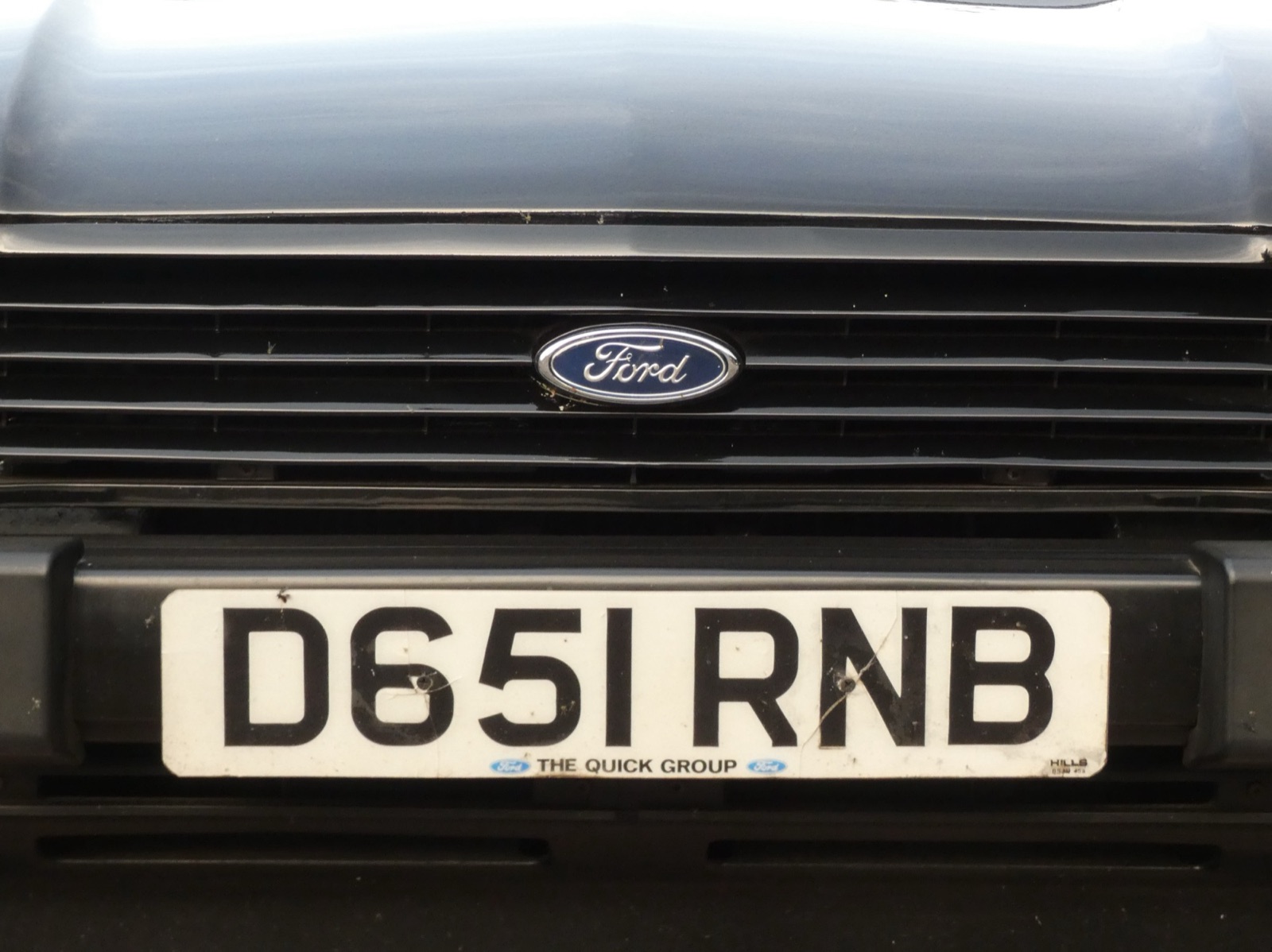
A prefix plate starts with the year letter, then one to three figures and three letters; the code is the last two. On D651 RNB the code is NB, Manchester's, and D means first registration between 1 August 1986 and 31 July 1987.
Old car registration years: suffix and prefix letters
Each year letter from A to Y was used twice, once at the end of the plate from 1963 to 1983 and once at the front from 1983 to 2001, so a K on a plate means either 1971–72 or 1992–93, depending on where it sits: a "K reg" car with the K at the end was first registered between 1 August 1971 and 31 July 1972. The tables give the dates the uk-old-registration-codes dataset holds for each letter.
Suffix year letters, 1963 to 1983
A began in February 1963; the suffix letter then changed each 1 January from B to E and each 1 August from F to Y. A car first registered in 1967 can carry an E or an F.
| Letter | Example | First registered |
|---|---|---|
| A | ABC 123A | February 1963 – 31 December 1963 |
| B | ABC 123B | 1 January 1964 – 31 December 1964 |
| C | ABC 123C | 1 January 1965 – 31 December 1965 |
| D | ABC 123D | 1 January 1966 – 31 December 1966 |
| E | ABC 123E | 1 January 1967 – 31 July 1967 |
| F | ABC 123F | 1 August 1967 – 31 July 1968 |
| G | ABC 123G | 1 August 1968 – 31 July 1969 |
| H | ABC 123H | 1 August 1969 – 31 July 1970 |
| J | ABC 123J | 1 August 1970 – 31 July 1971 |
| K | ABC 123K | 1 August 1971 – 31 July 1972 |
| L | ABC 123L | 1 August 1972 – 31 July 1973 |
| M | ABC 123M | 1 August 1973 – 31 July 1974 |
| N | ABC 123N | 1 August 1974 – 31 July 1975 |
| P | ABC 123P | 1 August 1975 – 31 July 1976 |
| R | ABC 123R | 1 August 1976 – 31 July 1977 |
| S | ABC 123S | 1 August 1977 – 31 July 1978 |
| T | ABC 123T | 1 August 1978 – 31 July 1979 |
| V | ABC 123V | 1 August 1979 – 31 July 1980 |
| W | ABC 123W | 1 August 1980 – 31 July 1981 |
| X | ABC 123X | 1 August 1981 – 31 July 1982 |
| Y | ABC 123Y | 1 August 1982 – 31 July 1983 |
Prefix year letters, 1983 to 2001
The prefix letter changed each 1 August until S, which ran for seven months; from T in March 1999 it changed every six months, in March and September. The yearly change had crowded sales into one month: in August 1996, 541,000 of the year's 2.4 million new cars were registered, Viscount Goschen of the Department of Transport told the House of Lords in January 1997.
| Letter | Example | First registered |
|---|---|---|
| A | A123 ABC | 1 August 1983 – 31 July 1984 |
| B | B123 ABC | 1 August 1984 – 31 July 1985 |
| C | C123 ABC | 1 August 1985 – 31 July 1986 |
| D | D123 ABC | 1 August 1986 – 31 July 1987 |
| E | E123 ABC | 1 August 1987 – 31 July 1988 |
| F | F123 ABC | 1 August 1988 – 31 July 1989 |
| G | G123 ABC | 1 August 1989 – 31 July 1990 |
| H | H123 ABC | 1 August 1990 – 31 July 1991 |
| J | J123 ABC | 1 August 1991 – 31 July 1992 |
| K | K123 ABC | 1 August 1992 – 31 July 1993 |
| L | L123 ABC | 1 August 1993 – 31 July 1994 |
| M | M123 ABC | 1 August 1994 – 31 July 1995 |
| N | N123 ABC | 1 August 1995 – 31 July 1996 |
| P | P123 ABC | 1 August 1996 – 31 July 1997 |
| R | R123 ABC | 1 August 1997 – 31 July 1998 |
| S | S123 ABC | 1 August 1998 – 28 February 1999 |
| T | T123 ABC | 1 March 1999 – 31 August 1999 |
| V | V123 ABC | 1 September 1999 – 29 February 2000 |
| W | W123 ABC | 1 March 2000 – 31 August 2000 |
| X | X123 ABC | 1 September 2000 – 28 February 2001 |
| Y | Y123 ABC | 1 March 2001 – 31 August 2001 |
Letters never used as year letters: I, O, Q, U and Z
Neither series used I, O, Q, U or Z as the year letter. DVLA's help page adds that suffix and prefix marks cannot contain I, Q or Z at all, and cannot have O or U as the year letter.
Codes that moved between councils and offices
Most codes did not stay with one authority: 403 of the 586 in the dataset have more than one holder, and an old plate is read against the holder of the year the car was first registered.
Codes given up, swapped or used twice before 1974
Some codes changed hands early. Dorset's original BF was replaced in 1905, the Lords orders show, and the dataset has it as FX from 1905; BF then went unused until Staffordshire took it in 1960. The Road Vehicles (Index Marks) Regulations 1964, the full list of every British council's codes as they stood in April 1964, give Staffordshire E, RE and RF and three-letter marks ending in BF. Northampton's first code, DF, later went to Gloucestershire, and XA, a London code from 1920, was reissued to Kirkcaldy in 1963. When the Greater London Council took over from the London and Middlesex county councils and three county boroughs on 1 April 1965, the 1965 amending regulations moved all their codes to it.
Codes reassigned after 1974
From 1974 each code belonged to a local vehicle licensing office, often in a different place from the old council. Hampshire's AA went to Salisbury in 1974, and from 1980 Bournemouth issued it on Salisbury's behalf; Warwickshire's AC went to Coventry. The dataset marks 97 codes that an office issued for another, as "for Salisbury" or "for Durham".
Codes that stopped
Thirty-four codes in the dataset carry a note that they went unused: 13 after 1964, 11 after 1974 and the rest after 1977, 1980 or 1981. The 23 single-letter codes all end in 1963 or 1964, A (London) in 1964 and F (Essex) in 1963 among them.
Northern Ireland registration codes
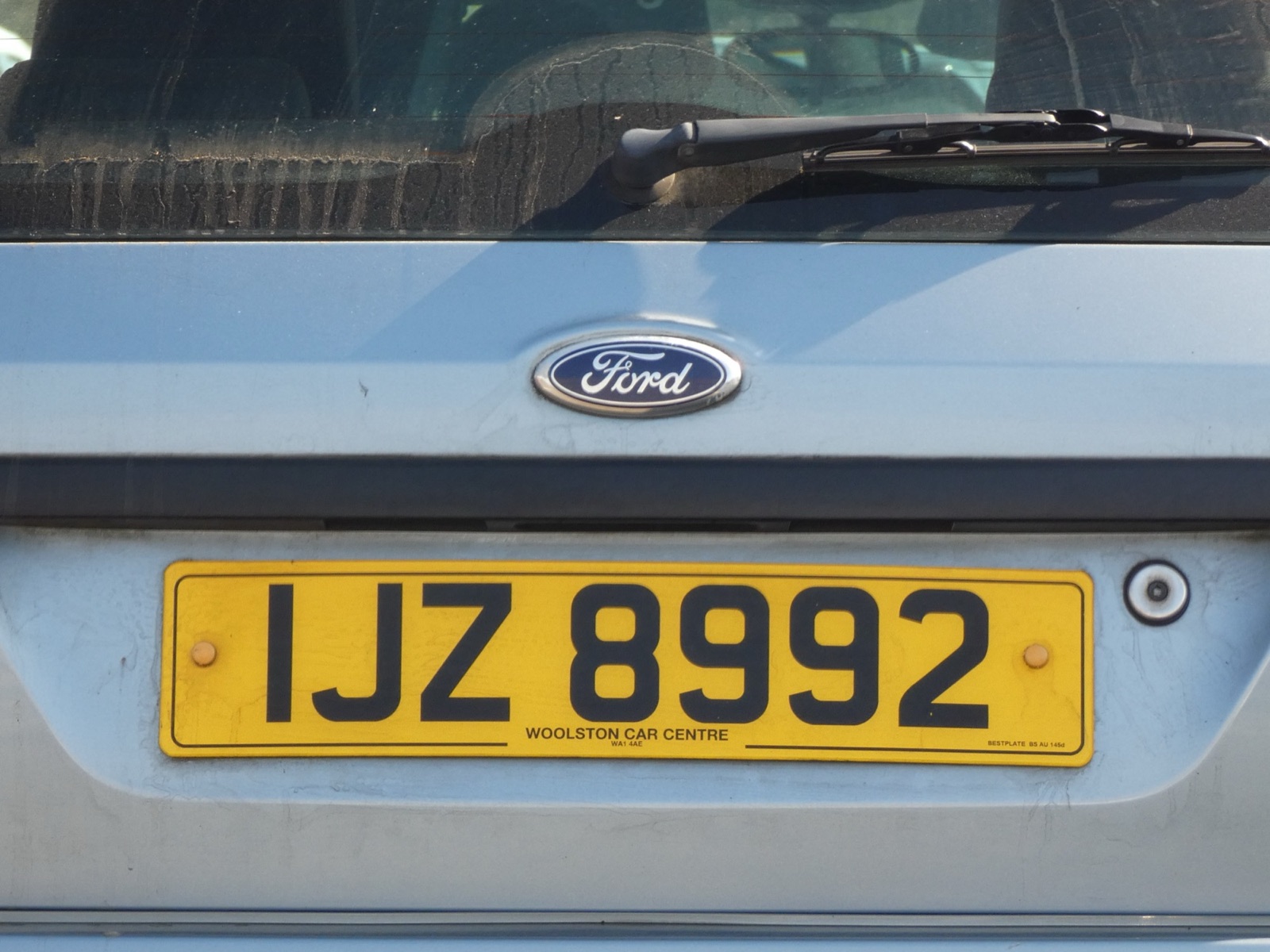
Northern Irish codes contain an I or a Z; the I combinations were Ireland's from the 1903 allocation. The dataset holds 34, with the county or city that issued each: IA and KZ County Antrim, IB and LZ Armagh, IJ and JZ Down, OI and XI Belfast, UI and VI the City of Derry, and others. Northern Irish plates kept the dateless style, three letters and up to four digits, as in ABZ 1234, and carry no year letter; DVLA describes dateless marks as having no age identifier and says that in mainland Great Britain they were issued only before February 1963.
Q plates and other special marks
"DVLA issues 'Q' registration numbers to vehicles whose age or identity is in doubt", says GOV.UK, and any original number then "will become invalid and you must not display it again". DVLA's import leaflet INF106 gives an imported vehicle with no evidence of its age a "'Q' or 'QNI' registration number", and DVLA's list of owners' clubs, V765/1, says a Q number is likely where a car has been "restored or rebuilt using a majority of used parts from different vehicles".
A few three-letter combinations have a meaning of their own, set out by London Bus Routes' history of British registrations. GPO marks, in the PO series (West Sussex's until 1974), were "reserved for the General Post Office, issued by London", and fell out of use. MAN, in the AN series (West Ham's, then London's, and Reading's from 1974), was not issued by Reading: the Isle of Man uses MAN marks alongside its own code, MN. SCY began as an ordinary Swansea mark in the CY series; "From 1971, 'Swansea' SCY marks were issued by Truro for use on the Isles of Scilly". The lookup reports MAN, GPO and SCY as these special marks. The dataset also notes that London's XP was later used for temporary plates on vehicles being exported to Europe.
Where was my car first registered?
The area code on an original plate says which council or office first registered the car. The date of first registration is held by DVLA and shown by its vehicle enquiry service, alongside the date of the last V5C logbook. Who owned the car, and which car carried which number, are in the records behind the plate, split between DVLA and the county record offices.
The logbook and DVLA's records
In INF104's words, the registration number "is given to the vehicle, not the registered keeper"; it stays with the car until the car is broken up, destroyed or exported for good, unless the keeper moves it to another car. DVLA's records do not reach back to every old car: "If you have a classic vehicle that has not been taxed since 1983, it might not be registered with DVLA", GOV.UK warns. Such a car can get its original number back on form V765, endorsed by an owners' club, with evidence such as "the original old style logbook (RF60/VE60)" or "archive/Library records displaying the registration number and the chassis number", V765/1 says, and that number cannot later be transferred.
How to find an old car registration number
Form V888 is used "to apply for information from DVLA's vehicle records", about a vehicle registered to you now or in the past, or, with "reasonable cause", to someone else. For a car first registered before 1974, the council registers in record offices are sorted by registration number, and some early ones are indexed by the owner's name, Gloucestershire Archives notes.
The councils' registers in record offices
The councils' own registers, 1903 to 1974, are where an original first owner is named, and many are in county record offices, arranged by registration number. Gloucestershire's registers for 1903 to 1921 give the owner's name and address and a description of the vehicle, including its colour; later ones name only the first owner, and after 1956 the dealer and the make. Warwickshire County Record Office holds the county's complete registration books from 1903 to 1974. Bedfordshire Archives has registration documents from 1903 to 1936 and a card index from 1936 to 1954 giving chassis number, engine number and first owner. For vehicles after March 1964 it refers enquirers to DVLA. Survival is uneven: Durham's J series of 1903 is not known to survive, and only one London County Council register, for LT 4001 to LT 4400 in 1917 to 1919, does. Dundee City Archives warns that its registers give no engine number, which DVLA asks for when re-registering a car.
When the plate is no guide
Three things break the link between the code and the car's history. Before 1921 a car could be registered with any council, so the code shows the council, not where the owner lived. A number moved from another car, a cherished or private mark, tells you where that number was first issued, not this car; councils allowed such transfers "for persons who desire their initials to appear in the registration mark", The Commercial Motor noted in 1969. And a car re-registered after losing its papers, or imported, may carry a later number, an age-related one or a Q plate.
The full list of old car registration area codes
The tables give every area code issued on British and Northern Irish plates from 1903 to 2001, and so the registration area behind each, with the issuing authorities that held it and their years. They are generated from the uk-old-registration-codes dataset, published by OUTLAW 8, which holds the 586 codes (552 for Great Britain and 34 for Northern Ireland), 1,111 holder entries and the suffix and prefix year-letter tables as JSON and CSV, with a plate parser. Its data is adapted from two Wikipedia articles at fixed revisions and is free to use and adapt under CC BY-SA 4.0, with credit and with adaptations shared under the same licence; its code is under the MIT licence. "From" and "to" are the years an authority held the code; a name with no years is one the source gives without dates, and "for Salisbury" means an office that issued the code on Salisbury's behalf.
Great Britain codes, A to Y
| Code | Issued by, with years |
|---|---|
| A | London, 1903–64 |
| AA | Hampshire, 1903–74; Salisbury, 1974–80; Bournemouth (for Salisbury), from 1980 |
| AB | Worcestershire, 1903–74; Worcester, from 1974 |
| AC | Warwickshire, 1903–74; Coventry, 1974–96 |
| AD | Gloucestershire, 1903–74; Gloucester, 1974–97 |
| AE | Bristol |
| AF | Cornwall, 1903–74; Truro, from 1974 |
| AG | Ayrshire, 1925–74; Hull, from 1974 |
| AH | Norfolk, 1903–74; Norwich, from 1974 |
| AJ | Yorkshire (North Riding), 1903–74; Middlesbrough, from 1974 |
| AK | Bradford, 1903–74; Sheffield, from 1974 |
| AL | Nottinghamshire, 1903–74; Nottingham, from 1974 |
| AM | Wiltshire, 1903–74; Swindon, 1974–97; Bristol (for Swindon), from 1997 |
| AN | West Ham, 1903–65; Greater London, 1965–74; Reading, from 1974. MAN reserved for Isle of Man |
| AO | Cumberland, 1903–74; Carlisle, from 1974 |
| AP | East Sussex, 1903–74; Brighton, from 1974 |
| AR | Hertfordshire, 1903–74; Chelmsford, from 1974 |
| AS | Nairnshire, 1903–74; Inverness, from 1974 |
| AT | Hull |
| AU | Nottingham |
| AV | Aberdeenshire, 1926–74; Peterborough, from 1974 |
| AW | Shropshire, 1903–74; Shrewsbury, from 1974 |
| AX | Monmouthshire, 1903–74; Cardiff, from 1974 |
| AY | Leicestershire, 1903–74; Leicester, 1974–96; Nottingham (for Leicester), from 1996 |
| B | Lancashire, 1903–63 |
| BA | Salford, 1903–74; Manchester, from 1974 |
| BB | Newcastle upon Tyne |
| BC | Leicester, 1903–96; Nottingham (for Leicester), from 1996 |
| BD | Northamptonshire, 1903–74; Northampton, from 1974 |
| BE | Lincolnshire (Lindsey), 1903–74; Grimsby, 1974–81; Lincoln (for Grimsby), from 1981 |
| BF | Dorset, 1903–05; Staffordshire, 1960–74; Stoke-on-Trent, 1974–97; Nottingham (for Stoke-on-Trent), from 1997 |
| BG | Birkenhead, 1931–74; Liverpool, 1974–96 |
| BH | Buckinghamshire, 1903–74; Luton, from 1974 |
| BJ | East Suffolk, 1903–74; Ipswich, from 1974 |
| BK | Portsmouth |
| BL | Berkshire, 1903–74; Reading, from 1974 |
| BM | Bedfordshire, 1903–74; Luton, from 1974 |
| BN | Bolton, 1903–81; Manchester (for Bolton), from 1981 |
| BO | Cardiff |
| BP | West Sussex, 1903–74; Portsmouth, from 1974 |
| BR | Sunderland, 1903–74; Durham, 1974–81; Newcastle upon Tyne (for Durham), from 1981 |
| BS | Orkney, 1903–74; Kirkwall, 1974–80; Inverness (for Kirkwall), from 1980 |
| BT | Yorkshire (East Riding), 1903–74; York, 1974–81; Leeds (for York), from 1981 |
| BU | Oldham, 1903–74; Manchester, from 1974 |
| BV | Blackburn, 1930–74; Preston, from 1974 |
| BW | Oxfordshire, 1903–74; Oxford, from 1974 |
| BX | Carmarthenshire, 1903–74; Haverfordwest, 1974–96; Swansea (for Haverfordwest), from 1996 |
| BY | Croydon, 1903–65; Greater London, 1965–74; London North-West, from 1974 |
| C | Yorkshire (West Riding), 1903–64 |
| CA | Denbighshire, 1903–74; Chester, from 1974 |
| CB | Blackburn, 1903–74; Bolton, 1974–81; Manchester (for Bolton), from 1981 |
| CC | Caernarfonshire, 1903–74; Bangor, from 1974 |
| CD | Brighton |
| CE | Cambridgeshire, 1903–65; Cambridgeshire and Isle of Ely, 1965–74; Cambridge, 1974–80; Peterborough (for Cambridge), from 1980 |
| CF | West Suffolk, 1903–74; Reading, from 1974 |
| CG | Hampshire, 1931–74; Salisbury, 1974–80; Bournemouth (for Salisbury), from 1980 |
| CH | Derby, 1903–74; Nottingham, from 1974 |
| CJ | Herefordshire, 1903–74; Hereford, 1974–81; Gloucester (for Hereford), 1981–97 |
| CK | Preston |
| CL | Norwich |
| CM | Birkenhead, 1903–74; Liverpool, 1974–96 |
| CN | Gateshead, 1903–74; Newcastle upon Tyne, from 1974 |
| CO | Plymouth, 1903–80. Unused after 1980 |
| CP | Halifax, 1903–74; Huddersfield, 1974–95 |
| CR | Southampton, 1903–74; Portsmouth, from 1974 |
| CS | Ayrshire, 1934–74; Ayr, 1974–81; Glasgow (for Ayr), from 1981 |
| CT | Lincolnshire (Kesteven), 1903–74; Boston, 1974–81; Lincoln (for Boston), from 1981 |
| CU | South Shields, 1903–74; Newcastle upon Tyne, from 1974 |
| CV | Cornwall, 1929–74; Truro, from 1974 |
| CW | Burnley, 1903–74; Preston, from 1974 |
| CX | Huddersfield |
| CY | Swansea. SCY issued by Truro for the Isles of Scilly from 1971; Swansea issued it before then |
| D | Kent, 1903–64 |
| DA | Wolverhampton, 1903–74; Birmingham, from 1974 |
| DB | Stockport, 1903–74; Manchester, from 1974 |
| DC | Middlesbrough, 1904–68; Teesside, 1968–74; Middlesbrough, from 1974 |
| DD | Gloucestershire, 1921–74; Gloucester, 1974–97 |
| DE | Pembrokeshire, 1903–74; Haverfordwest, 1974–96; Swansea (for Haverfordwest), from 1996 |
| DF | Northampton, 1903–05; Gloucestershire, 1926–74; Gloucester, 1974–97 |
| DG | Gloucestershire, 1930–74; Gloucester, 1974–97 |
| DH | Walsall, 1903–74; Dudley, 1974–96 |
| DJ | St Helens, 1903–74; Warrington, 1974–81; Liverpool (for Warrington), 1981–96 |
| DK | Rochdale, 1903–74; Bolton, 1974–81; Manchester (for Bolton), from 1981 |
| DL | Isle of Wight, 1903–74; Newport (IoW), 1974–81; Portsmouth (for IoW), from 1981 |
| DM | Flintshire, 1903–74; Chester, from 1974 |
| DN | York, 1903–81; Leeds (for York), from 1981 |
| DO | Lincolnshire (Holland), 1903–74; Boston, 1974–81; Lincoln (for Boston), from 1981 |
| DP | Reading |
| DR | Devonport, 1903–14; Plymouth, 1926–80. Unused after 1980 |
| DS | Peeblesshire, 1903–74; Glasgow, from 1974 |
| DT | Doncaster, 1927–74; Sheffield, from 1974 |
| DU | Coventry |
| DV | Devon, 1929–74; Exeter, from 1974 |
| DW | Newport, 1903–74; Cardiff, from 1974 |
| DX | Ipswich |
| DY | Hastings, 1903–80; Brighton (for Hastings), from 1980 |
| E | Staffordshire, 1903–63 |
| EA | West Bromwich, 1903–74; Dudley, 1974–96 |
| EB | Isle of Ely, 1903–65; Cambridgeshire and Isle of Ely, 1965–74; Cambridge, 1974–80; Peterborough (for Cambridge), from 1980 |
| EC | Westmorland, 1903–74; Kendal, 1974–81; Preston (for Kendal), from 1981 |
| ED | Warrington, to 1981; Liverpool, from 1981 |
| EE | Grimsby, 1903–81; Lincoln (for Grimsby), from 1981 |
| EF | West Hartlepool, 1903–67; Hartlepool, 1967–74; Middlesbrough, from 1974 |
| EG | Soke of Peterborough, 1931–65; Huntingdon and Peterborough, 1965–74; Peterborough, from 1974 |
| EH | Stoke-on-Trent, 1903–97; Nottingham (for Stoke-on-Trent), from 1997 |
| EJ | Cardiganshire, to 1974; Aberystwyth, 1974–81; Haverfordwest, from 1981 |
| EK | Wigan, 1903–74; Warrington, 1974–81; Liverpool (for Warrington), 1981–96 |
| EL | Bournemouth |
| EM | Bootle, 1903–74; Liverpool, 1974–96 |
| EN | Bury, 1903–74; Bolton, 1974–81; Manchester (for Bolton), from 1981 |
| EO | Barrow-in-Furness, 1903–81; Preston (for Barrow-in-Furness), from 1981 |
| EP | Montgomeryshire, 1903–74; Swansea, from 1974 |
| ER | Cambridgeshire, 1922–65; Cambridgeshire and Isle of Ely, 1965–74; Cambridge, 1974–80; Peterborough (for Cambridge), from 1980 |
| ES | Perthshire, 1903–74; Dundee, from 1974 |
| ET | Rotherham, 1903–74; Sheffield, from 1974 |
| EU | Breconshire, 1903–74; Bristol, from 1974 |
| EV | Essex, 1931–74; Chelmsford, from 1974 |
| EW | Huntingdonshire, 1903–65; Huntingdon and Peterborough, 1965–74; Peterborough, from 1974 |
| EX | Great Yarmouth, 1903–74; Norwich, from 1974 |
| EY | Anglesey, 1903–74; Bangor, from 1974 |
| F | Essex, 1903–63 |
| FA | Burton upon Trent, 1903–74; Stoke-on-Trent, 1974–97; Nottingham (for Stoke-on-Trent), from 1997 |
| FB | Bath, 1903–74; Bristol, from 1974 |
| FC | Oxford |
| FD | Dudley |
| FE | Lincoln |
| FF | Merionethshire, to 1974; Aberystwyth, 1974–81; Bangor, from 1981 |
| FG | Fife, 1925–74; Brighton, from 1974 |
| FH | Gloucester |
| FJ | Exeter |
| FK | Worcester, 1903–74; Dudley, 1974–96 |
| FL | Soke of Peterborough, 1903–65; Huntingdon and Peterborough, 1965–74; Peterborough, from 1974 |
| FM | Chester |
| FN | Canterbury, 1903–81. Unused after 1981 |
| FO | Radnorshire, 1903–74; Hereford (for Radnorshire), 1974–81; Gloucester, from 1981 |
| FP | Rutland, 1903–74; Leicester, 1974–96; Nottingham (for Leicester), from 1996 |
| FR | Blackpool, 1904–74; Preston, from 1974 |
| FS | Edinburgh, from 1931 |
| FT | Tynemouth, 1904–74; Newcastle upon Tyne, from 1974 |
| FU | Lincolnshire (Lindsey), 1922–74; Grimsby, 1974–81; Lincoln (for Grimsby), from 1981 |
| FV | Blackpool, 1929–74; Preston, from 1974 |
| FW | Lincolnshire (Lindsey), 1929–74; Lincoln, from 1974 |
| FX | Dorset, 1905–74; Bournemouth, from 1974 |
| FY | Southport, 1905–74; Liverpool, 1974–96 |
| G | Glasgow, 1903–63 |
| GA | Glasgow |
| GB | Glasgow |
| GC | London, 1929–74; London South-West, from 1974 |
| GD | Glasgow |
| GE | Glasgow |
| GF | London, 1930–74; London South-West, from 1974 |
| GG | Glasgow |
| GH | London, 1930–74; London South-West, from 1974 |
| GJ | London, 1930–74; London South-West, from 1974 |
| GK | London, 1930–74; London South-West, from 1974 |
| GL | Bath, 1932–74; Truro, from 1974 |
| GM | Motherwell and Wishaw, 1920–74; Reading, from 1974 |
| GN | London, 1931–74; London South-West, from 1974 |
| GO | London, 1931–74; London South-West, from 1974 |
| GP | London, 1931–74; London South-West, from 1974 |
| GR | Sunderland, 1933–74; Durham, 1974–81; Newcastle upon Tyne (for Durham), from 1981 |
| GS | Perthshire, 1928–74; Luton, from 1974 |
| GT | London, 1931–74; London South-West, from 1974 |
| GU | London, 1929–74; London South-East, from 1974 |
| GV | West Suffolk, 1930–74; Ipswich, from 1974 |
| GW | London, 1931–74; London South-East, from 1974 |
| GX | London, 1932–74; London South-East, from 1974 |
| GY | London, 1932–74; London South-East, from 1974 |
| H | Middlesex, 1903–63 |
| HA | Smethwick, 1907–66; Warley, 1966–74; Dudley, 1974–96 |
| HB | Merthyr Tydfil, 1908–74; Cardiff, from 1974 |
| HC | Eastbourne, 1911–74; Hastings, 1974–80; Brighton (for Hastings), from 1980 |
| HD | Dewsbury, 1913–74; Huddersfield, 1974–95 |
| HE | Barnsley, 1913–74; Sheffield, from 1974 |
| HF | Wallasey, 1913–74; Liverpool, 1974–96 |
| HG | Burnley, 1930–74; Preston, from 1974 |
| HH | Carlisle |
| HJ | Southend-on-Sea, 1914–74; Chelmsford, from 1974 |
| HK | Essex, 1915–74; Chelmsford, from 1974 |
| HL | Wakefield, 1915–74; Sheffield, from 1974 |
| HM | East Ham, 1916–65; Greater London, 1965–74; London Central, 1974–97 |
| HN | Darlington, 1915–74; Middlesbrough, from 1974 |
| HO | Hampshire, 1917–74; Salisbury, 1974–80; Bournemouth (for Salisbury), from 1980 |
| HP | Coventry, from 1919 |
| HR | Wiltshire, 1919–74; Swindon, 1974–97; Bristol (for Swindon), from 1997 |
| HS | Renfrewshire, 1903–74; Glasgow, from 1974 |
| HT | Bristol, from 1920 |
| HU | Bristol, from 1924 |
| HV | East Ham, 1930–65; Greater London, 1965–74; London Central, 1974–97 |
| HW | Bristol, from 1927 |
| HX | Middlesex, 1930–65; Greater London, 1965–74; London Central, 1974–97 |
| HY | Bristol, from 1930 |
| J | Durham, 1903–64 |
| JA | Stockport, 1929–74; Manchester, from 1974 |
| JB | Berkshire, 1932–74; Reading, from 1974 |
| JC | Caernarfonshire, 1931–74; Bangor, from 1974 |
| JD | West Ham, 1929–65; Greater London, 1965–74; London Central, 1974–97 |
| JE | Isle of Ely, 1933–65; Cambridgeshire and Isle of Ely, 1965–74; Cambridge, 1974–80; Peterborough (for Cambridge), from 1980 |
| JF | Leicester, 1930–96; Nottingham (for Leicester), from 1996 |
| JG | Canterbury, 1929–81. Unused after 1981 |
| JH | Hertfordshire, 1931–74; Reading, from 1974 |
| JJ | London, 1932–74; Canterbury, 1974–81. Unused after 1981 |
| JK | Eastbourne, 1928–74; Hastings, 1974–80; Brighton (for Hastings), from 1980 |
| JL | Lincolnshire (Holland), 1932–74; Boston, 1974–81; Lincoln (for Boston), from 1981 |
| JM | Westmorland, 1931–74; Reading, from 1974 |
| JN | Southend-on-Sea, 1930–74; Chelmsford, from 1974 |
| JO | Oxford, from 1930 |
| JP | Wigan, 1934–74; Warrington, 1974–81; Liverpool (for Warrington), 1981–96 |
| JR | Northumberland, 1932–74; Newcastle upon Tyne, from 1974 |
| JS | Ross and Cromarty, 1903–74; Stornoway, 1974–80; Inverness (for Stornoway), from 1980 |
| JT | Dorset, 1933–74; Bournemouth, from 1974 |
| JU | Leicestershire, 1931–74; Leicester, 1974–96; Nottingham (for Leicester), from 1996 |
| JV | Grimsby, 1930–81; Lincoln (for Grimsby), from 1981 |
| JW | Wolverhampton, 1931–74; Birmingham, from 1974 |
| JX | Halifax, 1932–74; Huddersfield, 1974–95 |
| JY | Plymouth, 1932–80. Unused after 1980 |
| K | Liverpool, 1903–64 |
| KA | Liverpool, from 1925 |
| KB | Liverpool, from 1914 |
| KC | Liverpool, from 1920 |
| KD | Liverpool, from 1927 |
| KE | Kent, 1920–74; Maidstone, from 1974 |
| KF | Liverpool, from 1930 |
| KG | Cardiff, from 1931 |
| KH | Hull, from 1925 |
| KJ | Kent, 1931–74; Maidstone, from 1974 |
| KK | Kent, 1922–74; Maidstone, from 1974 |
| KL | Kent, 1924–74; Maidstone, from 1974 |
| KM | Kent, 1925–74; Maidstone, from 1974 |
| KN | Kent, 1917–74; Maidstone, from 1974 |
| KO | Kent, 1927–74; Maidstone, from 1974 |
| KP | Kent, 1928–74; Maidstone, from 1974 |
| KR | Kent, 1929–74; Maidstone, from 1974 |
| KS | Roxburghshire, 1903–74; Selkirk, 1974–80; Edinburgh (for Selkirk), from 1980 |
| KT | Kent, 1913–74; Canterbury, 1974–81. Unused after 1981 |
| KU | Bradford, 1922–74; Sheffield, from 1974 |
| KV | Coventry, from 1931 |
| KW | Bradford, 1926–74; Sheffield, from 1974 |
| KX | Buckinghamshire, 1928–74; Luton, from 1974 |
| KY | Bradford, 1931–74; Sheffield, from 1974 |
| L | Glamorgan, 1903–64 |
| LA | London, 1910–74; London North-West, from 1974 |
| LB | London, 1908–74; London North-West, from 1974 |
| LC | London, 1905–74; London North-West, from 1974 |
| LD | London, 1909–74; London North-West, from 1974 |
| LE | London, 1911–74; London North-West, from 1974 |
| LF | London, 1912–74; London North-West, from 1974 |
| LG | Cheshire, 1928–74; Chester, from 1974 |
| LH | London, 1913–74; London North-West, from 1974 |
| LJ | Bournemouth, from 1929 |
| LK | London, 1913–74; London North-West, from 1974 |
| LL | London, 1914–74; London North-West, from 1974 |
| LM | London, 1914–74; London North-West, from 1974 |
| LN | London, 1906–74; London North-West, from 1974 |
| LO | London, 1915–74; London North-West, from 1974 |
| LP | London, 1915–74; London North-West, from 1974 |
| LR | London, 1916–74; London North-West, from 1974 |
| LS | Selkirkshire, 1903–74; Stirling, 1974–81; Edinburgh (for Stirling), from 1981 |
| LT | London, 1918–74; London North-West, from 1974 |
| LU | London, 1919–74; London North-West, from 1974 |
| LV | Liverpool, from 1932 |
| LW | London, 1919–74; London North-West, from 1974 |
| LX | London, 1919–74; London North-West, from 1974 |
| LY | London, 1919–74; London North-West, from 1974 |
| M | Cheshire, 1903–63 |
| MA | Cheshire, 1920–74; Chester, from 1974 |
| MB | Cheshire, 1922–74; Chester, from 1974 |
| MC | Middlesex, 1917–65; Greater London, 1965–74; London North-East, 1974–97 |
| MD | Middlesex, 1920–65; Greater London, 1965–74; London North-East, 1974–97 |
| ME | Middlesex, 1921–65; Greater London, 1965–74; London North-East, 1974–97 |
| MF | Middlesex, 1923–65; Greater London, 1965–74; London North-East, 1974–97 |
| MG | Middlesex, 1930–65; Greater London, 1965–74; London North-East, 1974–97 |
| MH | Middlesex, 1924–65; Greater London, 1965–74; London North-East, 1974–97 |
| MJ | Bedfordshire, 1932–74; Luton, from 1974 |
| MK | Middlesex, 1925–65; Greater London, 1965–74; London North-East, 1974–97 |
| ML | Middlesex, 1926–65; Greater London, 1965–74; London North-East, 1974–97 |
| MM | Middlesex, 1926–65; Greater London, 1965–74; London North-East, 1974–97 |
| MN | Isle of Man |
| MO | Berkshire, 1922–74; Reading, from 1974 |
| MP | Middlesex, 1927–65; Greater London, 1965–74; London North-East, 1974–97 |
| MR | Wiltshire, 1924–74; Swindon, 1974–97; Bristol (for Swindon), from 1997 |
| MS | Stirlingshire, 1903–74; Stirling, 1974–81; Edinburgh (for Stirling), from 1981 |
| MT | Middlesex, 1928–65; Greater London, 1965–74; London North-East, 1974–97 |
| MU | Middlesex, 1929–65; Greater London, 1965–74; London North-East, 1974–97 |
| MV | Middlesex, 1931–65; Greater London, 1965–74; London South-East, from 1974 |
| MW | Wiltshire, 1927–74; Swindon, 1974–97; Bristol (for Swindon), from 1997 |
| MX | Middlesex, 1912–65; Greater London, 1965–74; London South-East, from 1974 |
| MY | Middlesex, 1929–65; London, 1965–74; London South-East, from 1974 |
| N | Manchester, 1903–64 |
| NA | Manchester, from 1913 |
| NB | Manchester, from 1919 |
| NC | Manchester, from 1920 |
| ND | Manchester, from 1923 |
| NE | Manchester, from 1925 |
| NF | Manchester, from 1926 |
| NG | Norfolk, 1930–74; Norwich, from 1974 |
| NH | Northampton, from 1905 |
| NJ | East Sussex, 1932–74; Brighton, from 1974 |
| NK | Hertfordshire, 1921–74; Luton, from 1974 |
| NL | Northumberland, 1921–74; Newcastle upon Tyne, from 1974 |
| NM | Bedfordshire, 1920–74; Luton, from 1974 |
| NN | Nottinghamshire, 1921–74; Nottingham, from 1974 |
| NO | Essex, 1921–74; Chelmsford, from 1974 |
| NP | Worcestershire, 1921–74; Worcester, from 1974 |
| NR | Leicestershire, 1921–74; Leicester, 1974–96; Nottingham (for Leicester), from 1996 |
| NS | Sutherland, 1903–74; Glasgow, from 1974 |
| NT | Shropshire, 1921–74; Shrewsbury, from 1974 |
| NU | Derbyshire, 1923–74; Nottingham, from 1974 |
| NV | Northamptonshire, 1931–74; Northampton, from 1974 |
| NW | Leeds, from 1921 |
| NX | Warwickshire, 1921–74; Dudley, 1974–96 |
| NY | Glamorgan, 1921–74; Cardiff, from 1974 |
| O | Birmingham, 1903–64 |
| OA | Birmingham, from 1913 |
| OB | Birmingham, from 1915 |
| OC | Birmingham, from 1933 |
| OD | Devon, 1931–74; Exeter, from 1974 |
| OE | Birmingham, from 1919 |
| OF | Birmingham, from 1929 |
| OG | Birmingham, from 1930 |
| OH | Birmingham, from 1920 |
| OJ | Birmingham, from 1932 |
| OK | Birmingham, from 1922 |
| OL | Birmingham, from 1923 |
| OM | Birmingham, from 1924 |
| ON | Birmingham, from 1925 |
| OO | Essex, 1961–74; Chelmsford, from 1974 |
| OP | Birmingham, from 1926 |
| OR | Hampshire, 1922–74; Portsmouth, from 1974 |
| OS | Wigtownshire, 1903–74; Stranraer, 1974–81; Glasgow (for Stranraer), from 1981 |
| OT | Hampshire, 1926–74; Portsmouth, from 1974 |
| OU | Hampshire, 1928–74; Bristol, from 1974 |
| OV | Birmingham, from 1931 |
| OW | Southampton, 1931–74; Portsmouth, from 1974 |
| OX | Birmingham, from 1927 |
| OY | Croydon, 1930–65; Greater London, 1965–74; London North-West, from 1974 |
| P | Surrey, 1903–63 |
| PA | Surrey, 1913–74; Guildford, 1974–97; Reading (for Guildford), from 1997 |
| PB | Surrey, 1919–74; Guildford, 1974–97; Reading (for Guildford), from 1997 |
| PC | Surrey, 1921–74; Guildford, 1974–97; Reading (for Guildford), from 1997 |
| PD | Surrey, 1923–74; Guildford, 1974–97; Reading (for Guildford), from 1997 |
| PE | Surrey, 1924–74; Guildford, 1974–97; Reading (for Guildford), from 1997 |
| PF | Surrey, 1926–74; Guildford, 1974–97; Reading (for Guildford), from 1997 |
| PG | Surrey, 1929–74; Guildford, 1974–97; Reading (for Guildford), from 1997 |
| PH | Surrey, 1927–74; Guildford, 1974–97; Reading (for Guildford), from 1997 |
| PJ | Surrey, 1931–74; Guildford, 1974–97; Reading (for Guildford), from 1997 |
| PK | Surrey, 1928–74; Guildford, 1974–97; Reading (for Guildford), from 1997 |
| PL | Surrey, 1930–74; Guildford, 1974–97; Reading (for Guildford), from 1997 |
| PM | East Sussex, 1922–74; Guildford, 1974–97; Reading (for Guildford), from 1997 |
| PN | East Sussex, 1927–74; Brighton, from 1974 |
| PO | West Sussex, 1929–74; Portsmouth, from 1974. GPO formerly reserved for General Post Office vehicles |
| PP | Buckinghamshire, 1923–74; Luton, from 1974 |
| PR | Dorset, 1923–74; Bournemouth, from 1974 |
| PS | Shetland, 1903–74; Lerwick, 1974–80; Aberdeen (for Lerwick), from 1980 |
| PT | Durham, 1922–81; Newcastle upon Tyne (for Durham), from 1981 |
| PU | Essex, 1923–74; Chelmsford, from 1974 |
| PV | Ipswich, from 1932 |
| PW | Norfolk, 1923–74; Norwich, from 1974 |
| PX | West Sussex, 1923–74; Portsmouth, from 1974 |
| PY | Yorkshire (North Riding), 1923–74; Middlesbrough, from 1974 |
| R | Derbyshire, 1903–64 |
| RA | Derbyshire, 1926–74; Nottingham, from 1974 |
| RB | Derbyshire, 1929–74; Nottingham, from 1974 |
| RC | Derby, 1931–74; Nottingham, from 1974 |
| RD | Reading, from 1928 |
| RE | Staffordshire, 1921–74; Stoke-on-Trent, 1974–97; Nottingham (for Stoke-on-Trent), from 1997 |
| RF | Staffordshire, 1924–74; Stoke-on-Trent, 1974–97; Nottingham (for Stoke-on-Trent), from 1997 |
| RG | Aberdeen, 1928–74; Newcastle upon Tyne, from 1974 |
| RH | Hull, from 1930 |
| RJ | Salford, 1931–74; Manchester, from 1974 |
| RK | Croydon, 1922–65; Greater London, 1965–74; London North-West, from 1974 |
| RL | Cornwall, 1924–74; Truro, from 1974 |
| RM | Cumberland, 1924–74; Carlisle, from 1974 |
| RN | Preston, from 1928 |
| RO | Hertfordshire, 1925–74; Luton, from 1974 |
| RP | Northamptonshire, 1924–74; Northampton, from 1974 |
| RR | Nottinghamshire, 1925–74; Nottingham, from 1974 |
| RS | Aberdeen |
| RT | East Suffolk, 1925–74; Ipswich, from 1974 |
| RU | Bournemouth, from 1924 |
| RV | Portsmouth, from 1931 |
| RW | Coventry, from 1924 |
| RX | Berkshire, 1927–74; Reading, from 1974 |
| RY | Leicester, 1925–96; Nottingham (for Leicester), from 1996 |
| S | Edinburgh, 1903–64 |
| SA | Aberdeenshire, 1903–74; Aberdeen, from 1974 |
| SB | Argyll, 1903–74; Oban, 1974–80; Glasgow (for Oban), from 1981 |
| SC | Edinburgh, from 1927 |
| SD | Ayrshire, 1903–74; Ayr, 1974–81; Glasgow (for Ayr), from 1981 |
| SE | Banffshire, 1903–74; Keith, 1974–81; Aberdeen (for Keith), from 1981 |
| SF | Edinburgh, from 1924 |
| SG | Edinburgh, from 1920 |
| SH | Berwickshire, 1903–74; Selkirk, 1974–80; Edinburgh (for Selkirk), from 1980 |
| SJ | Bute, 1903–74; Ayr, 1974–81; Glasgow (for Ayr), from 1981 |
| SK | Caithness, 1903–74; Wick, 1974–81; Inverness (for Wick), from 1981 |
| SL | Clackmannanshire, 1903–74; Dundee, from 1974 |
| SM | Dumfriesshire, 1903–74; Dumfries, 1974–81; Carlisle (for Dumfries), from 1981 |
| SN | Dunbartonshire, 1903–74; Dundee, from 1974 |
| SO | Moray, 1903–74; Aberdeen, from 1974 |
| SP | Fife, 1903–74; Dundee, from 1974 |
| SR | Angus, 1903–74; Dundee, from 1974 |
| SS | East Lothian, 1903–74; Aberdeen, from 1974 |
| ST | Inverness-shire, 1903–74; Inverness, from 1974 |
| SU | Kincardineshire, 1903–74; Glasgow, from 1974 |
| SV | Kinross-shire, 1903–74. Unused after 1974 |
| SW | Kirkcudbrightshire, 1903–74; Dumfries, 1974–81; Carlisle (for Dumfries), from 1981 |
| SX | West Lothian, 1903–74; Edinburgh, from 1974 |
| SY | Midlothian, 1903–74. Unused after 1974 |
| T | Devon, 1903–64 |
| TA | Devon, 1920–74; Exeter, from 1974 |
| TB | Lancashire, 1919–74; Warrington, 1974–81; Liverpool (for Warrington), 1981–96 |
| TC | Lancashire, 1922–74; Bristol, from 1974 |
| TD | Lancashire, 1924–74; Bolton, 1974–81; Manchester (for Bolton), from 1981 |
| TE | Lancashire, 1927–74; Bolton, 1974–81; Manchester (for Bolton), from 1981 |
| TF | Lancashire, 1929–74; Reading, from 1974 |
| TG | Glamorgan, 1930–74; Cardiff, from 1974 |
| TH | Carmarthenshire, 1929–74; Swansea, from 1974 |
| TJ | Lancashire, 1932–74; Liverpool, 1974–96 |
| TK | Dorset, 1927–74; Plymouth, 1974–80. Unused after 1980 |
| TL | Lincolnshire (Kesteven), 1928–74; Lincoln, from 1974 |
| TM | Bedfordshire, 1927–74; Luton, from 1974 |
| TN | Newcastle upon Tyne, from 1925 |
| TO | Nottingham, from 1924 |
| TP | Portsmouth, from 1924 |
| TR | Southampton, 1925–74; Portsmouth, from 1974 |
| TS | Dundee |
| TT | Devon, 1924–74; Exeter, from 1974 |
| TU | Cheshire, 1926–74; Chester, from 1974 |
| TV | Nottingham, from 1929 |
| TW | Essex, 1925–74; Chelmsford, from 1974 |
| TX | Glamorgan, 1926–74; Cardiff, from 1974 |
| TY | Northumberland, 1925–74; Newcastle upon Tyne, from 1974 |
| U | Leeds, 1903–64 |
| UA | Leeds, from 1927 |
| UB | Leeds, from 1929 |
| UC | London, 1928–74; London Central, 1974–97 |
| UD | Oxfordshire, 1926–74; Oxford, from 1974 |
| UE | Warwickshire, 1925–74; Dudley, 1974–96 |
| UF | Brighton, from 1925 |
| UG | Leeds, from 1932 |
| UH | Cardiff, from 1925 |
| UJ | Shropshire, 1932–74; Shrewsbury, from 1974 |
| UK | Wolverhampton, 1925–74; Birmingham, from 1974 |
| UL | London, 1929–74; London Central, 1974–97 |
| UM | Leeds, from 1925 |
| UN | Denbighshire, 1927–74; Barnstaple, 1974–81; Exeter (for Barnstaple), from 1981 |
| UO | Devon, 1926–74; Barnstaple, 1974–81; Exeter (for Barnstaple), from 1981 |
| UP | Durham, 1927–81; Newcastle upon Tyne (for Durham), from 1981 |
| UR | Hertfordshire, 1928–74; Luton, from 1974 |
| US | Govan, 1903–12; Glasgow, from 1933 |
| UT | Leicestershire, 1927–74; Leicester, 1974–96; Nottingham (for Leicester), from 1996 |
| UU | London, 1929–74; London Central, 1974–97 |
| UV | London, 1929–74; London Central, 1974–97 |
| UW | London, 1929–74; London Central, 1974–97 |
| UX | Shropshire, 1927–74; Shrewsbury, from 1974 |
| UY | Worcestershire, 1927–74; Worcester, from 1974 |
| V | Lanarkshire, 1903–64 |
| VA | Lanarkshire, 1922–74; Cambridge, 1974–80; Peterborough (for Cambridge), from 1980 |
| VB | Croydon, 1927–65; Greater London, 1965–74; Canterbury, 1974–81. Unused after 1981 |
| VC | Coventry, from 1929 |
| VD | Lanarkshire, 1930–74; Luton, 1974–77. Unused after 1977 |
| VE | Cambridgeshire, 1928–65; Cambridgeshire and Isle of Ely, 1965–74; Cambridge, 1974–80; Peterborough (for Cambridge), from 1980 |
| VF | Norfolk, 1927–74; Norwich, from 1974 |
| VG | Norwich, from 1927 |
| VH | Huddersfield, 1927–95 |
| VJ | Herefordshire, 1927–74; Hereford, 1974–81; Gloucester (for Hereford), 1981–97 |
| VK | Newcastle upon Tyne, from 1929 |
| VL | Lincoln, from 1928 |
| VM | Manchester, from 1928 |
| VN | Yorkshire (North Riding), 1929–74; Middlesbrough, from 1974 |
| VO | Nottinghamshire, 1928–74; Nottingham, from 1974 |
| VP | Birmingham, from 1928 |
| VR | Manchester, from 1929 |
| VS | Greenock, 1903–74; Luton, from 1974 |
| VT | Stoke-on-Trent, 1927–97; Nottingham (for Stoke-on-Trent), from 1997 |
| VU | Manchester, from 1930 |
| VV | Northampton, from 1930 |
| VW | Essex, 1927–74; Chelmsford, from 1974 |
| VX | Essex, 1929–74; Chelmsford, from 1974 |
| VY | York, 1928–81; Leeds (for York), from 1981 |
| W | Sheffield, 1903–64 |
| WA | Sheffield, from 1919 |
| WB | Sheffield, from 1924 |
| WC | Essex, 1962–74; Chelmsford, from 1974 |
| WD | Warwickshire, 1930–74; Dudley, 1974–96 |
| WE | Sheffield, from 1927 |
| WF | Yorkshire (East Riding), 1926–74; Sheffield, from 1974 |
| WG | Stirlingshire, 1930–74; Sheffield, from 1974 |
| WH | Bolton, 1927–81; Manchester (for Bolton), from 1981 |
| WJ | Sheffield, from 1930 |
| WK | Coventry, from 1926 |
| WL | Oxford, from 1925 |
| WM | Southport, 1927–74; Liverpool, 1974–96 |
| WN | Swansea, from 1927 |
| WO | Monmouthshire, 1927–74; Cardiff, from 1974 |
| WP | Worcestershire, 1931–74; Worcester, from 1974 |
| WR | Yorkshire (West Riding), 1912–74; Leeds, from 1974 |
| WS | Leith, 1903–20; Edinburgh, 1934–74; Bristol, from 1974 |
| WT | Yorkshire (West Riding), 1923–74; Leeds, from 1974 |
| WU | Yorkshire (West Riding), 1925–74; Leeds, from 1974 |
| WV | Wiltshire, 1931–74; Brighton, from 1974 |
| WW | Yorkshire (West Riding), 1927–74; Leeds, from 1974 |
| WX | Yorkshire (West Riding), 1929–74; Leeds, from 1974 |
| WY | Yorkshire (West Riding), 1921–74; Leeds, from 1974 |
| X | Northumberland, 1903–63 |
| XA | London, 1920–64; Kirkcaldy, 1963–74. Unused after 1974 |
| XB | London, 1920–65; Coatbridge, 1965–74. Unused after 1974 |
| XC | London, 1920–64; Solihull, 1964–74. Unused after 1974 |
| XD | London, 1920–64; Luton, 1964–74. Unused after 1974 |
| XE | London, 1920–64; Luton, 1964–74. Unused after 1974 |
| XF | London, 1921–64; Torbay, 1968–74. Unused after 1974 |
| XG | Middlesbrough, 1929–68; Teesside, 1968–74. Unused after 1974 |
| XH | London, 1921–64. Unused after 1964 |
| XJ | Manchester, 1932–74. Unused after 1974 |
| XK | London, 1922–64. Unused after 1964 |
| XL | London, 1922–64. Unused after 1964 |
| XM | London, 1922–64. Unused after 1964 |
| XN | London, 1923–64. Unused after 1964 |
| XO | London, 1923–64. Unused after 1964 |
| XP | London, 1923–64. Later temporary plates for vehicles being exported to Europe |
| XR | London, 1924–64. Unused after 1964 |
| XS | Paisley, 1903–74. Unused after 1974 |
| XT | London, 1924–64. Unused after 1964 |
| XU | London, 1924–64. Unused after 1964 |
| XV | London, 1928–64. Unused after 1964 |
| XW | London, 1924–64. Unused after 1964 |
| XX | London, 1925–64. Unused after 1964 |
| XY | London, 1925–64. Unused after 1964 |
| Y | Somerset, 1903–64 |
| YA | Somerset, 1921–74; Taunton, 1974–97; Exeter (for Taunton), from 1997 |
| YB | Somerset, 1924–74; Taunton, 1974–97; Exeter (for Taunton), from 1997 |
| YC | Somerset, 1927–74; Taunton, 1974–97; Exeter (for Taunton), from 1997 |
| YD | Somerset, 1930–74; Taunton, 1974–97; Exeter (for Taunton), from 1997 |
| YE | London, 1927–74; London Central, 1974–97 |
| YF | London, 1927–74; London Central, 1974–97 |
| YG | Yorkshire (West Riding), 1932–74; Leeds, from 1974 |
| YH | London, 1927–74; London Central, 1974–97 |
| YJ | Dundee, 1932–74; Brighton, from 1974 |
| YK | London, 1925–74; London Central, 1974–97 |
| YL | London, 1925–74; London Central, 1974–97 |
| YM | London, 1925–74; London Central, 1974–97 |
| YN | London, 1926–74; London Central, 1974–97 |
| YO | London, 1926–74; London Central, 1974–97 |
| YP | London, 1926–74; London Central, 1974–97 |
| YR | London, 1926–74; London Central, 1974–97 |
| YS | Partick, 1903–12; Glasgow, from 1935 |
| YT | London, 1927–74; London Central, 1974–97 |
| YU | London, 1927–74; London Central, 1974–97 |
| YV | London, 1928–74; London Central, 1974–97 |
| YW | London, 1928–74; London Central, 1974–97 |
| YX | London, 1928–74; London Central, 1974–97 |
| YY | London, 1932–74; London Central, 1974–97 |
Northern Ireland codes
| Code | Issued by, with years |
|---|---|
| AZ | Belfast |
| BZ | Down |
| CZ | Belfast |
| DZ | Antrim |
| EZ | Belfast |
| FZ | Belfast |
| GZ | Belfast |
| HZ | Tyrone |
| IA | Antrim |
| IB | Armagh |
| IG | Fermanagh |
| IJ | Down |
| IL | Fermanagh |
| IW | County Londonderry |
| JI | Tyrone |
| JZ | Down |
| KZ | Antrim |
| LZ | Armagh |
| MZ | Belfast |
| NZ | County Londonderry |
| OI | Belfast |
| OZ | Belfast |
| PZ | Belfast |
| RZ | Antrim |
| SZ | Down |
| TZ | Belfast, to 2025; Downpatrick, from 2025 |
| UI | City of Derry |
| UZ | Belfast, to 2025; Ballymena, from 2025 |
| VI | City of Derry |
| VZ | Tyrone |
| WZ | Belfast, to 2025; Armagh, from 2025 |
| XI | Belfast |
| XZ | Armagh |
| YZ | County Londonderry |
Questions and answers
What do the first two letters of a number plate mean?
On a plate issued since September 2001 the first two letters are a DVLA memory tag for the region where the car was first registered (INF104). On an older plate the area code is at the end of the letter group: the last two letters of ABC 123D or D123 ABC, and the first letter of a three-letter group is only a serial.
What reg is a 1977 car?
A car first registered in 1977 is an R reg if it was registered before 1 August and an S reg from 1 August, with the letter at the end of the plate (R: 1 August 1976 to 31 July 1977; S: 1 August 1977 to 31 July 1978). R and S at the front of a plate mean 1997–98 and 1998–99.
Which number plate codes were London's?
London County Council held 75 codes, A and the G, L, U, X and Y series among them, according to the uk-old-registration-codes dataset; Middlesex had another 17, among them H, MC and ML. From 1 April 1965 the Greater London Council took over the London and Middlesex codes.
Was A 1 the first number plate?
Yes. A 1 was issued in London in 1903 to the second Earl Russell, who queued overnight for it, Warwickshire County Record Office says.
Can I get my car's original registration number back?
Sometimes. DVLA can reissue an original number to a car that has never been on its computer, on form V765 endorsed by an owners' club, with evidence linking the number to the chassis, such as the old RF60 or VE60 logbook or archive records. The number is then non-transferable.
Can a classic car have black and white number plates?
Yes, within limits. INF104 says vehicles made before 1 January 1973 may display traditional plates with white, silver or grey characters on black, and since April 2020 so may vehicles made before 1 January 1980 that are in the historic vehicles tax class.
How many old registration area codes were there?
The uk-old-registration-codes dataset holds 586: 552 for Great Britain, including 23 single letters, and 34 for Northern Ireland, with 1,111 entries for the councils and offices that held them.
Sources
- OUTLAW 8, uk-old-registration-codes (GitHub, read 8 November 2026, with the HN, FO and CY corrections of 8 November 2026): the code table, the year-letter tables and the counts of codes, holders and moves; data CC BY-SA 4.0, code MIT
- Wikipedia contributors, "Vehicle registration plates of the United Kingdom", revision 1383646012: the source the dataset adapts for Great Britain (CC BY-SA 4.0)
- Wikipedia contributors, "Vehicle registration plates of Northern Ireland", revision 1383671713: the source the dataset adapts for Northern Ireland (CC BY-SA 4.0)
- Motor Car Act 1903 (3 Edw. 7 c. 36), legislation.gov.uk: section 2 (registration with county and county borough councils, the mark, the twenty-shilling fee) and commencement on 1 January 1904
- Hansard, HC Deb 4 May 1904 vol 134 cc375-6, "Registration marks on motor cars": the marks are in the First Schedule to the 1903 Order
- Hansard, HL Deb 16 February 1905, "Motor Car Acts, 1896 and 1903": index marks for Blackpool and Tynemouth; Dorset's marks changed
- Hansard, HL Deb 10 August 1905, "Motor-Car Acts, 1896 and 1903": a second index mark for London County Council; Northampton's mark changed
- Hansard, HC Deb 21 January 1913, "Motor Car Acts": London's ninth index mark; marks for Barnsley, Dewsbury and Wallasey
- Motor Sport, October 1987, page 79, "British registrations" (letter): the 1903 allocation by 1901 population, A London to Y Somerset, AA Hampshire to FP Rutland, S for Scotland, I for Ireland
- Motor Sport, February 1964, page 49, "The growth of motoring" (letter): 3.5 million vehicles registered in England and Wales by January 1932, 700,000 in London
- The Commercial Motor, 26 May 1931, page 64, "A suggested system for vehicle registration indexes": two-letter marks running out, three-letter marks proposed, GD Glasgow and GO London
- The Commercial Motor, 26 September 1969, page 100: reversed marks, the year letters A, B and C, transfers of marks
- Our Warwickshire (Warwickshire County Record Office), "Vehicle Registration: What's on Your Plate?": A 1 and Earl Russell, AC 1, Warwickshire's codes and complete registers 1903-1974
- Worcestershire Archive and Archaeology Service, "Vehicle Licensing Records on Microfilm at The Hive" (2023), pages 1-14: AB, NP, UY, WP and FK; three-letter marks from 1932, AAB 1 in 1935, 1 AAB in 1960, B suffix 1963-64
- Gloucestershire Archives, "Research Guide: Vehicle Licensing Records" (September 2024): registration anywhere until 1921, reversed marks in the 1950s, A and B in 1963-64, E for seven months, what the registers record
- The Story (Durham County Record Office), "Vehicle Registration": J, PT, UP, HN, BR and GR; I, Q and Z unused; Darlington's registers by mark and date
- Bedfordshire Archives, "Vehicle registration documents": documents 1903-1936, card index 1936-1954, DVLA for vehicles after March 1964
- The London Archives, "Vehicle registration and licensing records": the GLC from 1 April 1965, the Department from 18 March 1978, the one surviving LCC register (LT)
- Dundee City Archives, "Vehicle Licensing": TS and YJ; registers without engine numbers
- The Road Vehicles (Index Marks) Regulations 1964 (SI 1964/404), Schedule 2: every council's index marks from 1 April 1964
- The Road Vehicles (Index Marks) (Amendment) Regulations 1965 (SI 1965/237): the Greater London Council takes the London, Middlesex, Croydon, East Ham and West Ham marks
- Hansard, written answer, 6 November 1973, "Motor Vehicles (Centralised Licensing)": first registration to be centralised from 1 April 1974
- Hansard, HC Deb 7 February 1974 vol 868 c409W, "Vehicle Licensing and Registration": the April date not kept
- Hansard, HC Deb 16 July 1974 vol 877 c130W, "Vehicle Licensing": 81 local vehicle licensing offices from 1 October 1974
- Hansard, HC Deb 11 November 1976 vol 919 cc757-67, "Driver and Vehicle Licensing Centre": 81 offices against the original 185 local authority offices
- Hansard, HC Deb 23 July 1980 vol 989 cc488-9, "Number Plate System": the system ends in July 1983
- Hansard, HL Deb 28 January 1997, "Vehicle Registration System": 541,000 of 2.4 million cars registered in August 1996
- DVLA Personalised Registrations, Help, "What style of personalised registrations do you offer for sale?" (read 8 November 2026): dateless, suffix and prefix dates and letters
- DVLA, INF104 "Vehicle registration numbers and number plates" (4/22), pages 3 and 5: the 2001 format; the number is given to the vehicle
- DVLA, INF106 "How to import a vehicle into the United Kingdom", section 9: age-related, Q and QNI numbers
- DVLA, V765/1 "List of vehicle owners clubs", page 2: evidence for an original number; Q numbers for rebuilt cars
- GOV.UK, "Vehicle registration: 'Q' registration numbers" (read 8 November 2026)
- GOV.UK, "Vehicle registration: Old vehicles" (read 8 November 2026): not taxed since 1983, form V765
- GOV.UK, "Request by an individual for information about a vehicle (form V888)" (read 8 November 2026)
- London Bus Routes, "British Registrations" (read 8 November 2026): GPO, MAN and SCY marks; councils that began the year letter in 1964 or 1965; Northern Ireland marks legal on the mainland
- GOV.UK, "Get vehicle information from DVLA" (read 8 November 2026): the vehicle enquiry service shows the date of first registration and of the last V5C
- Creative Commons, Attribution-ShareAlike 4.0 International licence: the licence of the dataset and of the tables adapted from it