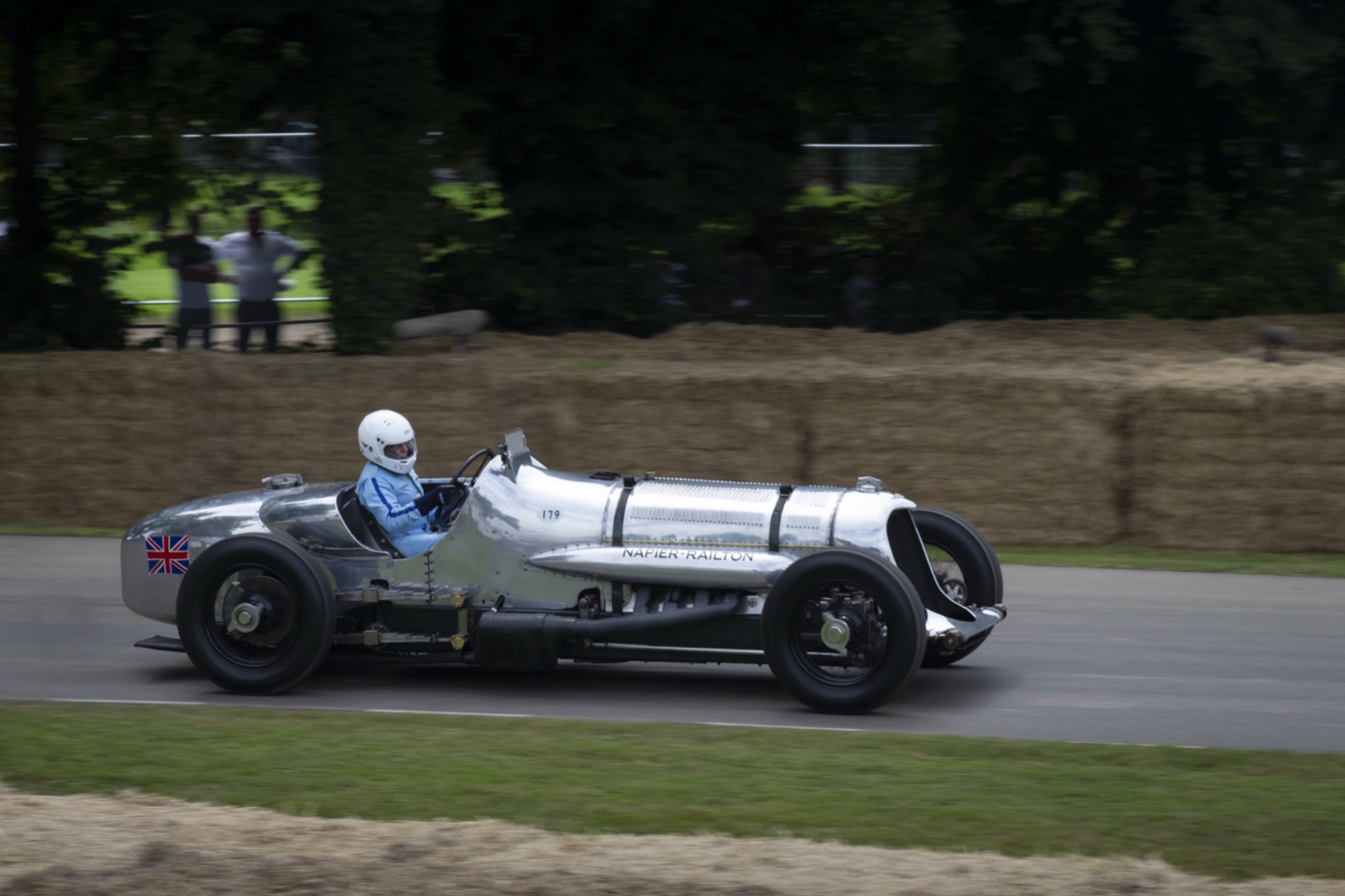
The Napier-Railton is the 24-litre, aero-engined single-seater car that John Cobb commissioned for Brooklands: designed by Reid Railton, built by Thomson & Taylor inside the Brooklands track in 1933 and powered by a Napier Lion aircraft engine with twelve cylinders. On 7 October 1935 the Napier-Railton lapped the Brooklands Outer Circuit at 143.44 mph, and because the track closed in 1939 that lap record can never be beaten. Between 1933 and 1937 it won the BRDC 500 Miles and 500 Kilometres races at Brooklands and broke world records at Montlhéry and on the Bonneville Salt Flats, including the first 24-hour run at more than 150 mph. Brooklands Museum has owned the Napier-Railton since 1997 and still runs it.
Who built the Napier-Railton, and why?
John Cobb ordered the Napier-Railton from Thomson & Taylor of Brooklands, whose chief engineer Reid Railton designed it, to take the Brooklands Outer Circuit lap record and to break long-distance world records. Andrew Frankel, in "Brooklands' Lionheart" in Motor Sport (July 2007), dates the idea to 1932 and the finished Napier-Railton to 1933, "built with two purposes in mind: long-distance record breaking and capturing the Brooklands Outer Circuit lap record".
Cobb, whose Brooklands career began in 1925, was a wealthy fur broker, born in Esher, six miles from the track, according to Brooklands Museum's story of John Cobb. He won his first Brooklands race in July 1925 in a 10-litre 1911 Fiat, and in 1929 took the lap record at 132.11 mph in his 10½-litre V12 Delage. By 1932, Frankel writes, the Delage had lapped at 133.9 mph, faster than any other car of over 8 litres, but the outright record belonged to Tim Birkin's 4½-litre supercharged Blower Bentley single-seater, at 137.96 mph since 24 March 1932, as Motor Sport's report of the 1934 Easter meeting recorded. Cobb sold the Delage in 1933, and Railton designed the new car to his commission, the museum's story says.
Bill Boddy, who watched the Napier-Railton race in the 1930s, described it in Motor Sport in July 1997 as built "for modest fur-broker John Cobb, who liked very big racing-cars". Railton's brief, Boddy wrote, was a car that "hopefully would take the lap-record, be durable for races over Brooklands' somewhat rough concrete surface and survive long-distance record-bids".
Napier-Railton specifications
The Napier-Railton has a 24-litre Napier Lion engine of about 450 to 590 bhp, depending on the source and the test, a three-speed gearbox and a weight of about two tons.
| Item | Figure | Source |
|---|---|---|
| Designer and builder | Reid Railton; Thomson & Taylor, Brooklands, 1933 | Motor Sport, August 1935; Brooklands Museum |
| Engine | Napier Lion Type E89 Series XIA, W12 (three banks of four), naturally aspirated | Boddy, 1980 |
| Capacity | 23,890 cc | Motor Sport, August 1935 |
| Capacity | 23,988 cc (race results) | Motor Sport, October 1935 |
| Capacity, bore and stroke | 23,970 cc; 140 × 130 mm | Frankel, 2007 |
| Valves and ignition | Twin overhead camshafts per bank, four valves per cylinder, two magnetos, twin spark | Frankel, 2007 |
| Gearbox and clutch | Moss three-speed, no reverse, no synchromesh; Borg & Beck clutch | Frankel, 2007; Boddy, 1980 |
| Final drive | 1.6 to 1 | Motor Sport, August 1935 |
| Suspension | Semi-elliptic springs at the front; twin cantilever springs each side at the back | Motor Sport, August 1935 |
| Brakes | Rear only: 16 in Dunlop drums when built, Dunlop discs since the 1950s | Frankel, 2007 |
| Fuel tank | 65 gallons | Boddy, 1980 |
| Length and width | 16 ft 3 in; 5 ft 3 in | Motor Sport, June 2008 |
| Weight | 2 tons | Motor Sport, August 1935 |
| Maximum speed | "in the neighbourhood of 170 m.p.h." | Motor Sport, August 1935 |
How much horsepower did the Napier-Railton have?
The Napier-Railton's engine gave 564 bhp at 2,350 rpm on a 6:1 compression ratio, and a maximum of 590 bhp at 2,700 rpm, when Napier tested it at Acton before it went into the chassis, according to Boddy's note of 1980. Other sources give lower round figures for the same engine.
| Source | Output |
|---|---|
| Motor Sport, May 1934 | 500 hp |
| Motor Sport, August 1935 | 450 hp |
| Boddy, Motor Sport, June 1980 (Napier's test at Acton) | 564 bhp at 2,350 rpm; 590 bhp at 2,700 rpm |
| Frankel, Motor Sport, July 2007 | 550 bhp at 2,350 rpm |
| Motor Sport, June 2008 | 530 bhp at 2,350 rpm |
The engine ran at about 2,000 to 2,200 rpm for most of its life (Boddy, 1980), while Cobb would rev it past 2,700 rpm for the highest speeds (Frankel). With so few revs the gearing is very tall: on the small wheels it wore for Frankel's drive in 2007, the Napier-Railton did 58 mph per 1,000 rpm in top.
How fast was the Napier-Railton?
The Napier-Railton's fastest timed speed was 151.97 mph over a kilometre, during the lap-record attempt of October 1935: "the fastest speed ever officially recorded at Brooklands", Boddy wrote, and one of its world records. Its maximum speed was about 170 mph, by Motor Sport's 1935 figure and Brooklands Museum's today; on its first lap-record attempt, in April 1934, Cobb reached 160 mph on the Railway Straight (Motor Sport, May 1934). At full speed its fuel consumption was half a gallon a mile, Frankel wrote in 2007.
Napier-Railton design and engineering
The Napier-Railton is a front-engined single-seater racing car built round a Napier Lion aircraft engine in a deep, rigid ladder frame. Both axles are beams on leaf springs, and only the rear wheels have brakes. Railton chose a slow-running engine and a very strong chassis so that it would last 24 hours at speed and survive the bumps of the Brooklands concrete, as Boddy explained in 1997.
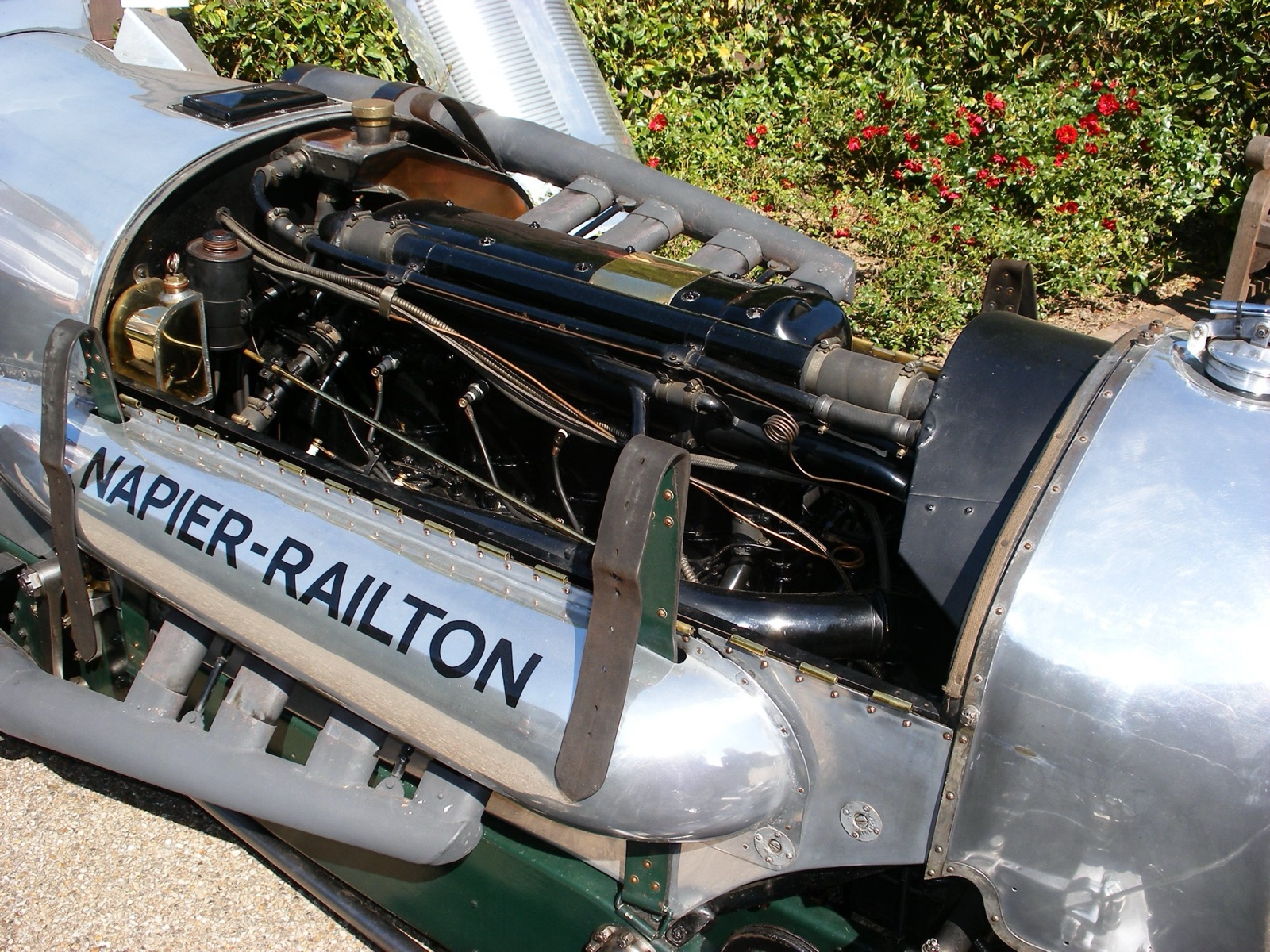
The Napier Lion engine
The Napier-Railton's engine is a Napier Lion. The Lion is a naturally aspirated aero engine with twelve cylinders in three banks of four, in what Brooklands Museum calls a "W" or broad-arrow configuration. Frankel lists twin overhead camshafts per bank, four valves per cylinder, twin-spark ignition from two magnetos and a 140 mm bore with a 130 mm stroke. The Lion had powered Vickers Virginia bombers and the Schneider Trophy-winning Supermarine S5. Boddy, in "A Further Look at the Napier Railton" (Motor Sport, June 1980), identified it as a Type E89 Series XIA aero engine, not the Sea Lion marine version. Cobb wanted reliability and avoided the more highly developed Schneider Trophy Lions, the last of which made 1,450 bhp supercharged.
The Midland Motor Museum confirmed to Boddy in 1980 that the engine in the Napier-Railton was the one installed in 1933. Its restorer, Peter Horne, thought the rumour that it had never been stripped before was probably true, after "at least 12,000 very high-speed miles". Allan Winn, director of Brooklands Museum, put the same figure to Frankel in 2007: "How many other engines have done 12,000 racing miles?"
Chassis, suspension and brakes
The Napier-Railton's chassis members are "of very deep channel section, tapering at the front and rear ends", according to Motor Sport's description of August 1935. The front axle sits above the side members with its semi-elliptic springs passing underneath. At the back Railton used two cantilever springs on each side, one above the other, which took most of the stress off the axle casing and gave security if a leaf broke; Motor Sport thought the arrangement "must surely be unique". André shock absorbers were fitted, and the rear axle ratio was 1.6 to 1.
The Moss gearbox is a crash gearbox with three ratios, no reverse and no synchromesh, and it was "used only for getting away", Motor Sport wrote in 1935. Frankel adds that the steering box is thought to come from a Bentley Speed Six, one of very few bought-in parts. The Napier-Railton was built with 16 in Dunlop drum brakes on the rear wheels only, since Outer Circuit racing and record work needed little stopping power. Those drums were replaced by Dunlop disc brakes, still on the rear wheels only, in the 1950s.
Body, cockpit and starting
The aluminium body has a spacious cockpit because Cobb was a big man and "would need this on record runs of up to 3,000 miles and 24 hours", Boddy wrote in 1997. The seat slides on a central rail and locks with a key into holes in the floor, so that it suited anyone "from Cobb to Dixon", Boddy noted in 1980. The throttle pedal is in the middle, the small gear lever and the transmission handbrake are to the driver's left, and a large Jaeger tachometer reads from 200 to 3,000 rpm.
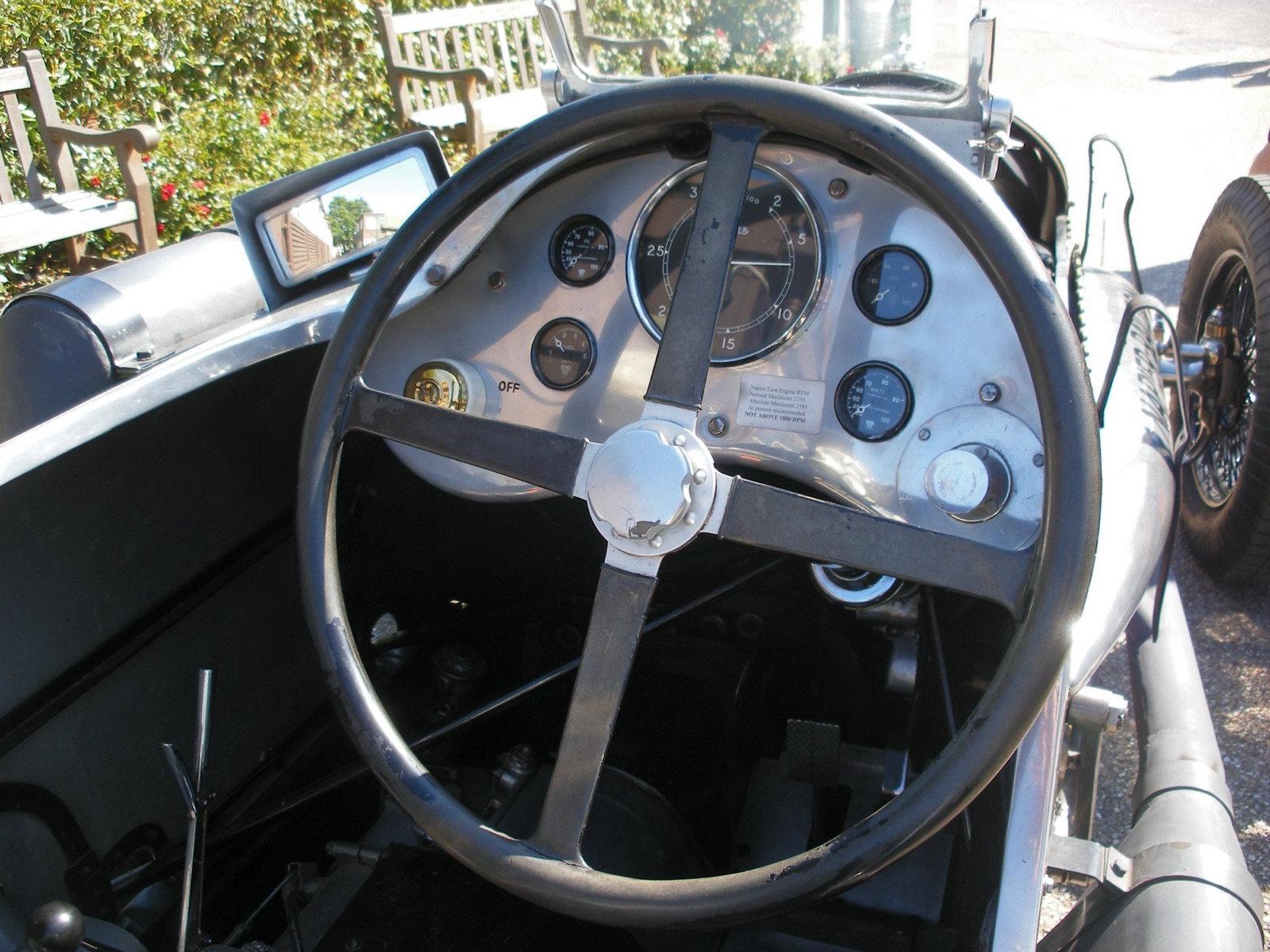
Frankel wrote that the Napier-Railton had no lights or wipers and was always push-started, so it needed no electrical equipment, "nor even a battery". For night running on the Utah salt it carried headlamps on a detachable bar with an engine-driven dynamo (Motor Sport, August 1935), and for 1936 it gained an electric starter that engaged with a back wheel (Boddy, 1980). At the track each of the three cylinder banks exhausts into its own pipe and silencer, ending in fishtails, because Brooklands had noise rules before the war.
The Brooklands Outer Circuit lap record
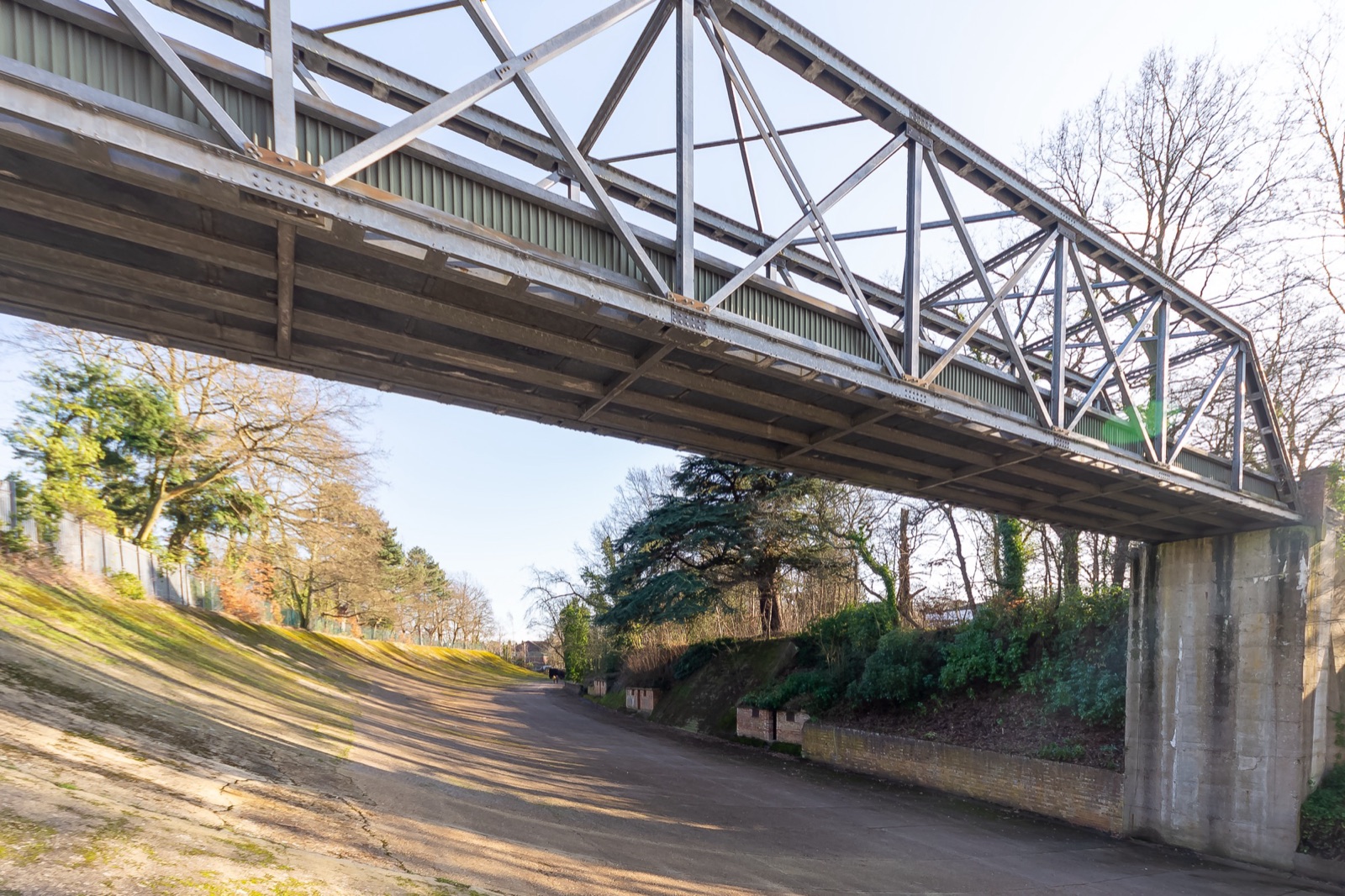
The Napier-Railton holds the Brooklands Outer Circuit lap record at 143.44 mph, set by John Cobb on 7 October 1935. Cobb broke the record three times with the car, losing it once in between to Oliver Bertram's Barnato-Hassan, and no vehicle ever lapped the Outer Circuit faster.
| Date | Driver and car | Speed (lap time) |
|---|---|---|
| 24 March 1932 | Tim Birkin, Bentley 4½ Litre supercharged single-seater | 137.96 mph (72.2 sec) |
| Easter Monday, 2 April 1934 | John Cobb, Napier-Railton | 139.71 mph (71.3 sec) |
| August Bank Holiday meeting, 1934 | John Cobb, Napier-Railton | 140.91 mph (70.69 sec) (Motor Sport, September 1934 and January 1936); 140.93 mph (Brooklands Museum) |
| August Bank Holiday meeting, 1935 | Oliver Bertram, 8-litre Barnato-Hassan | 142.60 mph (69.85 sec) |
| 7 October 1935 | John Cobb, Napier-Railton | 143.44 mph (69 sec) |
Motor Sport's report of the 1934 Easter meeting describes the first record lap: the Napier-Railton, in a colour scheme of "mottled aluminium and green", took the "bump" off the Members' Banking airborne, swept on to the Byfleet Banking "at such a colossal speed" and set 71.3 seconds, 139.71 mph. "Cobb's arms had to be massaged after the attempt", the magazine added. Boddy had predicted in print that Cobb should reach "between 138-139 m.p.h. fairly easily", he recalled in 1980. Cobb raised it to 140.91 mph, 70.69 seconds, on the second lap of the Brooklands Championship Race at the August Bank Holiday meeting of 1934 (Motor Sport, September 1934); the museum gives 140.93 mph.
In August 1935 Bertram took Woolf Barnato's 8-litre Barnato-Hassan round in 69.85 seconds, 142.60 mph, "remarkable for the low position of the car on the banking", Motor Sport's review "The Record-Breakers of 1935" reported in January 1936. The same review says that John Cobb "thought it was time to regain his lost Outer Circuit Lap record", and that the Napier-Railton "proved to have quite a bit up its capacious sleeve, and the record was regained quite comfortably at 143.44 m.p.h." Boddy recalled in 1997 that Cobb compared the attempt to "trying to see how far he could lean out of a first-floor window without falling out".
Brooklands Museum's notice for the record's 80th anniversary (2015) dated the lap to 7 October 1935, "that wet October day", and gave the time as 69 seconds. The museum's Cobb story places the record in the BRDC 500 Miles race; its own collection page dates the 500 Miles to 21 September and the lap record to 7 October, and Motor Sport's January 1936 review notes that records made during races were banned that year.
Why the 143.44 mph record can never be broken
The 143.44 mph record still stands because the Brooklands Outer Circuit never reopened after 1939. At the start of the Second World War, Brooklands was taken over for military use, warehouses were built and parts of the track were cut away, Motor Sport reported in June 2008. Brooklands Museum's 2015 notice compared the speed with Indianapolis: the Napier-Railton's lap speed was not beaten there until 1956.
Napier-Railton racing history at Brooklands
The Napier-Railton raced only on the Brooklands race track, from August 1933 to September 1937, and won the BRDC 500 Miles of 1935 and the BRDC 500 Kilometres of 1937. It also set the fastest race averages seen at Brooklands.
| Date | Race | Drivers and result | Source |
|---|---|---|---|
| August Bank Holiday, 1933 | Byfleet Short Handicap | Cobb: 1st, from scratch; standing lap 120.59 mph, flying lap 123.28 mph | Brooklands Museum; Boddy, 1997 |
| August Bank Holiday, 1934 | Brooklands Championship Race (scratch) | Cobb: 1st at 131.53 mph, then the fastest race at Brooklands | Motor Sport, September 1934 and April 1937 |
| 21 September 1935 | BRDC 500 Miles | Cobb and Tim Rose-Richards: 1st, 4 hr 28 min 52 sec, 121.28 mph | Motor Sport, October 1935; Brooklands Museum |
| Easter Monday, 29 March 1937 | Broadcast Trophy (about 29 miles) | Cobb: 1st from scratch at 136.03 mph | Motor Sport, April 1937 |
| 18 September 1937 | BRDC 500 Kilometres | Cobb and Oliver Bertram: 1st at 127.05 mph | Motor Sport, October 1937; Brooklands Museum |
1933: a win first time out
The Napier-Railton's first race was the Byfleet Short Handicap at the August Bank Holiday meeting of 1933, which it won, according to Brooklands Museum's Cobb story. Boddy wrote in 1997 that it won from scratch, "consuming ordinary pump petrol", after a standing-start lap of 120.59 mph and a flying lap of 123.28 mph. In its next race Cobb broke the Class A lap record at 137.20 mph (Boddy, 1980).
1934 and 1935: the fastest races at Brooklands
At the August Bank Holiday meeting of 1934 Cobb won the new Brooklands Championship Race, a scratch race for invited drivers, by half a mile at 131.53 mph, Motor Sport reported in September 1934: the highest race average yet seen at Brooklands, beating Kaye Don's 128.36 mph of 1928, and it stood until 1937. Its biggest win came in the BRDC 500 Miles of 1935, which Motor Sport reported in October 1935 under the headline "Scratch car wins the 500 mile race". Cobb and Tim Rose-Richards started from scratch in a race decided by "incessant tyre trouble caused by bad surface and high speeds". Bertram's Barnato-Hassan led after an hour at 126.57 mph, then stopped to change three tyres, which put Cobb ahead at 125.9 mph. Rose-Richards crossed the line at 4.28 pm after 4 hours 28 minutes 52 seconds, a record 121.28 mph, with the Riley of Edgar McClure and A. von der Becke second and Earl Howe and Brian Lewis's Bugatti third.
Boddy described a pit stop in that race from a photograph in 1980: Rose-Richards sat in the cockpit while fuel was hosed into the 65-gallon tank and "Dunlop Mac" and his men changed the tyres. The stop took more than ten minutes. Brooklands Museum's 2015 notice says the 121.28 mph average was not matched at Indianapolis until 1949.
1937: the last season
The Napier-Railton spent 1936 on record attempts in Utah and returned to Brooklands for the 1937 Easter meeting "after a year's absence in search of long-distance world's records", Motor Sport reported in April 1937. The magazine noted that the car's bonnet was shrouded until it was pushed out of the paddock, and that Cobb raced in overalls, a white linen helmet and "a pair of very ordinary goggles with the safety-glass labels still stuck on the glasses". He won the Broadcast Trophy, a handicap of about 29 miles broadcast on the radio, from scratch at 136.03 mph, "a higher average than any race has been won at Brooklands before". Brooklands Museum's Cobb story gives the average as 139.90 mph. In the same paddock, the report says, a new Maserati "vied with the Bimotore Alfa as the car of the moment".
In the BRDC 500 Kilometres of 18 September 1937 Cobb shared the Napier-Railton with Oliver Bertram and won at 127.05 mph, Motor Sport reported in October 1937. A rear tyre failed mid-race; Taylor stood on the track holding a strip of tyre-wrapping to mark the pit, Hassan worked on the wheel, and Bertram took over within three minutes. By 4 pm the Napier-Railton led at 127.4 mph. The Napier-Railton's racing career at Brooklands ended in 1937, when it had become too heavily handicapped to win, Brooklands Museum says.
Napier-Railton world records at Montlhéry and Bonneville
The Napier-Railton took long-distance world speed records at the Montlhéry track near Paris in 1933 and 1934 and on the Bonneville Salt Flats in Utah in 1935 and 1936, where it set the world 24-hour record twice.
Montlhéry, 1933 and 1934
Cobb first tried for the 24-hour record at Montlhéry in 1933. He did not get it, but he took other records before the radiator sprang a leak, says Brooklands Museum's Cobb story. Its 2025 collection page lists six world records from that attempt (200 miles at 125.64 mph, 500 km at 123.63 mph, 500 miles at 123.27 mph, 1,000 km at 122.05 mph, three hours at 124.33 mph and six hours at 122.62 mph) and six Class A records, including the hour at 126.83 mph.
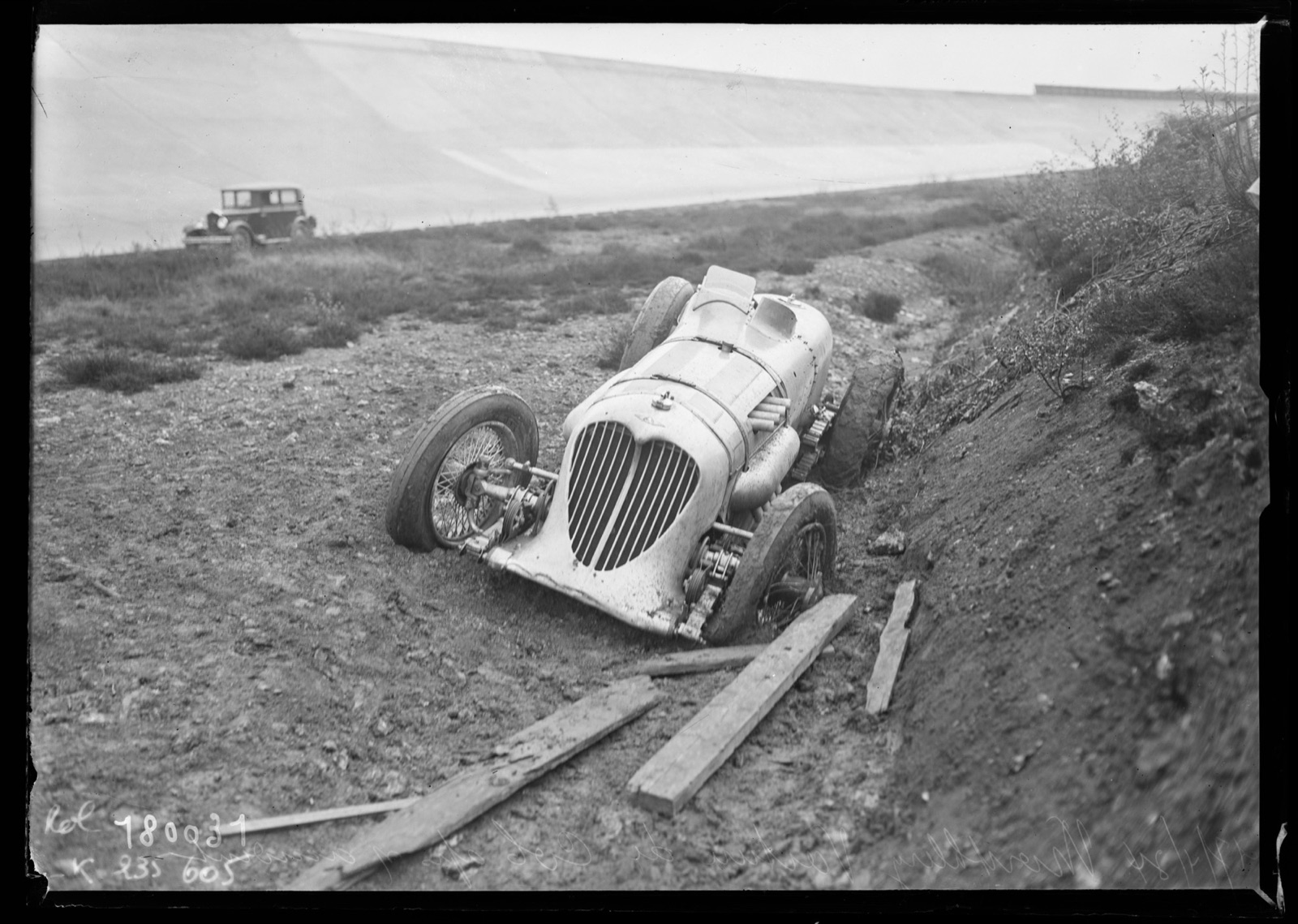
The second attempt, in April 1934, added five world records, the same page says, including six hours at 123.01 mph and 12 hours at 121.19 mph. It ended when the Napier-Railton, with Freddie Dixon driving, "went over the lip of the banking and was damaged sufficiently to end the attempt there and then", Frankel wrote. The Agence Rol photographs of the car in the ditch are dated 17 April 1934. When Peter Horne overhauled the car for Bob Roberts, Boddy reported in 1980, the repair to the chassis bent in Dixon's accident was still visible.
Bonneville, 1935
In July 1935 Cobb, Tim Rose-Richards and Charlie Dodson took 21 world records with the Napier-Railton on the Bonneville Salt Flats, "this magnificent effort of British drivers of an all-British car", as Motor Sport put it in August 1935. Fuel, oil, fifty large tyres, spares and the car were carried 6,000 miles, the last 100 from the railhead by lorry. Cobb broke the lap record of the ten-mile circuit in a preliminary run, then took the six records Hans Stuck had set at Avus in 1934 in the enclosed Auto Union, running at a little over 150 mph for an hour.
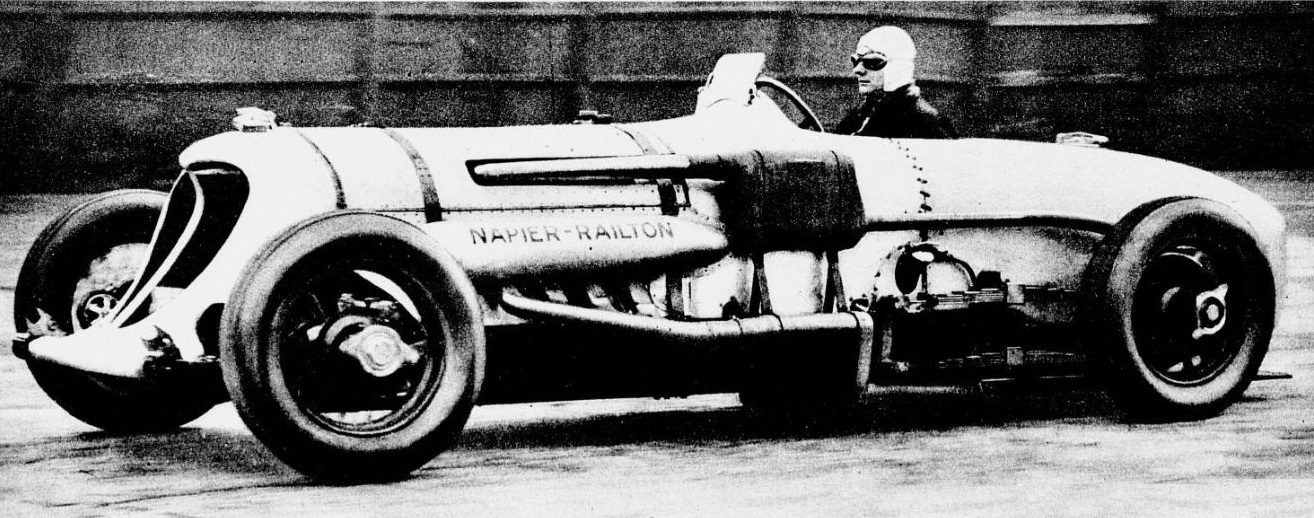
The 24-hour run began at 2 am on Tuesday 16 July. Cobb drove the first spell with headlamps on, stopping only after 500 miles to refuel; Rose-Richards drove to the 1,000-mile mark and Dodson took over. At midday it was 117 degrees in the shade, "and no shade", Motor Sport wrote, and spectators wandered about "in the most dangerous places". Only two tyre changes were needed, but at half-distance the car's pounding broke up the course and the drivers moved to a new one. Rose-Richards lost a tyre after 20 hours and still finished the 24 hours. Sources give two speeds for the record:
| Source | 24-hour speed | One hour |
|---|---|---|
| Motor Sport, August 1935 | 134.7 mph | "a little over" 150 mph |
| Motor Sport, January 1936 | 134.85 mph | 152.12 mph |
| Brooklands Museum, Cobb story | 134.7 mph | 152.7 mph |
| Frankel, Motor Sport, July 2007 | 134.85 mph | not given |
The 24-hour record did not last. Ab Jenkins, an American who had held it with a Pierce-Arrow, came back in August with a Duesenberg, took the hour at 152.15 mph and, with Tony Gulotta sharing the driving, raised the 24 hours "from 134.85 m.p.h. to 135.48 m.p.h.", Motor Sport's January 1936 review reported.
Bonneville, 1936: 150 mph for 24 hours
On 12 September 1936 the Napier-Railton set a world 24-hour record of 150.6 mph at Bonneville, by Brooklands Museum's collection page and Boddy's account of 1980; the museum's 2015 notice gives 150.16 mph. The record Cobb was chasing had been broken first by Jenkins and then by George Eyston, and stood "at a fraction over 149mph", Frankel wrote, and the Napier-Railton "had become the first car to average over 150mph for 24 hours, inclusive of all stops". The car ran on plain-treaded Dunlop 7.50-20 tyres, one of which Boddy saw on show in 1980 with a blueprint of the circular courses Cobb used.
How many records did the Napier-Railton set?
The Napier-Railton set 47 speed records in all, from one kilometre at 151.97 mph to 24 hours at 150.6 mph, by Boddy's count of 1980. Brooklands Museum's 2015 notice counts "no less than 37 World Records".
Who drove the Napier-Railton?
John Cobb drove the Napier-Railton in all its races and lap records, and shared it with co-drivers on record runs and in the two long races. Boddy listed them in 1980: the Hon. Brian Lewis, Tim Rose-Richards, Cyril Paul, Charles Brackenbury, Charlie Dodson, Oliver Bertram and Freddie Dixon, "the last-named crashing the car at Montlhery". Rose-Richards shared the 1935 500 Miles win and Bertram the 1937 500 Kilometres.
John Cobb
Cobb was educated at Eton and Trinity Hall, Cambridge, followed his father into the fur trade and learned to fly at Brooklands, earning his Royal Aero Club certificate in April 1924, Brooklands Museum's Cobb story says. Frankel described him as "a quiet, socially awkward man who just wanted to get on and do his thing with the minimum of fuss". After the Napier-Railton he took the land speed record in a twin-Lion Railton, also built by Thomson & Taylor, reaching 394.19 mph in 1947 as the mean of two runs, with one run at 403.13 mph, the museum's story says. He was killed on Loch Ness on 29 September 1952, when his jet boat Crusader broke up at over 200 mph during an attempt on the water speed record.
Driving the Napier-Railton today
Brooklands Museum's curator Geoff Dovey was the car's usual driver when Frankel drove it on the Byfleet Banking in 2007, the first journalist to drive it on the banking since S. C. H. Davis. Three men push it to start, Dovey told him: "Drop the clutch when I shout 'Now!' and be prepared. She does tend to run away." Frankel found the steering heavy only at parking speeds, the Moss gearbox easy, and the throttle "incredibly sensitive".
The Napier-Railton after Cobb
After its racing ended in 1937 the Napier-Railton played a part in a feature film, tested aircraft parachutes, raced again in vintage events and passed through several collections before Brooklands Museum bought it in 1997.
Pandora and the Flying Dutchman
In 1949 the Romulus Film Company hired the Napier-Railton from Cobb for Pandora and the Flying Dutchman, a film about a racing driver starring James Mason, according to Brooklands Museum. Frankel adds Ava Gardner and calls the film "apparently risible"; the car wore "strange bodywork" for it, and the museum's 2015 notice dates the film to 1951. A Brooklands Museum photograph captioned with the film's title shows the car on Pendine Sands in Wales.
Parachute testing at Dunsfold
In 1951 Cobb sold the Napier-Railton to the GQ Parachute Company of Woking, which used it as a test vehicle for aircraft braking parachutes on the runway at Dunsfold airfield, says the Dunsfold Airfield history of the Napier-Railton parachute test vehicle. Its test equipment deployed a braking parachute at high speed and retracted it once the car had slowed to about 30 knots. Allan Winn of Brooklands Museum wrote in a letter to Motor Sport in April 2007 that Thomson & Taylor modified the car for the trials in 1954, when it still wore its film bodywork, and that the 15 in disc brakes were built by Dunlop for an unidentified 1950s aircraft. Ian Taylor, son of Ken Taylor of Thomson & Taylor, helped convert the car to discs (Boddy, 1980).
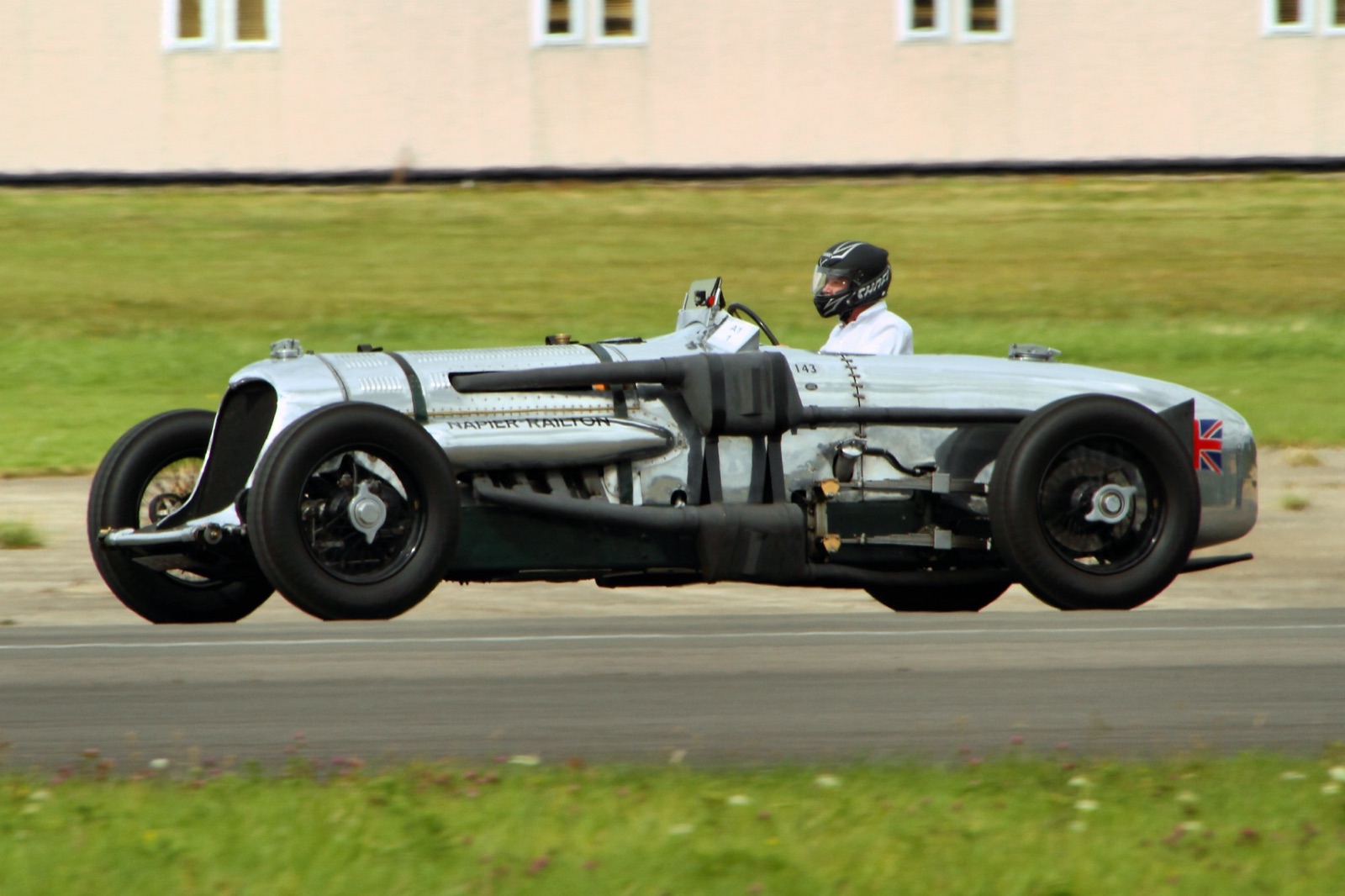
Sources differ on the driver. The text of the Dunsfold history and Boddy name Sir Geoffrey Quilter; Brooklands Museum's photograph captions, one dated May 1954 and one reproduced on the Dunsfold page, name Sir Raymond Quilter. Second gear in the Moss gearbox "had been thrashed hard by GQ" and had to be replaced, Boddy learned from the restorer.
Napier-Railton owners from 1951 to 1997
From GQ the Napier-Railton went to the Hon. Patrick Lindsay, who had it overhauled by Crosthwaite and Gardner, raced it in Vintage Sports-Car Club events and lent it for a time to the National Motor Museum at Beaulieu, according to the Dunsfold history. Boddy recalled in 1980 that Douglas Hull prepared it for Lindsay and that Lindsay once spun it at Oulton Park.
| Owner | What happened |
|---|---|
| GQ Parachute Company, Woking | Bought it in 1951; braking-parachute trials at Dunsfold; disc brakes fitted |
| Patrick Lindsay | VSCC racing; displayed at Beaulieu |
| T. A. "Bob" Roberts, Midland Motor Museum, Bridgnorth | Overhauled, except the engine, by Hodec Engineering of Old Woking in 1975; Peter Horne rebuilt the engine and remade the Brooklands exhausts |
| Victor Gauntlett | Bought it from Roberts in 1989 |
| A German industrialist, Leipzig | Bought it at auction in 1991 |
| Lukas Hüni (Swiss dealer) | Brought it back to Britain in 1997 and lent it to Brooklands Museum |
| Brooklands Museum Trust | Bought it in December 1997 |
When Peter Horne took the Napier-Railton on for Roberts, the water-pump drive had sheared, the water jackets leaked, and the old brake drums and the exhaust system were missing, Boddy reported in 1980. The Midland Motor Museum also had the original works drawings and the workshop schedules for the chassis parts made at Thomson & Taylor.
Where is the Napier-Railton now?
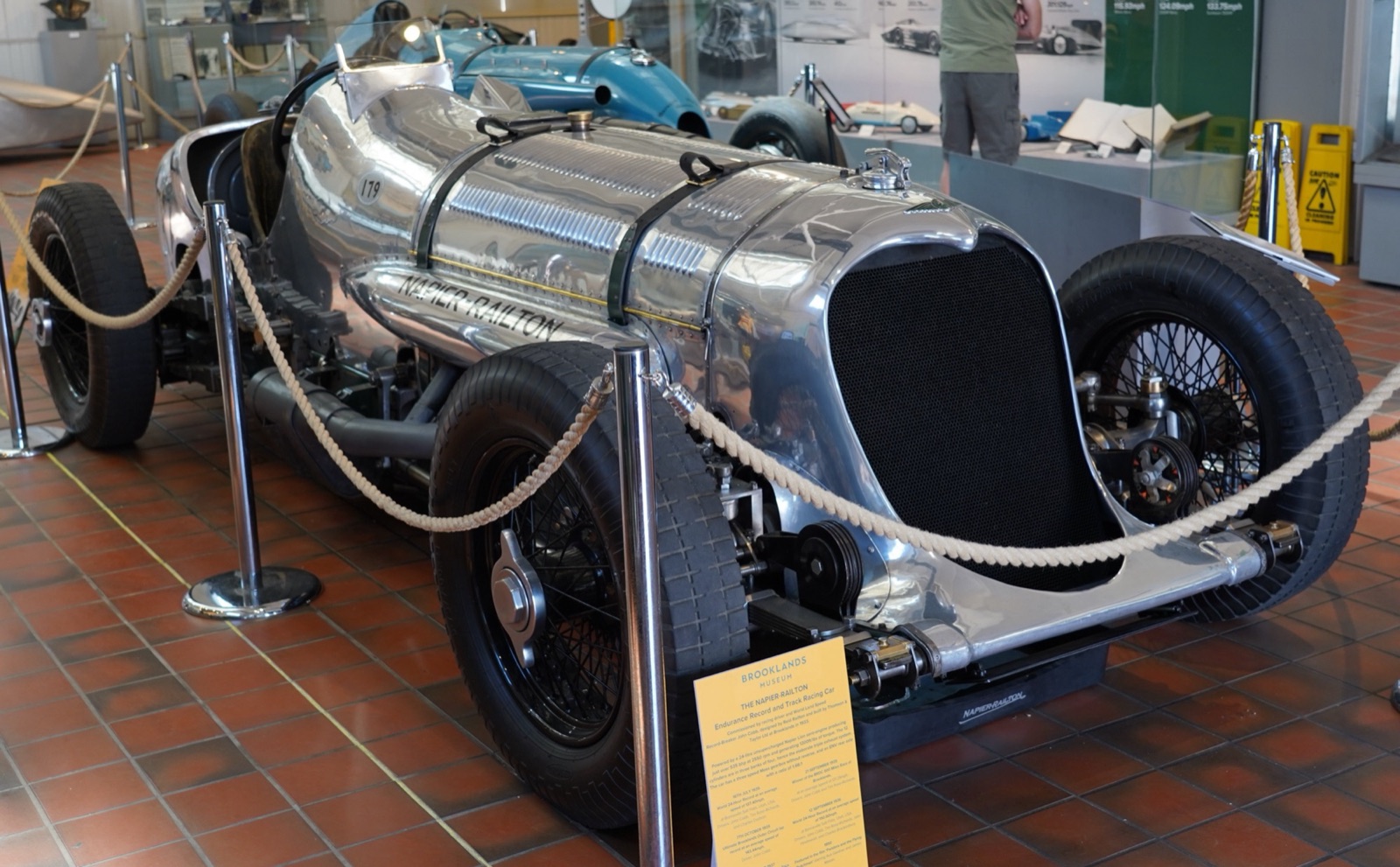
The Napier-Railton is at Brooklands Museum in Weybridge, Surrey, England, on the site where it was built, and it is kept in running order. The museum bought it in December 1997 with a Heritage Lottery Fund grant and money from private donors, according to the Dunsfold history and Frankel, and the museum's 2025 collection page has it on display in the ERA Shed.
What did Brooklands Museum pay for the Napier-Railton?
The car "returned from Germany earlier this year, and had been on loan at Brooklands until the Museum was able to raise the £800,000 asking price", Motor Sport reported in January 1998, adding that lottery grants totalling £1.5 million had made the purchase possible and would also pay for work on the museum's buildings. The share the Lottery paid is disputed. In a letter to Motor Sport in March 2007 Michael MacDowel wrote that "the Lottery only agreed to pay about 50 per cent", the rest raised by Victor Gauntlett; Allan Winn replied in April 2007 that the Heritage Lottery Fund "paid 75 per cent of the price, not 50 per cent". The Dunsfold history also gives 75 per cent. Frankel, driving it in 2007, called it "a priceless car".
Seeing the Napier-Railton run
The Napier-Railton runs on the Finishing Straight at Brooklands Museum and is usually at the Goodwood Festival of Speed each June, the museum says. The Dunsfold history lists demonstrations at Brands Hatch, the Goodwood Festival of Speed, the Goodwood Revival, the Farnborough International Air Show, Dunsfold Wings and Wheels and the museum's Double Twelve Motorsport Festival. The museum's 2015 notice announced its first appearance in Asia, as the centrepiece of the Hong Kong Classic on 9–11 October 2015, and recorded a run on Pendine Sands for the 90th anniversary of Malcolm Campbell's Blue Bird record.
Napier-Railton replicas
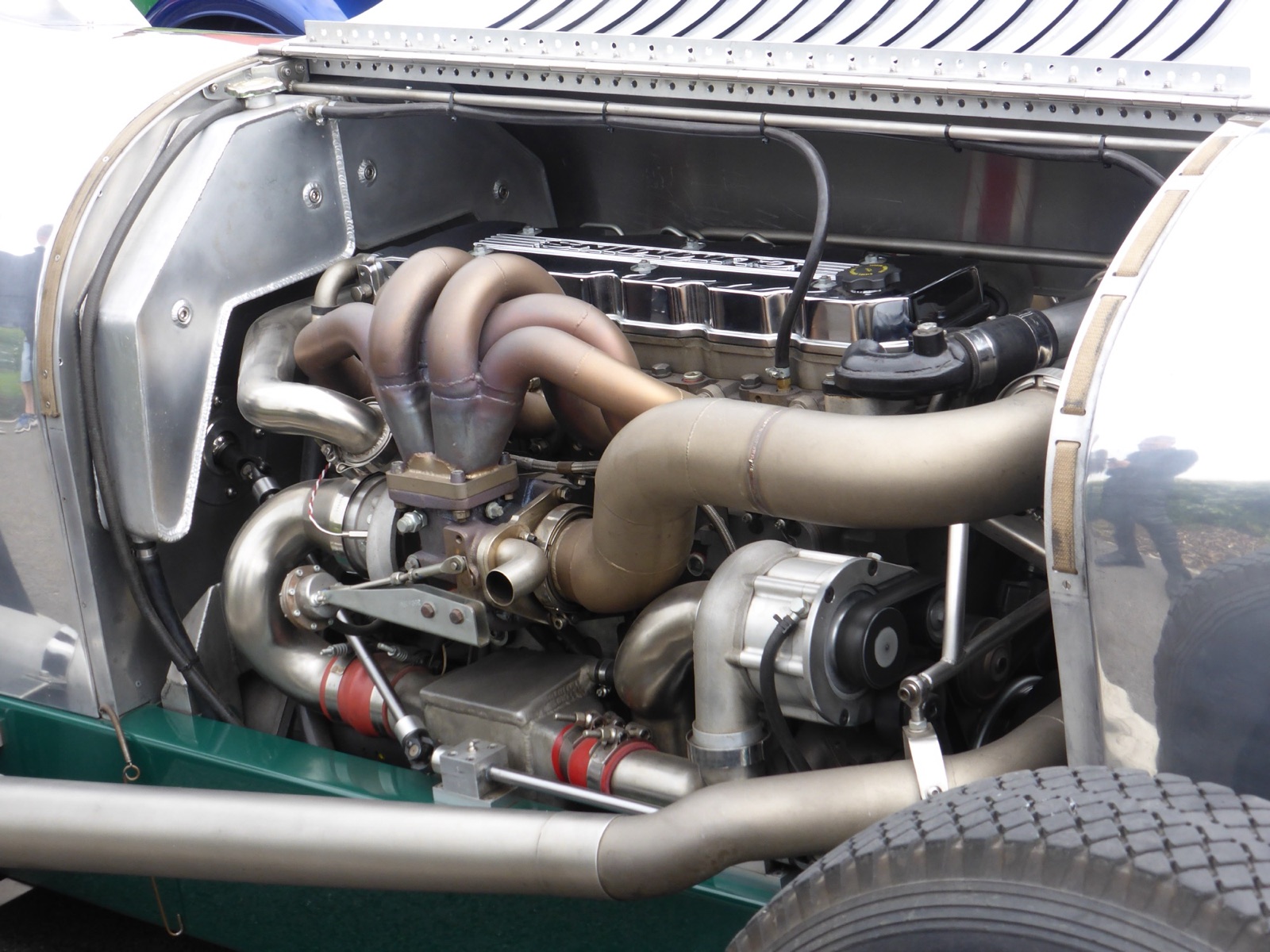
The best-known Napier-Railton replica is the Cummins Napier Railton, a dimensionally accurate copy with a 6.7-litre Cummins diesel in place of the Napier Lion. Cummins engineers took that engine, rated at up to 300 hp in commercial use, to close to 500 hp for the replica, Diesel Army reported from Cummins's announcement, and showed it at the INTERMAT show in Paris on 20–25 April 2015. Cummins had its own link with Brooklands: its 1931 Diesel Special No. 8 Indianapolis car was driven there on a European tour organised by Clessie Cummins.
Napier-Railton rivals
The Napier-Railton's rivals were the big Outer Circuit cars at Brooklands, and on the salt the American Ab Jenkins and the Englishman George Eyston, who traded the 24-hour record with Cobb in 1935 and 1936.
At Brooklands
Birkin's Bentley single-seater held the lap record the Napier-Railton was built to take, and lost it at Easter 1934. Only Oliver Bertram's 8-litre Barnato-Hassan, owned by Woolf Barnato, ever took the record from the Napier-Railton, in August 1935, and Cobb's own V12 Delage had held it in 1929. In 1937 the Napier-Railton raced against Austin Dobson's Bimotore Alfa Romeo, and in the 500 Kilometres against the Rileys, which finished second and third (Motor Sport, October 1937).
On the salt
Ab Jenkins drove a Pierce-Arrow of "less than eight litres" single-handed for 24 hours to set the record Cobb first beat (Motor Sport, August 1935), and took it back with a Duesenberg. George Eyston, whom Motor Sport expected to attack the records with his new "Spirit of the Winds", held the 24-hour record at a little over 149 mph when Cobb beat it in 1936 (Frankel, 2007).
Other Railton and Thomson & Taylor record cars
Thomson & Taylor also built three of Malcolm Campbell's Blue Birds and the Railton Mobil Special, Frankel wrote. The Railton land speed record car used two Napier Lion engines, wrote R. H. Beauchamp, who worked at Thomson & Taylor, in Motor Sport in January 1979; he listed its records as 350.20 mph in 1938, 369.70 mph in 1939 and 394.20 mph in 1947, all at Bonneville.
Questions and answers
Who was Reid Railton?
Reid Railton was the engineer at Thomson & Taylor of Brooklands who designed the Napier-Railton and, later, Cobb's twin-engined land speed record car; R. H. Beauchamp, who worked under him, called him "the great Reid Railton" in Motor Sport in 1979. Boddy wrote in 1997 that Railton was also responsible for the Railton-Terraplane touring cars. Beauchamp recalled Railton leaving Brooklands to live in California with his wife and children.
Why did the Napier-Railton race so little at Brooklands after 1935?
After 1935 the handicapping set at Brooklands for the Napier-Railton left it little chance of more racing success there, according to Brooklands Museum's story of John Cobb. Cobb raced a 4-litre Sunbeam at Brooklands in 1936 and sent the Napier-Railton back to Utah for more records.
How loud is the Napier-Railton?
Quieter than its size suggests, because it has always run with silencers. Motor Sport's 1937 Easter report described it "flying round the track with very little noise", and Frankel found it "surprisingly quiet" in 2007 next to Babs, with its 27-litre Liberty engine and stub exhausts.
What colour was the Napier-Railton?
Motor Sport described the colour scheme in May 1934 as "mottled aluminium and green". Boddy, writing in 1997, remembered it as an "aluminium-and-black car".
Why is it called the Napier-Railton?
The name joins Napier, maker of its Lion aero engine, and Reid Railton, its designer. Its builders, Thomson & Taylor, are marked only by the tiny T & T badge on the radiator cowl, which Boddy noted in 1980.
Sources
- Motor Sport, "High speeds and good racing at Brooklands", May 1934: the first lap record (139.71 mph, 71.3 sec), Birkin's record and date, colour scheme, 500 hp, 160 mph on the Railway Straight.
- Motor Sport, "August Bank Holiday at Brooklands", September 1934: the 1934 Brooklands Championship Race at 131.53 mph and the 140.91 mph lap record.
- Motor Sport, "Cobb and his comrades take 21 world's records on the Napier Railton", August 1935: the 1935 Bonneville runs, 134.7 mph, specification (23,890 cc, 450 hp, chassis, suspension, axle ratio, 2 tons, about 170 mph), Jenkins and Stuck.
- Motor Sport, "Scratch car wins the 500 mile race", October 1935: the 1935 BRDC 500 Miles, 121.28 mph, 23,988 cc in the results.
- Motor Sport, "The Record-Breakers of 1935", January 1936: 21 world records, 134.85 mph, the hour at 152.12 mph, Jenkins's replies, Bertram's 142.60 mph, the 143.44 mph lap, the ban on records in races.
- Motor Sport, "The B.A.R.C. Easter meeting", April 1937: the Broadcast Trophy win at 136.03 mph, the 1934 race average of 131.53 mph, the Bimotore Alfa Romeo.
- Motor Sport, "The B.R.D.C. 500", October 1937, p. 38: the 500 Kilometres win at 127.05 mph and the pit stop.
- R. H. Beauchamp, "Life at Thomson & Taylor's, 1927 to 1939", Motor Sport, January 1979: the Railton land speed record car's engines and records.
- Bill Boddy, "A Further Look at the Napier Railton", Motor Sport, June 1980: the engine test figures and type, 47 records, 150.6 mph, drivers, the restoration, the cockpit, later owners.
- Bill Boddy, "Napier Railton", Motor Sport, July 1997: Railton's brief, the first race, Cobb's "first-floor window" remark, 151.97 mph.
- Motor Sport, "Brooklands secures Napier-Railton at last", January 1998: the £800,000 asking price and the lottery grants.
- Motor Sport, Letters, March 2007 (Michael MacDowel), and "Railton extras", April 2007 (Allan Winn, Brooklands Museum): the Lottery's share, the GQ conversion and disc brakes.
- Andrew Frankel, "Brooklands' Lionheart", Motor Sport, July 2007: the car's purpose, the engine, gearbox, brakes and steering box, 134.85 mph, the first 150 mph 24 hours, later life, driving impressions, Cobb's death.
- Motor Sport, "Brooklands reborn", June 2008: 7 October 1935, dimensions, 530 bhp, the track's wartime fate.
- Bill Boddy, "Napier-Railton's glorious times", Motor Sport, April 2010: the 151.97 mph kilometre in the October 1935 lap-record attempt.
- Brooklands Museum, "Brooklands Stories: John Rhodes Cobb" (Peter Kearns): Cobb's life, the first race, Montlhéry, the 1934 lap records, 134.7 mph and 152.7 mph, the 1937 races, the land and water speed records.
- Brooklands Museum, "Napier-Railton", collection page (2025 version, read through a saved copy): the records list and dates, the end of racing in 1937.
- Brooklands Museum, "80th Anniversary of the Napier-Railton's Ultimate Outer Lap Record" (2015, read through a saved copy): 69 seconds, 37 world records, 150.16 mph, the Indianapolis comparisons, the Hong Kong Classic.
- Brooklands Museum, "Napier-Railton", collection highlights page: the 1949 film hire, the 1951 sale to GQ, runs on the Finishing Straight and at Goodwood.
- Dunsfold Airfield, "Napier-Railton parachute test vehicle": the parachute trials and the owners from 1951 to 1997.
- Diesel Army, "Cummins Replicates Historic 1933 Napier-Railton Race Car", 2015: the Cummins replica.
- Match l'Intran, no. 469, July 1935, p. 2: the photograph of Cobb in the car.
- Motor Sport, "Bob Roberts", May 1990: Roberts's sale of the car to Victor Gauntlett.