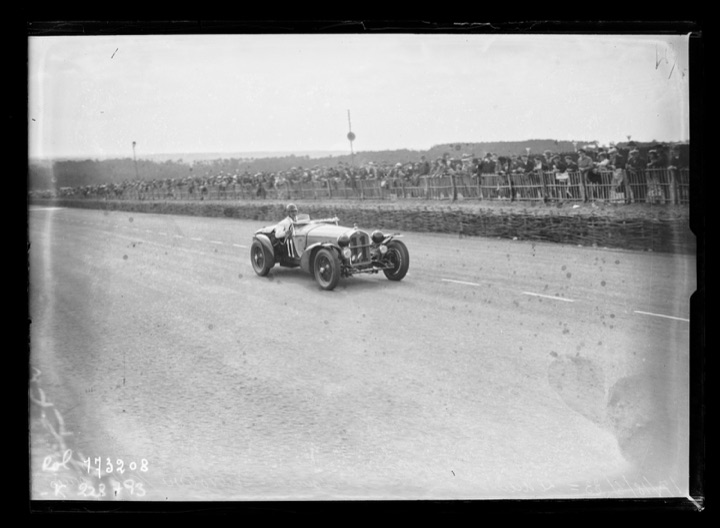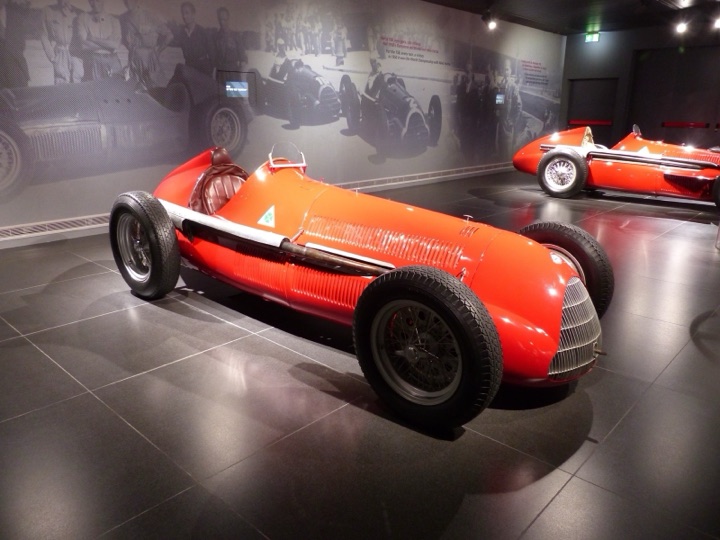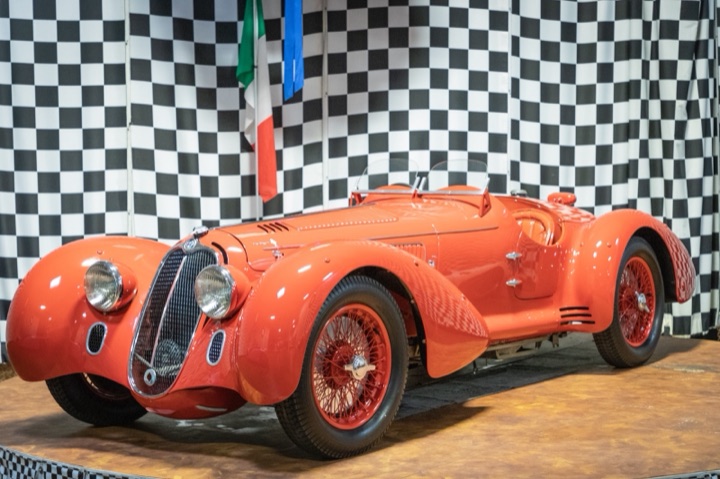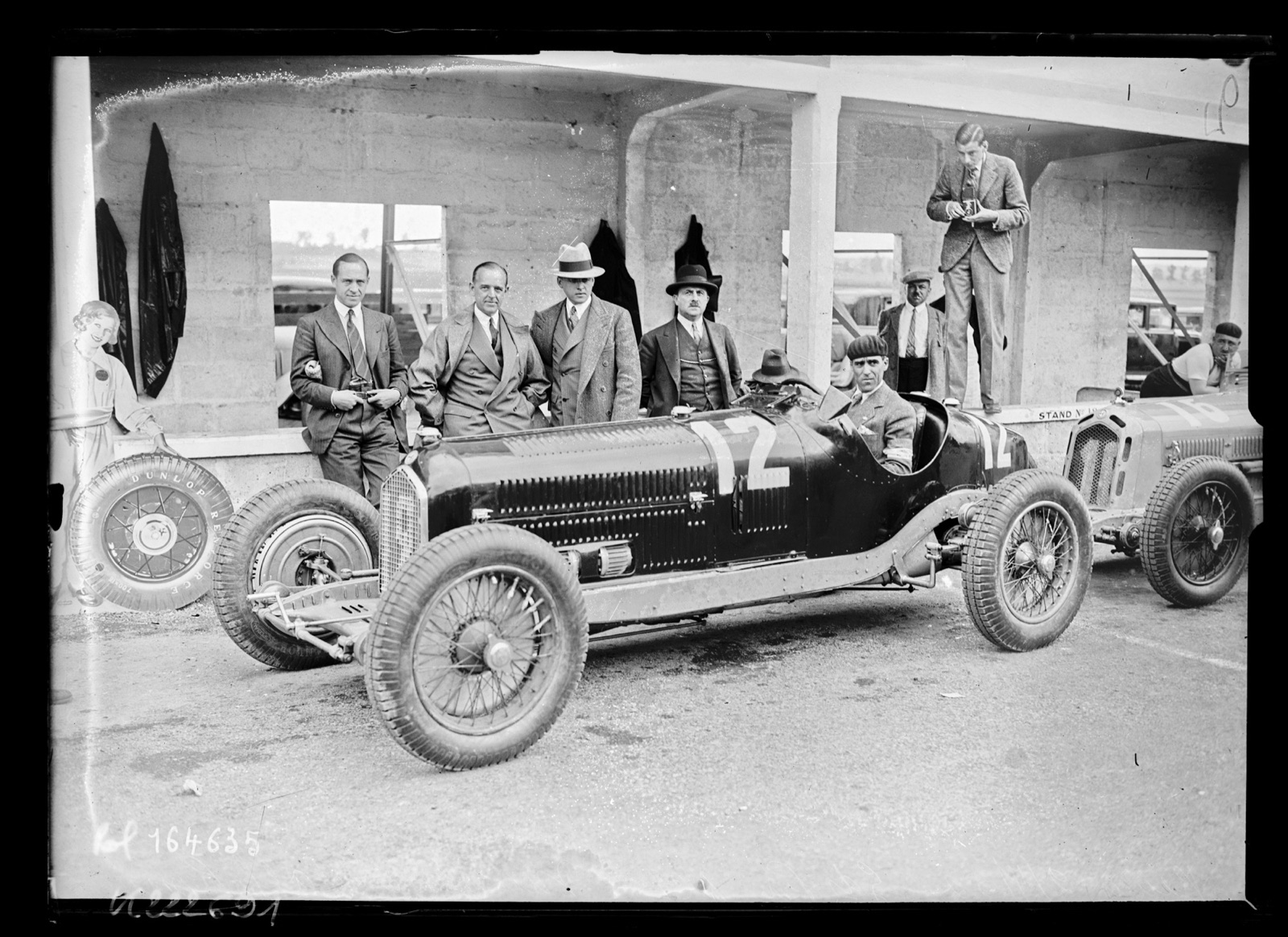
The Alfa Romeo P3, also called the Tipo B or the Monoposto, is the single-seat Grand Prix car Vittorio Jano designed for the 1932 season: a supercharged straight-eight of 2.6 litres, later 2.9 and 3.2, in a car Motor Sport puts at about 700 kg. It won on its debut in the Italian Grand Prix at Monza on 5 June 1932 and took the first three places in the French and German Grands Prix that summer, by the Motor Sport database. Enzo Ferrari's team raced it from August 1933, and in an Alfa Romeo P3 Tazio Nuvolari beat five Mercedes-Benz and four Auto Unions in the German Grand Prix at the Nürburgring on 28 July 1935, the race Motor Sport's report of September 1935 headed "Nuvolari the master".
Who designed the Alfa Romeo P3, and why?
The Alfa Romeo P3 was designed by Vittorio Jano, Alfa Romeo's chief designer since he joined from Fiat in 1923, for the 1932 season, when the Grand Prix rules no longer required a racing car to have two seats, as Paul Fearnley wrote in Motor Sport in March 2017. Jano had already designed the P2 Grand Prix car, winner of the first world championship for manufacturers in 1925, and the 6C sports cars that "put the Milanese marque on an improved financial footing", followed by the 8C 2300.
The Grand Prix rules of 1931 and 1932
The governing body, the AIACR, let cars of any engine size into its new European championship for drivers in 1931, and for 1932 it halved the main Grands Prix to five hours and dropped the rule that a car carry a second seat, which had been kept for riding mechanics after they were banned in 1924, Fearnley wrote. A single-seater had won the first Indianapolis 500 in 1911, but European Grand Prix cars had kept their two seats until then.
From the P2, the Tipo A and the 8C 2300
Jano's first single-seater was the Tipo A of 1931, a 980 kg car with two supercharged six-cylinder engines of 115 bhp side by side and two gearboxes; Giuseppe Campari won the 1931 Coppa Acerbo in one. The Alfa Romeo P3 kept the Tipo A's idea of two drive shafts and drew on the two-seat 8C 2300, later called the Monza, which "would provide Monoposto's underpinnings", in Fearnley's account. RM Sotheby's catalogue for chassis 50006 names the P2 instead: Jano began the new car in late 1931, it says, "using the two-seat P2 Grand Prix car as a foundation", with a 2.6-litre version of the straight-eight.
Why is it called the P3 and the Tipo B?
The Alfa Romeo P3 was the Monoposto (single-seater) in period; "its familiar P3 nomenclature came later", wrote Fearnley. Motor Sport in October 1982 said that in period the cars were called "two-nine Alfas" or "monoposto", and Andrew Frankel, in Motor Sport in 2015, called P3 an erroneous name. Motor Sport's survey of January 1934 already wrote "P.3" for the 1932 car and called the new 1934 cars "Type B".
Alfa Romeo P3 design and engineering
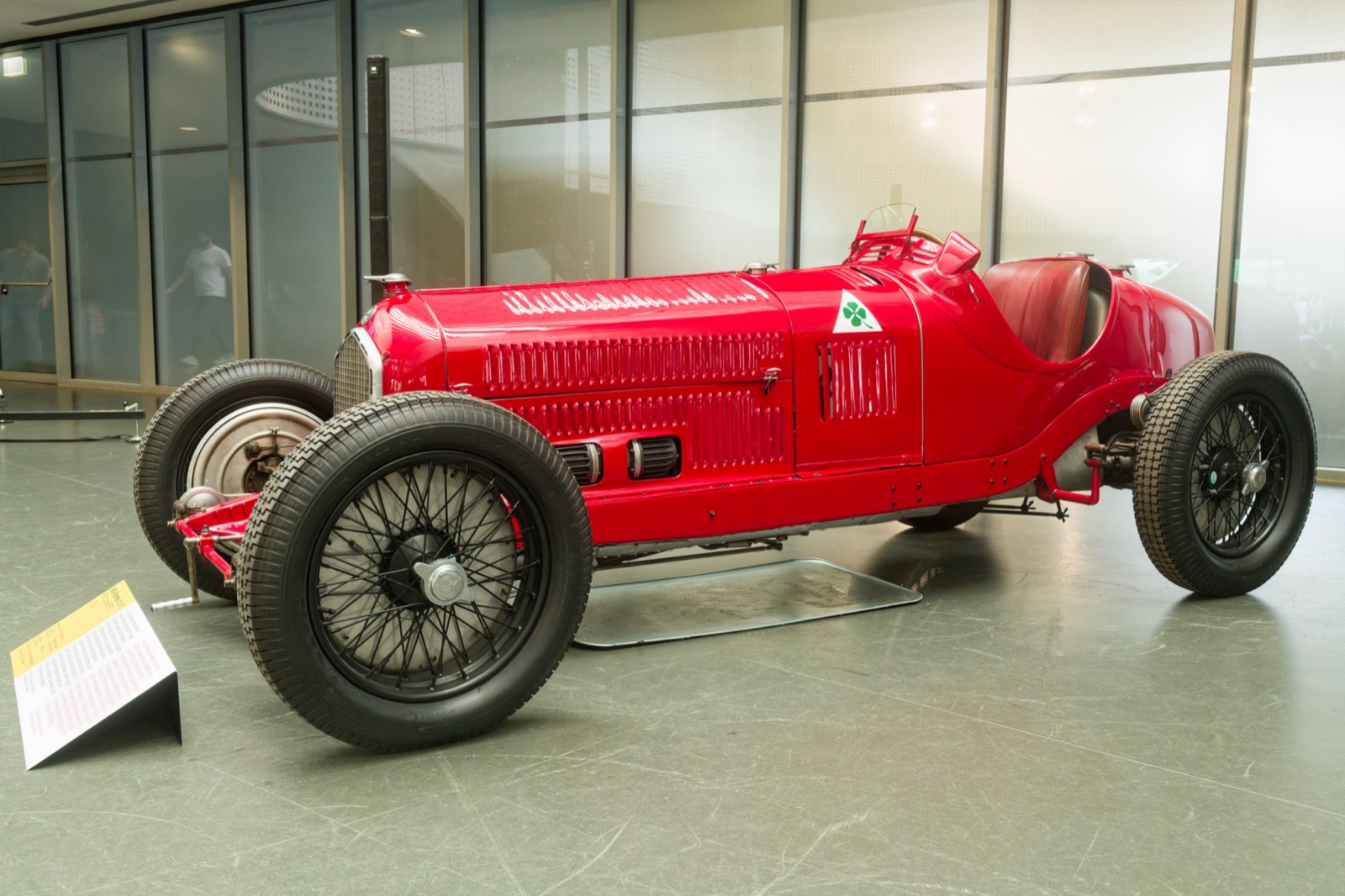
The Alfa Romeo P3 combined a conventional chassis, with beam axles on leaf springs and rod-operated drum brakes, with a light straight-eight engine and a split transmission that let the driver sit low between two propeller shafts (Fearnley, 2017). The chassis and cockpit were 66 cm across, and the car weighed about 700 kg.
Was the Alfa Romeo P3 the first single-seat Grand Prix car?
Not by every account. Fearnley's 2017 article opens: "Alfa's Tipo B Monoposto wasn't motor racing's first single-seater". RM Sotheby's printed catalogue called it the first Grand Prix car with monoposto coachwork, and the auction house then corrected that in a saleroom note: "the Alfa Romeo P3 Tipo B was not the first single seater grand prix car". Alfa Romeo's own Tipo A of 1931 was a single-seater, but a wide one; the Tipo B was the firm's first "truly narrow single-seater", by Motor Sport's 1982 account, and Neil Oatley, design director at McLaren, told a Motor Sport design panel in March 2017 that it was the first Grand Prix car to move the driver into a central position.
The straight-eight engine and twin superchargers
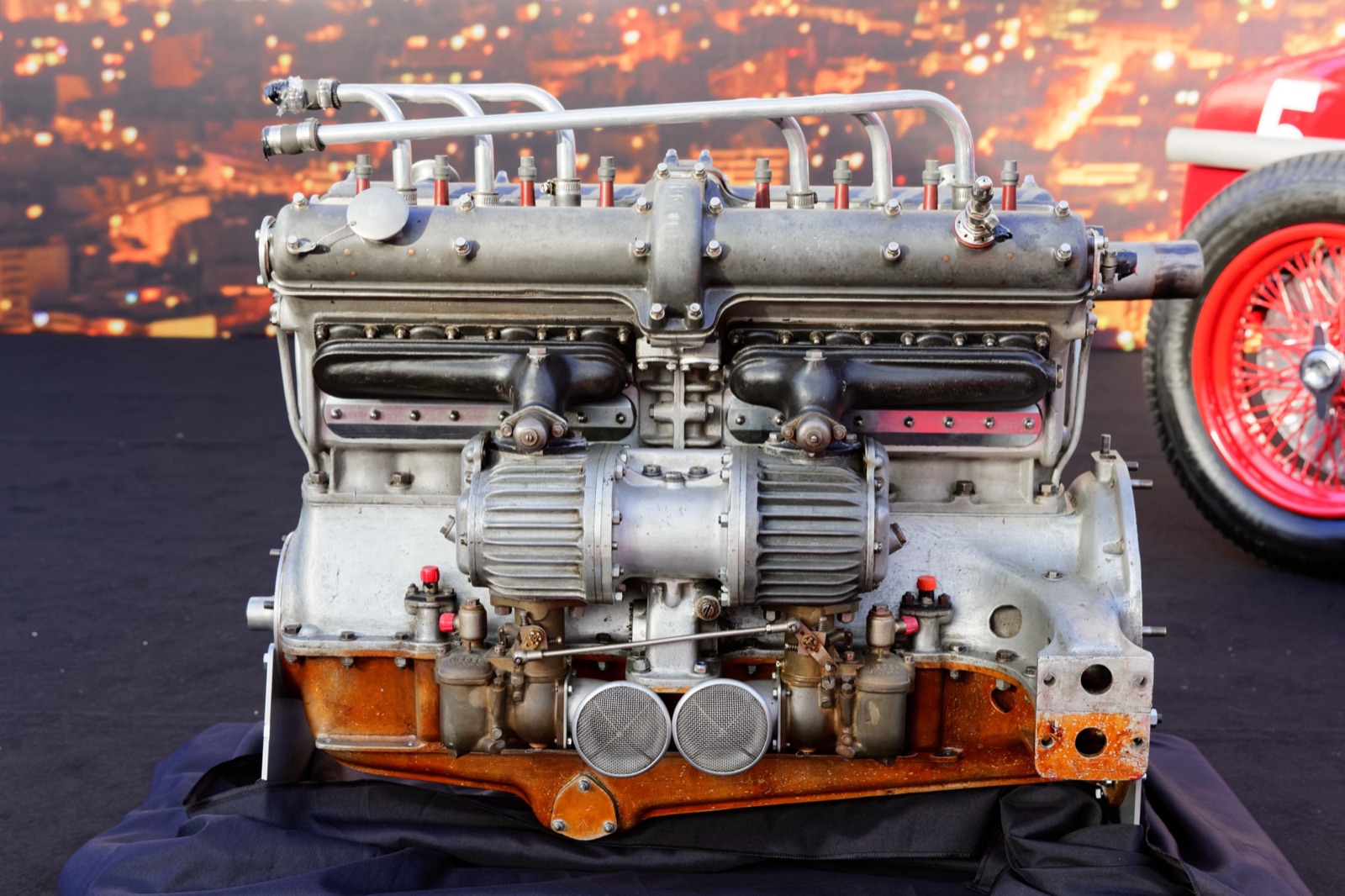
The engine was two light-alloy blocks of four cylinders with steel liners, separated by a tower of gears from the middle of the crankshaft that drove the two overhead camshafts, with two valves per cylinder in hemispherical combustion chambers (Fearnley, 2017). The crankshaft was made in two halves bolted together and ran in ten plain main bearings, and two Roots superchargers were mounted back to back, one feeding each block of four, drawing from two Solex carburettors, according to Motor Sport in January 1934. The same 1934 survey gave a compression ratio of 6 to 1, and Fearnley 6.5 to 1.
The split drivetrain
Behind the gearbox, the drive divided in a Y: a differential in unit with the gearbox fed two propeller shafts in torque tubes running diagonally back to a separate crown wheel and pinion at each rear wheel, and the driver sat in the triangle between them instead of on top of a central shaft (Motor Sport, January 1934; Motor Sport, October 1982). Fearnley lists what else it gained: less weight on the rear axle, less wheel lift under torque, and quick gear changes. In Frankel's words from his 2017 drive of the Tipo B that RM Sotheby's was about to sell in Paris, it also "created the world's most accessible differential".
Chassis, suspension and brakes
The frame was two steel channel-section rails 5 in deep with five cross-members, two tubular and three fabricated; live axles front and rear sat on semi-elliptic leaf springs with friction dampers, one at each front corner and two at each rear, and the brakes were drums worked by rods (Fearnley, 2017). The 1934 survey gave the drums as 15 in across and noted light alloy in the brake drums, shoes, rear axle casing and damper arms. The fuel tank, of about 28 gallons, was in the tail behind the driver (Motor Sport, January 1934).
Alfa Romeo P3 specifications
The Alfa Romeo P3's engine grew from about 2.65 litres to 2.9 and then 3.2 litres by enlarging the bore from 65 to 68 and then 71 mm, with the 100 mm stroke unchanged, according to Denis Jenkinson in Motor Sport in March 1975.
| 1932 (first series) | 1934 (second series) | 1935 | |
|---|---|---|---|
| Engine | Straight-eight, two blocks of four, two overhead camshafts, two valves per cylinder, two Roots superchargers | ||
| Bore × stroke | 65 × 100 mm (Jenkinson, 1975) | 68 × 100 mm (Jenkinson, 1975) | 71 × 100 mm (Jenkinson, 1975) |
| Capacity | 2.65 litres (Motor Sport, 1982) | 2,905 cc (Jenkinson, 1975; RM Sotheby's) | 3.2 litres (Jenkinson, 1975) |
| Power | 215 bhp at 5,600 rpm (Fearnley, 2017); 200 hp (Motor Sport, 1934) | 255 bhp at 5,400 rpm (Jenkinson, 1975) | 265 bhp (Fearnley, 2017) |
| Gearbox | Four speeds | Three speeds (Jenkinson, 1975; Motor Sport, 1982); some cars kept four (Frankel, 2017) | |
| Front suspension | Beam axle, semi-elliptic leaf springs | Dubonnet independent on at least three cars (Fearnley, 2017) | |
| Rear suspension | Live axle, semi-elliptic leaf springs | Live axle, reversed quarter-elliptic springs | |
| Brakes | Drums, rod-operated | Drums, hydraulic (Ariston) | |
| Wheels and tyres | 6.00 × 19 in tyres (Jenkinson, 1975) | 5.25 × 19 in front, 6.50 × 19 in rear at the 1935 German Grand Prix (Moore, 2008) | |
| Body width | 66 cm (Fearnley, 2017) | 85 cm minimum under the 1934 regulations | |
| Weight | About 700 kg (Fearnley, 2017); 701 kg (RM Sotheby's) | 750 kg maximum under the 1934 rules, without driver, fuel, oil, water and tyres | |
| Wheelbase | 8 ft 8 in (Jenkinson, 1975); 2,642 mm (RM Sotheby's, 50006) | ||
| Top speed | Not far short of 155 mph; about 145 mph reckoned on the straight at Reims, 1932 (Motor Sport, 1934) | About 160 mph (Jenkinson, 1975) | |
Sources as given in each cell; unattributed rows from Fearnley's 2017 article in Motor Sport.
How much horsepower did the Alfa Romeo P3 have?
The first Alfa Romeo P3s had 215 bhp at 5,600 rpm, by Fearnley's figures, and the 2.9-litre cars of 1934 had 255 bhp at 5,400 rpm, by Jenkinson's in 1975, a gain Fearnley gives as 40 bhp. Motor Sport's period survey of January 1934 gave the 2.6-litre engine 200 hp. The 3.2-litre engine of 1935 had 265 bhp (Fearnley; Simon Moore in Motor Sport in May 2008), and the larger engine Scuderia Ferrari tried in two cars at the 1935 French Grand Prix had 330 bhp. Chassis 50003 now gives 360 bhp on methanol and about 90 bhp less on petrol, Paul Grist, the restorer whose family race it, told Motor Sport in March 2017.
How fast was the Alfa Romeo P3?
Alfa Romeo claimed 122 mph in top gear for the 2.6-litre Alfa Romeo P3, a figure Motor Sport called modest in January 1934: Nuvolari "was reckoned to be doing 145 m.p.h." along the straight in the 1932 French Grand Prix, and the magazine put the car's maximum at "not far short of 155 m.p.h.". Jenkinson gave the 2.9-litre car "approximately 160 m.p.h." in 1975, and Fearnley "more than 160mph". By 1935 the car was "some 100bhp and 25mph down on its German rivals", Nigel Roebuck wrote in Motor Sport's 100 Greatest Grands Prix; Motor Sport's 1935 report had it 20 mph slower than the Mercedes-Benz.
Alfa Romeo P3 versions
The Alfa Romeo P3 changed each year: narrow 2.6-litre cars in 1932, wider 2.9-litre cars for the 1934 formula, and in 1935 new suspension, hydraulic brakes and 3.2-litre engines, according to Jenkinson in 1975.
The 1932 cars
Six cars were built in 1932 with spares for three more, numbered 5001 to 5006, with 2.65-litre engines and four-speed gearboxes (Motor Sport, October 1982). For 1934 they were rebuilt with wider cockpits and 2.9-litre engines (Jenkinson, 1975).
The 1934 second series
The 1934 formula limited a Grand Prix car to 750 kg without driver, fuel, oil, water and tyres, with a body at least 85 cm wide, so the second-series Tipo B was longer, wider and heavier, and seven were made "rather than a mooted batch of 25" (Fearnley, 2017). Motor Sport reported the plan in January 1934: 25 single-seaters announced in October 1933, then a batch of eight for Scuderia Ferrari only. The stronger gears needed for the extra torque left room for only three speeds in the same casing, Fearnley added. The second series was numbered 50001 to 50007 (Motor Sport, October 1982).
1935: Dubonnet front suspension and cantilever springs
For 1935 six of the second-series cars were rebuilt with reversed quarter-elliptic rear springs and then Dubonnet independent front suspension, its coil-spring units worked by a leading arm through a bell-crank, with hydraulic brakes and, later that season, the 3.2-litre engine (Jenkinson, 1975). Swing-axle independent rear suspension was tested and rejected (Fearnley, 2017). RM Sotheby's says chassis 50006 was one of three cars fitted with the Dubonnet suspension when new.
The Avus streamliner
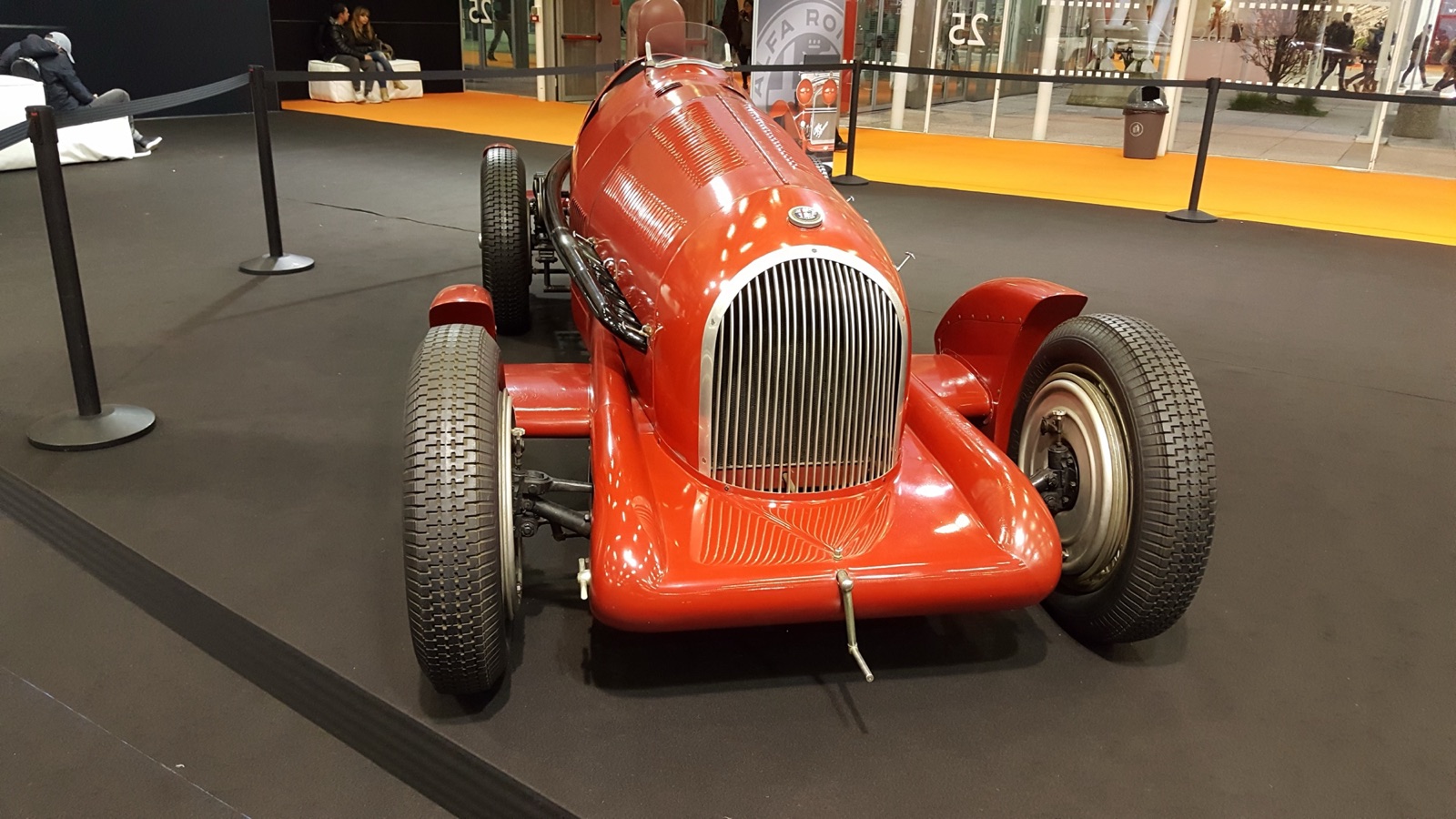
For the Avus race in Berlin on 27 May 1934, Guy Moll drove a Tipo B "comprehensively streamlined by Breda aerodynamicist Cesare Pallavicino", which had the first 3.2-litre engine, and beat the new Auto Unions (Fearnley, 2017; result from the Motor Sport database).
The 3.2-litre and 3.8-litre engines
Scuderia Ferrari fitted a larger engine to two Alfa Romeo P3s, driven by Nuvolari and Louis Chiron, at the French Grand Prix at Montlhéry on 23 June 1935, and both retired with transmission failure. Simon Moore, from Scuderia Ferrari's typed 1935 report, the Note tecniche attivita, gave its size as 3.8 litres in 2008; Jano told Motor Sport it was 3,450 cc, according to Fearnley, who gave it 330 bhp.
The two-seat Mille Miglia car
Carlo Pintacuda won the 1935 Mille Miglia in a Tipo B converted to two seats with cycle wings and headlamps (Fearnley, 2017; RM Sotheby's); Bill Boddy of Motor Sport, in a road test quoted by Bonhams, gave its winning average, with Della Stufa, as 71.3 mph.
Alfa Romeo P3 racing history
The Alfa Romeo P3 won its first race, the Italian Grand Prix of 5 June 1932, and works drivers Nuvolari, Borzacchini, Caracciola and Campari "were victorious in every event in which they took part" that year, by Motor Sport's January 1934 count. Motor Sport counted, in September 1991, some 78 races started by the works and Scuderia Ferrari cars from 1932 to 1935, with 46 wins, 36 seconds and 33 thirds. The table lists its wins in the major races of each season; from mid-1934, Fearnley wrote, it also took "a slew of minor victories".
| Date | Race | Circuit | Winner | Note |
|---|---|---|---|---|
| 5 Jun 1932 | Italian Grand Prix | Monza | Tazio Nuvolari | Debut |
| 3 Jul 1932 | French Grand Prix | Reims | Tazio Nuvolari | Borzacchini 2nd, Caracciola 3rd |
| 17 Jul 1932 | German Grand Prix | Nürburgring | Rudolf Caracciola | Nuvolari 2nd, Borzacchini 3rd |
| 31 Jul 1932 | Coppa Ciano | Montenero | Tazio Nuvolari | Borzacchini 2nd |
| 14 Aug 1932 | Coppa Acerbo | Pescara | Tazio Nuvolari | Caracciola 2nd |
| 11 Sep 1932 | Monza Grand Prix | Monza | Rudolf Caracciola | |
| 13 Aug 1933 | Coppa Acerbo | Pescara | Luigi Fagioli | Scuderia Ferrari's first race with the P3 |
| 10 Sep 1933 | Italian Grand Prix | Monza | Luigi Fagioli | |
| 24 Sep 1933 | Spanish Grand Prix | Lasarte | Louis Chiron | Fagioli 2nd |
| 2 Apr 1934 | Monaco Grand Prix | Monte Carlo | Guy Moll | Chiron 2nd |
| 6 May 1934 | Tripoli Grand Prix | Mellaha | Achille Varzi | Moll 2nd, Chiron 3rd |
| 27 May 1934 | Avusrennen | Avus | Guy Moll | Varzi 2nd |
| 1 Jul 1934 | French Grand Prix | Montlhéry | Louis Chiron | Varzi 2nd, Trossi and Moll 3rd |
| 24 Feb 1935 | Pau Grand Prix | Pau | Tazio Nuvolari | Dreyfus 2nd |
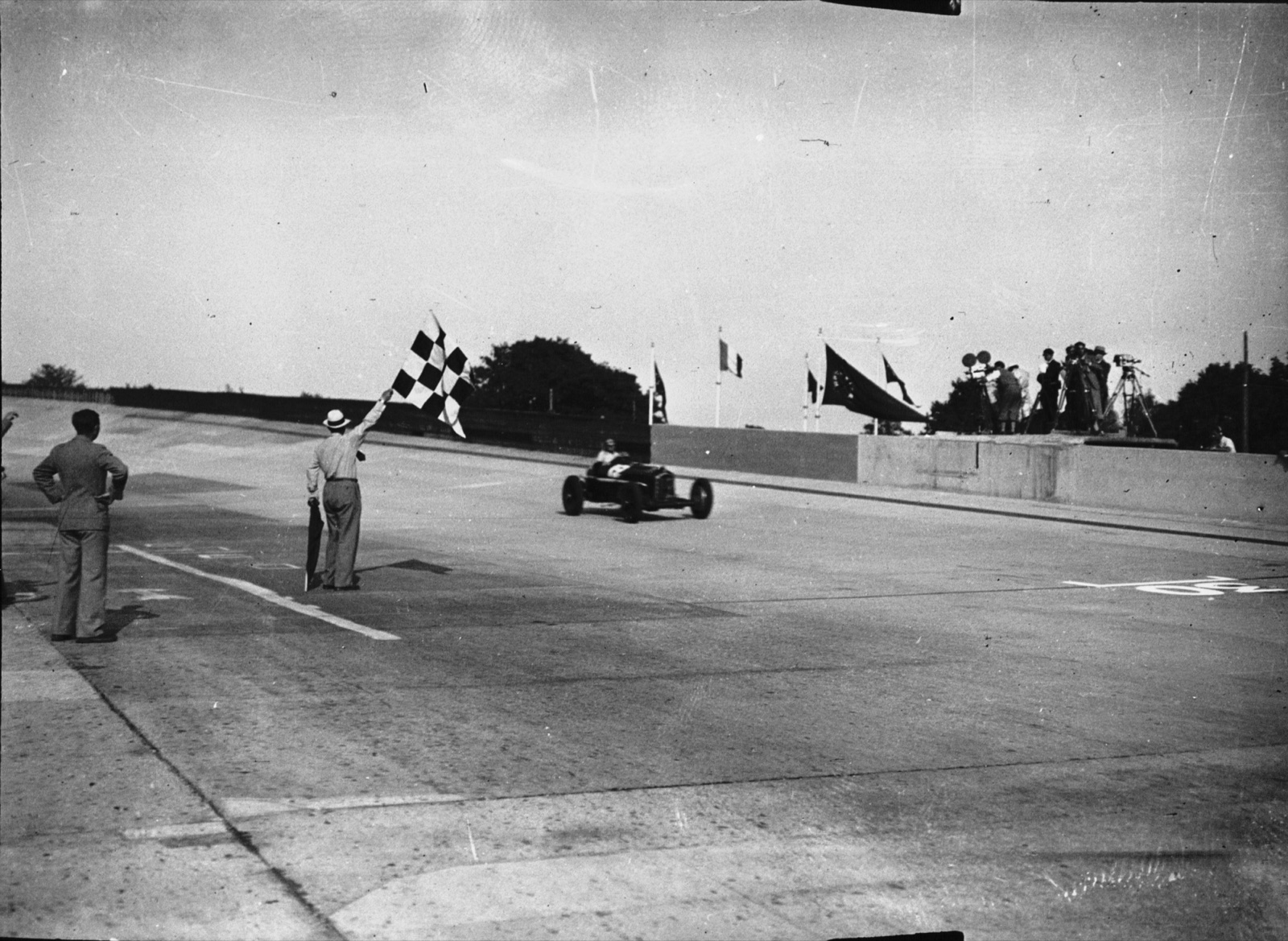
| 28 Jul 1935 | German Grand Prix | Nürburgring | Tazio Nuvolari | Ahead of Stuck (Auto Union) and Caracciola (Mercedes-Benz) |
| 5 Oct 1935 | Donington Grand Prix | Donington Park | Richard Shuttleworth | Private entry |
Source: the Motor Sport database's race page for each race, read 30 October 2026.
1932: the works team wins on its debut
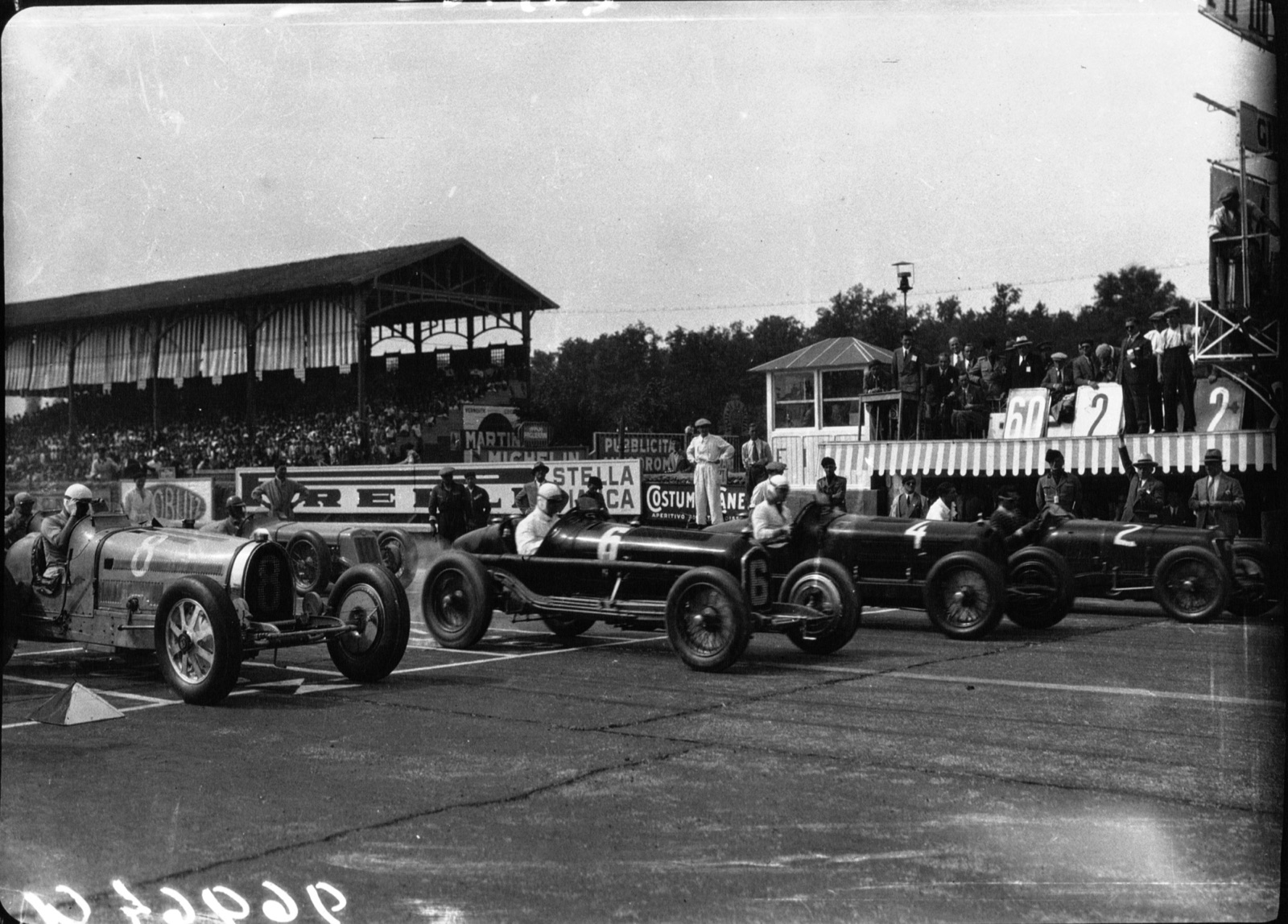
In the Italian Grand Prix, a five-hour race at Monza, Nuvolari won at 104 mph (Motor Sport, January 1934) on the Alfa Romeo P3's first appearance, and the works team then took the first three places in France and Germany. Caracciola, new to Alfa Romeo from Mercedes-Benz, told Jano when he tested it: "Your car is as fleet-footed as a ballerina", by Fearnley's account. No monoposto was sold to a private driver (Motor Sport, January 1934).
1933: locked away, then handed to Scuderia Ferrari
Alfa Romeo, short of money in the Depression and under state protection, closed its racing department and put the Alfa Romeo P3s in storage for 1933, leaving Scuderia Ferrari to race 2.6-litre 8C Monzas, Fearnley wrote. RM Sotheby's says the company had been placed in government receivership, could not spend on racing and formally withdrew from competition. After Nuvolari left mid-season for Maserati, Alfa Romeo released all six cars to Scuderia Ferrari in August, in time for the Coppa Acerbo, where Luigi Fagioli won after Nuvolari's Maserati was delayed by a pit stop (Motor Sport, January 1934). Fagioli and Chiron won three races each before the season ended. At the Monza Grand Prix on 10 September, Campari, in a P3, and the former P3 driver Baconin Borzacchini were both killed in one accident (Motor Sport panel, 2017).
1934: Monaco, Avus and Montlhéry
In 1934 the Alfa Romeo P3 won at Monaco and Tripoli, beat the new Auto Unions at the Avus, and at Montlhéry, with both German teams there in full, Chiron led home a Tipo B one-two-three in the French Grand Prix. After that the German cars, with independent suspension and hydraulic brakes, had the upper hand, and the Alfa Romeos won the smaller races, Fearnley wrote. Moll, who had won at Monaco and the Avus, was killed in the Coppa Acerbo in August.
1935: against the Silver Arrows
Nuvolari came back to Scuderia Ferrari for 1935 after Varzi took the seat he wanted at Auto Union, and the Alfa Romeo P3 won at Pau, Bergamo, Biella and Turin, races the German teams did not enter (Roebuck). Scuderia Ferrari "had not won a single race that season where the German teams had been present" before the German Grand Prix, Moore wrote in 2008. René Dreyfus won at Dieppe and in the Marne Grand Prix, and Nuvolari the Coppa Ciano and the Nice Grand Prix, according to Motor Sport's review of the season in December 1935.
The Alfa Romeo P3 at the 1935 German Grand Prix
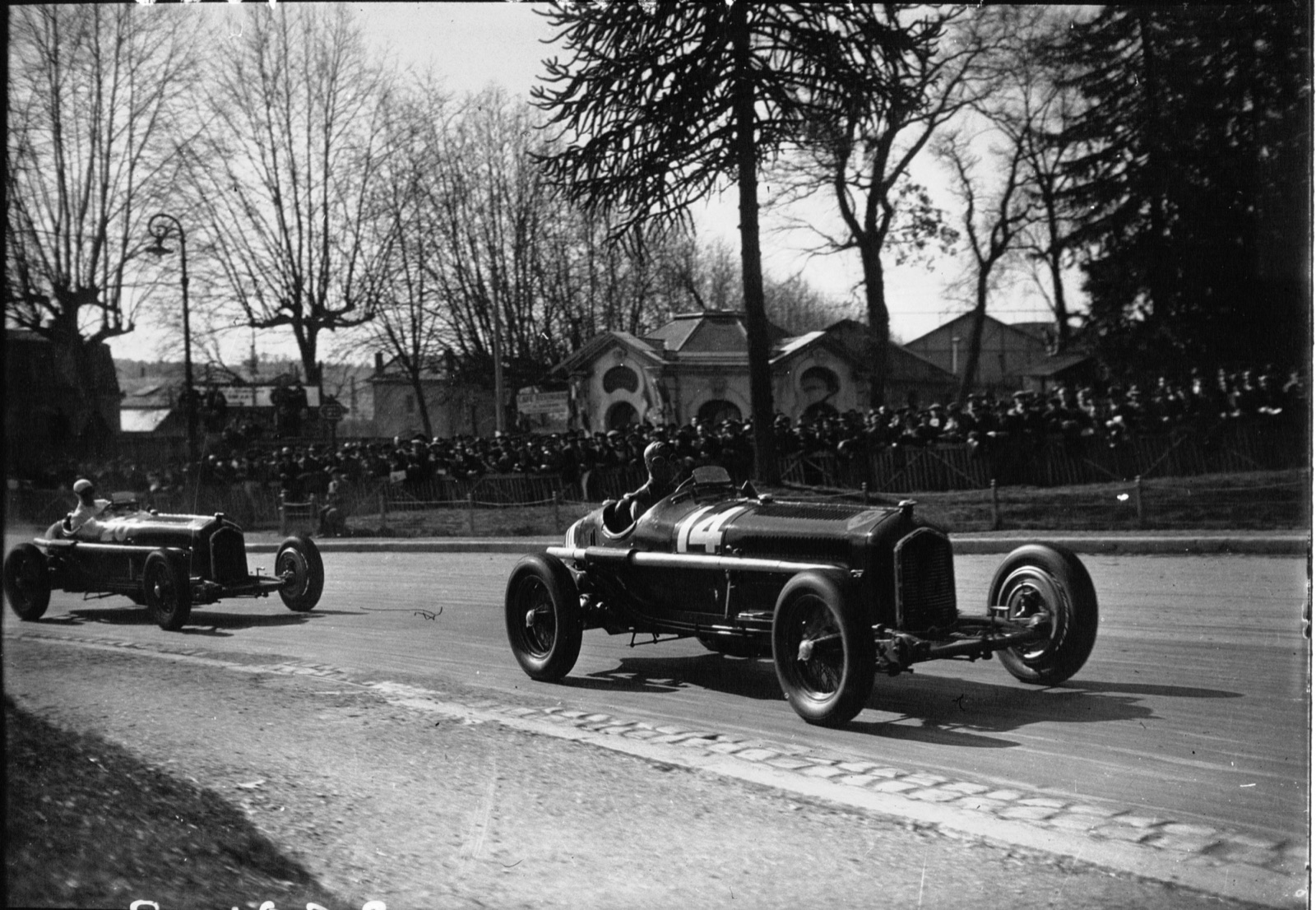
The Alfa Romeo P3 won the German Grand Prix of 28 July 1935 on the 14.167-mile Nürburgring, where Nuvolari finished 2 min 14.3 sec ahead of Hans Stuck's Auto Union, with Rudolf Caracciola's Mercedes-Benz third, by the race page in the Motor Sport database. Mercedes-Benz entered five cars and Auto Union four (Motor Sport, September 1935), against three Scuderia Ferrari Alfa Romeos (Frankel, 2015). The database's account of the 1935 season calls it "the greatest victory of the year".
The start and the first ten laps
The grid was drawn by lot, and Nuvolari's Alfa Romeo P3 started on the front row; rain had fallen overnight after two months of fine weather, and it was raining at the 11 o'clock start (Motor Sport, September 1935; Roebuck). Caracciola led the first lap by 12 seconds from Nuvolari. The two other Scuderia Ferrari cars were out by the sixth lap: Antonio Brivio's with a broken differential and Chiron's with gearbox trouble. Nuvolari became the first driver to lap in under 11 minutes, in 10 min 57.4 sec, and took the lead on the tenth lap; "the crowd were speechless with incredulity", Motor Sport reported.
The pit stop
Nuvolari's refuelling stop took 2 min 14 sec, against 47 sec for Manfred von Brauchitsch's Mercedes-Benz, and dropped him to sixth (Motor Sport, September 1935). Roebuck writes that the winding handle of the refuelling pump snapped and the tank was filled from churns; Shaun Campbell, in Motor Sport in November 1997, that the pipe to the fuel pressure pump was blocked. By the 13th lap Nuvolari had passed Fagioli, Rosemeyer, Caracciola and Stuck to run second.
The last lap
Von Brauchitsch broke the lap record in 10 min 30 sec, and the official gaps to Nuvolari were 1 min 27 sec after 15 laps, 47 sec after 18 and 35 sec at the start of the last lap (Motor Sport, September 1935). Half way round it, a tyre on von Brauchitsch's Mercedes burst and Nuvolari passed to win "a completely unexpected triumph" for Italy; after "a deathly silence", Motor Sport reported, the sportsmanship of the Germans in the crowd "triumphed over their astonishment", and von Brauchitsch crawled back to the pits "utterly crushed by his disappointment". Motor Sport in October 2011 put the failure at the left rear, at the Karussell. Moore, in 2008, gave three reasons for the result besides the driving: the damp track, the failure of von Brauchitsch's Continental tyre, and Englebert's tyres made for the race, which had extra tread on the 6.50 × 19 rears that "would not have lasted another lap", by the team's own record.
Motor Sport in 1935 counted 250,000 spectators, and Richard Heseltine, in 2011, wrote 300,000. The story that the organisers had no record of the Italian anthem and Nuvolari lent them his own appears in Heseltine's and Roebuck's accounts; Moore asked, "Would he really have carried an old shellac 78rpm disc around with him?"
Which engine did the winning Alfa Romeo P3 have?
The Alfa Romeo P3 that won had the standard 3.2-litre engine, not a 3.8, according to Scuderia Ferrari's 1935 technical report, which Moore read and described in Motor Sport in 2008; Nuvolari drove the car first assigned to Brivio, because of problems with his own in practice. Motor Sport's own report of September 1935 had called the team's cars "3.8-litre monopostos", and Campbell in 1997 also gave the winning car a 3.8-litre engine.
Who drove the Alfa Romeo P3?
The Alfa Romeo P3 was driven by the Alfa Romeo works team in 1932, by Scuderia Ferrari from August 1933 to 1935, and then by private owners, many of them British. Of its drivers, Chiron, Gianfranco Comotti, Raymond Sommer and Clemente Biondetti went on to start a world championship Grand Prix, as did Fagioli (Motor Sport panel, 2017).
The works and Scuderia Ferrari drivers
Campari, an opera singer and the winner of the 1924 French Grand Prix, was a major star of the 1920s; Fagioli spent a single season, 1933, in a Scuderia Ferrari P3 and added the Comminges Grand Prix to the wins in the table; Varzi won six Grands Prix in a P3 in 1934 before joining Auto Union; and Moll had caught Enzo Ferrari's attention in Bugattis and a private 8C 2300 (Motor Sport panel, 2017). Dreyfus finished second to Nuvolari at Pau in 1935 in his first drive in an Alfa Romeo (Motor Sport, December 1935).
The British private owners
Seven Alfa Romeo P3s came to Britain, among them those of Richard Shuttleworth, Charlie Martin, Luis Fontes, Austin Dobson and A. F. Ashby, Jenkinson recorded in 1975. Shuttleworth bought his in early 1935, painted it green and won the first Donington Grand Prix with it on 5 October, beating the Bugatti Type 59s of Earl Howe and Martin, according to Jenkinson in Motor Sport in October 1982. He was thrown out of it in a crash at the South African Grand Prix at East London in January 1936 and suffered severe head injuries; he raced only once more, at Brooklands in August 1939.
The Alfa Romeo Bimotore
The Bimotore was Scuderia Ferrari's twin-engined Alfa Romeo of 1935, built on a lengthened Alfa Romeo P3 frame with one Tipo B straight-eight in front of the driver and another behind, both driving a central gearbox (Jenkinson, 1975). The engineers Bazzi and Roselli designed and built two at the Scuderia in Modena, with Jano's blessing, for the Formule Libre events at Tripoli and the Avus, wrote Jenkinson in Motor Sport in December 1978; one had two 3.2-litre engines, and the other, by Bill Boddy's account in Motor Sport in November 1992, two 2.9-litre engines, 5,808 cc in all.
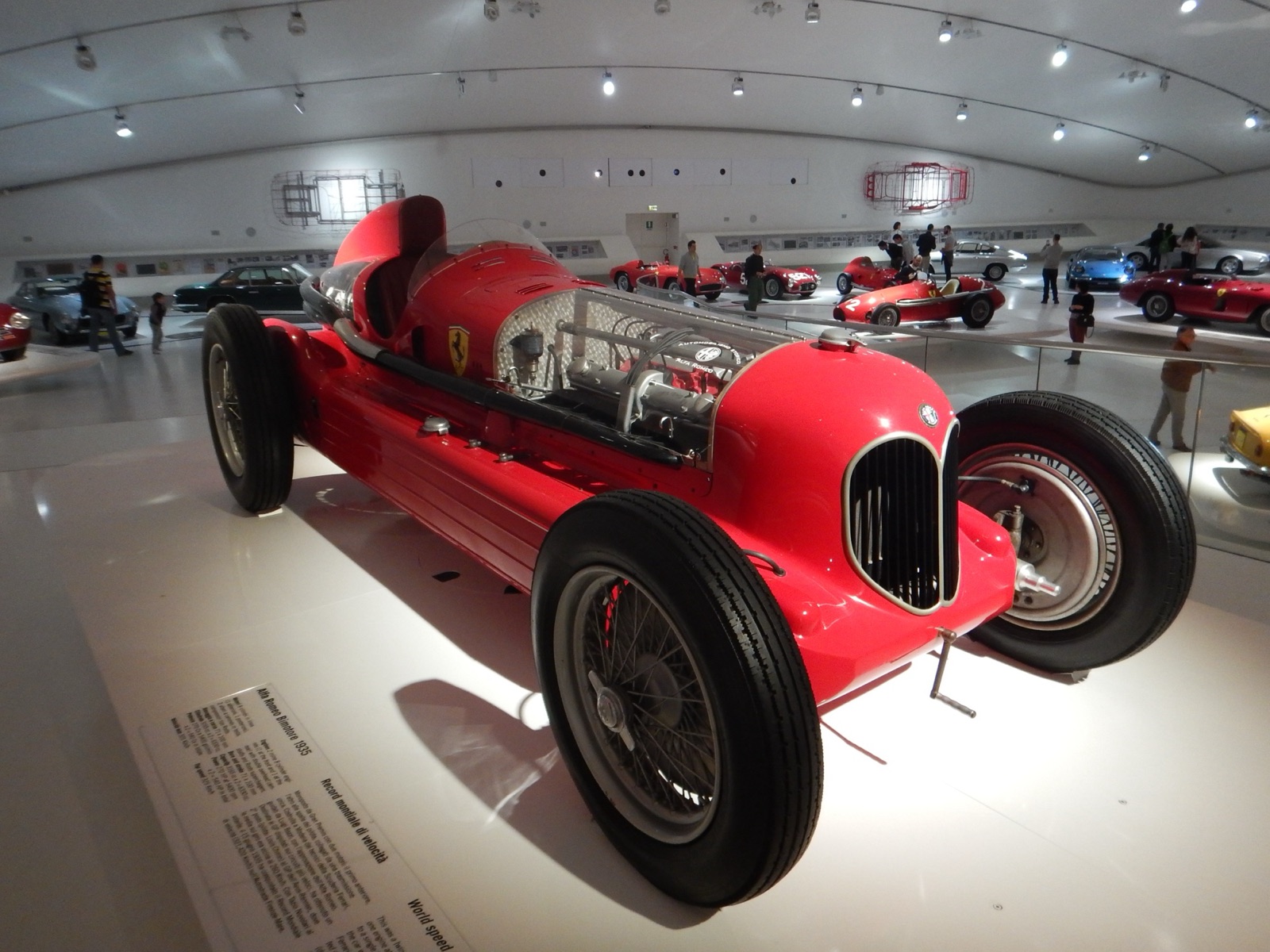
The Bimotore wore out its tyres "at a phenomenal rate" (Jenkinson, 1978): Nuvolari finished fourth at Tripoli in May 1935 (Boddy, 1992), and at the Avus Chiron drove one to second place without a tyre change, "one of the finest successes of his career", Motor Sport wrote that December. On the Florence–Viareggio autostrada at Altopascio in June 1935, Nuvolari set Class B records of 200.803 mph for the flying kilometre and 200.789 mph for the flying mile, by Motor Sport's first report in July 1935, the kilometre figure Jenkinson repeated in 1978; the magazine's fuller account in August 1935 gave the means as 321.125 km/h for the kilometre and 323.125 km/h for the mile, and described a cross-wind that sent the car into a lurch across the road. Austin Dobson bought one in 1937, and Peter Aitken cut it in half in 1938–39 to make the single-engined Alfa-Aitken; Tom Wheatcroft later had it rebuilt as a twin-engined car for his Donington Collection (Boddy, 1992). By 1978 Alfa Romeo had authorised Luigi Fusi, head of its museum at Arese, to build a third Bimotore (Jenkinson, 1978).
How many Alfa Romeo P3s were built, and where are they now?
Alfa Romeo built 13 Alfa Romeo P3s, six in 1932 and seven in 1934, with spares for seven more, according to the Alfa Romeo historian Luigi Fusi as Motor Sport reported him in October 1982; that would allow "not more than twenty monopostos in existence at the very most", and the magazine knew of 13. RM Sotheby's gives the same six and seven, but also says Alfa Romeo widened "the original five" cars for 1934.
Chassis numbers
The first series were numbered 5001 to 5006 and the second 50001 to 50007, a numbering "often causing a lot of confusion" (Motor Sport, October 1982). Chassis 50007, Shuttleworth's car, shows it: Simon Moore writes in The Magnificent Monopostos that it must have been a first-series car and that its plate gives the number "incorrectly", as quoted in Bonhams' 2018 catalogue, which sold it as "Chassis no. '50007' (see text)". Neither the factory nor Scuderia Ferrari kept records of which chassis ran in which race, says RM Sotheby's.
Where can you see an Alfa Romeo P3?
Alfa Romeo kept a working example of the 1932 car, Jenkinson wrote in 1975, when two later cars were in America and one in Argentina. Chassis 50006, sold by Scuderia Ferrari to Frank Ashby in late 1936, raced in Britain and then New Zealand, and was owned in Japan from about 1990 and by Bruce McCaw in America from 2000 to 2007 (RM Sotheby's). A 1934 Tipo B from the Auriga Collection in Germany won the jury's Best of Show at the Concorso d'Eleganza Villa d'Este in May 2025, according to BMW Group's report of the event.
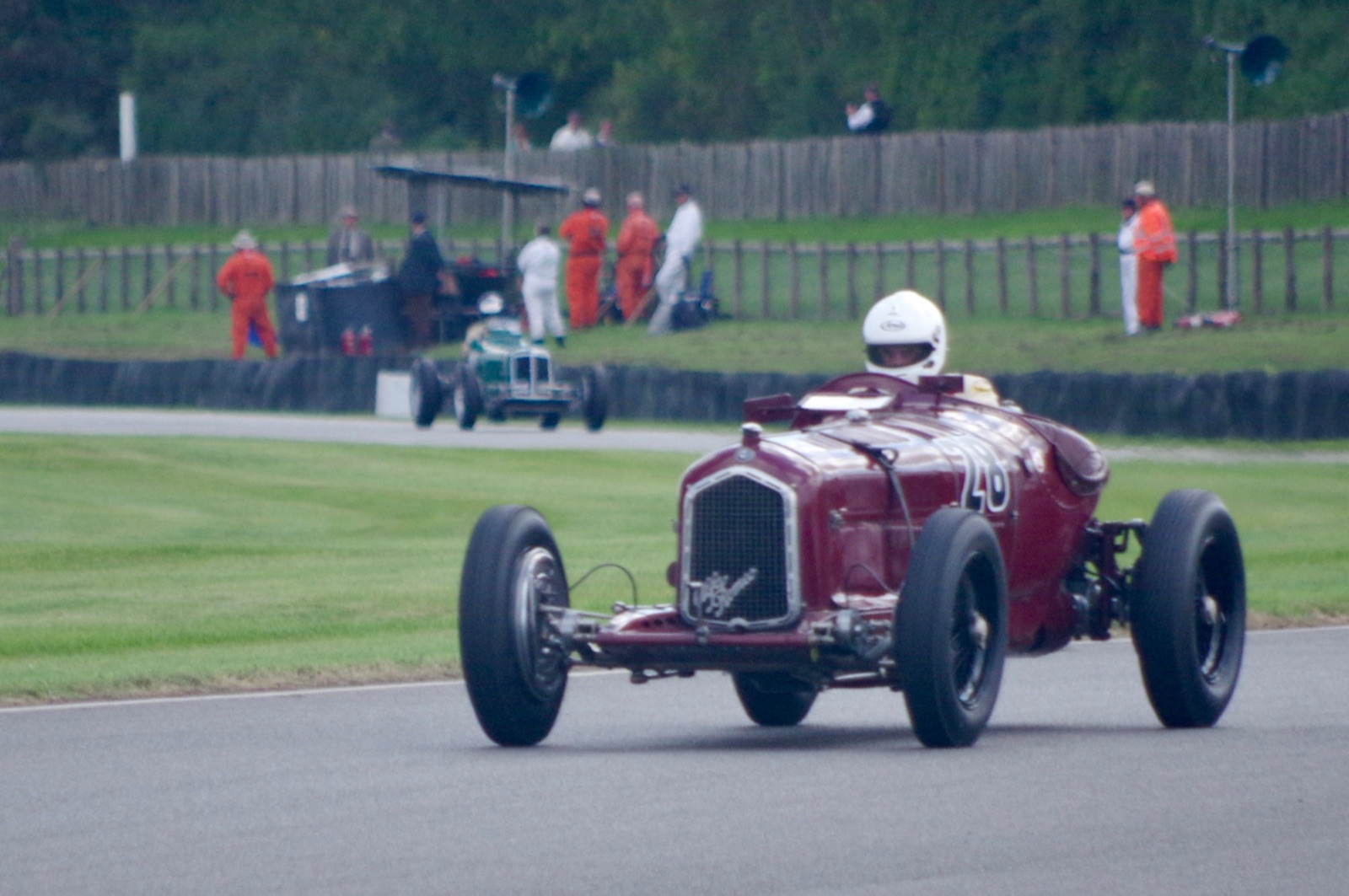
Several still race. Charlie Martin bought chassis 50003 from Scuderia Ferrari at the end of 1935, and the Grist family have raced it since 2008, at the Goodwood Members' Meeting and Revival, the Monaco Historique and the Château Impney hill climb (Motor Sport panel, 2017). "It's the transmission we have to watch, because that takes a real hammering," Paul Grist said.
Alfa Romeo P3 values and auction sales
Two Alfa Romeo P3s sold at auction in 2017 and 2018 made €3.92 million and £4,593,500 including the buyer's premium.
| Date | Chassis | Auction | Price | Note |
|---|---|---|---|---|
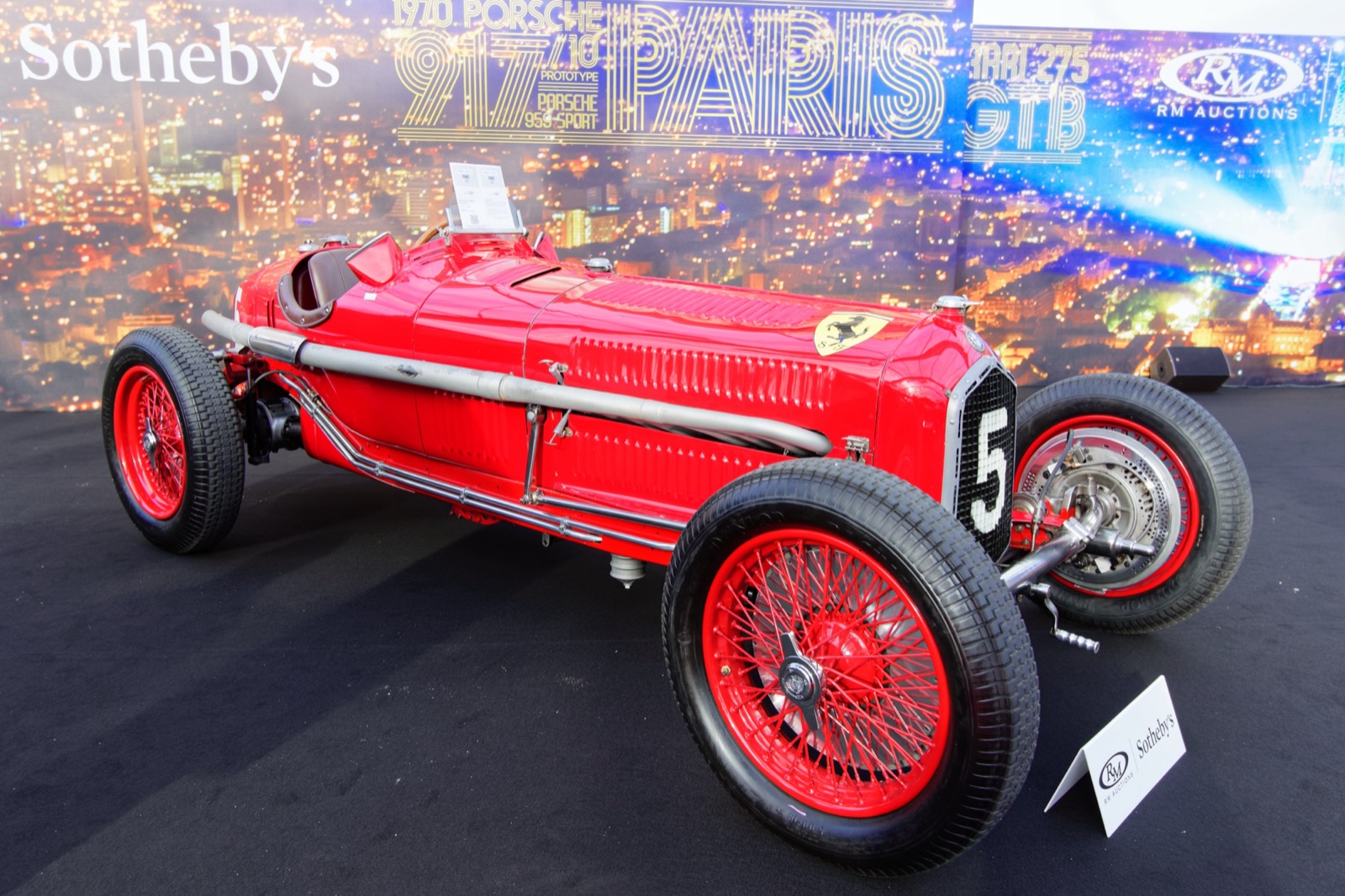
| 8 Feb 2017 | 50006 | RM Sotheby's, Paris (lot 161) | €3,920,000 | Scuderia Ferrari number 46; sold with the Bimotore's 3.2-litre engine SF-50-A |
| 13 Jul 2018 | '50007' (number disputed) | Bonhams, Goodwood Festival of Speed (lot 352) | £4,593,500 including premium | Shuttleworth's 1935 Donington winner; UK road-registered MPH 374 |
Sources: RM Sotheby's lot page; Bonhams' lot page and Bonhams' results release.
RM Sotheby's said chassis 50006 kept "almost all factory-original components", with a new centre section of bodywork made in New Zealand, and was offered with the Bimotore engine on a stand and a new engine built by Hall & Hall from Jim Stokes parts for racing. Frankel, who drove it at Blyton Park for Motor Sport before the sale, found a car that "doesn't understeer at all" and burned nearly a gallon of methanol on every lap of a circuit "little more than 1.5 miles round".
Alfa Romeo P3 rivals and successor
The Alfa Romeo P3's rivals were the Maserati and Bugatti cars it raced in 1932 and 1933, and from 1934 the Mercedes-Benz W25 and the Auto Union Type A and Type B, which outran it.
Maserati and Bugatti
In 1932 the Bugatti Type 51s of Chiron and Dreyfus finished fourth and fifth behind the three P3s in the French Grand Prix (Motor Sport database). Nuvolari's 1933 Maserati 8CM single-seater "was faster, though less reliable" than the P3, Fearnley wrote. By 1935 Bugatti's Type 59 was the car of Earl Howe and Charlie Martin, whom Shuttleworth beat at Donington.
Mercedes-Benz and Auto Union
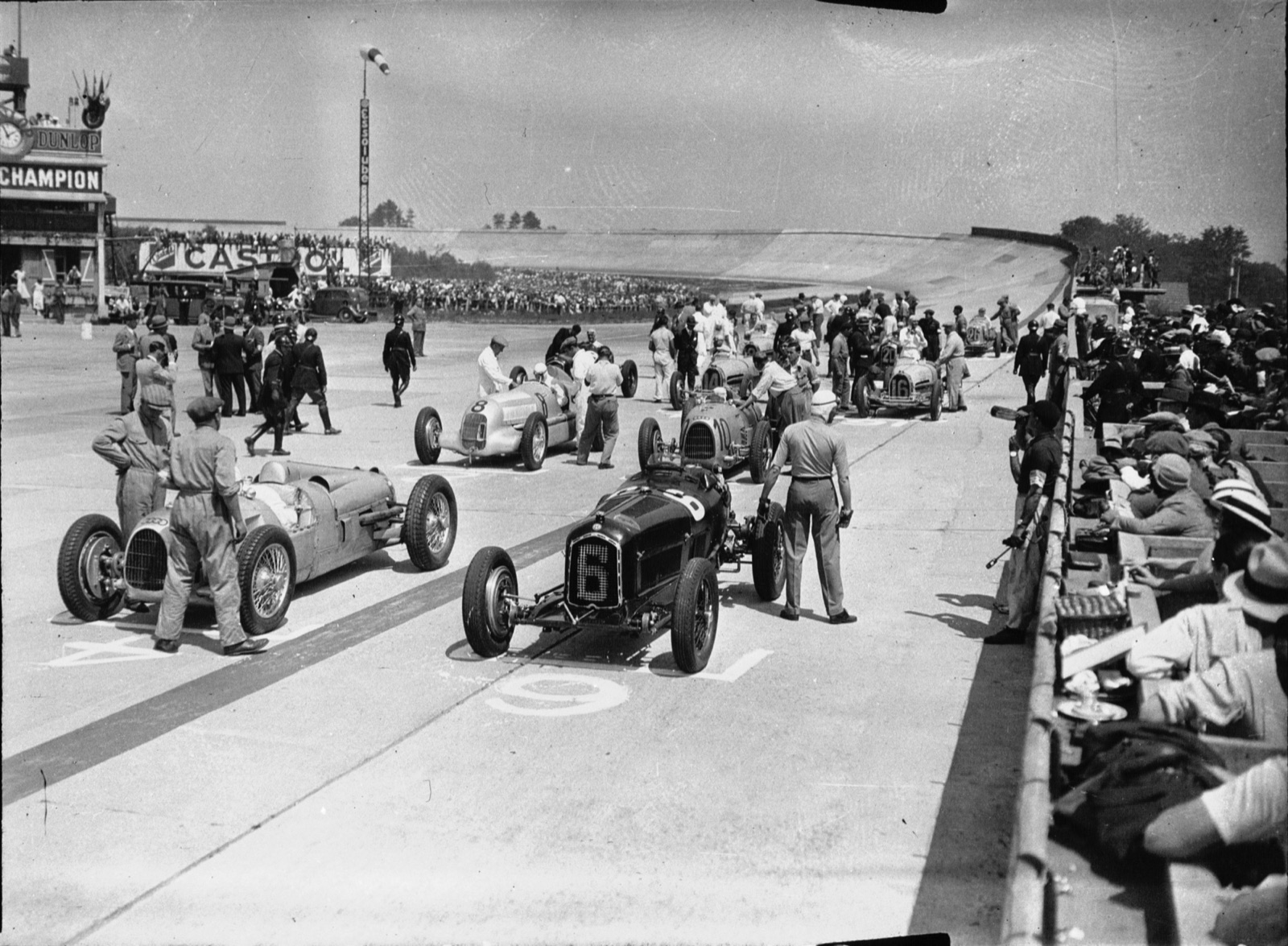
The 750 kg formula, "much influenced by the Alfa's speed and spec", underestimated the German teams, whose cars had independent suspension, hydraulic brakes and much larger engines (Fearnley, 2017). By 1935 the W25 and the V16 Auto Union were "nudging 400bhp" and had five-speed gearboxes and a power advantage over the Tipo B of at least 100 bhp, Frankel wrote in 2015.
The Tipo C and the 158
The Alfa Romeo P3's successor was the Tipo C, with the 3.8-litre engine, its gearbox in unit with the rear axle and independent suspension all round; Nuvolari brought one home second on its debut at the Italian Grand Prix on 8 September 1935, having taken over Dreyfus's car (Moore, 2008). Motor Sport's December 1935 review said the new 3.8-litre cars, with streamlined bodies, made "a successful debut", Nuvolari setting the record lap. Alfa Romeo's later 158 Alfetta won the first world championship race, the British Grand Prix of 13 May 1950, with Giuseppe Farina (Motor Sport database), and was the car of Juan Manuel Fangio's first world championship season.
Questions and answers
Did Enzo Ferrari design the Alfa Romeo P3?
No. Vittorio Jano designed it at Alfa Romeo for the 1932 season. Enzo Ferrari's team, Scuderia Ferrari, raced the cars from August 1933, when Alfa Romeo released all six to it, according to Paul Fearnley in Motor Sport in March 2017.
What does monoposto mean?
It is Italian for single-seater. Motor Sport wrote in October 1982 that the Tipo B was Alfa Romeo's first truly narrow single-seater, and that, besides "two-nine Alfas", the cars were called "monoposto" (single-seater).
Is the Alfa Romeo P3 the same car as the 8C 2300 Monza?
No. The 8C 2300 of 1931, later called the Monza, was Jano's two-seat car, and it "would provide Monoposto's underpinnings", Paul Fearnley wrote in Motor Sport in 2017. While Alfa Romeo kept the P3s in storage in 1933, Scuderia Ferrari raced 2.6-litre Monzas.
Can an Alfa Romeo P3 be driven on the road?
Some have been. Shuttleworth's car was converted into a two-seater for the road in the late 1940s and was still UK road-registered, as MPH 374, when Bonhams sold it in 2018. The Grist family fit wings and a small two-seat body to chassis 50003 for road use, and run it on petrol, Motor Sport reported in March 2017.
Did an Alfa Romeo P3 win the Mille Miglia?
Yes. Carlo Pintacuda won the 1935 Mille Miglia in a Tipo B converted to two seats with cycle wings and headlamps, according to Fearnley in Motor Sport and RM Sotheby's.
How much fuel did an Alfa Romeo P3 carry?
About 28 gallons, in a tank in the tail, by Motor Sport's survey of January 1934. Running on methanol, the car RM Sotheby's sold in 2017 burned nearly a gallon on every lap of Blyton Park, a circuit "little more than 1.5 miles round", when Andrew Frankel drove it for Motor Sport.
Sources
- Motor Sport, 1934 Racing Cars, January 1934: the 1932 season, the 1933 handover, the plans for 1934, the engine, transmission and chassis, Alfa Romeo's speed claim and the 145 mph at Reims.
- Motor Sport, Records by the Bimotore Alfa-Romeo, July 1935, and More details of Nuvolari's records, August 1935: the Bimotore's records at Altopascio.
- Motor Sport, Nuvolari the master, September 1935: the 1935 German Grand Prix, entries, start, laps, pit stops, gaps and crowd.
- Motor Sport, Looking back on 1935, December 1935: the 1935 season, the Bimotore at Tripoli and the Avus, the Tipo C's debut.
- Denis Jenkinson, Motor Sport, Alfa Romeo Monoposto Tipo B, March 1975: numbers built, the 1934 and 1935 changes, the British cars, the survivors in 1975, the 2.9-litre specification.
- Denis Jenkinson, Motor Sport, Bringing back the Bimotore, December 1978: the Bimotore's builders, engines and later history.
- Motor Sport, Historic Grand Prix Cars, October 1982: Luigi Fusi's production figures, chassis numbers, the 1932 and 1934 specifications.
- Denis Jenkinson, Motor Sport, Alfa Romeo Tipo B 1934 chassis no. 50007, October 1982: Shuttleworth's car, Donington and East London.
- Motor Sport, Veteran to classic: Alfa Romeo Tipo B Monoposto, September 1991 (not linked: it ranks for this page's search term): the overall record of 78 starts and 46 wins.
- Bill Boddy, Motor Sport, Bi-motore burblings, November 1992: the Bimotore's engines, Tripoli and Avus results, Dobson, Aitken and Wheatcroft.
- Shaun Campbell, Motor Sport, Nuvolari and the master race, November 1997: the 1935 German Grand Prix pit stop and engine claim.
- Simon Moore, Motor Sport, Case solved... after 73 years, May 2008: the 3.2-litre engine at the Nürburgring, the Englebert tyres, the 3.8-litre engine at Montlhéry, the Tipo C.
- Richard Heseltine, Motor Sport, 1935 German Grand Prix, October 2011: crowd, tyre failure and anthem.
- Andrew Frankel, Motor Sport, Nuvolari's Nürburgring, 31 March 2015: the P3 name; the German cars' advantage in 1935.
- Paul Fearnley, Motor Sport, Alfa Romeo Tipo B Monoposto: F1's shape of things to come, March 2017: the rules, Jano, the Tipo A, the design, the power figures, the seasons from 1932 to 1935.
- Andrew Frankel, Motor Sport, Driving the greatest single-seater ever: the preposterous Alfa Romeo Tipo B, March 2017: driving the car RM Sotheby's sold in Paris in 2017; the gearboxes.
- Motor Sport, Alfa Romeo Tipo B: design legends discuss Jano's greatest GP car, March 2017: Neil Oatley's comments, the drivers, Paul Grist and chassis 50003.
- Nigel Roebuck, Motor Sport, 100 Greatest Grands Prix: 1935 German GP, 2 January 2024: the 1935 German Grand Prix and the P3's deficit to the German cars.
- Motor Sport database, 1935 European Championship and the race page for each race in the results table (for example 1935 German Grand Prix), and the 1950 British Grand Prix, read 30 October 2026: dates, circuits, placings and car numbers.
- RM Sotheby's, 1934 Alfa Romeo Tipo B P3, chassis 50006, Paris, 8 February 2017: the car's design and history, its sale price and the saleroom note.
- Bonhams, 1932–34 Alfa Romeo Tipo B Grand Prix Monoposto, chassis no. '50007', Goodwood Festival of Speed, 13 July 2018, and Bonhams celebrates 50th Goodwood sale: the car's history, its chassis number, its price.
- BMW Group, "Best of Show": Alfa Romeo Tipo B (P3) wins the Trofeo BMW Group, 26 May 2025: Villa d'Este 2025.