The Bentley Speed Six is the sporting version of W. O. Bentley's 6½ Litre six-cylinder chassis, built from 1928 to 1930, and the car that won the 24 Hours of Le Mans in 1929 and 1930. Bentley Motors' heritage page for its own Speed Six counts 182 built and calls it "the most successful racing Bentley". One works Speed Six, later called "Old Number One", won both of those races, and in March 1930 another raced the Blue Train express from the Riviera and reached London before the train reached Calais.
Who designed the Bentley Speed Six, and why?
The Bentley Speed Six was designed at Cricklewood by Walter Owen Bentley's team as a faster form of the 6½ Litre, the six-cylinder chassis the company had sold since 1926. According to the history of the 6½ Litre "Big Six" by the Bentley Drivers' Club (BDC) in Motor Sport, February 1949, W.O. began the six in 1925, "ably assisted by the redoubtable 'K.M.'" (H. Kensington Moir). It was "based on their experience with the 3-litre" and meant for a different class of motorist, one who wanted a fast touring chassis able to carry closed coachwork. Bonhams' catalogues say the 6½ Litre "had been conceived as a touring car to compete with Rolls-Royce's New Phantom".
The first prototype six had an 80 mm bore and was in fact a 4½-litre engine, the club wrote. Registered as "The Sun", it met the first experimental Rolls-Royce Phantom I on the roads of France, and in the "dice" that followed it "had too little in hand for the liking of 'W.O.'". The bore went up to 100 mm and the capacity to 6,597 cc, and the first 6½ Litre chassis, WB 2551, took the road in March 1926.
The Speed Six followed in 1928. Rumours of a "Speed Model" were about in September 1928, and the first chassis built to the new specification was WT 2265 (BDC, 1949). The maker's heritage page says W.O. "believed that the best way to increase power was to increase capacity", where Tim Birkin put his faith in supercharging. RM Sotheby's catalogues say the model was created "at the urging of" Woolf Barnato, the company's chairman and backer. Bill Boddy, in "Saga of a Speed Six Bentley", Motor Sport, September 1990, says the works car LB 2332 was delivered to Barnato in May 1929 with a Vanden Plas body. RM Sotheby's (2011) calls that the first Speed Six delivery.
Bentley Speed Six design and engineering
The Bentley Speed Six kept the 6½ Litre's layout: a six-cylinder engine with block and head cast in one piece of iron, a single overhead camshaft, four valves per cylinder and two magnetos, in a chassis on semi-elliptic springs.
The engine and its coupling-rod camshaft drive
The Bentley Speed Six engine's most unusual part is its camshaft drive. The BDC described it in 1949 as a gear-driven three-throw crankshaft, its throws at 120 degrees, coupled by three connecting rods to a second crankshaft on the camshaft. Springs at the top of each rod, later stacks of 49 thin steel washers, took up expansion. Motor Sport's road test of March 1930 said the rods replaced "the more usual bevel drive" because silence was wanted, and called the drive "reminiscent of locomotive practice".
For the Speed Six the club lists pistons giving 5.3:1 compression (the standard 6½ Litre had 4.4:1) and two SU carburettors in place of a single Smith five-jet. It also had the BM 7032 camshaft, a C-type gearbox, a 3.84:1 rear axle and a parallel-sided radiator with a green label on the winged B. Following "the racing successes of 1929", road cars from that year's Motor Show also had the single-port cylinder block first used on the racing cars.
What made a works Le Mans car different
The works Bentley Speed Six differed from the road car mainly in its engine, gearbox and fuel system. The BDC's 1949 specification for the first "Le Mans Speed Six", chassis LB 2332, has 5.8:1 compression, the single-port block, a five-gallon sump and twin SU HVG5 carburettors. It lists the close-ratio D-type gearbox, a 3:1 axle, 32 × 6 in road-racing tyres, a 45-gallon tank and an 11 ft 6 in wheelbase; for 1930 the compression went to 6.1:1. The maker gives the racing version an 11 ft wheelbase. James Elliott, in "Great Briton", Classic & Sports Car, September 2015, gives 11 ft for the two team cars added in 1930, with four-seat Vanden Plas bodies, 200 bhp and extra shock absorbers.
Bentley Speed Six specifications
The Bentley Speed Six has a 6,597 cc six-cylinder engine of 160 to 200 bhp, by year and tune, and a top speed of about 119 to 120 mph.
| Item | Figure | Source |
|---|---|---|
| Engine | Six cylinders in line, block and head cast in one, single overhead camshaft driven by three coupling rods, four valves per cylinder, twin magnetos | Bentley Motors; BDC (1949) |
| Bore × stroke, displacement | 100 × 140 mm, 6,597 cc | Bentley Motors; BDC (1949) |
| Carburettors | Two SU (HVG5 on the 1929 Le Mans car) | BDC (1949) |
| Compression ratio | 5.3:1 road; 5.8:1 Le Mans 1929; 6.1:1 Le Mans 1930 | BDC (1949); the maker gives 6.1:1 for the racing cars |
| Power, road car | 160 bhp; 180 bhp with the 1930 single-port block | Bonhams (2019); RM Sotheby's (2011) gives 180 bhp, Motor Sport (2025) 180 bhp at 3,500 rpm |
| Power, racing | 200 bhp | Bentley Motors; Elliott (2015); Motor Sport (2025) |
| Gearbox | Four speeds, no synchromesh: C-type on road cars, close-ratio D-type on the racing cars | BDC (1949) |
| Wheelbases, road cars | A variety: 138, 140.5 and 152.5 in, the shortest the most popular | Bentley Motors |
| Wheelbase, racing cars | 11 ft 6 in (LB 2332); 11 ft (the 1930 team cars) | BDC (1949); Bentley Motors; Elliott (2015) |
| Wheels and tyres | 21 in wheels with 6.75 in tyres on the first 6½ Litres; 32 × 6 in road-racing tyres on the 1929 Le Mans car | BDC (1949) |
| Suspension and brakes | Semi-elliptic springs front and rear, Hartford friction dampers; Dewandre vacuum servo brakes | Motor Sport (2025); BDC (1949); Motor Sport road test (1930) |
| Weight | 2,132 kg | Motor Sport (2025), for the car it tested |
| Top speed | 119 mph | Motor Sport (2025); RM Sotheby's (2017) cites period reports of 120 mph |
How much horsepower did the Bentley Speed Six have?
In its first road form the Speed Six made 160 bhp, and 180 bhp with the single-port block of 1930, according to Bonhams' 2019 catalogue for chassis SB 2754. The racing cars made 200 bhp (the maker's heritage page). Motor Sport's testers were told 175 bhp at 3,500 rpm in 1930. The standard 6½ Litre is given as 140 bhp by the BDC and 147 bhp by the maker.
How fast was the Bentley Speed Six?
Andrew Frankel's track test, "Bentley Blower vs Speed Six", Motor Sport, April 2025, gives the Speed Six a top speed of 119 mph in its data panel. RM Sotheby's 2017 catalogue for chassis HM2861 says period reports "indicated a top speed of 120 mph". Motor Sport's road test of March 1930 reached 87 mph on a very cold day and thought more possible. In the 1929 BRDC 500 Miles a Speed Six averaged 109.4 mph for 500 miles of the Brooklands Outer Circuit.
Bentley Speed Six racing history
The Bentley Speed Six won two 24 Hours of Le Mans, a Double Twelve, a Brooklands Six Hours and a BRDC 500 Miles between 1929 and 1931. Bonhams' 2019 catalogue for chassis FR2639 counts "5 first places and four second place finishes in major races" in those three years.
| Race | Date | Drivers and result | Source |
|---|---|---|---|
| JCC Double Twelve, Brooklands | 10–11 May 1929 | Barnato and Benjafield (LB 2332): led, then stopped by the officials after the dynamo coupling sheared | Motor Sport, June 1929 |
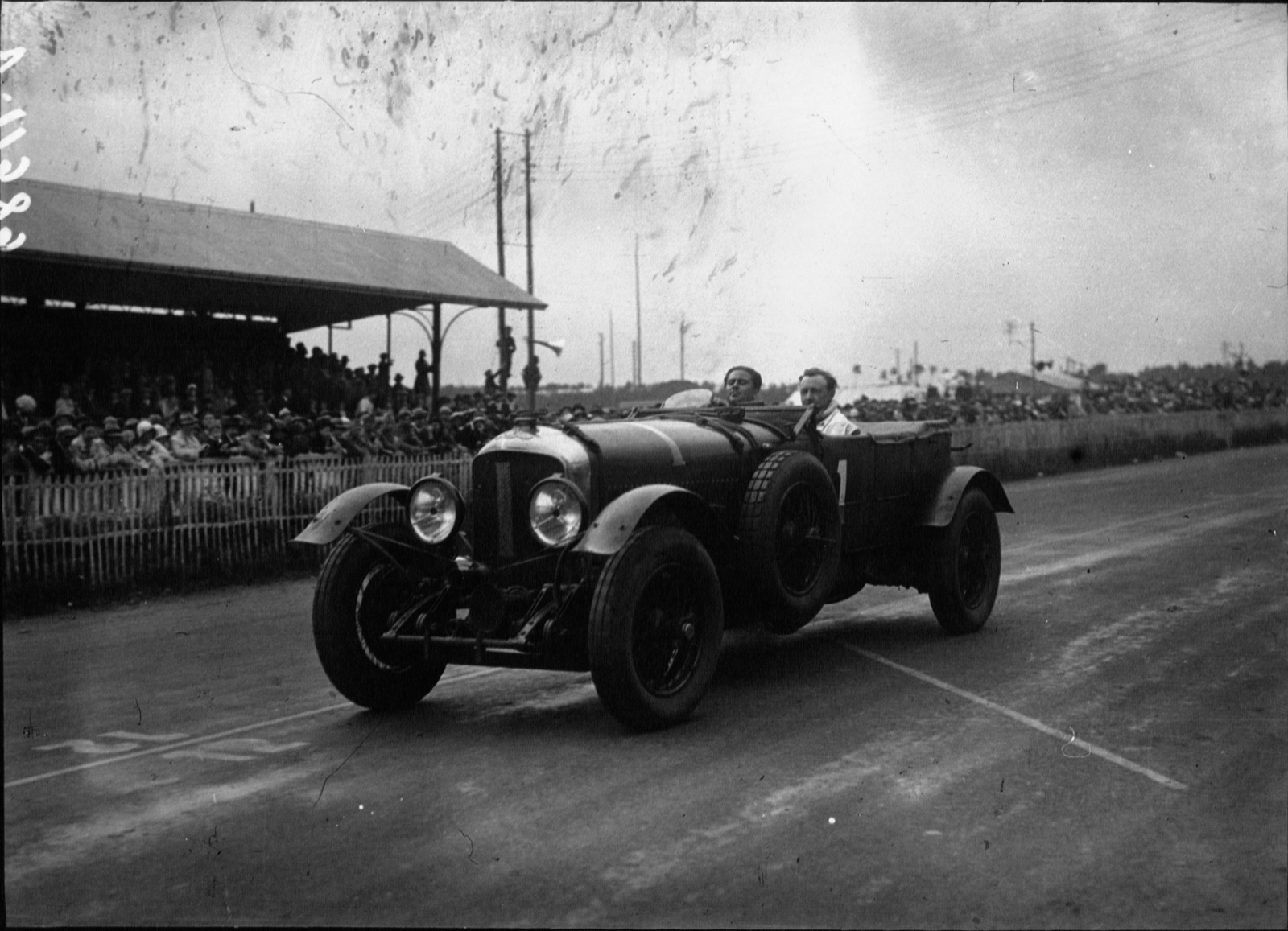
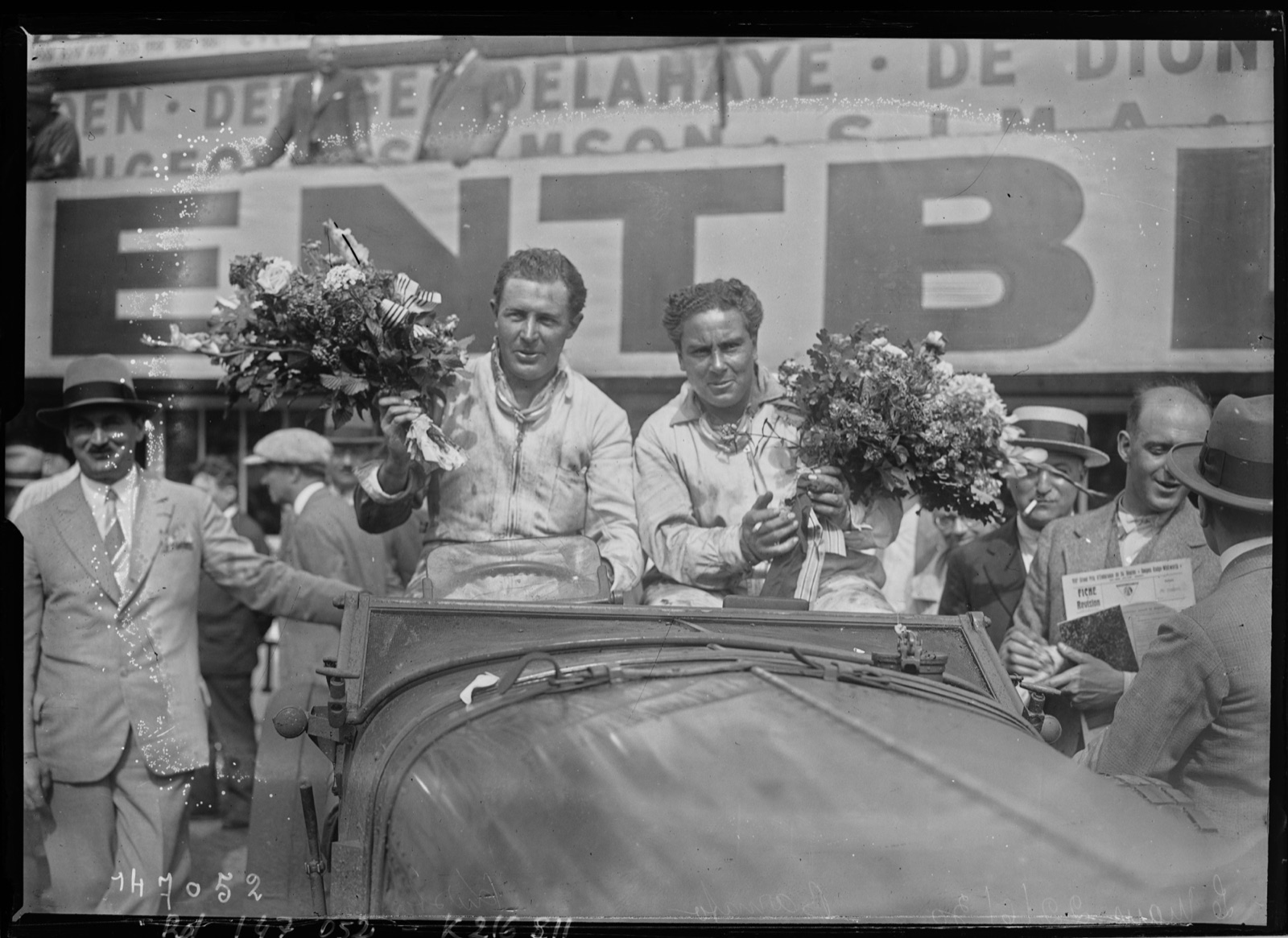
| 24 Hours of Le Mans | 15–16 June 1929 | Barnato and Birkin (No. 1, LB 2332): 1st, 2,843 km | ACO; Motor Sport database |
| Six Hours, Brooklands | 29 June 1929 | Barnato and Jack Dunfee (LB 2332): 1st | Boddy (1990); BDC (1949) |
| Irish Grand Prix, Phoenix Park | 13 July 1929 | Kidston (LB 2332): 2nd at 79.8 mph, the fastest average | Boddy (1990); date from the Motor Sport database |
| Tourist Trophy, Ards | August 1929 | Kidston (LB 2332): crashed at Bradshaw's Brae | Boddy (1990); BDC (1949) |
| BRDC 500 Miles, Brooklands | 12 October 1929 | Davis and Clive Dunfee (LB 2332): 2nd at 109.4 mph | Motor Sport, November 1929 |
| JCC Double Twelve, Brooklands | 9–10 May 1930 | Barnato and Clement (No. 2): 1st at 86.68 mph; Davis and Clive Dunfee (No. 3): 2nd at 85.68 mph | BDC (1949) |
| 24 Hours of Le Mans | 21–22 June 1930 | Barnato and Kidston (No. 4, LB 2332): 1st; Clement and Watney (No. 2): 2nd; Davis and Clive Dunfee (No. 3): retired | Motor Sport, July 1930; Motor Sport database |
| JCC Double Twelve, Brooklands | 1931 | Birkin (HM 2869): led early, retired | Elliott (2015) |
| BRDC 500 Miles, Brooklands | 3 October 1931 | Jack Dunfee and Cyril Paul (LB 2332): 1st at 118.39 mph | Motor Sport, November 1931 |
| British Empire Trophy, Brooklands | Easter 1932 | Jack Dunfee (LB 2332): 2nd in the heat at 121.17 mph; crankshaft broke in the final | Boddy (1990); the date from Hubbard (1990) |
1929: the Double Twelve and the first Le Mans victory
The Speed Six's first race was the Junior Car Club's Double Twelve at Brooklands, which started at 8 am on Friday 10 May 1929. Motor Sport's report of June 1929 has "the big six Bentley" leading at the end of the sixth hour, lapping at 94 to 95 mph, until the dynamo coupling sheared. The officials then stopped it, as the rules did not allow a car to go on without its dynamo. Later accounts differ: Boddy (1990) says it led "for nine hours", and Frankel (2025) that it "was excluded". Giulio Ramponi's Alfa Romeo won.
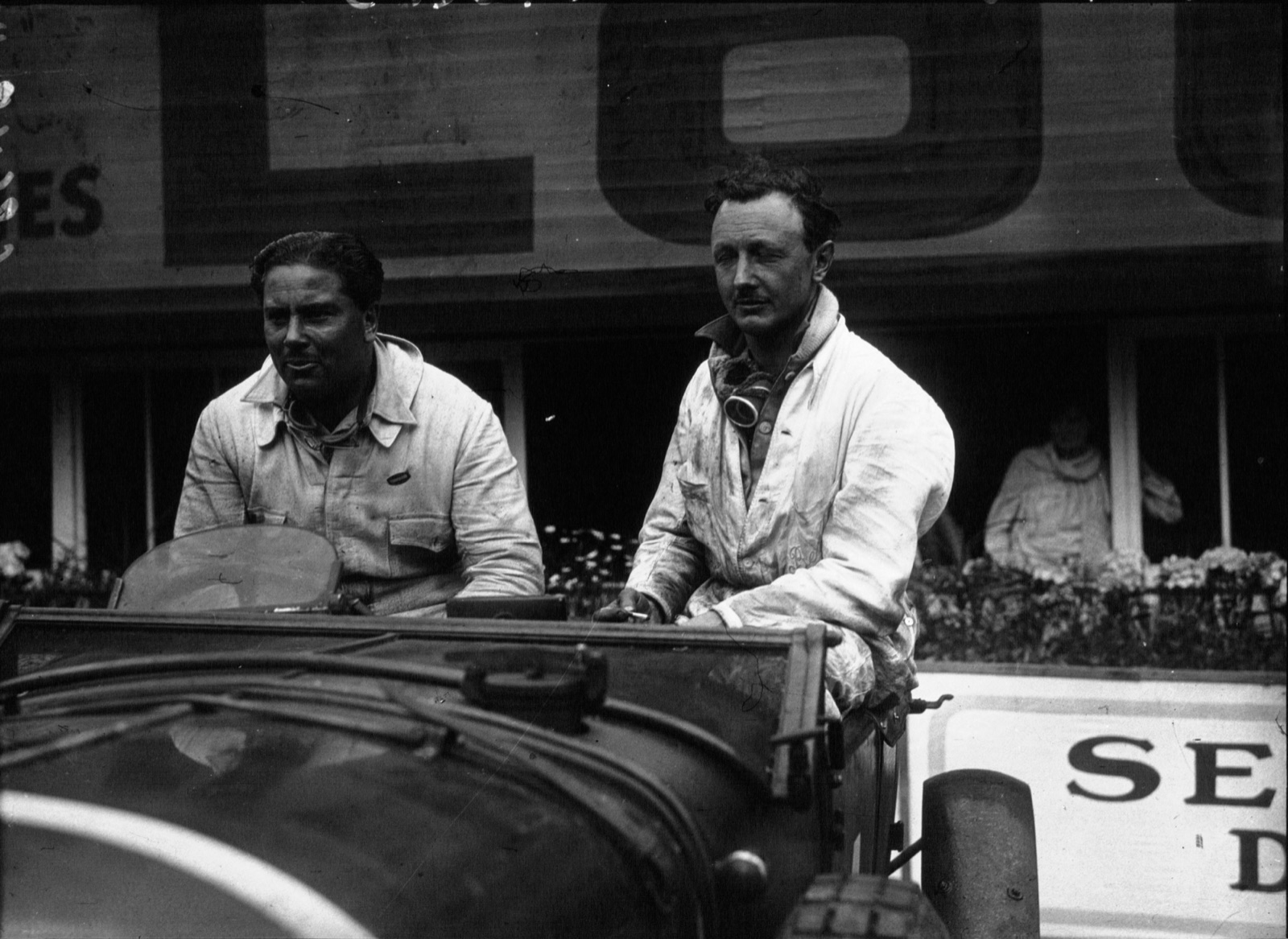
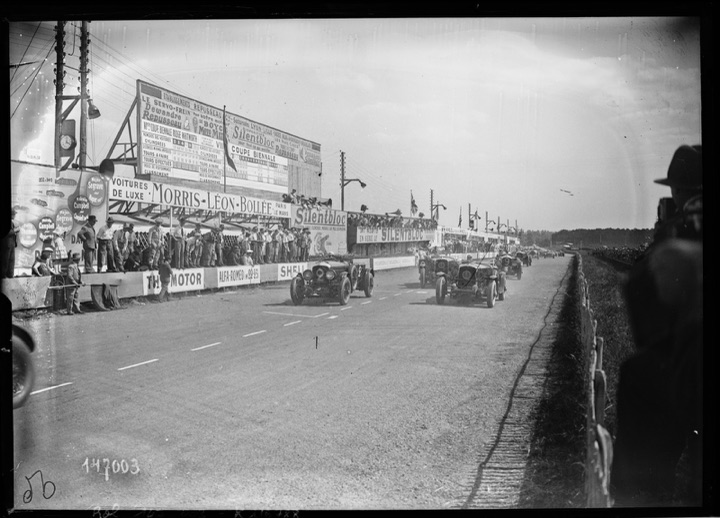
At Le Mans five weeks later, Speed Six No. 1 led home three 4½ Litres for a one-two-three-four. The Automobile Club de l'Ouest's history of the 1929 race gives the winners' distance as 2,843 km (174 laps) at 118 km/h, and says Birkin set a lap record of 7 min 21 s, 133 km/h. Boddy (1990) gives the average as 73.62 mph and adds that the car also took the Rudge Cup. RM Sotheby's (2017) says the Bentleys were so far ahead that they were told to slow to touring speed for the last few hours.
Nobby Clarke, who ran the racing shop, reported on the engine, in the words the BDC printed in 1949: "Nothing to report. Exhaust valves and valve springs changed as a precautionary measure only." The same report found a small fracture in the frame at the front engine bearer.
The rest of 1929: Brooklands, Ireland and Ulster
LB 2332 won the Brooklands Six Hours on 29 June, at 73.55 mph by Boddy's figure (1990) or 75.88 mph by the club's (1949). It was second in the Irish Grand Prix, crashed in the Tourist Trophy, and for the BRDC 500 Miles on 12 October had a stubby two-seater body. Motor Sport's November 1929 report says Sammy Davis and Clive Dunfee, starting from scratch, set "the highest speed of the day" and finished second on handicap to Jack Barclay and Frank Clement's 4½ Litre. Boddy (1990) names the winners as Clement and Barnato; the period report and Doug Nye, in "The legend of the Blower Bentley", Motor Sport, October 2021, both give Barclay.
1930: the Double Twelve and the second Le Mans victory
Two new Bentley Speed Six team cars were ready for 1930 and finished first and second in the Double Twelve of 9 and 10 May, in what the BDC called "shocking weather conditions". Motor Sport's June 1930 report describes some of the heaviest rain ever seen at Brooklands, with the "big Bentleys in the hands of Woolf Barnato and S. C. H. Davis" leading comfortably. All three of Birkin's supercharged Blowers retired.
Three Speed Sixes started at Le Mans on 21 June: No. 2 for Clement and Dick Watney, No. 3 for Davis and Clive Dunfee, and No. 4, LB 2332, for Barnato and Glen Kidston. Motor Sport's July 1930 report has Birkin's Blower setting the pace against Rudolf Caracciola and Christian Werner's supercharged 7-litre Mercedes-Benz, and first Davis, then Barnato, moving up behind the Mercedes. A flying stone smashed Davis's goggles and cut his eye ("Luckily I had another eye," he said). Dunfee put No. 3 into a sandbank soon after taking over, at the Pontlieue hairpin according to Elliott (2015); Boddy (1990) puts the crash at Mulsanne corner.
After dark No. 4 passed Werner for the lead; Caracciola had the Mercedes ahead again before midnight, and at about 2.30 am it came into its pit with almost no light from its headlamps and stayed there. The winning Speed Six covered 1,821 miles at 75.88 mph, with Clement and Watney's second on 1,760 miles at 73.33 mph. It was the marque's fourth Le Mans victory in a row, and the works team then stopped: "After this the Bentley works racing team was disbanded," wrote Boddy (1990).
1931 and 1932: private Speed Sixes at Brooklands
In private hands the Speed Six raced on. LB 2332, now Barnato's own car, ran in the BRDC 500 Miles of 3 October 1931 with a narrow body and a cowled radiator (Boddy, 1990). Motor Sport's November 1931 report says "the veteran Bentley" of Jack Dunfee and Cyril Paul won in 5 h 32 min 13 s at 118.39 mph, "the highest speed for the distance ever recorded in the history of motoring". In the British Empire Trophy at Easter 1932 (Hubbard, 1990) its crankshaft broke in the final (Boddy, 1990).
How many times did the Bentley Speed Six win Le Mans?
Twice: the Speed Six won Le Mans in 1929 and 1930, and the same chassis, LB 2332, took both victories. The marque's other Le Mans wins of the period came in 1924 and 1927 with the 3 Litre and in 1928 with the 4½ Litre. Barnato, who drove it to both wins, won all three Le Mans he started, a record the ACO says "remains unbeaten to date".
Who drove the Bentley Speed Six?
The Bentley Speed Six's drivers were the Bentley Boys. Barnato, a "diamond dealer and Bentley's main shareholder" in the ACO's words, drove in four of its five major wins. Birkin shared the 1929 Le Mans victory and set the lap record. Glen Kidston, a naval commander, won Le Mans in 1930 and raced the car alone in Ireland and Ulster in 1929.
Each works car had two drivers taking turns at Le Mans and in the Double Twelve. Frank Clement won the 1930 Double Twelve and was second at Le Mans with Dick Watney. S. C. H. "Sammy" Davis had gone to Brooklands in October 1929 to report the 500 Miles for The Autocar when W.O. asked him to drive the car, "which other drivers had found too fast and difficult" (Boddy, 1990). The brothers Jack and Clive Dunfee shared the 1929 Six Hours win (Jack), the 1930 Double Twelve second place (Clive) and the 1931 500 Miles win (Jack, with Cyril Paul). Dr J. D. Benjafield shared the car on its debut.
Old Number One: which Bentley Speed Six is it?
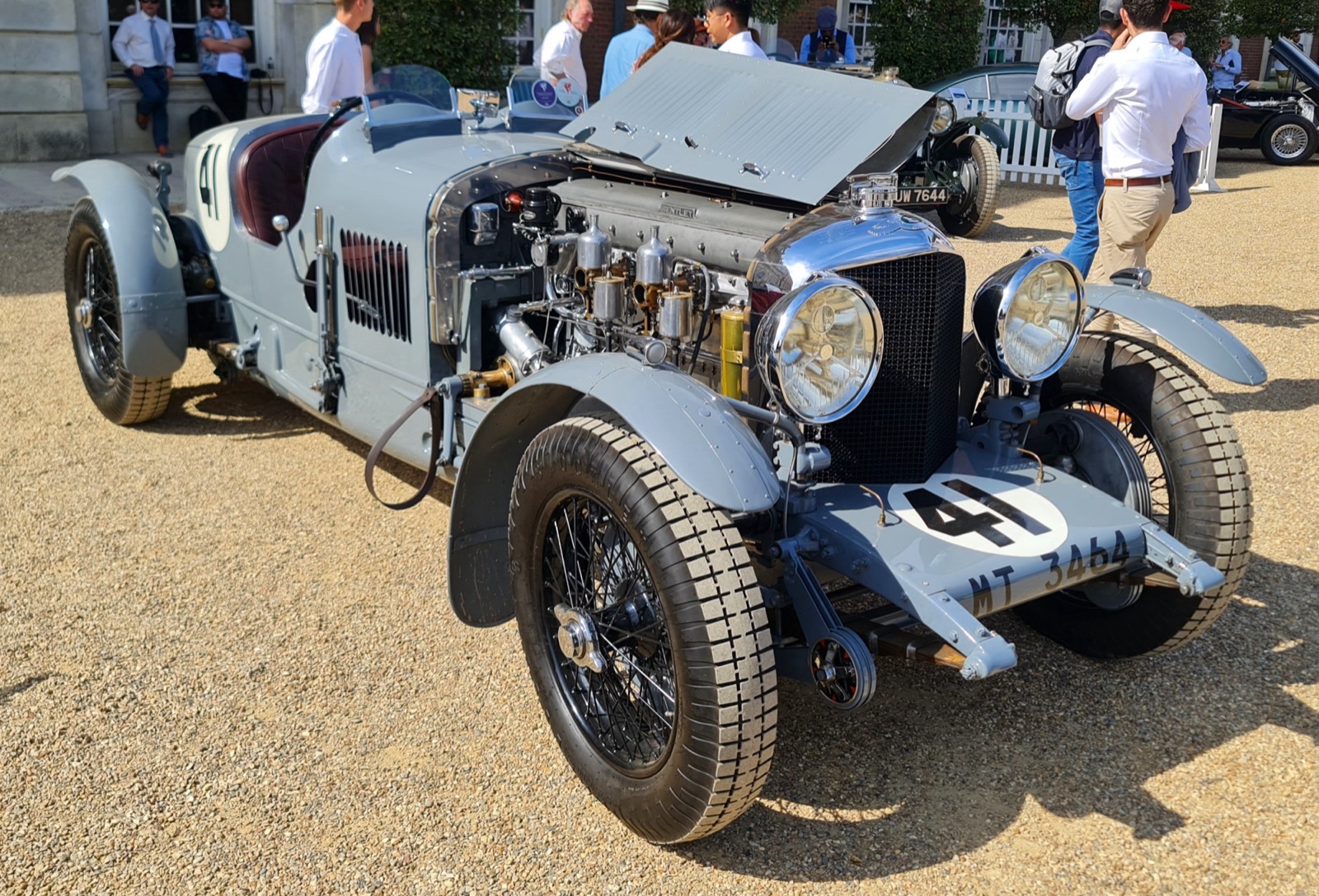
"Old Number One" is the works Bentley Speed Six LB 2332, registered MT 3464, with engine LB 2336, which won Le Mans in 1929 and 1930 (Boddy, 1990). Diana Barnato Walker told the High Court in 1990 that her father "would pat it as he went by and say 'Hello Old Number One'", according to Ed Hubbard in "Old Number One: the inside story", Motor Sport, October 1990. The car survives, restored to its 1932 form as a grey two-seater with an 8-litre engine.
How the car changed between 1929 and 1932
The Speed Six LB 2332 was rebuilt more than once. Michael Hay, the marque's historian, told the court that the chassis, front axle, gearbox, differential and possibly the steering column and crankcase were replaced before Le Mans in 1930 (Hubbard, 1990). Its Vanden Plas body gave way to a narrower one for the 1931 500 Miles, wrote Alan Padgett in a letter to Motor Sport, September 1983.
For 1932 Walter Hassan rebuilt the car on a 4-litre Bentley frame with an 8-litre engine; Hubbard says the frame was a hybrid that kept the 1930 car's gearbox, cross members, steering column, radiator, bulkhead and wings. In the 1932 BRDC 500 Miles Clive Dunfee lost control on the Members' banking, was thrown out and killed, and the car went over the top of the banking (Boddy, 1990). It was rebuilt as a coupé, given a stark two-seater body around 1958 for L. G. Quinney of Reading, and sold in early 1960 to J. Ward Jnr of Boston, Lincolnshire (Padgett, who built that body).
The court case of 1990
In 1990 Hubbard, then the owner, sued Middlebridge Scimitar Ltd, which had agreed to buy "the Bentley known as 'Old Number One'" and then argued it was not the Le Mans winner. Boddy (1990) put the sum at some £10 million; Motor Sport's review of Hay's book on the car, September 1999, says it would have been worth about £250,000 had the court found against it. After a 12-day trial Mr Justice Otton found for Hubbard: "There is no other Bentley which could legitimately lay claim to be 'Old Number One'."
The judgment has not settled the argument among historians. The BDC wrote in 1949 that the car's "identity has thus been lost". Its secretary Darell Berthon wrote in 1965 that the numbers had passed to a new car and the old chassis was scrapped, as Boddy quoted in Motor Sport, February 1991. Boddy could not see "how two cars, one created in 1929, the second in 1932, can merge into one historic entity". Hubbard replied that Boddy's own 1957 history of Brooklands called it the Number One Speed Six with a new engine and frame, and Hay held that it was "the direct descendant" of the Le Mans winner.
Did a Bentley Speed Six race the Blue Train?
Yes: in March 1930 a Bentley Speed Six driven by Barnato reached London before the Blue Train express reached Calais, though the accounts differ in detail. Boddy, in "Changing train of thought", Motor Sport, November 2001, gives the run as Cannes to London on 13 and 14 March 1930, ending at the RAC "15 minutes before the famous express steamed into Calais". The Concours of Elegance's 2019 Bentley centenary notes describe a £200 wager to beat the train from St Raphael, and an arrival "four minutes before the train reached Calais". The maker's heritage page says he reached his London club before the train was due at Calais.
Which Speed Six made the run?
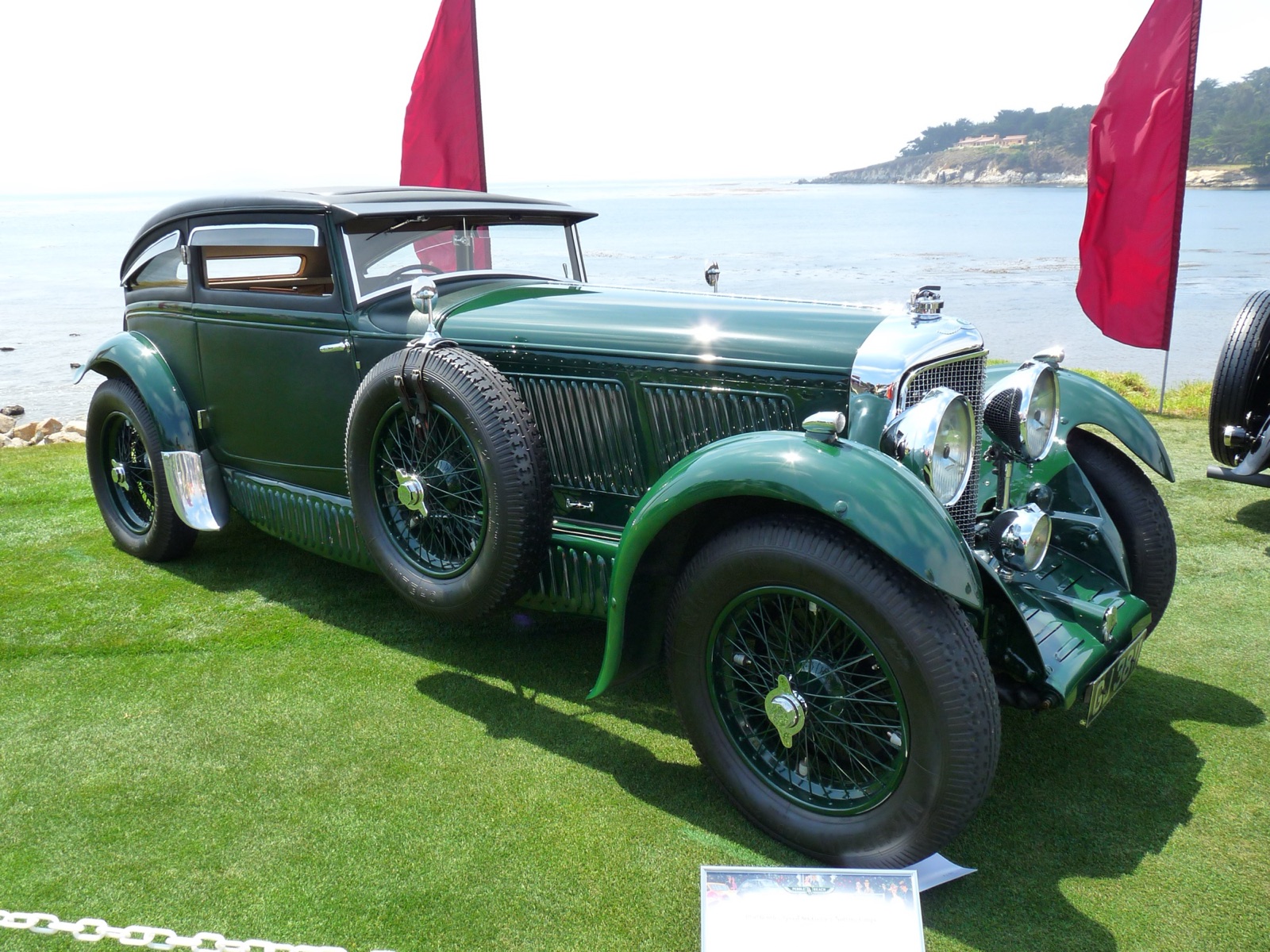
The Speed Six long named as the Blue Train car is a Gurney Nutting coupé, chassis HM 2855, registered GJ 3811, which Cuneo painted racing the train. Boddy (2001) reports that Hay, who had named the coupé in his 1986 book, changed his mind after its owner, Bruce McCaw, asked him to research it. The coupé passed its test 10 weeks after the run, Stanley Sedgwick had dated its delivery to May 1930, and Barnato had spoken of doing the run in a saloon. Hay's candidate is the saloon BA2592, registered UU 5999, which had covered over 16,000 miles in its first year.
The sources disagree on who bodied that saloon. Boddy reports Hay as calling it a four-door Gurney Nutting Weymann saloon. The maker's heritage page says the run was made in a Speed Six "with H. J. Mulliner saloon coachwork", and that the coupé was delivered "more than a month after the race". Both cars were shown at Pebble Beach in August 2001, the saloon wearing its original body again after it was found on another car (Boddy, 2001).
How many Bentley Speed Six cars were built?
Bentley Motors says "182 Speed Six models were built between 1928 and 1930", and Bonhams' catalogues give the same production figure out of 544 6½ Litre chassis in all. The BDC wrote in 1949 that 544 were made "of which 171 were 'Speed Sixes'". The maker's heritage page counts 362 standard 6½ Litres, which with its 182 Speed Sixes also makes 544.
Three were works racing cars: LB 2332 for 1929, and HM 2868 and HM 2869 for 1930 (Boddy, 1990; BDC, 1949; Elliott, 2015). Bentley sold rolling chassis, and the catalogues cited here name coachbuilders including Vanden Plas, H. J. Mulliner, Gurney Nutting, Freestone & Webb and Corsica. Bonhams' 2019 catalogue for SB 2754 says 121 6½ Litres were built on the short 11 ft 6 in chassis, and that "by the late 1990s only 185 of all types could be accounted for". Its 2014 catalogue for HM2865 counts 24 long-wheelbase Speed Sixes.
Where are the Bentley Speed Six team cars now?
All three works Bentley Speed Six cars survive. LB 2332, "Old Number One", was in the Concours of Elegance's Bentley centenary display in 2019 and was photographed at Hampton Court in 2023 in its grey 1932 form.
HM 2868, "Old Number Two", won the 1930 Double Twelve and was second at Le Mans. The BDC found it in 1949 with J. D. Percy, "in its original form" (the article prints its registration as "CF 8507"), and wrote that it led Barnato's funeral cortège. The same article says it won Le Mans in 1930, which the July 1930 report and the Motor Sport database contradict. The Concours of Elegance's 2016 notes on the car say a collector bought it in 2004 and had Graham Moss of R. C. Moss conserve it as near as possible to its 1930 specification.
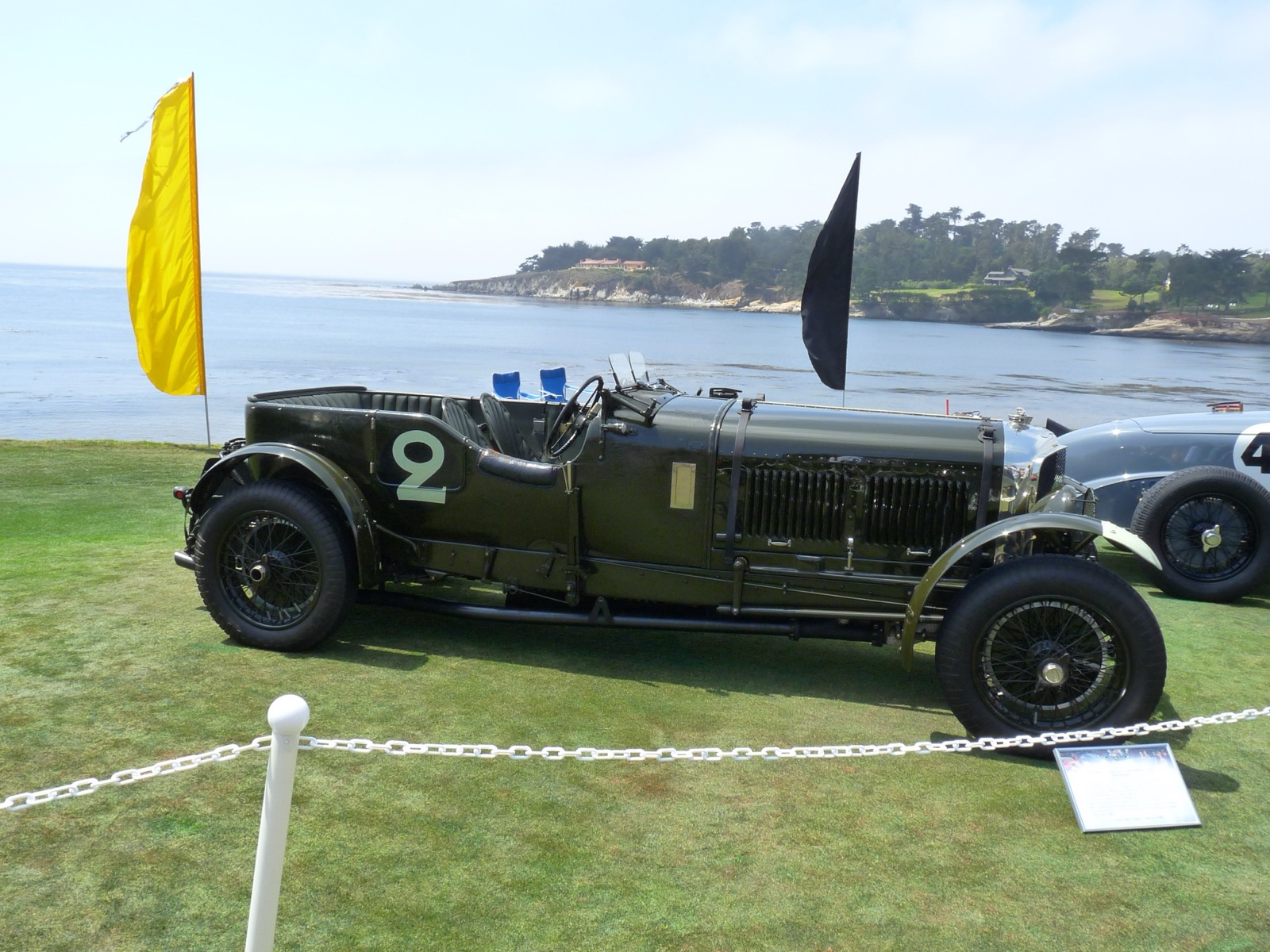
HM 2869, GF 8511, "Old Number Three", is the car Davis and Clive Dunfee raced at Le Mans in 1930. Elliott (2015) traces it through H. J. Thomas of the Bristol Aeroplane Company, who bought it from Jack Barclay for £750 in October 1932. David Vine reunited it with its original engine in the mid-1980s, and it has been in the ownership of the collector Peter Neumark's family since 2000. Bentley's page for its Speed Six Car Zero says Mulliner used it as a reference. The maker's own original Speed Six, GU 407, built in 1929 with a Victor Broom saloon body, was converted to team-car specification in 2005 and joined the heritage collection in 2021.
Bentley Speed Six values and auction results
Since 2013, Bentley Speed Six cars with their original closed or touring bodies have sold for US$1,462,500 to US$3,410,000 at Gooding and RM Sotheby's, by the auction houses' own results below. Speed Sixes rebodied as Vanden Plas-style tourers have made US$533,000 to US$1,457,500. For a works car, RM Sotheby's 2011 catalogue for chassis FA 2518 says a "recent sale" of the second-place car from Le Mans 1930 made "well over $5 million". The Concours of Elegance says a collector bought that car, Old Number Two, in 2004.
| Sale | Car | Result |
|---|---|---|
| Bonhams, Paris, February 2013 | BA2580, tourer; first a Gurney Nutting saloon, Vanden Plas tourer body from about 1971 | €828,000 |
| Gooding & Company, Pebble Beach, 2013 | Grafton coupé, original body, matching numbers | US$2,860,000 |
| Bonhams, Goodwood Members' Meeting, March 2016 | RC 2898, project: Speed Six engine LB 2340S on a replacement chassis | £205,340 |
| RM Sotheby's, Monterey, 2017 | HM2861, Corsica sportsman's saloon, original coachwork | US$3,410,000 |
| Bonhams, Scottsdale, January 2018 | LR 2787, "Le Mans Replica" tourer | US$1,457,500 |
| Bonhams, Quail Lodge, August 2019 | SB 2754, "Le Mans Replica" tourer | US$874,000 |
| Bonhams, Collectors' Motorcars sale, October 2019 | FR2639, sports tourer in the style of Vanden Plas | US$749,975 |
| Gooding & Company, Pebble Beach, 2023 | LR2778, H. J. Mulliner sports saloon, ex-Maharaja of Jaipur | US$1,462,500 |
| RM Sotheby's, London, 2023 | BA2587, Le Mans tourer in the style of Vanden Plas, rebuilt around its original cross member | Sold; price not shown |
| Bonhams, Amelia Island, February 2024 | FR 2641, Le Mans Replica tourer in the style of Vanden Plas | US$750,000 (after the sale; no premium shown) |
| Gooding & Company, Stan Lucas Collection, 2025 | LR2781, Vanden Plas fabric sports tourer, matching numbers | US$2,095,000 |
| Gooding & Company, Pebble Beach, 2025 | SB2769, Saoutchik drophead coupé, original chassis, engine and coachwork | US$2,150,000 |
| Gooding & Company, Pebble Beach, 2026 | RC2898, Le Mans-style sports tourer (the 2016 project, finished) | US$533,000 |
Earlier, Bonhams sold Speed Sixes between 2003 and 2008 for £135,000 to £309,500 and US$335,000 to US$568,000. RM Sotheby's sold FA 2518, a 6½ Litre tourer fitted with a 1930 Speed Six engine, for £470,400 at Salon Privé in 2011.
How much is a Bentley Speed Six worth?
A Bentley Speed Six is worth from about US$500,000 for a rebodied tourer to over US$3 million for a car with famous original coachwork, by the sales above. Several have failed to sell. LR2778 was unsold at RM Sotheby's in 2019 against a US$2.6 to 3.2 million estimate, then made US$1,462,500 at Gooding in 2023. SB2751 was unsold at Bonhams in 2018 and RM Sotheby's in 2023. FR 2641 was bought in at Bonhams' Amelia Island sale in February 2024 against US$900,000 to 1.2 million, and Bonhams' lot page now shows it sold for US$750,000. SB2762, a Freestone & Webb saloon, was unsold at RM Sotheby's London in 2025 against £800,000 to £1.3 million.
Speed Six continuation cars and replicas
Mulliner, Bentley's coachbuilding division, is building 12 new Speed Six Continuation Series cars to the specification of the 1930 Le Mans team cars. The maker's page for Car Zero says the drawings came largely from the W. O. Bentley Memorial Foundation and that the test car covered 8,000 km and a six-hour race simulation. Bentley's release of 6 November 2024 says each car takes eight months to build, with specialist suppliers across the United Kingdom, and needs over 600 new parts, including a new block casting. The engines gave 205 bhp on the dynamometer against the original 200 bhp. The first customer car, for John Breslow in the USA, was finished in November 2024; Bentley called it the first delivery of a new Speed Six since 1930.
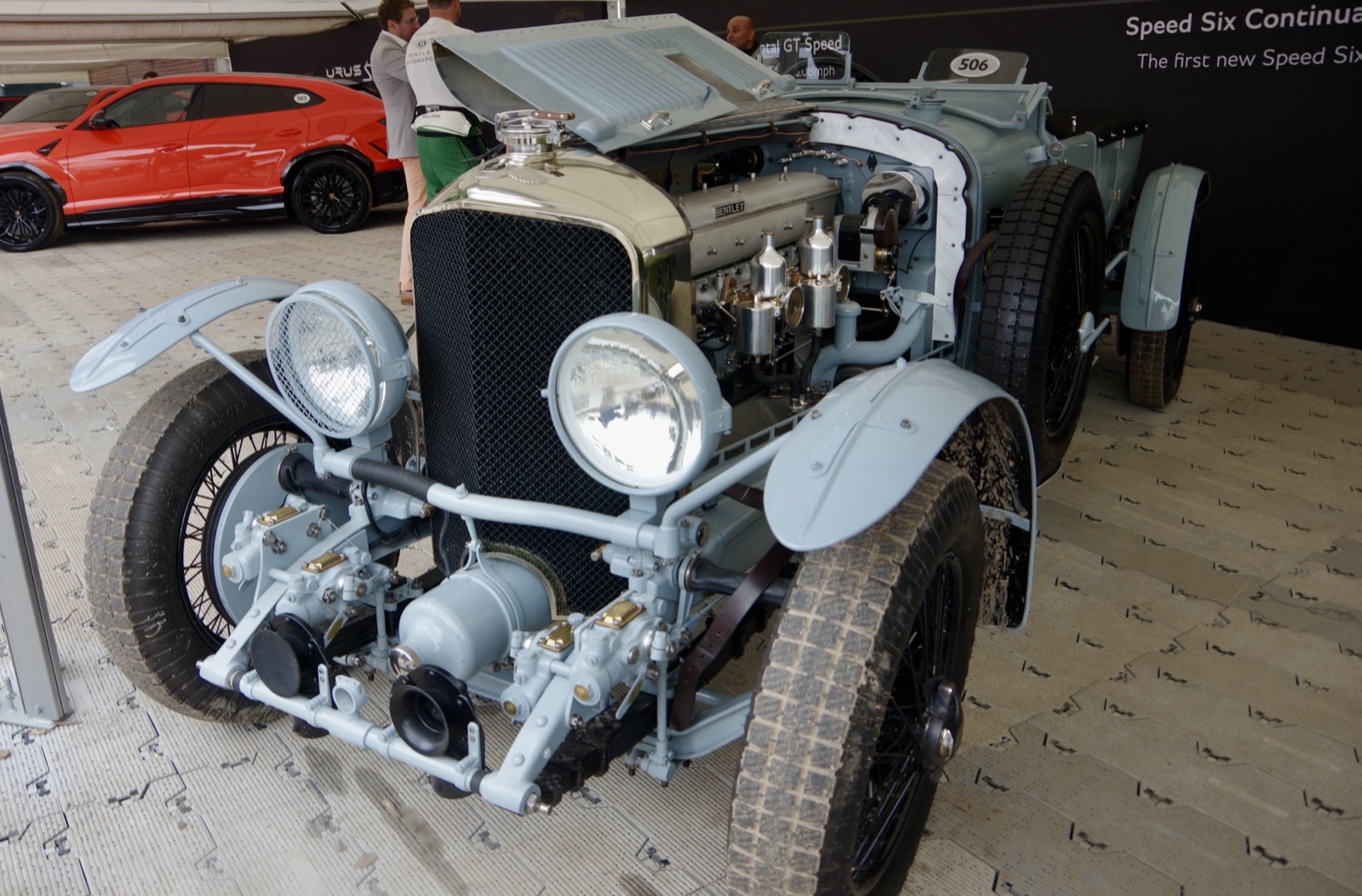
Many period Speed Sixes now wear "Le Mans" tourer bodies. Bonhams' 2014 catalogue for HM2865 describes a long-chassis Gurney Nutting saloon whose body was probably scrapped. By May 1964 its chassis had been replaced by a shortened frame stamped with the original number, under a new Vanden Plas-style tourer body. Standard 6½ Litres have been built up as team-car replicas too: Bonhams sold SB2758, first bodied as a saloon and since built "as a replica of the works Le Mans Speed Six", for £501,400 in 2021 and £577,240 in 2023.
Bentley Speed Six rivals
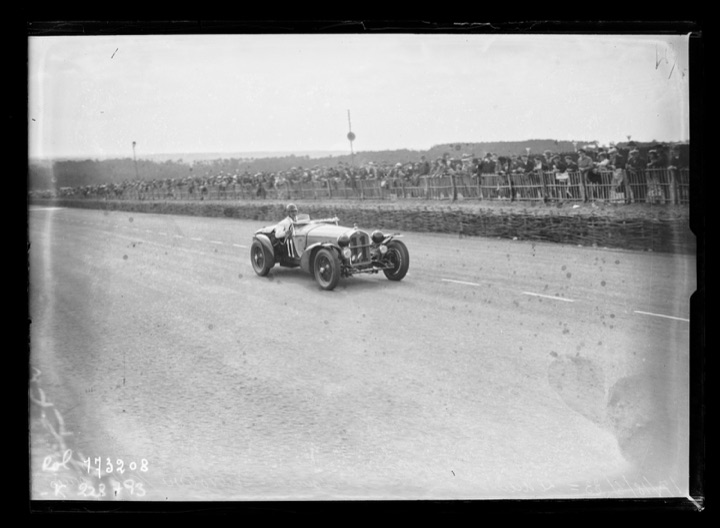
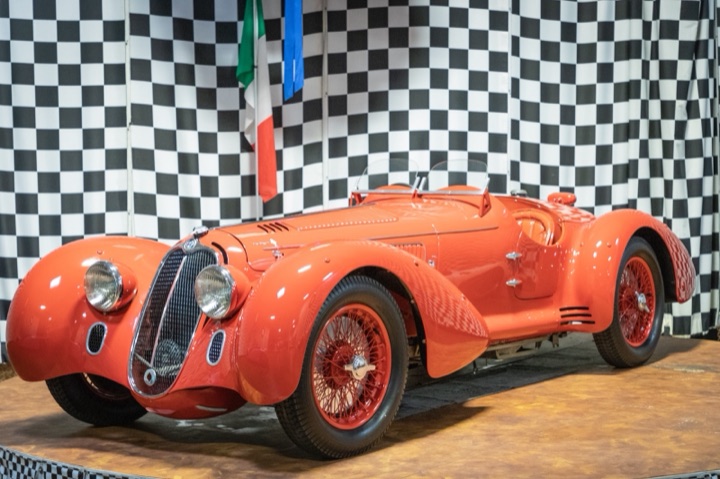
Italy, Germany, the United States and Britain supplied the Speed Six's racing rivals. Alfa Romeo's supercharged 1,750s beat it in 1929: Ramponi won the Double Twelve (Motor Sport, June 1929), and Boris Ivanowski's 6C 1750 SS won the Irish Grand Prix ahead of Kidston (Motor Sport database). At Le Mans in 1930 the threat was Caracciola's 7-litre Mercedes-Benz, and the 2.3-litre Talbots finished third and fourth behind the two Speed Sixes; in 1929 the best car behind the four Bentleys was a Stutz, fifth. Bonhams' catalogues name the Rolls-Royce New Phantom as the 6½ Litre's target on the road, and Frankel (2025) compares the Speed Six with the Blower: heavier and less powerful, "but somewhat more durable".
Questions and answers
Is the Bentley Speed Six the same as the Bentley 6½ Litre?
The Bentley Speed Six is the sporting version of the 6½ Litre chassis, introduced in 1928 with twin SU carburettors and 5.3:1 compression against the standard car's 4.4:1. It also had a different camshaft, the C-type gearbox and a parallel-sided radiator, according to the Bentley Drivers' Club's 1949 history in Motor Sport. Bentley counts 362 standard 6½ Litres and 182 Speed Sixes.
Why is the Bentley Speed Six called Old Number One?
The name belongs to one car, the works Speed Six LB 2332, which carried number 1 when it won Le Mans in 1929 (Motor Sport database). Ed Hubbard's 1990 account quotes Barnato's daughter: her father would pat the car and say "Hello Old Number One".
Was the Bentley Speed Six faster than the Blower Bentley?
Not on paper. The data panel of Motor Sport's 2025 track test gives the Speed Six 180 bhp and 119 mph against 240 bhp and 125 mph for Birkin's racing Blower, and calls the Speed Six heavier and less powerful but more durable. In 1930 Speed Sixes finished first and second in the Double Twelve and at Le Mans, and every Blower that started those races retired.
Was the Speed Six W.O. Bentley's favourite car?
Bonhams' catalogues say so: "the fast yet refined 6½-Litre Speed Six was W O Bentley's favorite car" (LR 2787, 2018). Its 2019 catalogue for SB 2754 quotes Jonnie Green's 50 Years of the Marque to the same effect.
How many Bentley Speed Six continuation cars are there?
Bentley Mulliner is building 12 customer cars, plus Car Zero, the test car, which stays in Bentley's heritage collection (Bentley). The first customer car was finished in November 2024, for a customer in the USA.
When did Bentley stop racing the Speed Six?
The works team's last race was Le Mans in June 1930, after which it was disbanded (Boddy, Motor Sport, 1990), and Bentley Motors went into receivership on 10 July 1931 (Nye, Motor Sport, 2021). Speed Sixes raced on privately: Barnato's Old Number One won the 1931 BRDC 500 Miles, and Birkin drove Old Number Three in the 1931 Double Twelve.
Sources
- Bentley Motors, "1929 Speed Six GU 407", heritage collection page, read 31 October 2026: 182 built 1928–30, 362 standard 6½ Litres, bore and stroke, 147 bhp standard, road wheelbases, racing 11 ft wheelbase, 6.1:1 and 200 bhp, the Blue Train saloon, GU 407's history.
- Bentley Motors, "Speed Six Continuation Series Car Zero", heritage collection page, read 31 October 2026: 12 cars, drawings, Old Number 3 as reference, 8,000 km testing.
- Bentley Motors, "First Speed Six delivery in 94 years, as a Blower finishes a 24 hour race", press release, 6 November 2024: build time, parts, 205 bhp, first delivery.
- Bentley Drivers' Club (compiled under Stanley Sedgwick), "The 6½ Litre Bentley", Motor Sport, February 1949, p. 17: origins, The Sun, camshaft drive, Speed Six and Le Mans specifications, race results, production, team cars in 1949.
- Motor Sport, "The Speed Six Bentley", road test, March 1930, p. 7: camshaft drive, 175 bhp, 87 mph, gear ratios, brakes.
- Motor Sport, "The Junior Car Club's Double Twelve Hour Race", June 1929, p. 6: the Speed Six's debut, dynamo coupling, Ramponi's win.
- Motor Sport, "The B.R.D.C. 500 Miles Race", November 1929, p. 28: Davis and Clive Dunfee second at 109.4 mph.
- Motor Sport, "The Double Twelve", June 1930, p. 34: the 1930 race in the rain.
- Motor Sport, "Grand Prix d'Endurance", July 1930, p. 4: Le Mans 1930, starters, Davis and Dunfee, the Mercedes, results.
- Motor Sport, "The B.R.D.C. 500", November 1931, p. 23: Jack Dunfee and Cyril Paul's win at 118.39 mph.
- Motor Sport database, 1929 Le Mans 24 Hours, 1930 Le Mans 24 Hours and 1929 Irish Grand Prix, read 31 October 2026: dates, car numbers, results.
- Automobile Club de l'Ouest, "Nine 9s: the 1929 race", read 31 October 2026: distance, lap record, Barnato's three wins.
- Bill Boddy, "Saga of a Speed Six Bentley", Motor Sport, September 1990, p. 4: LB 2332's history and races, the court case, Boddy's view.
- Ed Hubbard, "Old Number One: the inside story", Motor Sport, October 1990, p. 4: the trial, Hay's evidence, the 1932 rebuild, the judgment.
- Bill Boddy, "Veteran to Classic Miscellany", Motor Sport, February 1991, p. 56: Darell Berthon's 1965 view.
- Alan Padgett, "Old No 1 Bentley", letter, Motor Sport, September 1983, p. 98: the 1958 body, owners to 1960.
- Motor Sport, review of Michael Hay, Bentley "Old Number One", September 1999, p. 90: the £10 million and £250,000 values.
- Bill Boddy, "Changing train of thought", Motor Sport, November 2001, p. 99: the Blue Train run and Hay's revised view of the car.
- Andrew Frankel, "Bentley Blower vs Speed Six: speed meets sophistication", Motor Sport, April 2025, p. 132: track test, data panel, the 1929 debut.
- Doug Nye, "The legend of the Blower Bentley: magic... or myth?", Motor Sport, October 2021, p. 120: the 1929 500 Miles winners, Bentley's receivership on 10 July 1931.
- James Elliott, "Great Briton", Classic & Sports Car, September 2015, p. 118: the 1930 team cars, Old Number Three's races and owners.
- Concours of Elegance, "The cars that established the Bentley legend", 2019: the Blue Train wager, Old Number One and Old Number Three on show.
- Concours of Elegance, "Car of the Week: Bentley Speed Six 'Old No 2'", 2016: HM 2868's 2004 purchase and conservation.
- Bonhams, lot pages: BA2580, Paris 2013; HM2865, Goodwood 2014; RC 2898, 2016; LR 2787, Scottsdale 2018; SB2751, 2018; SB 2754, Quail Lodge 2019; FR2639, 2019; SB2758, 2021; SB2758, 2023; FR 2641, Amelia Island 2024; results and earlier sales from Bonhams' own lot search, read 31 October 2026.
- RM Sotheby's, lot pages: HM2861, Monterey 2017; LR2778, Monterey 2019; SB2751, Villa Erba 2023; BA2587, London 2023; and, unlinked here, FA 2518 (Salon Privé 2011) and SB2762 (London 2025).
- Gooding & Company (Gooding Christie's), lot pages: Grafton coupé, Pebble Beach 2013; LR2778, Pebble Beach 2023; LR2781, 2025; SB2769, Pebble Beach 2025; RC2898, Pebble Beach 2026.