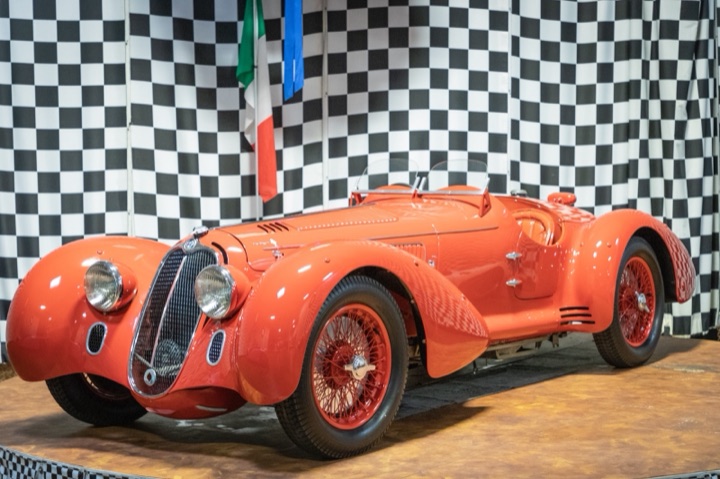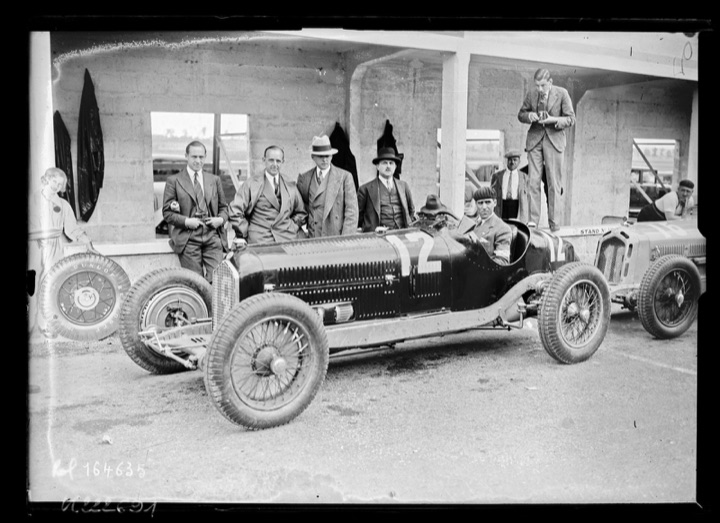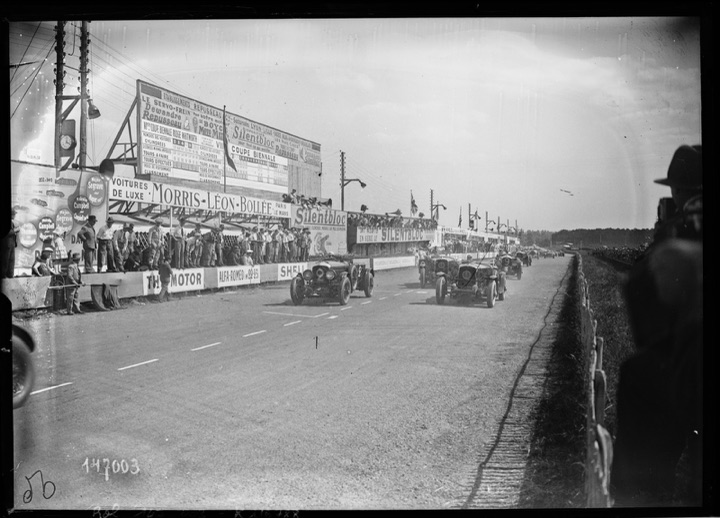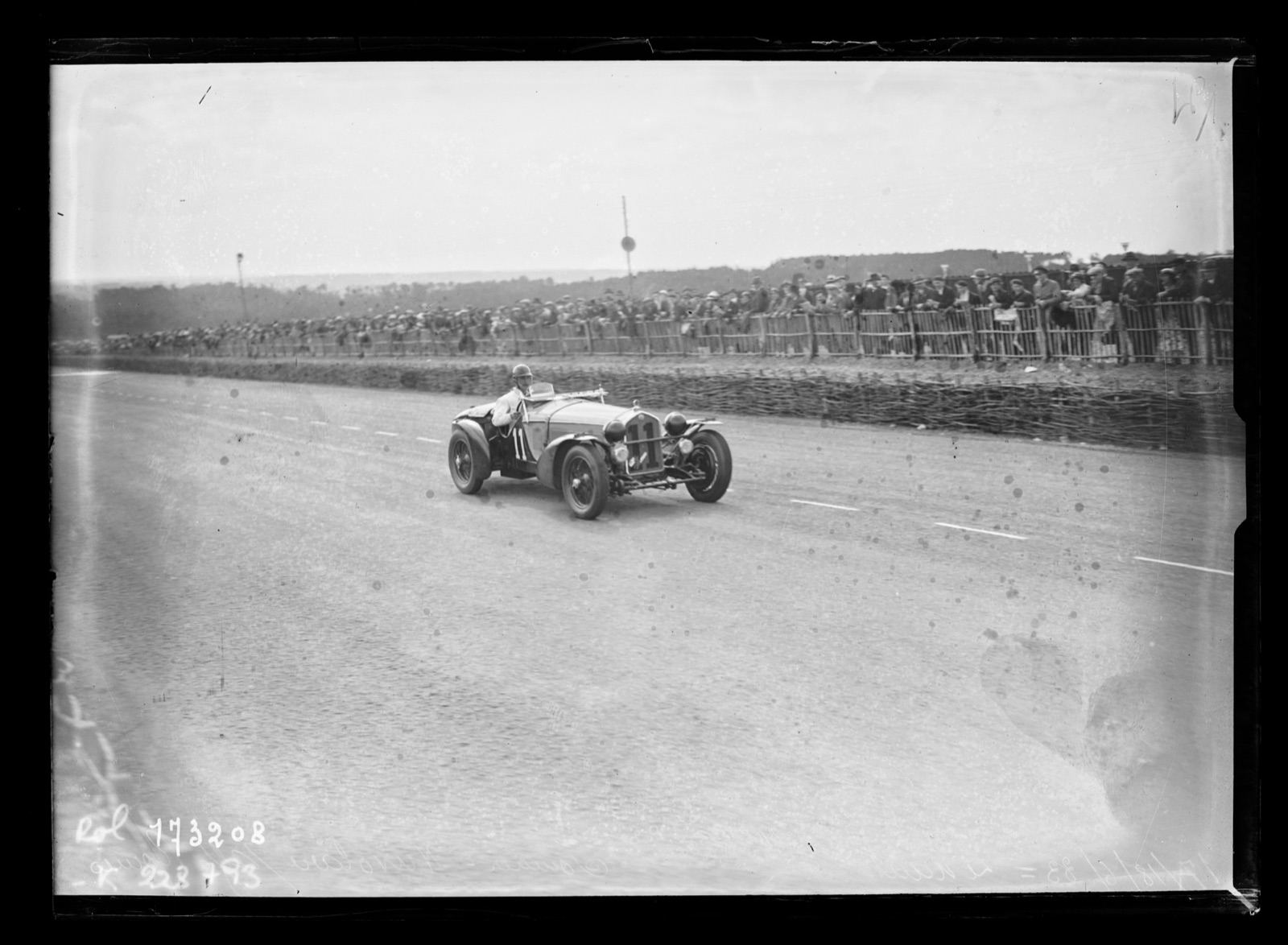
The Alfa Romeo 8C 2300 is the supercharged straight-eight sports and racing car Vittorio Jano designed for Alfa Romeo, built from 1931 to 1934 with an engine of 2,336 cc, according to Stellantis Heritage's history of the 8C 2300 Le Mans. It won the Le Mans 24 Hours four years running from 1931 to 1934, the Targa Florio from 1931 to 1933 and the Mille Miglia from 1932 to 1934, by the Motor Sport database. Its short Grand Prix version is the 8C 2300 Monza, named after Giuseppe Campari and Tazio Nuvolari won the ten-hour Italian Grand Prix at Monza in one on 24 May 1931, according to RM Sotheby's.
Who designed the Alfa Romeo 8C 2300, and why?
The Alfa Romeo 8C 2300 was designed by Vittorio Jano, the engineer in charge of Alfa Romeo's planning department, after the company's directors, encouraged by the racing and sales success of the six-cylinder 6C cars, decided on a new straight-eight engine for faster and more luxurious cars, Stellantis Heritage says. Jano had joined Alfa Romeo from Fiat in 1923 and designed the P2 Grand Prix car and the 6C 1500 and 1750, which "put the Milanese marque on an improved financial footing", Paul Fearnley wrote in Motor Sport in March 2017. "His two-seat 8C 2300 of 1931 – its Monza appellation came later – was a natural progression," Fearnley added.
Much of Alfa Romeo's racing was by then run by Enzo Ferrari, Sir Anthony Stamer wrote in Motor Sport's history of Alfa Romeo in December 1961: Scuderia Ferrari was founded at Modena on 1 December 1929 and given the factory's racing cars, and it entered two new 8C 2300s, for Nuvolari and Luigi Arcangeli, in the 1931 Mille Miglia. They arrived too late to be prepared properly and suffered "chronic tyre trouble", in Stamer's words, and Rudolf Caracciola won for Mercedes-Benz in 16h 10m 10s, Motor Sport recorded in its report of the 1932 race.
The first win came a month later. Nuvolari won the Targa Florio on 10 May 1931 in "one of the new 2,300 c.c. straight-eight Alfa-Romeo racing cars", reported Motor Sport in June 1931. The type was then "put into production as a sports model, albeit with a lower compression ratio, 5.75 to 1", the magazine said in its road test of August 1932.
Alfa Romeo 8C 2300 design and engineering
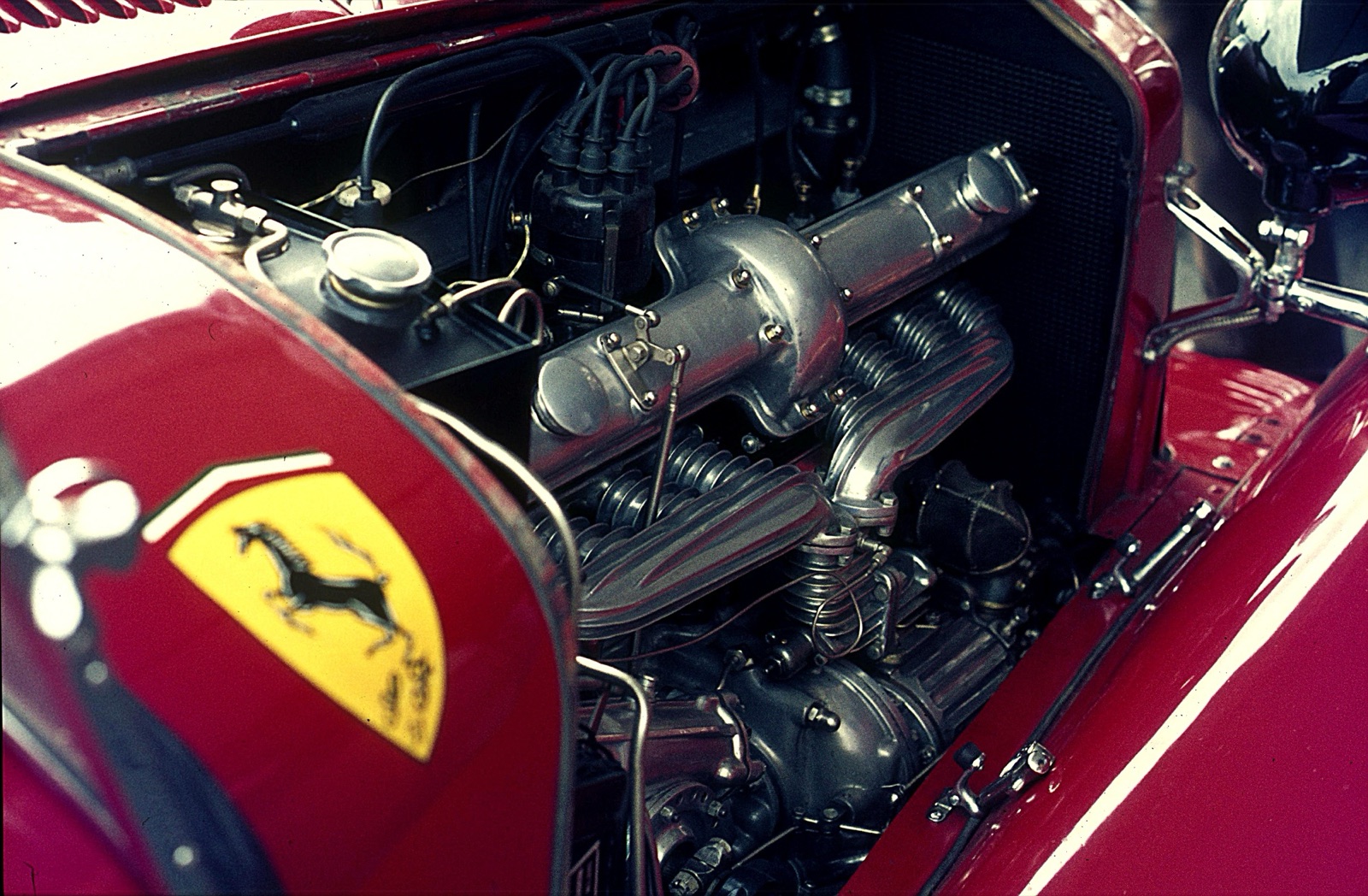
The Alfa Romeo 8C 2300's engine has two blocks of four cylinders on a common crankcase under one eight-cylinder head, with a train of gears between the two blocks that drives the twin overhead camshafts, the supercharger, the water pump and the dynamo, by Stamer's 1961 description.
The straight-eight and its supercharger
The 8C 2300 engine shares its bore and stroke, 65 × 88 mm, with the 6C 1750, which gives 2,336 cc from eight cylinders (Stamer, 1961; Stellantis Heritage). The Museo Storico Alfa Romeo's specification of the 8C 2300 Corto "Mille Miglia" gives the blocks and head in light alloy, two valves per cylinder, gear-driven camshafts, a single carburettor and a supercharger. The crankshaft was built in two halves and ran in ten plain white-metal bearings, and a Roots blower driven at engine speed drew from a Memini carburettor, wrote Flight Lieutenant John Scafe in Motor Sport in April 1943. Stamer placed the supercharger at the front of the engine, on its right-hand side, and said the central gear drive kept torsional vibration down.
Chassis, brakes and the three series
The 8C 2300 chassis has two steel side members linked by five cross-members, with the rigid engine bearers acting as a sixth; solid axles on longitudinal leaf springs front and rear; rod-operated drum brakes; and a four-speed gearbox in unit with the engine, Jonathan Stein wrote in Motor Sport in June 2001. Stamer gave the drums as 18 in across, finned and filling the back of the wire wheels, and the clutch as Alfa Romeo's multi-plate type.
Stamer also set out three production series. First-series cars had a small Memini S1.36 carburettor fed by gravity from a 2.6-gallon reservoir on the bulkhead, filled by two Autovacs, and the oil reservoir under the passenger's seat. The second series had front springs shackled at both ends, the larger S1.42 carburettor fed by an electric pump, and two pairs of rear dampers. The third series moved the oil reservoir under the driver's seat, away from the heat of the exhaust and where the driver could see that its filler cap had not blown open.
Alfa Romeo 8C 2300 specifications
The Alfa Romeo 8C 2300 has a 2,336 cc supercharged straight-eight in every version; the versions differ in wheelbase, tune, weight and speed, and the sources differ on power and on how many were built.
| Corto ("Mille Miglia") | Lungo ("Le Mans") | Monza | |
|---|---|---|---|
| Engine | Straight-eight, two blocks of four, twin overhead camshafts, two valves per cylinder, one supercharger (Museo) | ||
| Bore × stroke, displacement | 65 × 88 mm, 2,336 cc (Museo); by 1932 most Monzas, and some Mille Miglia cars, bored to 69 mm, 2,632 cc (Stamer) | ||
| Carburation, ignition | One carburettor, distributor (Museo) | One carburettor, distributor (Museo) | Two carburettors, magneto (Museo) |
| Power | 155 hp at 5,200 rpm (Museo) | 155 hp at 5,200 rpm (Museo); 180 hp by 1934 (Stellantis) | 165 hp at 5,400 rpm (Museo; Stein); 178 bhp (Stamer); "said to develop 190 b.h.p." (Scafe) |
| Gearbox | Four speeds and reverse (Museo) | ||
| Wheelbase | 108.3 in (Stein); 9 ft 0 in (Stamer); the Museo gives 3,100 mm | 3,100 mm (Museo); 122 in (Stein); 10 ft 2 in (Stamer) | 2,650 mm (Museo); 104.3 in (Stein); 8 ft 8 in (Stamer) |
| Track | 4 ft 8 in (Stamer) | ||
| Weight | 1,000 kg (Museo) | About 1,000 kg (Stellantis; Museo) | 920 kg (Museo); 2,024 lb (Stein); 18 cwt (Scafe) |
| Top speed | 185 km/h (Museo) | 200 km/h (Museo; Stellantis); 215 km/h by 1934 (Stellantis) | 210 km/h (Museo); 130 mph (Stamer); 130–140 mph (Stein) |
| Number built | All 8C 2300s: 188 (Stellantis) or 308 (Museo); Le Mans cars: 9 (Stellantis; Museo) | 10 (Museo) | |
Museo: the Museo Storico Alfa Romeo's pages for the Corto "Mille Miglia", the Le Mans and the Monza. Stamer, Stein and Scafe: Motor Sport, 1961, 2001 and 1943. Stellantis: Stellantis Heritage.
How much horsepower did the Alfa Romeo 8C 2300 have?
The Alfa Romeo 8C 2300 had 155 hp at 5,200 rpm in Spider Corsa form, the most powerful, almost double the 85 hp of the 6C 1750, by Stellantis Heritage's figures, and the Le Mans cars had 180 hp by 1934. Stamer put the ordinary 8C 2300 at "around 150 b.h.p." and the Monza at 178 bhp, and Stein gave 142 to 165 bhp "depending upon tune". Alfa Romeo claimed 130 bhp at 4,900 rpm, with the supercharger at 6 lb boost, for the long-chassis car Gordon Cruickshank described in Motor Sport in December 1983. The Simeone Foundation Automotive Museum in Philadelphia says the third-series Le Mans car Earl Howe bought in 1933, chassis 2311201, had a 180 hp engine "of the latest design", in its history of that car.
How fast was the Alfa Romeo 8C 2300?
The Alfa Romeo 8C 2300 reached 185 km/h (115 mph) as a short-chassis Mille Miglia car, 200 km/h (124 mph) as a Le Mans car and 210 km/h (130 mph) as a Monza, by the Museo Storico Alfa Romeo's figures. Nuvolari's 1931 Targa Florio winner "was capable of 115 m.p.h. on the level" with a final drive of 4.5 to 1, Motor Sport reported in June 1931, and at Le Mans in 1933 the leaders were "doing over 120 m.p.h." along the straight past the Hippodrome café, by the magazine's report of that race.
Motor Sport reached 95 mph on its 1932 road test of Birkin's 1931 car, then owned by Ernest Kleinwort, before traffic intervened. Kleinwort gave the comfortable maximum as 107 mph at 5,000 rpm; on the 4.25 to 1 top gear, 5,300 rpm "under favourable conditions" meant 114 mph, by the magazine's speed chart. For a 2.6-litre car, The Autocar timed 0–60 mph in 6.9 sec and 0–100 mph in 24.8 sec, with a top speed "in the vicinity of 130 m.p.h.", as Stamer quoted it in 1961.
Alfa Romeo 8C 2300 versions: Corto, Lungo, Le Mans and Monza
The Alfa Romeo 8C 2300 came in three chassis lengths, or wheelbases, Stamer wrote: 10 ft 2 in, "usually termed the Le Mans type", with a four-seat body; 9 ft 0 in, the Mille Miglia, with a two-seat body; and 8 ft 8 in, the Monza racing two-seater. Stein gave the short (corto) and long (lungo) chassis as the two offered at first, with the Monza made as "a limited series".
The 8C 2300 Le Mans
The 8C 2300 Le Mans was built because Alfa Romeo's general manager, Prospero Gianferrari, wanted to win at Le Mans, Stellantis Heritage says. The race's rules called for a four-seat body, so a long-wheelbase competition car with a torpedo racing body was made with the Milan coachbuilder Touring; it weighed about 1,000 kg and reached 200 km/h, and nine were built. The Simeone museum counts eight cars made "with standard racing Le Mans bodywork by Touring of Milan". Stein, though, describes the 1931 winner as "a lungo 'Le Mans'-bodied car by Zagato".
The 8C 2300 Monza
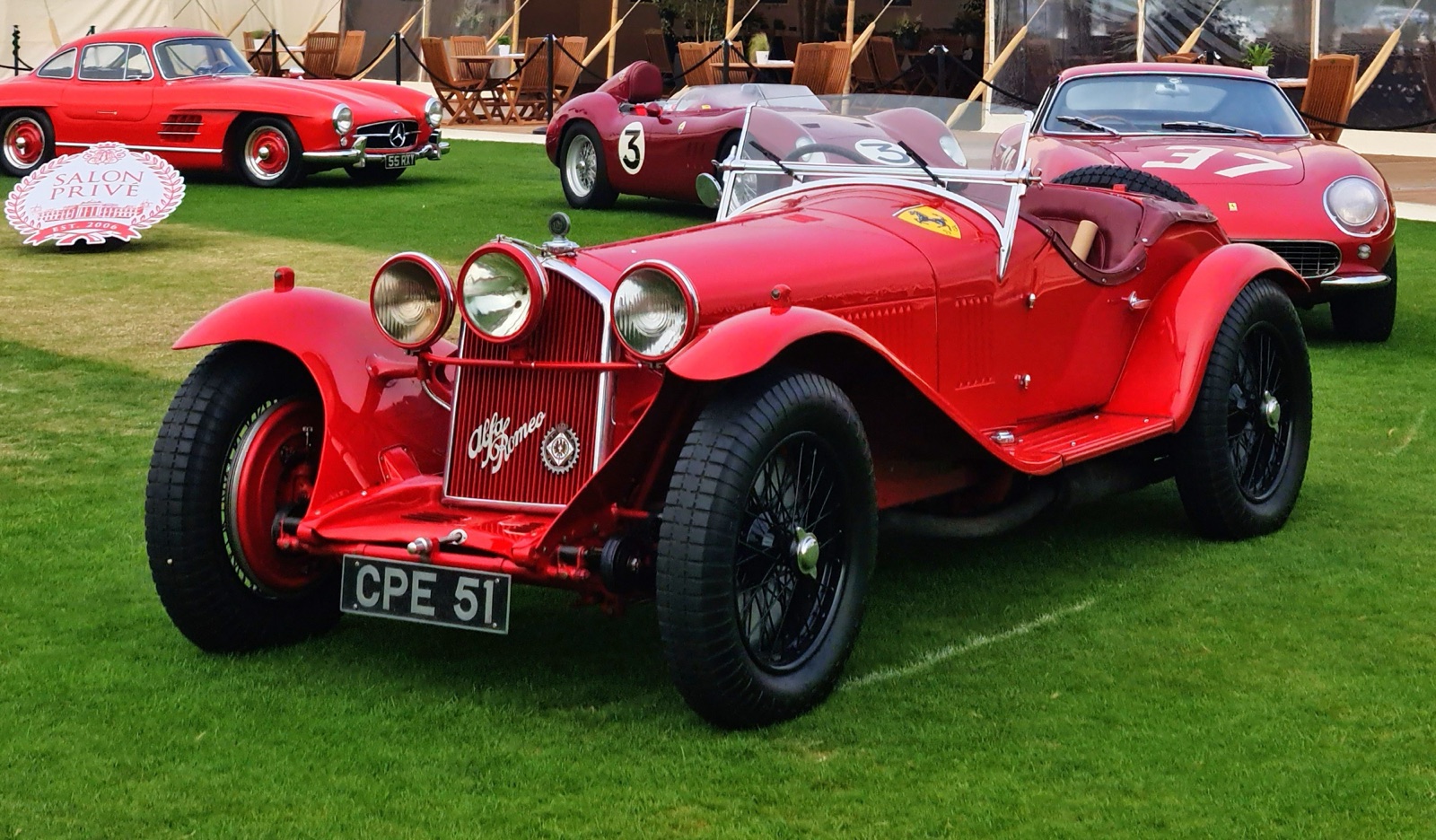
The 8C 2300 Monza is the short racing two-seater, which had higher compression, a supercharger turning faster and "hotter" camshafts than the Le Mans and Mille Miglia cars, by Stamer's account; the Museo Storico Alfa Romeo lists two carburettors and magneto ignition for it. Its slotted radiator cowl appeared on road cars too: Cruickshank found one on a long-chassis 8C 2300 with a convertible body by Figoni et Falaschi, "derived from the 'Monza' racing model".
Why is it called the Monza?
The Alfa Romeo 8C 2300 Monza is named after its win in the 1931 Italian Grand Prix at Monza. RM Sotheby's, in its 2021 catalogue for chassis 2111037, writes that Alfa Romeo prepared "a stripped down, short-wheelbase version" of the chassis, "complete with tapered racing tail and full-length side exhaust", for Nuvolari and Campari to drive in that race, and that the win "would lead to the sobriquet by which any such ultimate-specification variants would be known thereafter". Cruickshank wrote in 1983 that the Monza was "so named after winning the Italian GP at that circuit in 1931".
How many 8C 2300 Monzas were built?
Alfa Romeo built ten 8C 2300 Monzas, by the Museo Storico Alfa Romeo's count. The Simeone museum, in its history of its own Monza, says the exact number "is unclear" but fewer than the cars now called Monzas, and that most of the Grand Prix cars were built by Scuderia Ferrari, "often converted from two passenger spiders". By 1932 most of the Monzas had been bored out to 69 mm, giving 2,632 cc, Stamer wrote.
Coachbuilt 8C 2300s: Touring, Zagato, Figoni and others
The Alfa Romeo 8C 2300's road and sports-racing versions were often bodied by Touring, Zagato and Pinin Farina, and also by Figoni, Castagna and others, Stein wrote; RM Sotheby's adds Brianza. Figoni built bodies for seven 8C 2300s, all shipped to France as knocked-down kits and assembled there, and four survive in essentially their original form, says RM Sotheby's in its 2026 catalogue for a Figoni cabriolet. An 8C 2300 with a Figoni spider body, from the HM Collection in Belgium, won the jury's Best of Show at the Concorso d'Eleganza Villa d'Este in May 2024, BMW Group reported.
Alfa Romeo 8C 2300 at Le Mans
The Alfa Romeo 8C 2300 won the Le Mans 24 Hours four years running, from 1931 to 1934, each time with a different pair of drivers, and finished second in 1935, by the Motor Sport database.
| Year | Drivers (number) | Distance and average | Second |
|---|---|---|---|
| 1931 | Earl Howe and Sir Henry Birkin (16) | 3,017 km (MS 1933); 78.13 mph (MS 1943) | Ivanowski and Stoffel, Mercedes-Benz SSK |
| 1932 | Raymond Sommer and Luigi Chinetti (8) | 76 mph (MS 1932) | Cortese and Guidotti, Alfa Romeo 8C |
| 1933 | Raymond Sommer and Tazio Nuvolari (11) | 3,144 km; 81.39 mph (MS 1933) | Chinetti and Varent, Alfa Romeo 8C, 10 sec behind |
| 1934 | Luigi Chinetti and Philippe Étancelin (9) | 2,886.938 km; 74.75 mph (MS 1934) | Sebilleau and Delaroche, Riley |
Drivers, numbers and second places from the Motor Sport database's race pages (linked); distances and speeds from Motor Sport (MS) in the year given in each cell.
1931: Howe and Birkin
Two Alfa Romeos started in 1931, Motor Sport reported in July 1931: one for the factory drivers Marinoni and Zehender, and number 16 for "the English amateurs, Lord Howe and Sir Henry Birkin", which the database lists as Howe's own entry. Stellantis Heritage gives three 8C 2300s and says Alfa Romeo's racing staff helped the British crew. Bugatti withdrew its team after treads came off its tyres, one throwing Rost's car into the crowd, where a spectator was killed. Howe's car took the lead a quarter of an hour after midnight. The other Alfa Romeo stopped just before six in the morning and was withdrawn, its back axle bent when Zehender ran off the road at Arnage in the rain. At a quarter past three, in the last hour, the winners passed the 24-hour record of 2,930.663 km set by the winning Bentley in 1930. Stellantis gives the winning average as 125.735 km/h and the margin as 112 km.
1932: Sommer and Chinetti
Seven Alfa Romeos started in 1932, and they held the first three places after one lap, Motor Sport reported in July 1932. Howe and Birkin judged the mudguards, lamps and windscreen of their new car too flimsy and fitted a new windscreen, against the advice of Alfa Romeo's staff, who were at the circuit with Gianferrari and Jano; by the finish the Alfa Romeos' mudguards were "entirely held on by straps and rope". Raymond Sommer, "an amateur", and Luigi Chinetti won at an average of 76 mph, with Franco Cortese and Giovanni Battista Guidotti second in another 8C. Simon Moore, in his book The Legendary 2.3, identifies the winner as probably chassis 2111018, an early Zagato spider with streamlined wings and tail designed by Figoni, Stein wrote.
1933: Nuvolari and Sommer by 10 seconds
Four 2.3-litre Alfa Romeos ran at Le Mans in 1933, for Sommer, Chinetti, Brian Lewis and Louis Chiron, with little to choose between them in practice, and Sommer, sharing with Nuvolari, set a lap record of 88.48 mph on the 11th lap, according to Motor Sport's report of July 1933. Soon after 4 am petrol was seen "pouring from a leak in the tank"; it was patched with soap and 16 minutes were lost. Nuvolari raised the lap record to 90.07 mph just after 8 am. On Sunday a rivet came adrift in the tank, and the staff of Arthur Fox's pit, which ran the third-placed Alfa Romeo, passed the leaders chewing gum to seal it; Stellantis Heritage credits Alfa Romeo's own mechanics. Chinetti took the lead with ten minutes to go, Nuvolari passed him again at Arnage, and won by 10 seconds at 81.39 mph, a record for 24 hours on the road, with Alfa Romeos first, second and third.
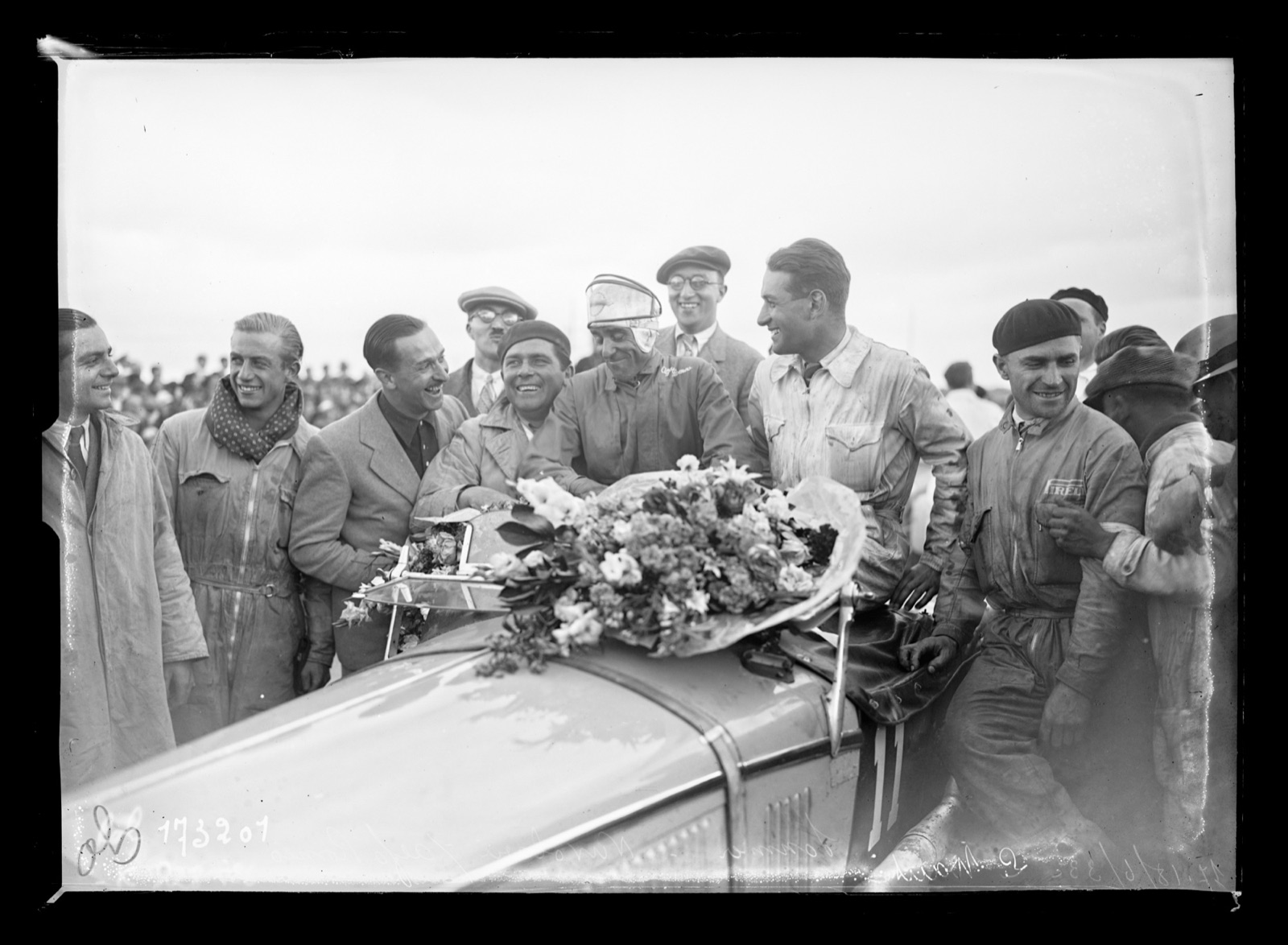
The 1933 winner was a new short-chassis Zagato spider, which Stein gives as chassis 2211109 (his article also prints it as 2111109); its certificate of origin was issued to Alfa Romeo on 31 May 1933, and Stein thought Alfa Romeo probably lent it to Nuvolari for the race.
1934: Chinetti and Étancelin
Chinetti and Philippe Étancelin won in 1934 although their car "was in constant trouble with a damaged petrol tank", Motor Sport reported in July 1934; this time the pit had chewing gum ready, and "all hands" set about providing the "cement". Sommer's car caught fire at Arnage in the second hour, and he was unhurt. The winning average, 74.75 mph, was the lowest since 1928, and Rileys finished second and third. Howe and Tim Rose-Richards retired chassis 2311201 with a failed clutch after 1,146 km, by the Simeone museum's account.
1935: second place
The Alfa Romeo 8C 2300 of Pierre Louis-Dreyfus and Henri Stoffel finished second at Le Mans in 1935, behind the Lagonda Rapide of John Hindmarsh and Luis Fontes, by the Motor Sport database. Howe and Brian Lewis, in 2311201, set the fastest lap, 5 min 47.9 sec (86.75 mph), before a holed piston stopped them at 5.30 am, the Simeone museum says.
Alfa Romeo 8C 2300 in the Targa Florio and Mille Miglia
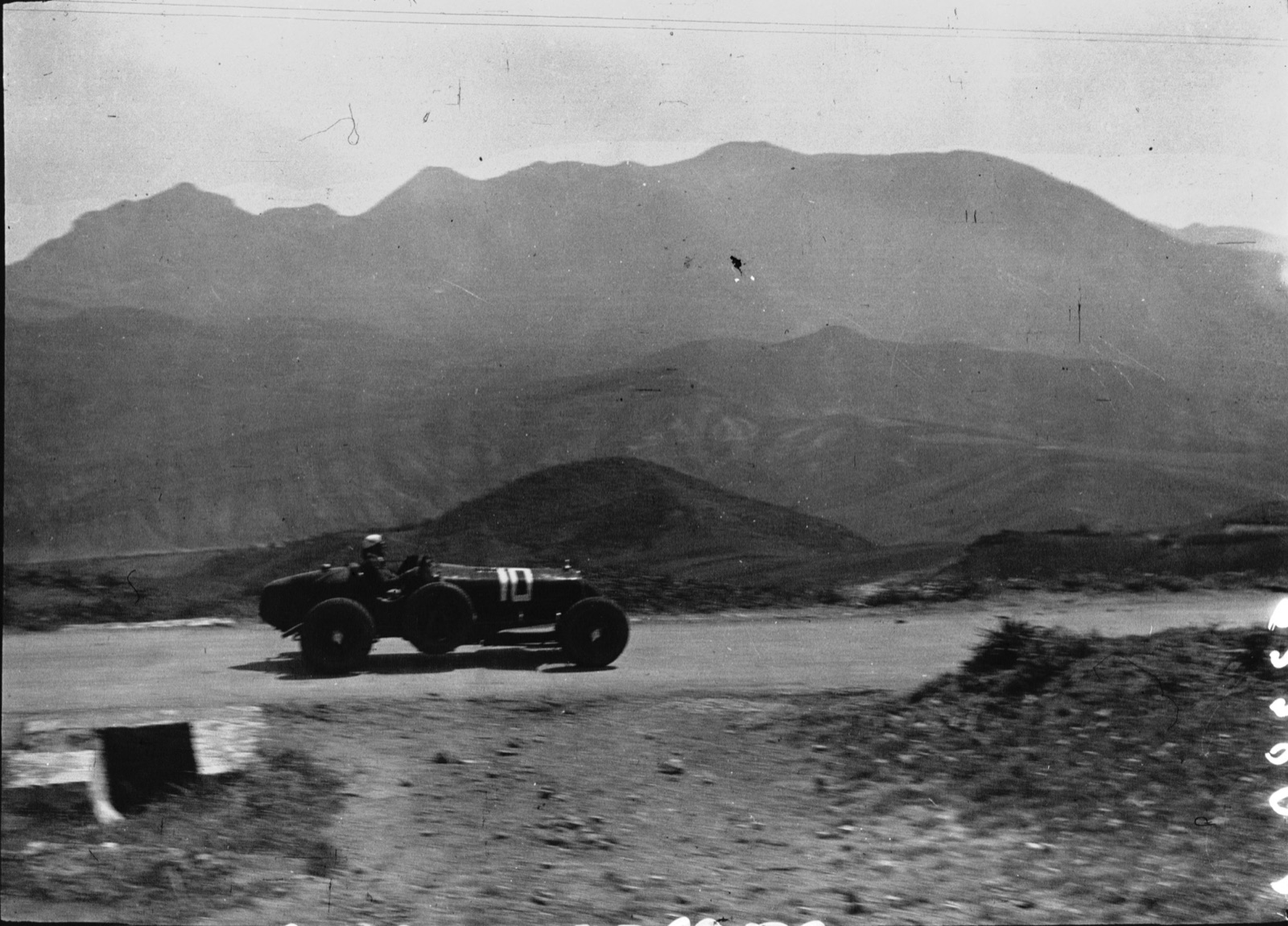
The Alfa Romeo 8C 2300 won the Targa Florio in 1931, 1932 and 1933 and the Mille Miglia in 1932, 1933 and 1934, by the Motor Sport database's race pages.
The Targa Florio, 1931 to 1933
Alfa Romeo prepared two of the new straight-eights for Nuvolari and Arcangeli for the 1931 Targa Florio on the long Madonie circuit in Sicily, Motor Sport reported. Rain began on the second of the four laps, and the Alfa Romeo drivers were "enormously assisted" by the mudguards on their cars. Nuvolari won, Baconin Borzacchini was second in a 1,750 cc Alfa Romeo, and Achille Varzi's Bugatti third. Nuvolari won again on 8 May 1932, with Borzacchini second, and in 1933 Antonio Brivio won, with cars the database lists as 8C Monzas in the first five places.
The Mille Miglia, 1932 to 1934
Thirty-one of the 48 big cars in the 1932 Mille Miglia were Alfa Romeos, Motor Sport reported, and Borzacchini and Amedeo Bignami won. The Mille Miglia museum's archivist has confirmed to Moore that their car was the works-entered Touring spider 2111037, and Alfa Romeos filled 11 of the top 12 places, says RM Sotheby's. In 1933 Borzacchini led to Rome and retired with a cracked cylinder head, and Nuvolari and Decimo Compagnoni won in 15h 11m 50s, an average of 67.45 mph, ahead of the Alfa Romeos of Count Carlo Castelbarco and Cortese, and of Piero Taruffi and Pellegrini, by Motor Sport's report of May 1933. Varzi and Bignami won in 1934 for Scuderia Ferrari, in 14h 8m 5s, by the database.
Castelbarco's car, now in the Simeone museum, was a Monza chassis that Zagato fitted with wings, a spare wheel and lamps. It caught fire in the factory the evening before the race, was put back together on race morning with parts from other Monzas, and started a few seconds late, Count Giovanni Lurani wrote in his book Racing Round the World, as the museum quotes him.
Alfa Romeo 8C 2300 Monza in Grand Prix racing
The Alfa Romeo 8C 2300 Monza won Grands Prix from its first, the ten-hour Italian Grand Prix of 24 May 1931, until the single-seat Tipo B took over in the works team in 1932 and in Scuderia Ferrari's in August 1933.
| Date | Race | Winner | Entrant | Second |
|---|---|---|---|---|
| 24 May 1931 | Italian Grand Prix, Monza | Giuseppe Campari and Tazio Nuvolari | Alfa Corse | Minoia and Borzacchini, Alfa Romeo |
| 17 April 1932 | Monaco Grand Prix | Tazio Nuvolari | Alfa Corse | Caracciola, Alfa Romeo, 2.7 sec behind |
| 29 May 1932 | Eifelrennen, Nürburgring | Rudolf Caracciola | Caracciola | Dreyfus, Bugatti, 22 sec behind |
| 29 March 1933 | Tunisian Grand Prix, Carthage | Tazio Nuvolari | Scuderia Ferrari | Borzacchini, Alfa Romeo, 0.2 sec behind |
| 30 April 1933 | Circuito di Alessandria | Tazio Nuvolari | Scuderia Ferrari | Trossi, Alfa Romeo |
| 28 May 1933 | Eifelrennen, Nürburgring | Tazio Nuvolari | Scuderia Ferrari | Von Brauchitsch, Mercedes-Benz SSKL |
| 4 June 1933 | Nîmes Grand Prix | Tazio Nuvolari | Scuderia Ferrari | Étancelin, Alfa Romeo |
Results, entrants and gaps from the Motor Sport database's race pages (linked).
1931: the Italian Grand Prix
The 1931 Italian Grand Prix was a ten-hour race, and "one of the new straight-8 Alfa-Romeos", driven by Campari and Nuvolari, won it at an average of 153.5 km/h, with another Alfa Romeo straight-eight, of Ferdinando Minoia and Borzacchini, second, Motor Sport reported in June 1931. Arcangeli was killed in practice the day before, in the twin-engined Tipo A, Fearnley wrote.
1932: the works team
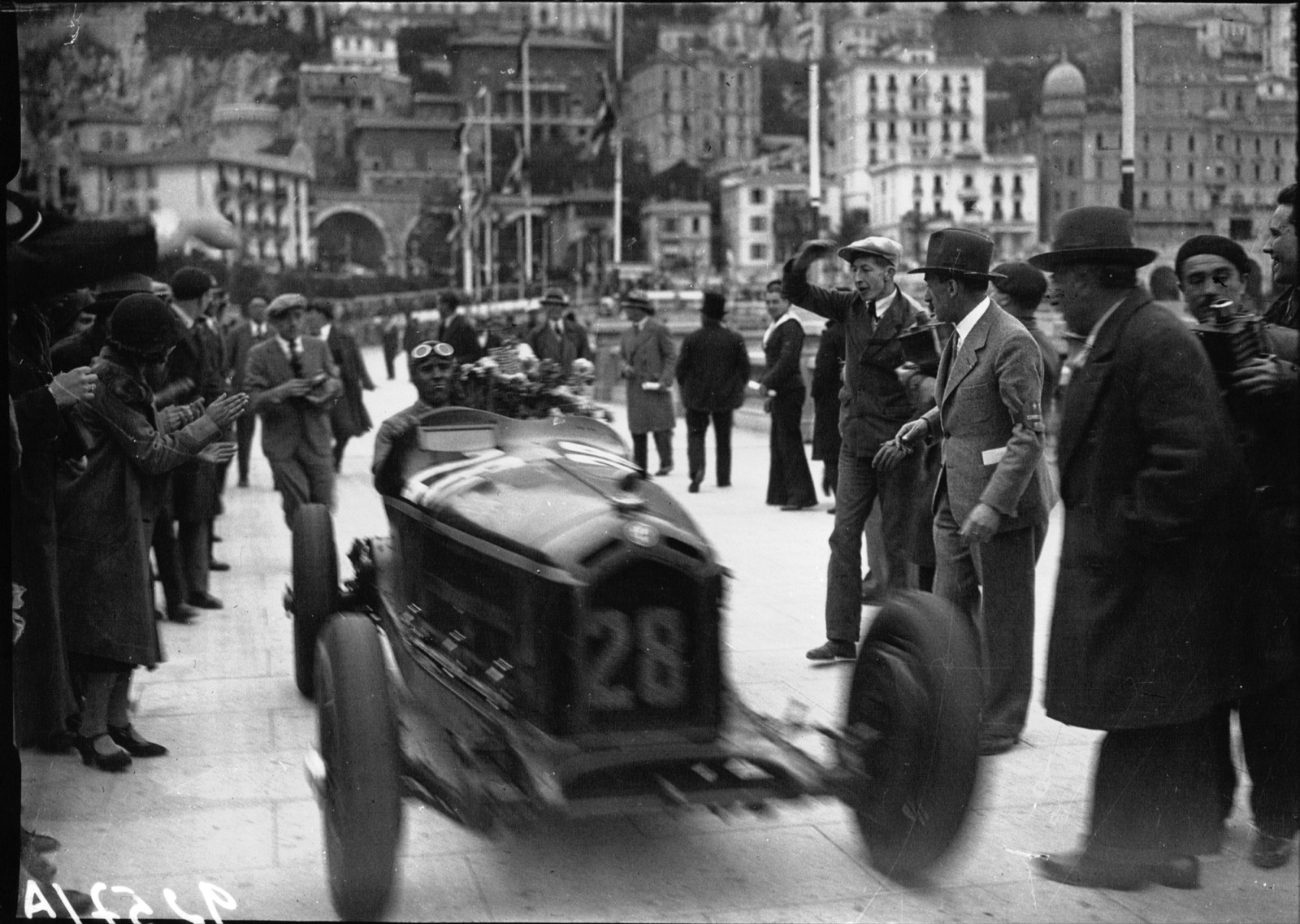
Alfa Romeo entered an official team at Monaco for the first time in 1932, with its 2.3-litre cars for Borzacchini, Campari and Nuvolari, Motor Sport reported in May 1932, and Nuvolari won by 2.7 seconds from Caracciola's Monza. Caracciola won the Eifelrennen at the Nürburgring on 29 May. At the Italian Grand Prix on 5 June, Nuvolari and Campari drove the new Tipo B and Caracciola and Borzacchini "the well-tried 2,350 c.c. machines", Motor Sport reported; the Monza shared by Borzacchini, Attilio Marinoni and Caracciola finished third, by the database.
1933: Scuderia Ferrari's 2.6-litre Monzas
Alfa Romeo, short of money in the Depression and under state protection, shut its racing department and stored the Tipo Bs for 1933, leaving Scuderia Ferrari to race "a 2.6-litre version of the 8C Monza", Fearnley wrote. Nuvolari won four races in the Monza for Scuderia Ferrari between March and June, at Tunis, Alessandria, the Nürburgring and Nîmes, by the database. Unhappy with the Monza, he moved to Maserati in mid-season, and Alfa Romeo then released all six Tipo Bs to Scuderia Ferrari in August, in Fearnley's account; the Monza had obtained "only moderate success" that year, in Stamer's view.
Who drove the Alfa Romeo 8C 2300?
The Alfa Romeo 8C 2300 was raced by Alfa Romeo's own team, Alfa Corse, in 1931 and 1932, by Scuderia Ferrari from 1931 to 1934, and by private owners in Britain, France and Italy, by Stamer and the entrants in the Motor Sport database.
Nuvolari and the Alfa Romeo drivers
Tazio Nuvolari won the 1931 Targa Florio and Italian Grand Prix, the 1932 Monaco Grand Prix and Targa Florio, and in 1933 the Mille Miglia and Le Mans in 8C 2300s. His team-mates in the works and Scuderia Ferrari cars included Giuseppe Campari, Baconin Borzacchini, Rudolf Caracciola, Ferdinando Minoia, Antonio Brivio, Carlo Felice Trossi, Piero Taruffi and Achille Varzi, by the database.
Private owners
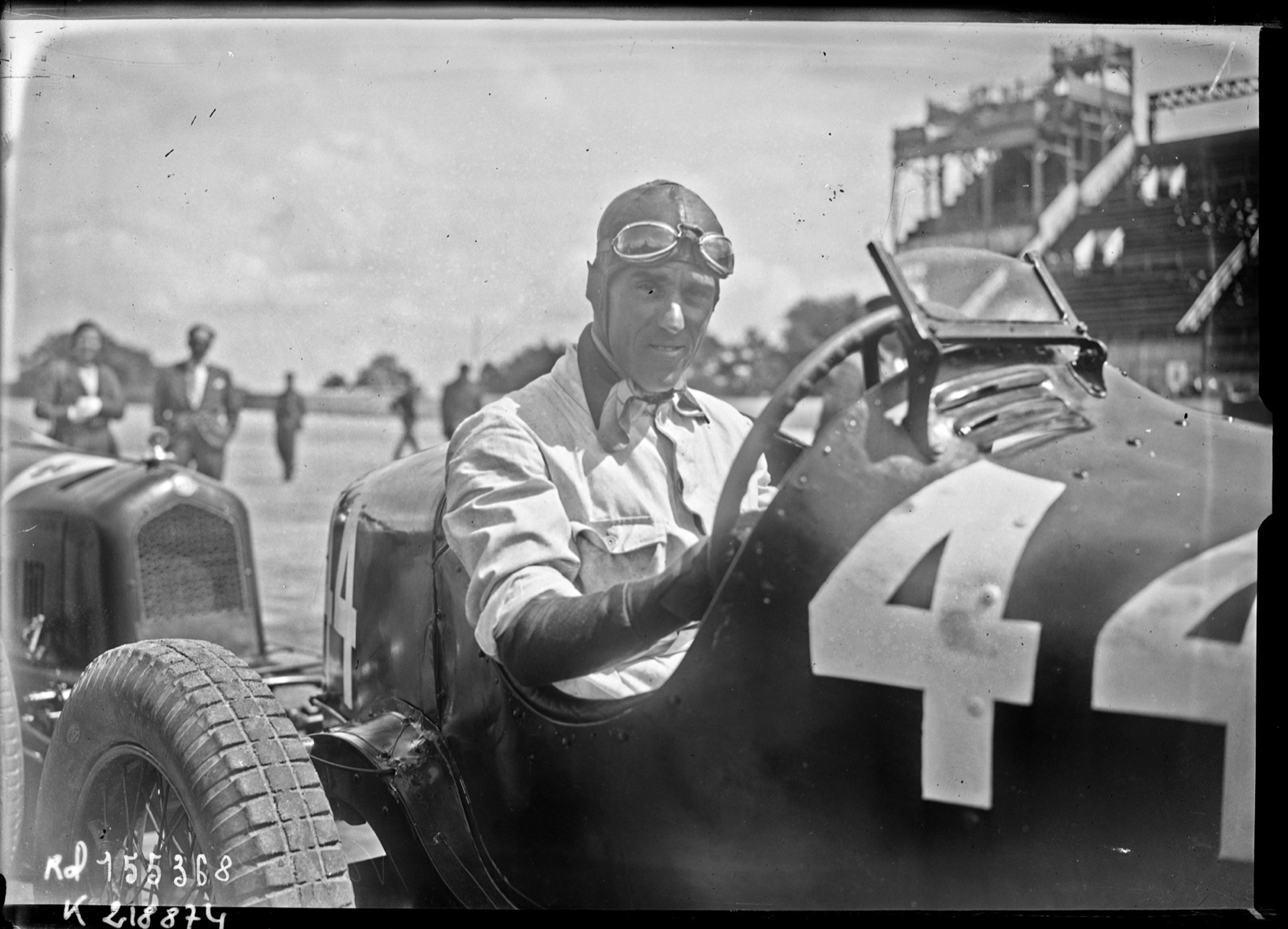
Earl Howe entered the 1931 Le Mans winner himself, and in 1933 he bought chassis 2311201 to replace his 2111005, the Simeone museum says. Sir Henry Birkin raced his own 8C 2300 in 1931, averaging 83.8 mph in the Irish Grand Prix at Phoenix Park and lapping Brooklands at 125 mph in the 500 Miles race, Motor Sport reported in its 1932 road test. Raymond Sommer entered the 1932 and 1933 Le Mans winners, and Étancelin and Chinetti the 1934 winner, by the database's entrant lists. Nuvolari bought the 1933 Le Mans winner from Alfa Romeo in August 1934, used it as his own car, and took it to New York in October 1936 for the Vanderbilt Cup, where he left it with a new owner, Stein wrote.
What replaced the Alfa Romeo 8C 2300?
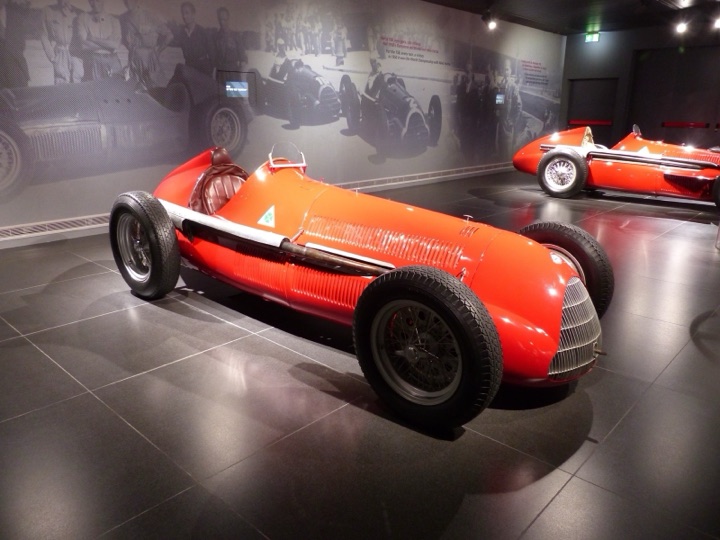
The Alfa Romeo 8C 2300 was replaced in Grand Prix racing by Jano's single-seat Tipo B, now often called the P3, from June 1932, and in Alfa Romeo's range by the six-cylinder 6C 2300 in 1934, Stamer wrote; the next eight-cylinder road car was the 8C 2900B of 1937. The Tipo B's straight-eight had a bore and stroke of 65 × 100 mm, 2,650 cc and two superchargers, and the car weighed 700 kg; Nuvolari won with it on its debut in the Italian Grand Prix at Monza on 5 June 1932, by Motor Sport's report of July 1932. The two-seat 8C 2300 "would provide Monoposto's underpinnings", Fearnley wrote.
Stamer noted that the factory did not use the name P3 until it had become commonplace. The Tipo B soon went out of date, which left Alfa Romeo with 36 new 8C engines of 2,905 cc; these went, detuned to 180 bhp, into the 8C 2900B road car of 1937, Stamer wrote, and Clemente Biondetti won the 1938 Mille Miglia in an 8C 2900B at 84.13 mph.
Alfa Romeo 8C 2300 production and survivors
The Alfa Romeo 8C 2300 was built from 1931 to 1934. The 1933 Le Mans winner was restored in the 1990s, and Alfa Romeo's museum at Arese and the Simeone museum in Philadelphia each show 8C 2300s.
How many Alfa Romeo 8C 2300s were built?
Alfa Romeo built 188 8C 2300s from 1931 to 1934, nine of them in Le Mans form, according to Stellantis Heritage. The Museo Storico Alfa Romeo gives 308 for the 8C 2300 over the same years, with nine Le Mans cars and ten Monzas. Production ended in 1934: RM Sotheby's calls the registration of chassis 2311222 in Como on 12 June 1935 "one year after 8C 2300 production ended", in its 2026 catalogue for that car.
The Le Mans winners and other known chassis
Alfa Romeo says the 8C 2300 Le Mans in its museum at Arese is the car Howe and Birkin drove to win in 1931; it was bought by a private collector after the race and stored for years in a tin mine in Nigeria, then bought back by Alfa Romeo and added to its collection in 1966, according to Stellantis Heritage. Stein, in 2001, gave the 1931 winner as chassis 2111005, the number of the car Howe replaced with 2311201 in 1933, by the Simeone museum's account. 2311201 has its own claim: in 1963 its owner, Sir Ralph Millais, wrote that Lord Howe had confirmed to him it was the 1931 winner, while Boddy and Jenkinson of Motor Sport had stated that it was "very definitely not the winning car", the museum records.
The 1933 winner, 2211109, was sold by Brooks at Olympia in 1992 to Peter Sachs, who had Tony Merrick rebuild it to its 1933 factory and Zagato specification, Stein wrote; Merrick found much of the original body still on the car. The 1932 Mille Miglia winner, 2111037, was destroyed in practice for the Grand Prix des Frontières at Chimay in 1937, says RM Sotheby's. The 1933 Monza 2311218, with its Brianza body and matching-numbers engine, was raced by Italian drivers from 1933 to 1950 and won the 1947 Sport Nazionale championship with Renato Balestrero, Gooding & Company says in its 2016 catalogue entry.
Where can you see an Alfa Romeo 8C 2300?
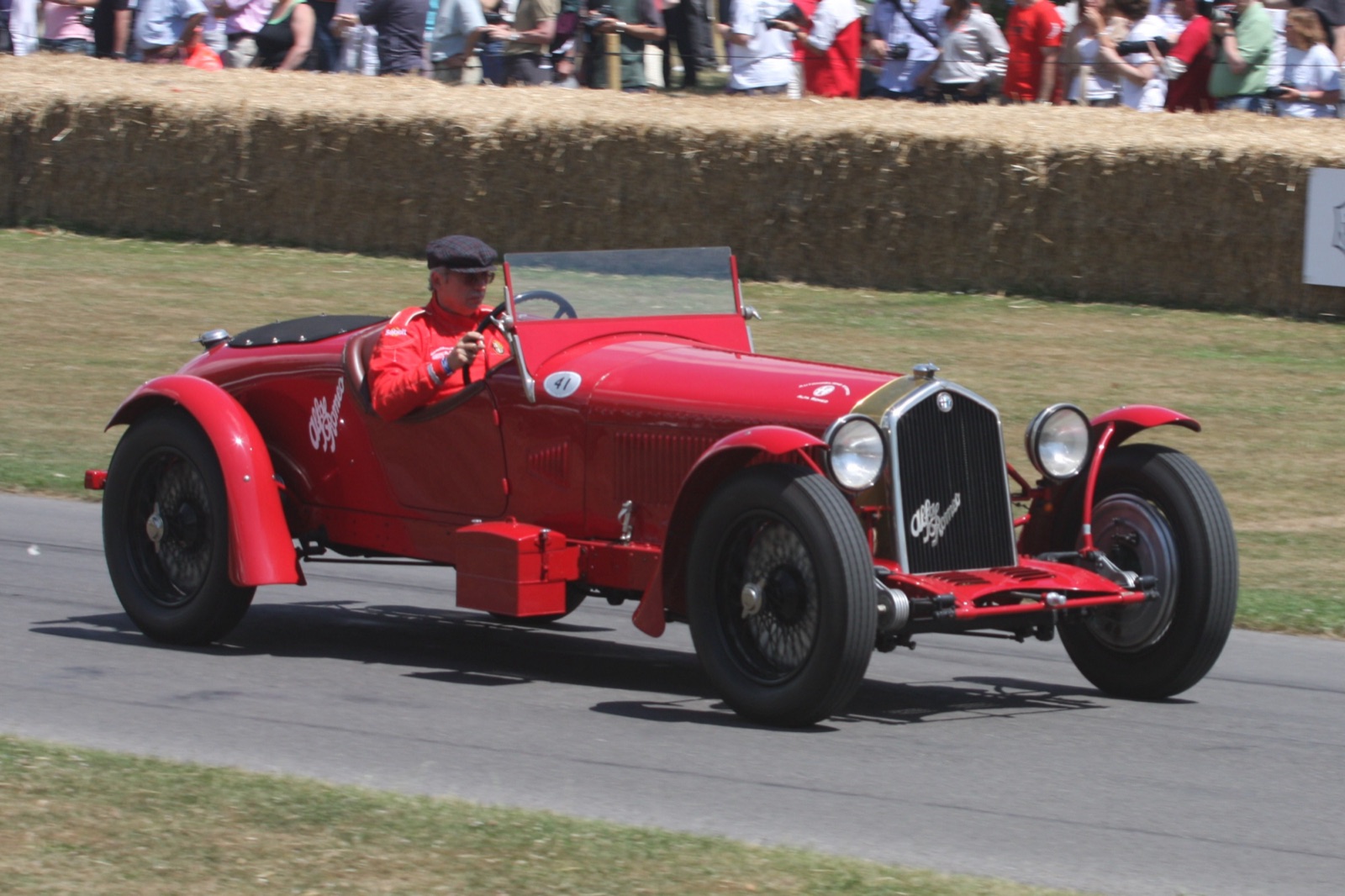
Alfa Romeo's museum at Arese lists an 8C 2300 Le Mans, an 8C 2300 Corto "Mille Miglia" and an 8C 2300 Monza in its collection. The Simeone Foundation Automotive Museum in Philadelphia shows Howe's 2311201, painted in his blue, and Castelbarco's 1933 Monza, which keeps its original engine, body, chassis and transmission, the museum says. 8C 2300s still race in historic events: 2111037 is eligible for the Monterey Reunion, the Goodwood Revival, the Monaco Historique and the Le Mans Classic, RM Sotheby's says.
What is an Alfa Romeo 8C 2300 worth?
An Alfa Romeo 8C 2300 has made from $995,000 to $11,990,000 in the auction sales below. The road and sports cars sold since 2023 made $995,000 to $4,515,000, by the lot pages of Gooding & Company (2023), RM Sotheby's (2024, and the Figoni cabriolet in 2026) and Gooding Christie's (2026). The highest is the $11,990,000 Gooding & Company got for the Monza 2311218 at Pebble Beach in 2016, by its press release of 22 August 2016; the lot page gives the estimate as $12 million to $15 million. The same car had made $6,710,000 at Gooding's Pebble Beach sale in 2010, by Gooding's 2010 lot page. The 1932 Mille Miglia winner 2111037 made $1,160,000 in 2021, with a frame of later steel that RM Sotheby's thinks is a replacement and an engine made by Jim Stokes.
| Sale | Car | Result |
|---|---|---|
| Gooding & Company, Pebble Beach, 2010 (lot 117) | 1933 8C 2300 Monza, Brianza body, chassis 2311218 | $6,710,000 |
| Gooding & Company, Pebble Beach, 2016 (lot 128) | The same car, 2311218 | $11,990,000 |
| RM Sotheby's, Monterey, 2021 (lot 259) | 1932 8C 2300 Monza, chassis 2111037, rebuilt | $1,160,000 |
| Gooding & Company, Pebble Beach, 2023 (lot 36) | 1933 8C 2300 cabriolet by Castagna, chassis 2311214 | $4,515,000 |
| RM Sotheby's, Monterey, 2024 (lot 352) | 1934 8C 2300 Lungo spider, body by Eagle Coach Works, chassis 2311237 | $4,075,000 |
| RM Sotheby's, Cliveden House, 2025 (lot 147) | 8C 2300 Monza recreation, chassis 710724 | Not sold (estimate £600,000–£800,000) |
| RM Sotheby's, Paris, 2026 (lot 178) | 1934 8C 2300 long chassis, Le Mans tourer body of the 2000s, chassis 2311222 | Not sold (estimate €2,000,000–€2,500,000) |
| RM Sotheby's, Monterey, 2026 (lot 265) | 1933 8C 2300 cabriolet by Figoni, chassis 2311212 ("see text") | $995,000 |
| Gooding Christie's, Pebble Beach, 2026 (lot 151) | 1932 8C 2300 Lungo spider, Zagato-style body recreated by Dino Cognolato, chassis 2211086 | $3,305,000 |
From the auction houses' lot pages, cited in this section and the next.
Alfa Romeo 8C 2300 replicas and rebuilt cars
Alfa Romeo 8C 2300s assembled from the parts of more than one car are "not uncommon", RM Sotheby's wrote of its Figoni cabriolet in 2026, and recreations of the Monza have been built from new. That car began as chassis 2111025 and was fitted early in life with the engine, steering box and front axle of 2311212, the car Sommer raced at Le Mans in 1935, Moore found.
2111037 was recreated in Monza form by the restorer Aldo Cesaro from remains he bought in 1977–78, and analysis in 2021 found its frame to be of a later mild steel unlike that of original 8C chassis, RM Sotheby's says. 2311222, first registered as a cabriolet, had a Touring-style spider body from 1984 and since the early 2000s has worn a Le Mans tourer body by Rod Jolley Coachbuilding, built with Mike Hawthorn's 8C, 2311204, as the reference for its proportions, by RM Sotheby's Paris catalogue. The Monza recreation RM Sotheby's offered at Cliveden House in 2025 was built from 2019 in New Zealand and Britain on a chassis numbered 710724, with a 3,051 cc supercharged straight-eight of 260 bhp by Jim Stokes Workshop, and received an FIA Historic Technical Passport in April 2023, says RM Sotheby's catalogue.
Alfa Romeo 8C 2300 rivals
The Alfa Romeo 8C 2300's rivals in Grands Prix and road races were Bugatti's Type 51, the 2.8-litre Maserati and the 7-litre Mercedes-Benz, the three cars that would press Alfa Romeo hard in 1931, Stamer wrote. At Le Mans it raced the Mercedes-Benz SSK and Talbot in 1931, the Rileys in 1934 and the Lagonda in 1935.
The Bugatti Type 51 of Chiron and Varzi beat the Monza of Campari and Borzacchini in the ten-hour French Grand Prix at Montlhéry on 21 June 1931, and Varzi's Type 51 beat Borzacchini's Monza by two minutes at Monaco in 1933. Campari, by then driving for Maserati, won the 1933 French Grand Prix in an 8C-3000 by 52 seconds from Étancelin's own Monza, by the times on the Motor Sport database.
Questions and answers
What does 8C 2300 mean?
8C stands for eight cylinders, Gordon Cruickshank wrote in Motor Sport in December 1983. The engine is of 2,336 cc, which John Scafe gave in Motor Sport in 1943 as "2,300 c.c.".
Is the Alfa Romeo 8C 2300 Monza a single-seater?
No. Sir Anthony Stamer called it "the Monza racing 2-seater" in Motor Sport in 1961. Jano's first single-seaters were the twin-engined Tipo A of 1931 and the Tipo B of 1932, Paul Fearnley wrote in Motor Sport in 2017.
Did Enzo Ferrari race the Alfa Romeo 8C 2300?
His team did. Scuderia Ferrari entered two 8C 2300s, for Nuvolari and Arcangeli, in the 1931 Mille Miglia, Stamer wrote, and won the race with Nuvolari in 1933 and Achille Varzi in 1934, by the Motor Sport database.
Could an Alfa Romeo 8C 2300 be used on the road?
Yes. Motor Sport road-tested Birkin's 1931 car in August 1932, with low-compression pistons fitted for the road, and found its tractability "amazing" in London traffic. In the early 1950s Phil Moore drove the 1933 Le Mans winner to the railway station every day and covered 45,000 miles in it, Jonathan Stein wrote in Motor Sport in 2001.
How much did an Alfa Romeo 8C 2300 cost new?
The chassis alone cost "about £1,700", Motor Sport reported in August 1932. The body was extra: Roger Goldet, first owner of the Figoni cabriolet 2111025, commissioned his body himself "at considerable cost", says RM Sotheby's.
Sources
- Stellantis Heritage, Alfa Romeo 8C 2300 Le Mans (read 30 October 2026): Jano and the decision to build the 8C, 2,336 cc, 155 hp against the 6C 1750's 85 hp, Gianferrari and the Le Mans car, 188 built and nine Le Mans cars, the four Le Mans wins, 180 hp and 215 km/h by 1934, the museum car.
- Museo Storico Alfa Romeo, 8C 2300 Corto "Mille Miglia", 8C 2300 Le Mans and 8C 2300 Monza (read 30 October 2026): specifications, weights, top speeds and numbers built.
- Sir Anthony Stamer, Motor Sport, Alfa Romeo racing and production cars, 1910–1940, December 1961: Scuderia Ferrari's founding, the 1931 Mille Miglia, the engine, the brakes, the three chassis lengths and three series, the 2.6-litre bore, The Autocar's figures, the 1933 season, the 8C 2900B.
- Paul Fearnley, Motor Sport, Alfa Romeo Tipo B Monoposto: F1's shape of things to come, March 2017: Jano's career, "its Monza appellation came later", Arcangeli and the Tipo A, the 1933 storage and hand-over.
- Jonathan Stein, Motor Sport, Veni, vidi, 8C, June 2001: the chassis, power by tune, the Monza series, coachbuilders, the 1931, 1932 and 1933 Le Mans cars, and the history of 2211109.
- John Scafe, Motor Sport, Racing car evolution part IV: 1928–1933, April 1943: the engine, the Monza's 190 bhp and 18 cwt, the 1931 Le Mans average.
- Gordon Cruickshank, Motor Sport, A trio of Alfas, December 1983: the Monza's name and slotted cowl.
- Motor Sport, The Targa Florio, June 1931, and Italian G.P. result, June 1931: the first win, the mudguards, 115 mph; the Italian Grand Prix and Arcangeli's death.
- Motor Sport, The Grand Prix d'Endurance, July 1931: the 1931 Le Mans race.
- Motor Sport, The Italian 1,000 miles race, May 1932, and The seventh Mille Miglia, May 1933: the 1931, 1932 and 1933 Mille Miglia.
- Motor Sport, 1932 Monaco Grand Prix, May 1932: Alfa Romeo's first official team at Monaco.
- Motor Sport, The Grand Prix d'Endurance, July 1932, and Alfa-Romeo does the hat trick, July 1932: the 1932 Le Mans race; the 1932 Italian Grand Prix and the Tipo B's specification.
- Motor Sport, A car with a history, August 1932: road test of Birkin's 1931 car, the production compression ratio, speeds and the chassis price.
- Motor Sport, The Le Mans 24 hour race, July 1933, and English small cars sweep the board at Le Mans, July 1934: the 1933 and 1934 races, lap records, the fuel-tank repairs, distances and averages.
- Motor Sport database, race pages (read 30 October 2026): Le Mans 1931–35, the Mille Miglia 1931–34, the Targa Florio 1931–33, and the Grands Prix in the tables, including the 1931 Mille Miglia, 1932 Mille Miglia, 1933 Mille Miglia, 1931 Targa Florio, 1932 Targa Florio, 1933 Targa Florio, 1932 Italian Grand Prix, 1931 French Grand Prix, 1933 Monaco Grand Prix and 1933 French Grand Prix.
- Simeone Foundation Automotive Museum, 1933 Alfa Romeo 8C 2300 Le Mans and 1933 Alfa Romeo 8C 2300 Monza (read 30 October 2026): 2311201, Howe's races, the Millais letter, the Monza's number and conversions, Castelbarco's car.
- RM Sotheby's, 1932 Alfa Romeo 8C 2300 Monza, Monterey 2021, lot 259: the Monza's name, the 1932 Mille Miglia, the history and rebuild of 2111037, the sale price.
- RM Sotheby's, 1933 Alfa Romeo 8C 2300 Cabriolet by Figoni, Monterey 2026, lot 265: Figoni's seven bodies, 2111025 and 2311212, the sale price.
- RM Sotheby's, 1934 Alfa Romeo 8C 2300 'Long Chassis' Le Mans Tourer, Paris 2026, lot 178: 2311222, the end of production, its body and estimate.
- RM Sotheby's, 1934 Alfa Romeo 8C 2300 Monza Recreation, Cliveden House 2025, lot 147: the recreation 710724 and its estimate.
- Gooding & Company, 1933 Alfa Romeo 8C 2300 Monza, Pebble Beach 2010, lot 117, and 1933 Alfa Romeo 8C 2300 Monza, Pebble Beach 2016, lot 128: 2311218, its history and both prices; press release, 22 August 2016.
- Gooding & Company, 1933 Alfa Romeo 8C 2300 Cabriolet, Pebble Beach 2023, lot 36: the Castagna cabriolet 2311214 and its sale price.
- RM Sotheby's, 1934 Alfa Romeo 8C 2300 Lungo Spider by Eagle Coach Works, Monterey 2024, lot 352: 2311237, its body and sale price.
- Gooding Christie's, 1932 Alfa Romeo 8C 2300 Lungo Spider, Pebble Beach 2026, lot 151: 2211086, its recreated Zagato-style body by Dino Cognolato and sale price.
- BMW Group PressClub Italia, "Best of Show": L'Alfa Romeo 8C 2300 vince il Trofeo BMW Group al Concorso d'Eleganza Villa d'Este 2024, May 2024: the Figoni spider's Best of Show.