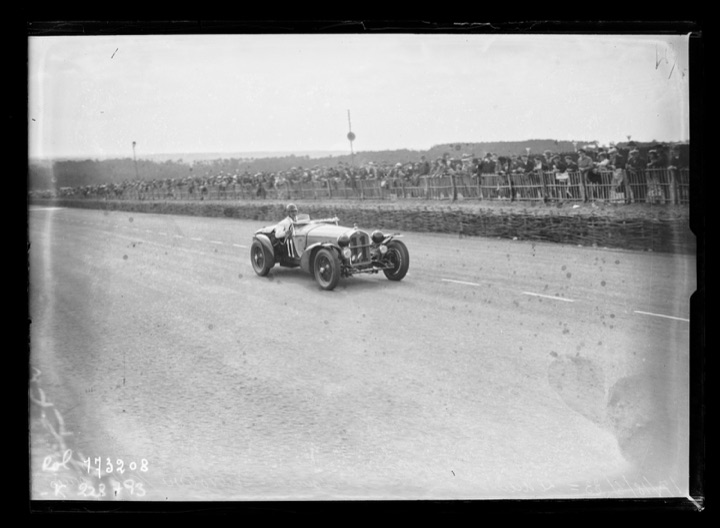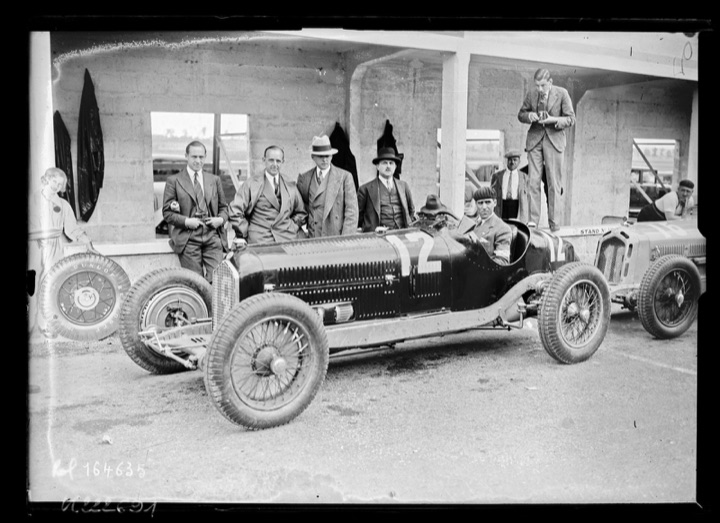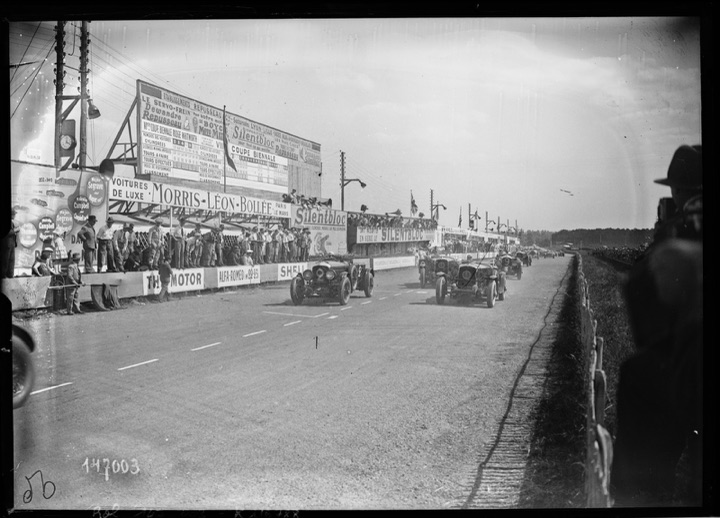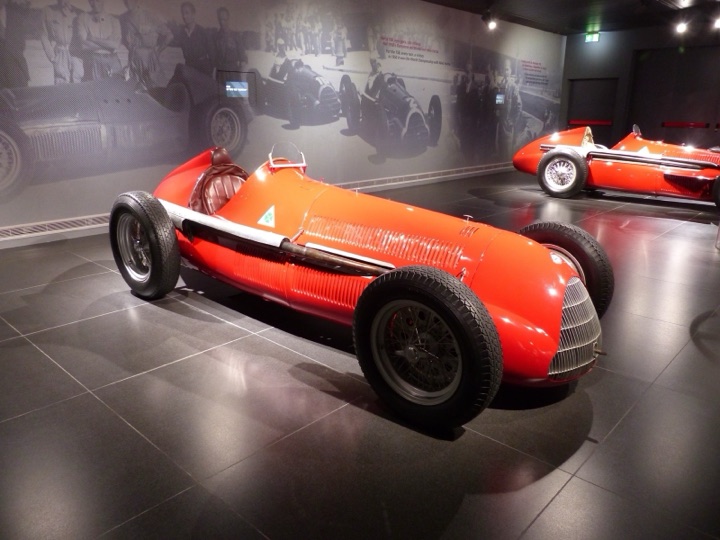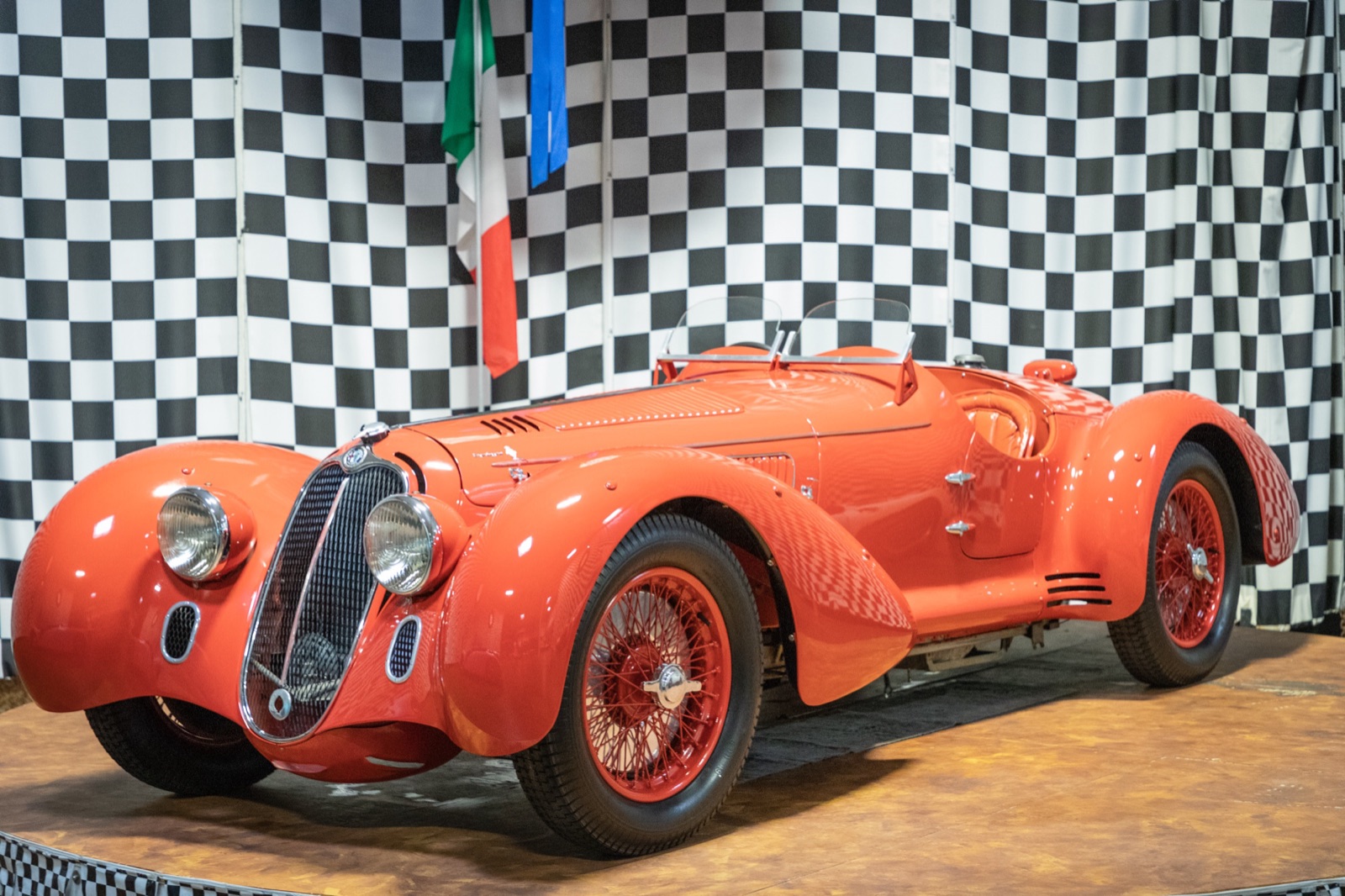
The Alfa Romeo 8C 2900 is the sports and racing car Alfa Romeo built from 1935 to 1939 around a twin-supercharged 2,905 cc straight-eight derived from the engine of the Tipo B Grand Prix car. The 8C 2900A won the Mille Miglia in 1936, with Scuderia Ferrari's cars first, second and third, and again in 1937, Motor Sport reported; the 8C 2900B won it in 1938. Published counts of how many were built run from about 32 to 43, most of them with coachwork by Carrozzeria Touring.
Who designed the Alfa Romeo 8C 2900, and why?
The Alfa Romeo 8C 2900 was Alfa Romeo's answer to the Mercedes-Benz and Auto Union cars that entered Grand Prix racing in 1934, which showed that rigid axles on leaf springs were out of date. That is how Simon Moore, author of The Immortal 2.9 (1986, revised 2008), began his account of the type for Artcurial's sale catalogue of February 2019. Alfa Romeo saw that both the 8C 2300 sports car and the Tipo B "needed a complete revision". Instead of starting again, the company hired the Porsche design office, which had drawn the Auto Union, to design independent suspension for the 6C 2300B (project 63) and the 8C 2900 (project 69). Alfa Romeo's own technical department in Milan designed a new frame that was "very rigid".
The engine was Vittorio Jano's. RM Sotheby's 2016 catalogue calls it the "Vittorio Jano-designed straight-eight", and Moore "a development of the Grand Prix Tipo B power unit rather than the 8C2300". Gooding & Company calls the car the culmination of a decade's development under Jano, Alfa Romeo's chief engineer.
Was the engine left over from the Tipo B?
Sir Anthony Stamer thought so. In his history of Alfa Romeo in Motor Sport in December 1961 he wrote that the Tipo B went out of date so fast that the factory was left with "a stock of 36 new and highly expensive 8C engines". It detuned them and put them into road cars: "thus was born the fabulous 8C 2900B model in 1937". Gordon Cruickshank disagreed in Motor Sport in March 1989. The layout was the Tipo B's, he wrote, but there are block differences "which show that the units were designed for the sports-car and not left over from the Tipo B programme". Stamer's account also skips the 8C 2900A, which raced from 1936.
The 1935 show car and the botticella racers
Moore dates the first 8C 2900 to the Paris Salon of 3 to 13 October 1935. It was an open spider bodied by Alfa Romeo's own body shop, Carrozzeria Alfa, in two colours split by a curved line along the side. A second, similar car appeared at the Milan show later that year. Alfa Romeo made almost no cars in 1936 while it supplied trucks and aero engines for Italy's war in Africa. It did deliver four to Scuderia Ferrari, with bodies like the Tipo C Grand Prix car's plus cycle wings and lamps. These were the "botticellas", Italian for casks or bottles, and they won the 1936 Mille Miglia and the Spa 24 Hours.
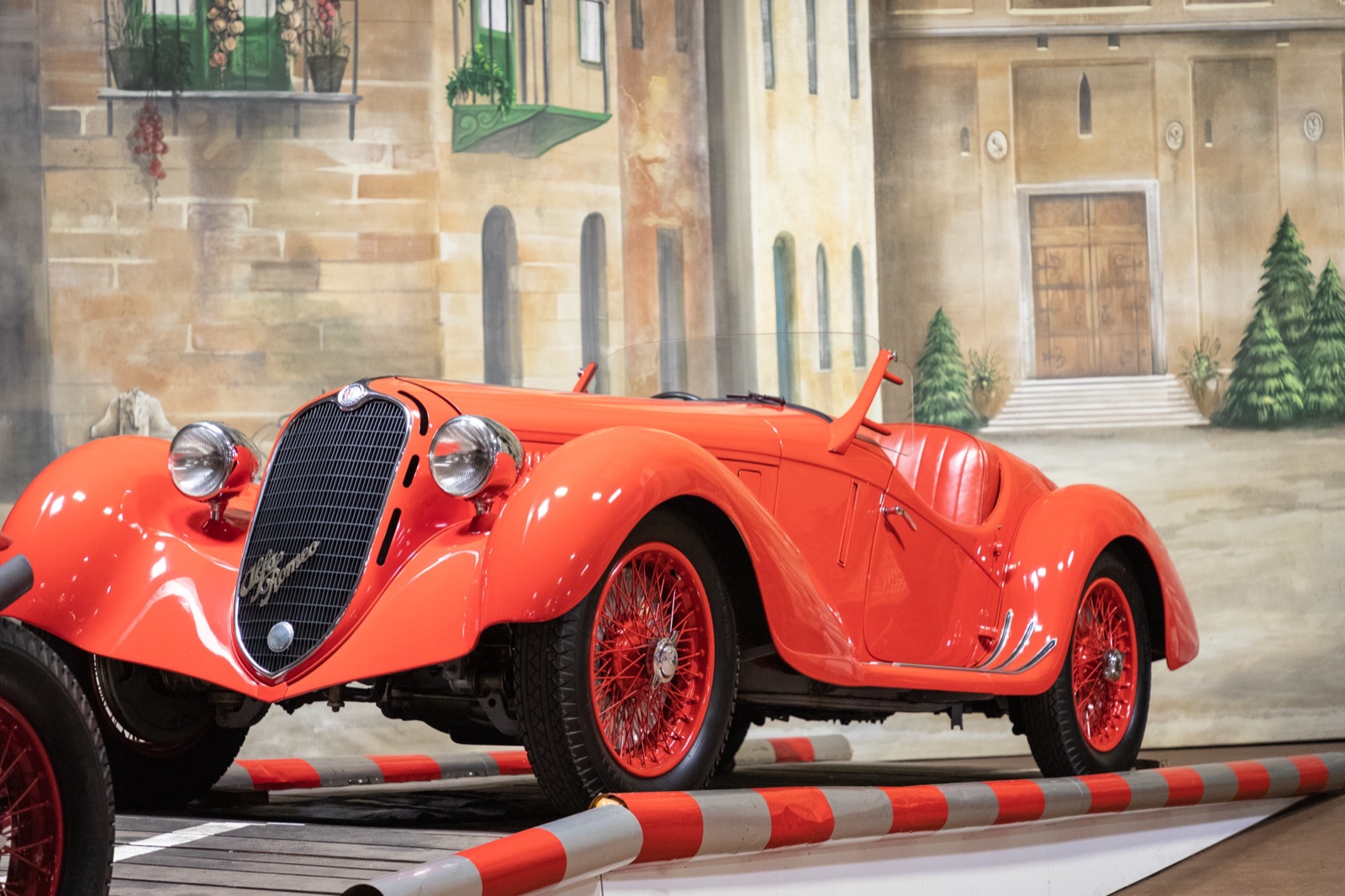
Alfa Romeo 8C 2900 design and engineering
The Alfa Romeo 8C 2900 put a supercharged Grand Prix engine into a frame with independent suspension on all four wheels and the gearbox at the back, in unit with the differential, Cruickshank wrote in 1989.
The twin-supercharged straight-eight
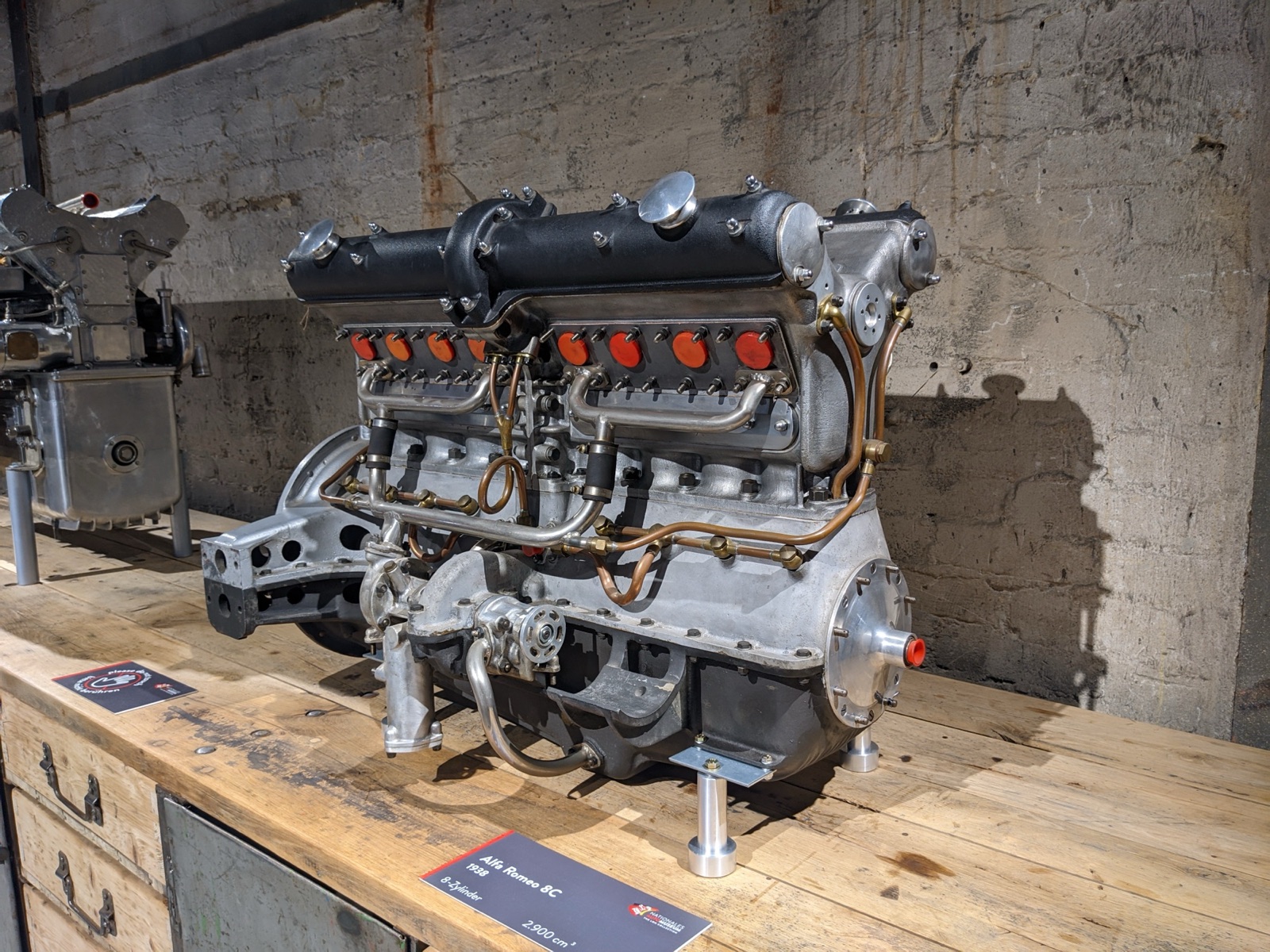
Cruickshank describes an engine of two blocks of four cylinders split by the gears that drive the twin overhead camshafts. Two Roots superchargers sit on the side of the crankcase, driven by gears from the centre of the crankshaft, and draw from two Weber carburettors below them. The Museo Storico Alfa Romeo's specification of the 8C 2900 B Lungo gives light-alloy blocks and heads, two valves per cylinder, magneto ignition and a bore and stroke of 68 × 100 mm. Moore adds that the heads are not detachable ("testa fissa"), and that the road engine was a detuned 8C 2900A unit with aluminium castings where the racing engines used magnesium.
Suspension, transaxle and brakes
Moore's description of the back of the 8C 2900 has swing axles with radius arms running from a transaxle, sprung by a transverse leaf spring fixed at its centre. To tame the worst swing-axle effects, Alfa Romeo found a way to shorten the spring's working length on each side independently. Each side had two dampers, one hydraulic and one adjustable friction damper, set by cable on the early cars and hydraulically on later ones. The front suspension was close to the 6C 2300B's, and a similar design went onto the Tipo C Grand Prix car that first raced at the Italian Grand Prix in September 1935.
The Museo lists wishbones, coil springs and hydraulic dampers at the front and hydraulically worked drum brakes on all four wheels. Cruickshank saw the front as small twin trailing arms with an enclosed spring and integral damper.
What is an 8C 2900 like to drive?
Cruickshank drove the 1938 Mille Miglia winner, chassis 412031, on public roads in America for his 1989 article. The power came "in a steady flow from 2000 rpm up to the 5000 or so" that seemed a sensible limit, and the steering needed only small corrections at 70, 80 and 90 mph. The gearchange is reversed, first and second against the driver's left knee, third and fourth against the passenger's right. In tight bends the car "tends towards oversteer, so that it can be balanced with steering or throttle". The brake pedal was heavy and needed care not to lock the narrow tyres.
Touring's Superleggera bodies
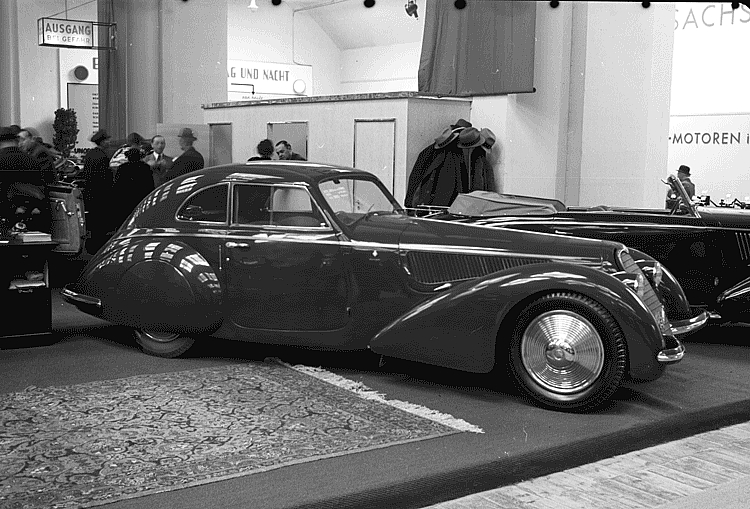
Carrozzeria Touring of Milan bodied most 8C 2900s by its Superleggera ("superlight") method, which RM Sotheby's describes as a frame of thin steel tubes covered in aluminium panels, with fabric between the two to stop electrolysis. Moore gives Touring's first two designs as drawing 977, a coupé on the long chassis, and drawing 979, a spider on the short chassis built for an American client, MacLure Halley. In his account the first short-chassis spider, believed to be 412011, was shown at the London Motor Show of 14 to 23 October 1937, and the first berlinetta, 412020, at the Paris Salon of 7 to 17 October. Touring's long-chassis spiders were generally heavier than its all-aluminium berlinettas because their bodies used steel.
RM Sotheby's tells 412011's story differently in its 2025 catalogue. The car went back to the factory on 24 January 1938 with a cabriolet body by Nowack of Germany and weighed 1,462 kg, "which would indicate that it was built as a desirable Lungo chassis from new". RM adds that the old belief that the Nowack body was not original and the chassis had been lengthened is "now known to be incorrect". Other coachbuilders on the 8C 2900 included Carrozzeria Alfa and Pinin Farina, whose cabriolet Christie's sold in 1999.
Alfa Romeo 8C 2900 specifications
The Alfa Romeo 8C 2900 has a 2,905 cc twin-supercharged straight-eight in every road car; the racing cars differed in tune, wheelbase and weight, and the 1938 works cars in engine size too.
| 8C 2900A (1936) | 8C 2900B (road car) | 1938 Mille Miglia spider | 1938 Le Mans berlinetta | |
|---|---|---|---|---|
| Engine | Straight-eight, two light-alloy blocks and heads, twin overhead camshafts driven by gears, two valves per cylinder, two Roots superchargers, two Weber carburettors, magneto (Museo; Cruickshank, 1989) | |||
| Bore × stroke, displacement | 2.9 litres (Motor Sport, 1936) | 68 × 100 mm, 2,905 cc (Museo) | 2,905 cc; Biondetti's car a Tipo 308 engine of 69 × 100 mm, 2,991 cc (Cruickshank, 1989) | 68.25 × 100 mm, 2,926 cc (Museo) |
| Power | 220 hp at 5,400 rpm (Motor Sport, 1936) | 180 hp at 5,200 rpm (Museo); 180 bhp, 5,000 rpm maximum (Stamer) | 225 bhp; 295 bhp with the 308 engine (Cruickshank, 1989) | 220 CV at 5,500 rpm (Museo) |
| Gearbox | Four speeds and reverse, in a transaxle at the rear (Museo; Cruickshank, 1989) | |||
| Wheelbase | 2.75 m (Moore) | Corto 2.80 m, lungo 3.00 m (Moore); 9 ft 2¼ in and 9 ft 10⅛ in (Stamer) | – | 3,000 mm (Museo) |
| Weight | 750 kg complete (Motor Sport, 1936) | 1,250 kg, Touring berlinetta (Museo); 1,462 kg, 412011 with its Nowack body, on the long chassis by RM Sotheby's reading (2025) | – | 1,250 kg (Museo) |
| Top speed | – | 175 km/h, Touring berlinetta (Museo) | 211.4 km/h average over 86.8 km of autostrada, 1938 (Moore) | 220 km/h (Museo) |
Museo: the Museo Storico Alfa Romeo's pages for the 8C 2900 B Lungo and the 8C 2900 B Speciale Tipo Le Mans. Motor Sport, 1936: the report of the 1936 Mille Miglia. Stamer and Cruickshank: Motor Sport, 1961 and 1989. Moore: Artcurial's catalogue, 2019. RM: RM Sotheby's London catalogue, 2025.
How much horsepower did the Alfa Romeo 8C 2900 have?
The Alfa Romeo 8C 2900 had 180 hp at 5,200 rpm as an 8C 2900B road car, by the Museo Storico Alfa Romeo's figure. Gooding & Company puts the range at 180 to 225 hp "depending on its state of tune". The 2.9-litre Tipo B Grand Prix car had 255 bhp, Stamer wrote.
How fast was the Alfa Romeo 8C 2900?
The Alfa Romeo 8C 2900B reached 175 km/h (109 mph) as a Touring berlinetta road car and 220 km/h (137 mph) as the 1938 Le Mans berlinetta, by the Museo Storico Alfa Romeo's figures. The racing spiders were faster still. Moore records that in the 1938 Mille Miglia Carlo Pintacuda averaged 178.7 km/h over almost 250 km of ordinary roads from Brescia to Bologna. On the new autostrada from Florence to the coast north of Livorno he averaged 211.4 km/h for 86.8 km. At Le Mans in 1938 Raymond Sommer burst a tyre at "something over 130 m.p.h." on the Mulsanne straight, Motor Sport reported in July 1938.
Alfa Romeo 8C 2900 versions: 2900A and 2900B
The Alfa Romeo 8C 2900 came in two series and three wheelbases, by Moore's account: the 8C 2900A racing cars of 1935 to 1937, on a 2.75-metre wheelbase, and the 8C 2900B of 1937 to 1939. The 8C 2900B was built on a short (corto) chassis of 2.80 metres and a long (lungo) chassis of 3.00 metres.
What is the difference between the 8C 2900A and 8C 2900B?
The 8C 2900A was built for racing, and the 8C 2900B was the production car, with a detuned engine and a longer wheelbase, though Alfa Corse raced 2900Bs in 1938. Cruickshank wrote in 1989 that the ten earliest cars were 2900As, with a shorter wheelbase and differences in chassis and scuttle; the Louwman Museum counts "the first eleven", all raced by Scuderia Ferrari. Only one 2900A was sold with its Mille Miglia body, to Argentina, Moore wrote. The others had Carrozzeria Alfa bodies, and two genuine examples survive with plates calling them 8C 2900B, "presumably to make the buyer think that they were buying a new car not a second hand race car". Stamer gave the 8C 2900B camshafts "of less aggressive profile" than the Grand Prix car's, a limit of 5,000 rpm, 180 bhp and a track of 4 ft 5 in.
The five Touring berlinettas
Touring built five berlinettas on the 8C 2900B chassis, and Moore gave the history of each in Artcurial's catalogue.
| Chassis | New | Later |
|---|---|---|
| 412020 | Paris Salon, October 1937; sold in Germany | In the USA from the 1950s; restored by Tony Merrick, then by RX in Vancouver for David Sydorick; Best of Show at Pebble Beach, 2018 |
| 412024 | Probably finished in the first half of 1938; in Britain from February 1939 | Owned by Jack Bartlett, Dennis de Ferranti and Lord Ridley; in the Martens family in the Netherlands from 1976; sold by Artcurial in 2019 |
| 412029 | Registered by an Italian owner, August 1938 | Exported to Switzerland after the war and fitted with a Studebaker engine; rescued by Luigi Fusi in the early 1960s; in the Museo Storico Alfa Romeo, Arese |
| 412035 | Registered to a Milan company, July 1938 | Won the first race at Watkins Glen with Frank Griswold; restored for Jon Shirley; Best of Show at Pebble Beach, 2008 |
| 412036 | Paris Salon, October 1938; sold in Milan | Won the 1947 Mille Miglia with Emilio Romano and Clemente Biondetti; in Miles Collier's collection in Naples, Florida |
From Moore's history in Artcurial's catalogue of 2019; Pebble Beach years from the Pebble Beach Concours's list of Best of Show winners.
The 1938 Mille Miglia spiders
Alfa Corse, the re-formed works team that took over from Scuderia Ferrari for 1938, had five spiders built for the Mille Miglia and entered four, the Simeone Foundation Automotive Museum says; Cruickshank wrote of "four special cars". In his description their slim bodies were planned by Alfa Romeo and shaped by Touring, with a 38-gallon fuel tank, a five-gallon oil tank and a spare wheel laid almost flat under the tail. To make room for the spare, the chassis rails turned down behind the rear axle, a feature unique to these cars.
The 1938 Le Mans berlinetta
Alfa Romeo built one racing berlinetta for the 1938 Le Mans 24 Hours, Moore wrote, and the Museo Storico Alfa Romeo, which owns it, lists a Touring Superleggera body, a 2,926 cc engine of 220 CV and a top speed of 220 km/h. Denis Jenkinson recorded in Motor Sport in August 1990 how the museum got it. A French enthusiast who raced as "Mike Sparken" owned the coupé, and in a deal with the Arese museum he gave it up for an Alfa Romeo Tipo 158.
The last cars: the King of Romania's saloon and the Balena
Moore lists two more 8C 2900s finished in the early war years: a Touring saloon for the King of Romania and an experimental streamlined spider built by Alfa Romeo. Production of the long-chassis Touring spiders had run into 1939, and the last, chassis number 412042, was sold in August that year. The Louwman Museum in The Hague has an experimental streamlined 8C 2900B, the Balena ("whale"), which it calls the last of the series, with a 180 hp engine developed by Gioachino Colombo. Its remains were found in a bedroom in Buenos Aires in the 1980s, and Carlos Perez de Villa raced it in Argentina from 1949 to 1951.
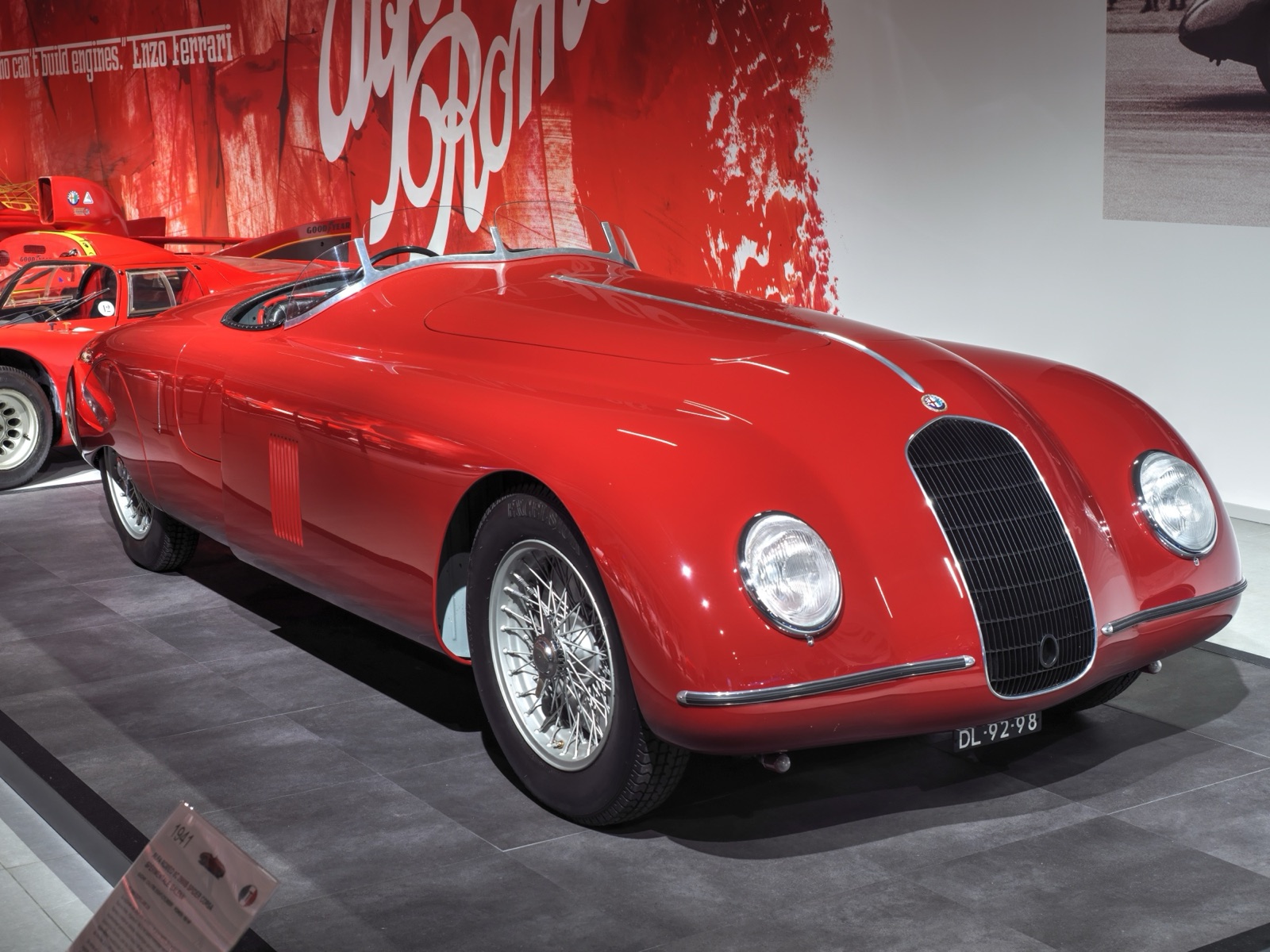
Alfa Romeo 8C 2900 racing history
The Alfa Romeo 8C 2900 won the Mille Miglia four times, in 1936, 1937, 1938 and 1947, and the Spa 24 Hours twice, by the Simeone museum's count. It never won at Le Mans: Sommer and Guidotti retired their 8C 2900A in 1937, Racing Sports Cars' results show, and the 1938 berlinetta broke while leading by 12 laps.
| Date | Race | Drivers | Car | Result |
|---|---|---|---|---|
| 5 April 1936 | Mille Miglia | Antonio Brivio and Carlo Ongaro | 8C 2900A, Scuderia Ferrari | 1st; Farina 2nd, Pintacuda 3rd |
| 12 July 1936 | Spa 24 Hours | Raymond Sommer and Francesco Severi | 8C 2900A, Scuderia Ferrari | 1st, 202 laps |
| 4 April 1937 | Mille Miglia | Carlo Pintacuda and Paride Mambelli | 8C 2900A, Scuderia Ferrari | 1st; Farina and Meazza 2nd |
| 3 April 1938 | Mille Miglia | Clemente Biondetti and Aldo Stefani | 8C 2900B spider 412031, Alfa Corse | 1st; Pintacuda and Mambelli 2nd |
| 18–19 June 1938 | Le Mans 24 Hours | Raymond Sommer and Clemente Biondetti | 8C 2900B berlinetta, Alfa Corse | Retired while leading by 12 laps |
| 10 July 1938 | Spa 24 Hours | Carlo Pintacuda and Francesco Severi | 8C 2900B spider 412032, Alfa Corse | 1st, 201 laps |
| 21 June 1947 | Mille Miglia | Clemente Biondetti and Emilio Romano | 8C 2900B berlinetta 412036 | 1st |
| 2 October 1948 | Watkins Glen Grand Prix | Frank Griswold | 8C 2900B | 1st |
Dates and winners from the Motor Sport database's race pages (Mille Miglia, Le Mans) and Racing Sports Cars' result pages (Spa, Watkins Glen); second places from Motor Sport's reports of 1936 to 1938. Models and chassis from Moore, the Louwman Museum, the Simeone museum and Racing Sports Cars.
1936: the Mille Miglia and Spa
Motor Sport's report of May 1936 tells how Scuderia Ferrari entered three of "the new 2.9-litre sports model, with independent suspension all round", for Brivio, Pintacuda and Giuseppe Farina. Their strongest rival was Clemente Biondetti in the 3.2-litre monoposto Pintacuda had won with in 1935, rebodied as a two-seater, and Biondetti reached Rome first. The Ferrari drivers caught him on the wider roads between Rome and Terni, and Brivio led, though his battery lead broke near Padua and his mechanic held it together by hand. He drove the last 25 miles from Verona with smashed headlamps and won at 75.57 mph (121.622 km/h). Farina, who had started 14 minutes later, finished 32 seconds behind on time.
At Spa in July the "big Alfa-Romeo" of Sommer and Severi was the only supercharged car in contention and averaged 77.67 mph for the 24 hours, with a race-record lap of 85.69 mph, Motor Sport reported in August 1936. Racing Sports Cars' results list the winner as an 8C 2900A.
1937: Pintacuda's Mille Miglia
The 1937 Mille Miglia ran over 1,111 miles in heavy rain, and Scuderia Ferrari's Pintacuda and Farina fought for the lead until Pintacuda drew away, Motor Sport reported in May 1937. Pintacuda finished in 14h 17m 32s, at 71.305 mph, and Farina came in 18 min 11 sec later. The botticellas made their last appearance for Scuderia Ferrari in the Pontedecimo-Giovi hill climb in October 1937, which Pietro Ghersi won, Moore wrote.
1938: Biondetti's Mille Miglia
The 1938 Mille Miglia used a faster route with more autostrada and a detour to the coast between Florence and Rome, and the first two places went to Alfa Corse, Motor Sport reported in April 1938. Pintacuda led until he went off the road on a tricky corner and lost eight minutes, and Biondetti went past. Pintacuda cut the gap to two minutes by Brescia, and Biondetti won by 1 min 52 sec at 84.45 mph, both men driving the whole distance. Early in the race a Lancia ran into the crowd at Bologna and nine spectators were killed. The R.A.C.I., Italy's motoring club, dropped the race for 1939 (Motor Sport, May 1939).
The sources differ on the margin and speed. The Simeone museum gives 2 min 2 sec, says Pintacuda had brake trouble, and has Biondetti at the wheel for the whole 12 hours; the Motor Sport database gives his time as 11h 58m 29s. Moore gives "a fraction over 2 minutes" and 135.39 km/h, which is 84.13 mph, Stamer's figure. In the two-litre class A. F. P. Fane won for BMW in a BMW 328 at 74.05 mph.
Did Biondetti's car have a Tipo 308 engine?
The Simeone museum says it did. Its factory racing records show that the car Biondetti and Stefani drove had "the larger type 308 Grand Prix engine" and larger brakes, and its chassis plate reads "Tipo C". Cruickshank weighed the same evidence in 1989. Alfa Corse's magazine called 412031 a "308 MM" after the Parma-Berceto hill climb, its front brake drums are as wide as a 308's, and its "Tipo C" plate can refer only to its engine. It certainly had a 2.9-litre engine when it reached Britain later in 1938, he added. Moore's view is that the winner's engine was "more like the 3 litre Tipo 308 Grand Prix car than a standard 8C2900B".
1938: leading Le Mans by 12 laps
Raymond Sommer's "beautifully streamlined 2.9-litre Alfa-Romeo 'saloon'" fought the Delahayes and Darracqs from the start of the 1938 Le Mans 24 Hours on 18 June, Motor Sport reported. Sommer waved his straw hat as he passed the pits in the lead. He lapped in 5 min 13.8 sec on the 11th lap, Biondetti took the lead back at a quarter to nine, and by 4 a.m. the car was five laps clear. At three-quarter distance it had covered 189 laps to the second car's 178. Sommer then burst a tyre at over 130 mph on the Mulsanne straight, the tread slashing through the mudguards. Soon after, with Biondetti driving, the engine failed at Arnage with a broken valve, while the car led by 12 laps, about 100 miles. The Delahaye of Eugène Chaboud and Jean Trémoulet won at 82.35 mph. Moore gives the blown front tyre as the cause of the retirement.
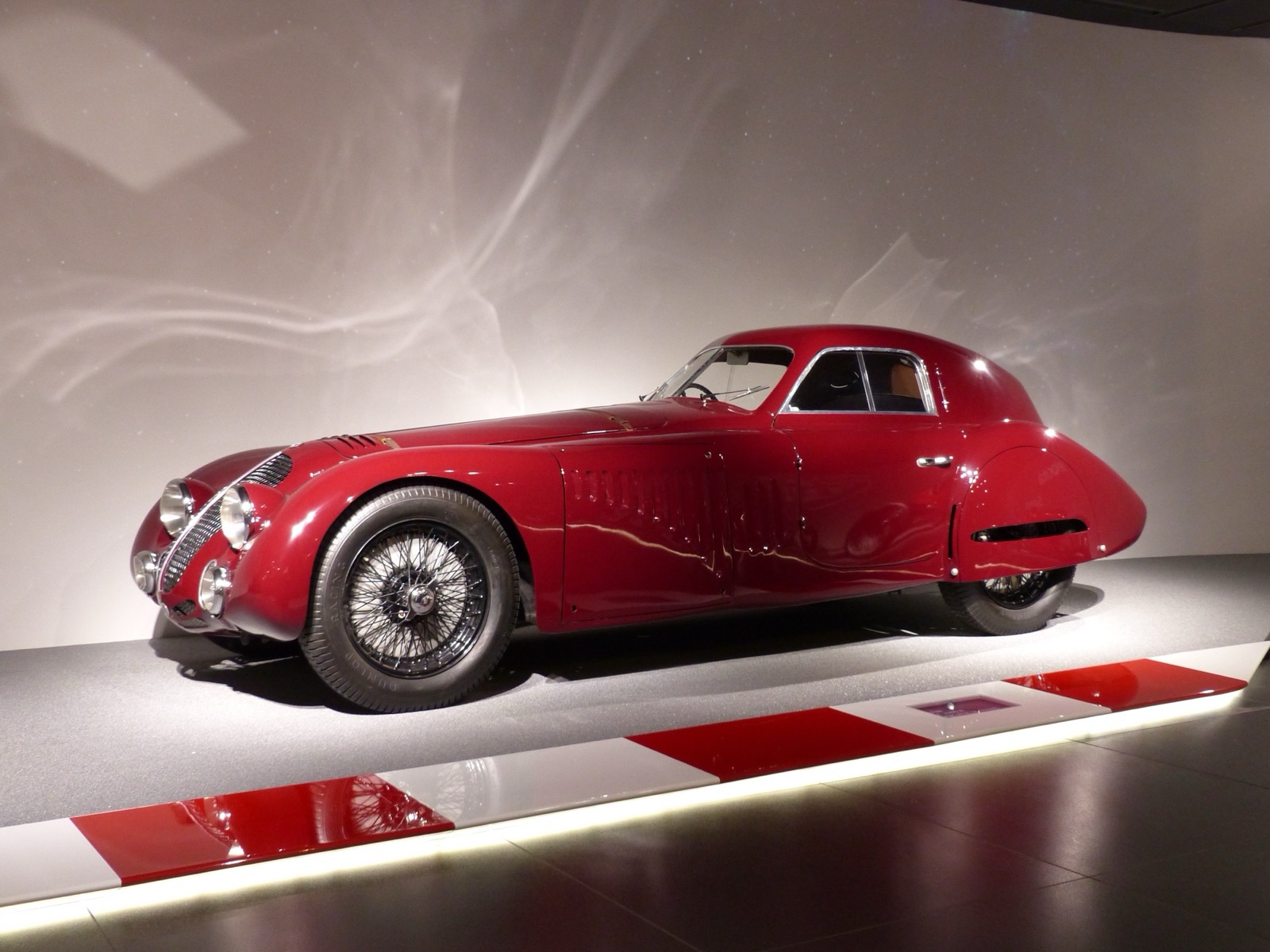
After the war: the 1947 Mille Miglia and Watkins Glen
Moore tells how Emilio Romano, the local Alfa Romeo agent in the Brescia area, entered his 8C 2900B berlinetta, 412036, in the 1947 Mille Miglia with Biondetti as co-driver, and won. The rules made Romano take the superchargers off. The Motor Sport database dates the race 21 June 1947 and gives their time as 16h 16m 39s. In America, Frank Griswold won the first Watkins Glen Grand Prix, on 2 October 1948, in an 8C 2900B; Moore dates that race to 1947 and gives Griswold's car as the berlinetta 412035.
Who drove the Alfa Romeo 8C 2900?
The Alfa Romeo 8C 2900 was raced by Scuderia Ferrari in 1936 and 1937 and by Alfa Corse in 1938, and later by private owners in Britain, America and South America.
Scuderia Ferrari and Alfa Corse drivers
Antonio Brivio, Giuseppe Farina, Carlo Pintacuda, Clemente Biondetti, Raymond Sommer and Francesco Severi drove the works 8C 2900s, by Motor Sport's reports and the race results of 1936 to 1938. Alfa Romeo had owned 80 per cent of Scuderia Ferrari before re-forming Alfa Corse, with Enzo Ferrari in charge, for 1938, the Simeone museum says. Pintacuda and Biondetti raced each other hard in the 1938 Mille Miglia. In Motor Sport's words, "the possibility of their being given regular mounts in the forthcoming Grand Prix races would depend largely upon their showing in this race".
Hugh Hunter, Tony Crook and other private owners
Cruickshank's 1989 article follows the 1938 Mille Miglia winner to Britain. Thomson & Taylor showed it at the London Motor Show that autumn as a showpiece, not for sale, but the amateur driver Hugh Hunter persuaded the firm to sell it to him. He registered it JML 1 and at a Brooklands members' day won all but one of the eight events. In the "Fastest Sports-car" match races there on Whit Monday 1939, he won the first race, on the Campbell circuit, before the gear-selector failed at the start of the second. Arthur Dobson won overall in Rob Walker's 3½-litre Delahaye. Tony Crook bought the car late in 1945, the Simeone museum says; he often raced it with cycle wings and sold it in 1951 to a Scottish collector, whom the museum names as E. J. Thompson of Peeblesshire.
In South America, Mario Tavares Leite won at Interlagos in 1949 and 1950 in the 8C 2900B that RM Sotheby's links to chassis 412041. Ernesto Tornquist raced the Simeone museum's 2900A in Argentina; the museum dates his last race, fourth at Mar del Plata, to 1952, and Racing Sports Cars lists that fourth place on 15 January 1950.
How many Alfa Romeo 8C 2900s were built?
Alfa Romeo built about 40 8C 2900s, by Simon Moore's estimate as Gooding & Company quoted it in 2024, but published counts run from about 32 to 43, and the sources count different things.
| Source | Count | What it counts |
|---|---|---|
| RM Sotheby's, Monterey catalogue, 2016 | About 32 | "2.9 chassis" |
| RM Sotheby's, London catalogue, 2025 | 38 | "examples of the 2900" |
| Gordon Cruickshank, Motor Sport, October 1987 | "39 or so" | All 8C 2900s, reviewing Moore's book |
| Simon Moore, quoted by Gooding & Company, 2024 | "Around forty" | All 8C 2900s |
| Gordon Cruickshank, Motor Sport, March 1989 | 43 | All 8C 2900s, of which the first ten were 2900As |
| Artcurial's catalogue, 2019; Gooding & Company, 2024 | Fewer than 50 | All 8C 2900s, road and racing |
| Louwman Museum | 11 | 8C 2900A racing cars |
| BMW Group, Villa d'Este release, 2019 | 30 | 8C 2900B road cars, 1937–40 |
| Museo Storico Alfa Romeo | 10 | 8C 2900 B Lungo |
| Moore in Artcurial's catalogue, 2019 | 5 | Touring berlinettas |
| Simon Moore, quoted by Gooding & Company, 2024 | 8 | Long-chassis Touring spiders, half of them surviving complete |
| Simeone Foundation Automotive Museum | 5 | 1938 Mille Miglia spiders, four of them raced |
The counts of surviving Touring spiders differ too. RM Sotheby's wrote in 2016 that 12 of the surviving 8C 2900s are believed to be Touring spiders, seven of them on the long chassis. Gooding & Company said in 2024 that five genuine long-chassis Touring spiders exist.
Where are the Alfa Romeo 8C 2900s now?
The Alfa Romeo 8C 2900s that survive are in museums and private collections, "the majority of these cars in significant long-term collections", in RM Sotheby's words.
Museums
The Simeone Foundation Automotive Museum in Philadelphia shows the 1938 Mille Miglia winner, 412031, on a turntable, and its 8C 2900A. Of the other three 1938 Mille Miglia cars, two are in the Schlumpf museum without their bodies and 412030 is in the Ralph Lauren collection, the Simeone museum says. The Museo Storico Alfa Romeo at Arese has the 1938 Le Mans berlinetta and the berlinetta 412029, and the Louwman Museum in The Hague has the Balena.
Concours winners
The 8C 2900B has won Best of Show at the Pebble Beach Concours d'Elegance three times: John Mozart's 1937 Touring spider in 1988, Jon and Mary Shirley's 1938 berlinetta in 2008 and David and Ginny Sydorick's 1937 berlinetta in 2018. At the Concorso d'Eleganza Villa d'Este, 412027 was Best of Show in 1996, Gooding & Company says, and in 2019 Sydorick's berlinetta won both the Coppa d'Oro and the Trofeo BMW Group.
Chassis with a story
RM Sotheby's history of 412041 starts in Brazil in 1949 and reunites, in a Tony Merrick restoration of the 1990s, a frame that came out of Brazil with a Touring body kept in Buenos Aires. RM itself says no hard evidence confirms the sequence of events. 412011 was the only 8C 2900 bodied in Germany when new, by Nowack, and now wears a spider body in the style of Carrozzeria Alfa and Zagato, its 2025 catalogue says. Its engine crankcase is "believed to originate from chassis 412027", and its block is numbered 422031, the number Gooding & Company gives for 412027's engine.
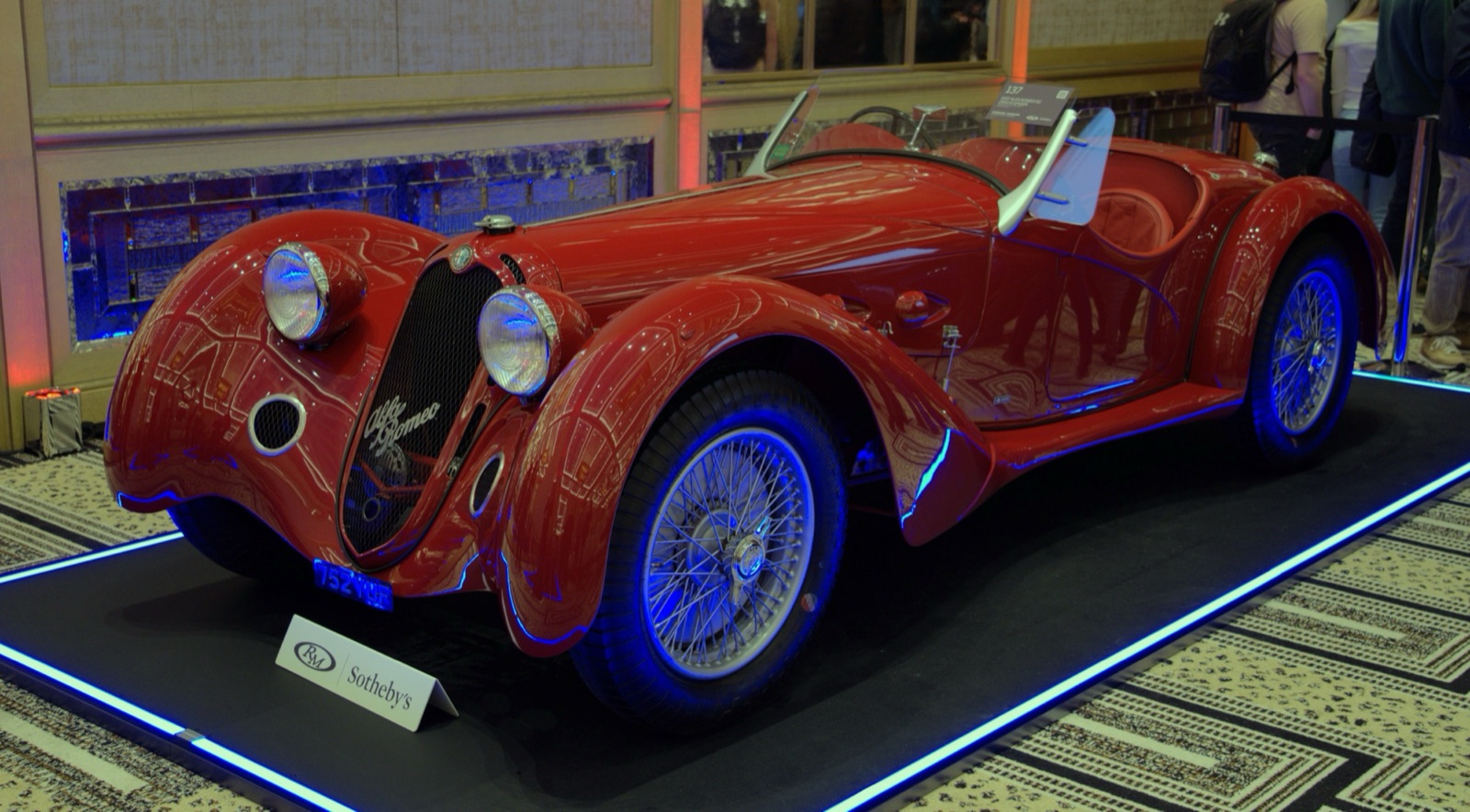
What is an Alfa Romeo 8C 2900 worth?
An Alfa Romeo 8C 2900 has sold at auction for prices from £2.8 million (412011, 2025) to $19.8 million (412041, 2016). Of the two sold since 2023, the long-chassis spider 412027, recovered after a theft in 2022, made $14,030,000 at Gooding & Company's Pebble Beach sale in 2024, under its $16 million to $20 million estimate.
| Sale | Car | Result |
|---|---|---|
| Christie's, Exceptional Motor Cars and Automotive Art, August 1999 (lot 29) | 1937 8C 2900B cabriolet by Pinin Farina, ex-Piero Dusio, chassis 412012 | $4,072,500 |
| RM Sotheby's, Monterey, 2016 (lot 234) | 1939 8C 2900B Lungo spider by Touring, chassis 412041 | $19,800,000 |
| Artcurial, Rétromobile, Paris, 8 February 2019 (lot 20) | 1939 8C 2900B Touring berlinetta, chassis 412024 | €16,745,600 (estimate €16 million–€22 million) |
| Gooding & Company, Pebble Beach, 2024 (lot 29) | 1938 8C 2900B Lungo spider by Touring, chassis 412027 | $14,030,000 (estimate $16 million–$20 million) |
| RM Sotheby's, London, 2025 (lot 137) | 1937 8C 2900B spider in the style of Carrozzeria Alfa Romeo and Zagato, chassis 412011 | £2,817,500 |
Results from the lot pages of Christie's, RM Sotheby's, Artcurial (the lot page is no longer online and was read in an archived copy; its result includes buyer's fees and taxes) and Gooding & Company.
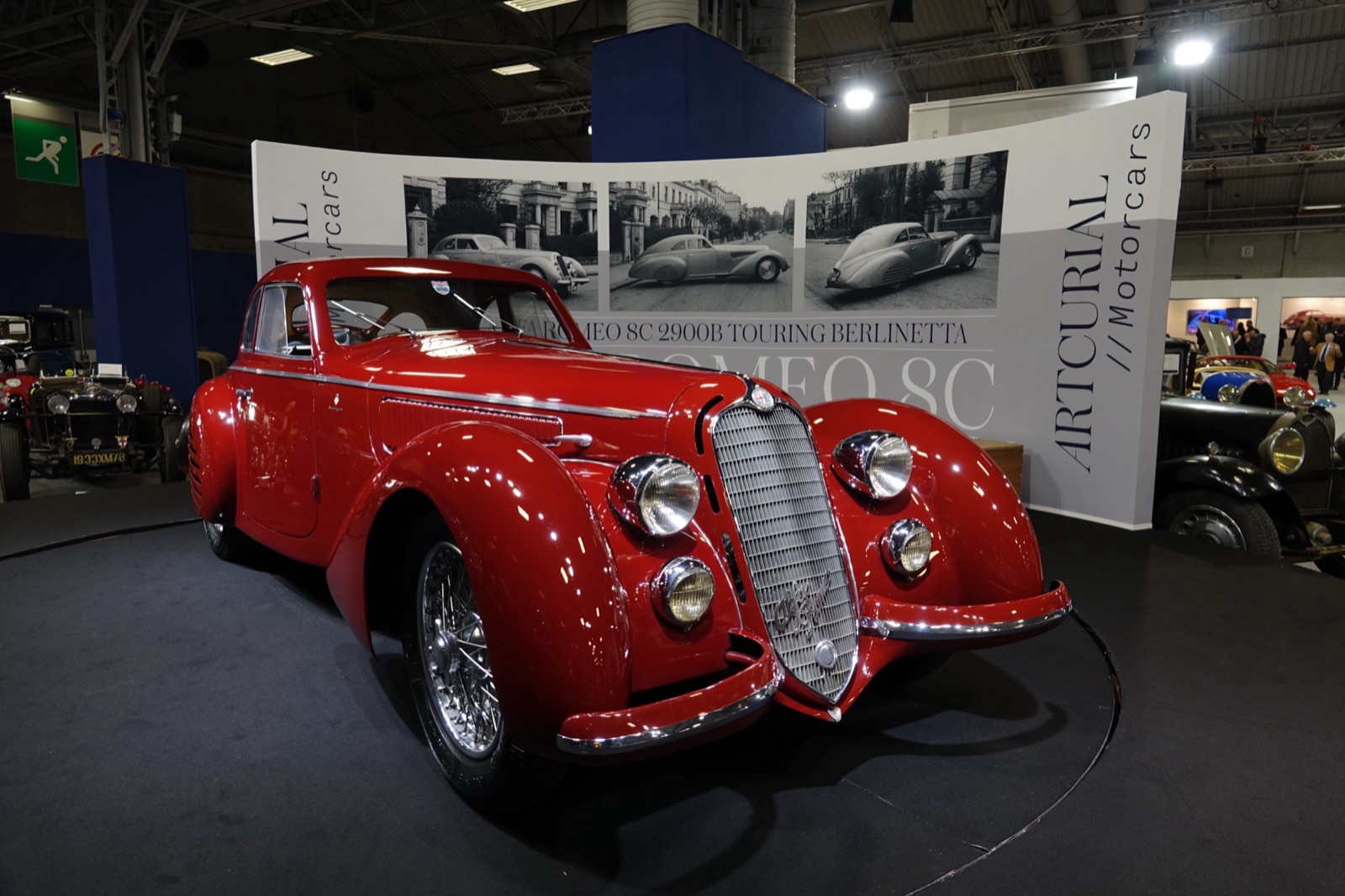
Alfa Romeo 8C 2900 rivals and successor
The Alfa Romeo 8C 2900's rivals in the races it ran were French sports cars: Delahaye, Talbot and Darracq. Motor Sport's reports show Schell and Carrière's Delahaye third behind the two Alfas in the 1937 Mille Miglia. In 1938 the Delahaye of René Dreyfus and Varet was fourth and the Talbot of Carrière and Lebègue fifth, "unable to match the speed of the supercharged Alfas". At Le Mans in 1938 the Alfa fought Dreyfus's V12 Delahaye and Philippe Étancelin's 4½-litre Darracq, and a Delahaye 135 won once it broke. At Brooklands in 1939 it was a Delahaye again, Rob Walker's, that beat Hunter's car.
As a road car, RM Sotheby's set the 8C 2900 against the Mercedes-Benz 540 K and the Duesenberg, fast but massive and "not particularly storehouses of new technology", and against Bugatti, with its "nimble if unorthodox chassis engineering". Cruickshank wrote that Alfa Romeo planned a successor in the 412: a similar chassis and body with an unsupercharged 4.5-litre V12 from the experimental 12C 37 Grand Prix car. The three 1938 Mille Miglia cars Alfa Romeo kept were hidden with the Alfetta voiturettes during the war.
Questions and answers
Who won the 1938 Mille Miglia?
Clemente Biondetti, with Aldo Stefani, in the Alfa Corse 8C 2900B spider 412031, now in the Simeone Foundation Automotive Museum in Philadelphia. Motor Sport gave his average as 84.45 mph and his margin over Carlo Pintacuda's sister car as 1 min 52 sec.
Did the Alfa Romeo 8C 2900 ever win Le Mans?
No. The 8C 2900B berlinetta of Raymond Sommer and Clemente Biondetti led the 1938 race by 12 laps on the Sunday morning, then retired at Arnage with a broken valve after a burst tyre, Motor Sport reported. A Delahaye won.
Why is the 8C 2900 called the Immortal 2.9?
Automobile Quarterly described the car as "immortal", and Simon Moore used the word as the title of his book on it, The Immortal 2.9, first published in 1986 and revised in 2008, RM Sotheby's says.
What does botticella mean?
It is Italian for casks or bottles, Simon Moore wrote. It was the name for the 8C 2900As Scuderia Ferrari raced in 1936 and 1937, which had light bodies like the Tipo C Grand Prix car's with cycle wings and lamps added.
Which Alfa Romeo 8C 2900 was stolen?
The 1938 long-chassis Touring spider 412027. It was stolen with the truck and trailer carrying it from a hotel car park in South Carolina in July 2022 and located by the ATF and FBI in December 2023. Gooding & Company sold it at Pebble Beach in 2024 for $14,030,000.
What is the most expensive Alfa Romeo 8C 2900?
The 1939 long-chassis Touring spider 412041, which RM Sotheby's sold at Monterey in 2016 for $19,800,000. The berlinetta 412024 made €16,745,600 at Artcurial's Paris sale in 2019.
Was the Alfa Romeo 8C 2900 the fastest road car of the 1930s?
Artcurial's 2019 catalogue called it "the fastest production car that you could buy before the war". John Dugdale wrote in The Autocar of 27 January 1939 that Hugh Hunter's ex-Biondetti car "must be one of the fastest road cars in existence", as the Simeone museum quotes him.
What happened to the works 8C 2900s during the war?
Alfa Romeo kept three of the four 1938 Mille Miglia spiders and hid them with its Alfetta voiturettes for the rest of the war, Gordon Cruickshank wrote in Motor Sport in 1989.
Sources
- Simon Moore, history of the 8C 2900 and of chassis 412024 in Artcurial's catalogue, Rétromobile sale, lot 20, 8 February 2019 (read 31 October 2026 in an archived copy of the lot page, which also shows the result, Sold €16,745,600): the origins, Porsche's suspension projects 63 and 69, the engine, the 1935 Paris show car, the botticellas, the wheelbases, Touring's drawings and first cars, the five berlinettas, the 1938 Mille Miglia speeds, the Le Mans berlinetta, the wartime cars.
- RM Sotheby's, 1939 Alfa Romeo 8C 2900B Lungo Spider by Touring, Monterey 2016, lot 234 (read 31 October 2026): Jano's engine, Superleggera construction, about 32 chassis, 12 Touring spiders, the history of 412041, the rivals, $19,800,000 sold.
- RM Sotheby's, 1937 Alfa Romeo 8C 2900 B Spider in the style of Carrozzeria Alfa Romeo and Zagato, London 2025, lot 137 (read 31 October 2026): the engine from the Tipo B, 38 built, the history of 412011, its weight in 1938, its engine crankcase and block, £2,817,500 sold.
- Gooding & Company, 1938 Alfa Romeo 8C 2900B Lungo Spider, Pebble Beach Auctions 2024, lot 29 (read 31 October 2026): chassis 412027, engine 422031, Villa d'Este 1996, estimate and $14,030,000 sold.
- Gooding & Company, press release on 412027, 19 July 2024: 1935–39, Jano, 180–225 hp, fewer than 50 built, five long-chassis Touring spiders, Simon Moore's estimate of about forty, the theft and recovery.
- Christie's, 1937 Alfa Romeo 8C 2900B Cabriolet, coachwork by Pinin Farina, lot 29, Exceptional Motor Cars and Automotive Art, August 1999 (read 31 October 2026): chassis 412012, ex-Piero Dusio, price realised $4,072,500.
- Museo Storico Alfa Romeo, 8C 2900 B Lungo and 8C 2900 B Speciale Tipo Le Mans (read 31 October 2026): engine, suspension, dimensions, weights, power, top speeds, numbers.
- Sir Anthony Stamer, Motor Sport, "Alfa Romeo racing and production cars, 1910–1940", December 1961: the 36 engines, the 8C 2900B's power, revs, wheelbases and track, the Tipo B's 255 bhp, 84.13 mph in 1938.
- Gordon Cruickshank, Motor Sport, "The Immortal 2.9", October 1987: review of Moore's book, "39 or so" built.
- Gordon Cruickshank, Motor Sport, "Vincitore di Mille Miglia", March 1989: 412031, its engine and plates, Hunter and Crook, the engine and chassis design, the Mille Miglia spiders, 43 cars, the 412, the drive.
- Motor Sport, "Higher speeds again in the Mille Miglia", May 1936: the 1936 race, the cars' power and weight.
- Motor Sport, "British cars do well at Spa", August 1936: the 1936 Spa 24 Hours.
- Motor Sport, "Racing round Italy", May 1937: the 1937 Mille Miglia.
- Motor Sport, "Another Alfa win in the Mille Miglia", April 1938: the 1938 race, the Bologna accident, Fane's class win.
- Motor Sport, "Britain eclipsed at Le Mans", July 1938: the 1938 Le Mans 24 Hours.
- Motor Sport, "Continental notes and news", May 1939: the Mille Miglia dropped for 1939.
- Denis Jenkinson, Motor Sport, "A rarity", August 1990: the Le Mans coupé traded to the Arese museum.
- Motor Sport database, race pages for the 1936, 1937, 1938 and 1947 Mille Miglia and the 1938 Le Mans 24 Hours (read 31 October 2026): dates, winning crews, times, the Le Mans winners.
- Racing Sports Cars, results of the 1936 and 1938 Spa 24 Hours and the 1948 Watkins Glen Grand Prix, and its list of 8C 2900 results by chassis (read 31 October 2026): the 1937 Le Mans entry, 412003 in the 1937 Mille Miglia, 412032 at Spa in 1938.
- Simeone Foundation Automotive Museum, 1938 Alfa Romeo 8C 2900B Mille Miglia (read 31 October 2026): Alfa Corse, the five spiders and their fates, the 308 engine, the 1938 margin, Hunter and Crook. Its page on the 1937 Alfa Romeo 8C 2900A Mille Miglia Spider (read the same day): the 2900A's history and the race record.
- Louwman Museum, Alfa Romeo 8C 2900B Spider Corsa Sperimentale "Balena" (read 31 October 2026): the Balena, the first eleven cars.
- Pebble Beach Concours d'Elegance, past Best of Show winners (read 31 October 2026): 1988, 2008, 2018.
- BMW Group, Concorso d'Eleganza Villa d'Este 2019 release: the 2019 awards, 30 built.