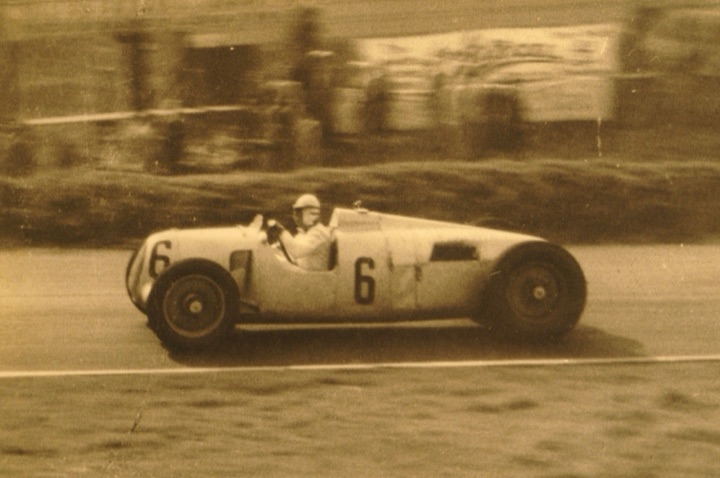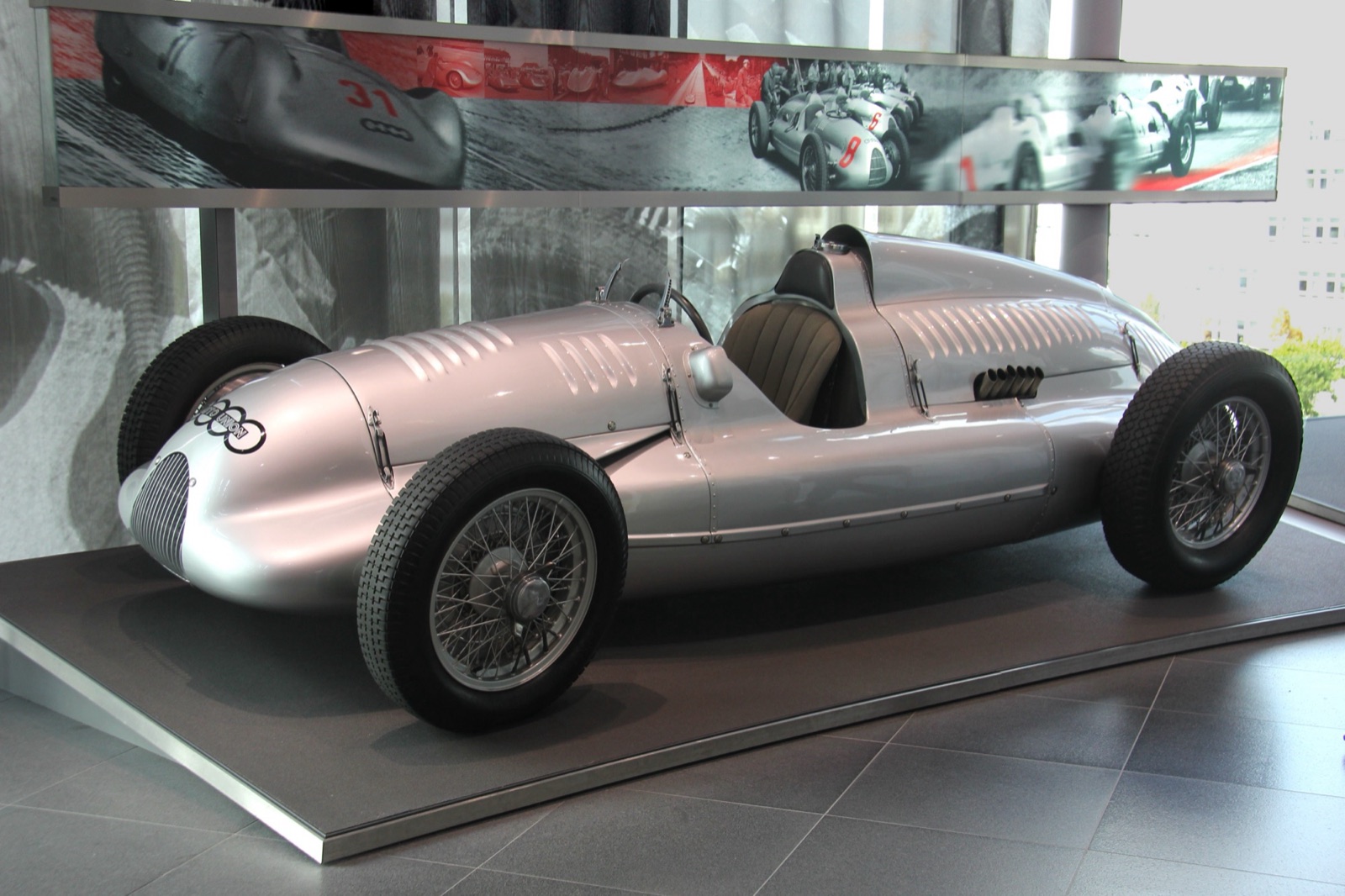
The Auto Union Type D is the Grand Prix car that Auto Union's racing department at Zwickau built for the three-litre formula of 1938. It is a single-seater with a supercharged V12 engine behind the driver, side fuel tanks and a de Dion rear axle. The Auto Union Type D won four of the twelve races it started in 1938 and 1939, by the Motor Sport database's results: three for Tazio Nuvolari and one for Hermann Paul Müller. Its last win, at Belgrade on 3 September 1939, came in the last Grand Prix in Europe until 1945, as Ian Bancroft recorded in Motor Sport.
Who designed the Auto Union Type D, and why?
The Auto Union Type D was designed by Robert Eberan von Eberhorst for the Grand Prix regulations of 1938, which limited supercharged engines to a capacity of 3 litres. Audi Tradition's history of the Silver Arrows says the company tackled the new formula "without Bernd Rosemeyer and also without technical support from Ferdinand Porsche", and that Eberan von Eberhorst designed its three-litre, twelve-cylinder supercharged engine. Audi's 2009 history of the Silver Arrow legend adds that Porsche's contract had ended, so the chief engineer drew the new design.
The three-litre formula of 1938
The new rules ranked a three-litre supercharged car equal to a 4½-litre unsupercharged one, as Motor Sport explained in its review of the 1938 Grand Prix season. Mercedes-Benz Classic's archive entry for the W 154 says the AIACR, the sport's governing body, announced them in October 1936, to bring engine development back under control. Bonhams gave the minimum weight as 850 kg in its 2009 sale announcement. They replaced the 750 kg formula of 1934 to 1937, the formula of the Auto Union Type C, with its V16, and of the Mercedes-Benz W125.
Rosemeyer's death and the decision to go on
Bernd Rosemeyer, the team's leading driver, was killed attempting records on the autobahn at the start of 1938, so he never drove the Type D, Denis Jenkinson wrote in Motor Sport in December 1982. Paul Fearnley, in Motor Sport in December 2003, adds that Porsche had just left and that opinion inside Auto Union was divided, with closing the racing department "on the agenda". Eberan von Eberhorst, Porsche's right-hand man since 1933, argued for the mid-engined layout and for racing on, and "he got his way on both counts".
Did Porsche design the Type D?
Not according to Audi, which credits the engine to Eberan von Eberhorst and says Porsche gave no technical support. Jenkinson's 1982 account differs: he wrote that "Dr. Porsche and the Auto Union engineers settled on a V12-cylinder layout" for the three-litre limit, and that Eberan von Eberhorst then took over development for 1938 and 1939.
Auto Union Type D design and engineering
The Auto Union Type D kept the layout of the P-Wagen that Porsche drew in 1933, as Jenkinson described it in 1982. The driver sat ahead of the engine, the engine ahead of the rear axle, and the five-speed gearbox behind it. What changed was the driving position, the fuel tanks and the rear suspension. The fuel went into pontoon tanks, a fuel tank along each side, so the driver could sit further back than in the Type C, and a de Dion axle on torsion bars replaced the swing axles.
The V12 engine
The V12 was a cut-down V16. Dick Crosthwaite, whose firm Crosthwaite & Gardiner restored the surviving cars, told Motor Sport in March 2007 that "the 12-cylinder crankcase is basically the 16-cylinder's but with two cylinders lopped off either end". Fearnley found the same family likeness: one central camshaft working the inlet valves of both banks, and the V16's connecting-rod length and main-bearing diameter. His specification adds a one-piece aluminium crankcase and block with wet liners, and a built-up Hirth crankshaft on roller bearings. Motor Sport's report of the 1938 Donington Grand Prix described the 1938 engine as 2,986 cc, with a single Roots blower driven from the rear of the engine and drawing from twin carburettors.
Chassis, de Dion axle and side tanks
Fearnley's 2003 article gives the frame as chrome-molybdenum tubes weighing 51 kg. At the front the Type D kept Porsche's twin trailing links and transverse torsion bars. At the rear Eberan von Eberhorst ran the de Dion tube under the gearbox and located it with a low Panhard rod, which gave a low roll centre; Fearnley's verdict is that "the D-Type was a basic understeerer". The central tanks held 62.7 gallons, almost 15 per cent of the car's weight, and kept the balance as they emptied, where the Mercedes carried 88 gallons partly behind its rear axle. Motor Sport's 1938 report adds that cooling water ran through the chassis tubes between engine and radiator.
Brakes, dampers and gearbox
Crosthwaite told Motor Sport in 2007 that the Type D used four leading shoes per drum, against two on the Mercedes, with shoes 2.5 inches wide, and twin master cylinders, one for each axle. The five-speed gearbox is a compact twin-shaft unit, worked by a rod linkage more than four feet long, and the differential is a ZF limited-slip unit, in Fearnley's description.
How did the Auto Union Type D handle?
The Auto Union Type D handled better than the V16 cars but still demanded care. Phil Hill, the 1961 world champion, expected the worst when Nye arranged for him to test one at Donington in the late 1970s. He found the handling "eye-openingly impressive". "It's a tragedy that after World War II all anybody remembered was the terrifying tail-happiness of the earlier Auto Union V16s," he said. Georg Meier, the BMW motorcycle champion, was less sure when he tested a Type D in November 1938. He found it heavy to steer and tricky near the limit, and spun three or four times. Fearnley, who drove one in 2003, found oversteer "still a flex of the ankle away at all times" and the cockpit cramped, 44 inches from seat back to wheel boss. Crosthwaite called the Auto Unions "horrible to drive because you sit far too close to the steering wheel".
Auto Union Type D specifications
The Auto Union Type D is a mid-engined single-seater on a 2,850 mm wheelbase, with a supercharged V12 of three litres' engine displacement that Fearnley's specification rates at 485 bhp at 7,000 rpm in 1939 form.
| Item | Type D | Source |
|---|---|---|
| Engine | 60-degree V12 behind the driver, three gear-driven camshafts, two valves per cylinder | Fearnley, 2003; Motor Sport, 1938 |
| Bore × stroke, displacement | 65 × 75 mm; 2,986 cc (Motor Sport, 1938) or 2,985 cc (Fearnley) | Motor Sport, 1938; Fearnley, 2003 |
| Supercharging | One Roots blower in 1938; two in series in 1939, at 24 psi | Motor Sport, 1938; Fearnley, 2003 |
| Compression ratio | 10:1 | Fearnley, 2003 |
| Torque | 405 lb ft at 4,000 rpm | Fearnley, 2003 |
| Gearbox (transmission) | Five speeds, behind the rear axle; ZF limited-slip differential | Jenkinson, 1982; Fearnley, 2003 |
| Front suspension | Twin trailing links, transverse torsion bars, hydraulic dampers | Fearnley, 2003 |
| Rear suspension | De Dion axle on torsion bars: longitudinal by Jenkinson's account, transverse in Fearnley's specification | Jenkinson, 1982; Fearnley, 2003 |
| Brakes | Lockheed hydraulic, 17-inch drums, four leading shoes | Fearnley, 2003 |
| Wheelbase, track | 2,850 mm, 1,390 mm | Fearnley, 2003 |
| Length, width, height | 4,200 mm, 1,660 mm, 1,060 mm | Fearnley, 2003 |
| Wheels | 19-inch wheels at the front; 22-inch rear wheels on faster tracks; Rudge-Whitworth hubs | Fearnley, 2003 |
| Weight | 850 kg, the formula minimum | Fearnley, 2003; Bonhams, 2009 |
| Fuel | 62.7 gallons in side tanks; 2.75 mpg | Fearnley, 2003 |
| Weight distribution | 45 per cent front, 55 per cent rear | Fearnley, 2003 |
Fearnley's figures are for the 1939 car he drove at Donington in 2003, rebuilt from original parts by Crosthwaite & Gardiner.
How much horsepower did the Auto Union Type D have?
Between about 420 and 500 bhp, depending on the year and the source; the Type D's power output rose when two-stage supercharging came in for 1939. Bonhams gave 420 bhp for the single-supercharger engine of 1938 and 485 bhp at 7,000 rpm for the two-stage engine of 1939. The published figures differ:
| Source | Figure | What it describes |
|---|---|---|
| Bonhams, sale announcement, March 2009 | About 420 bhp | 1938, single-stage supercharger |
| Bonhams, the same | About 485 bhp at 7,000 rpm | 1939, two-stage supercharging |
| Fearnley, Motor Sport, December 2003 | 460 bhp, then 485 bhp at 7,000 rpm | One blower, then two in series |
| Audi, History of the Four Rings | 485 hp | The V12 of the Type D |
| Jenkinson, Motor Sport, December 1982 | "Something like 500 b.h.p." | On a special alcohol fuel, to 7,000 rpm |
How fast was the Auto Union Type D?
The Auto Union Type D's top speed was about 185 to 190 mph on the fastest circuits, by Motor Sport's reports of 1939 and 1940. Its reporter at the 1939 French Grand Prix at Reims saw the leading Type D and Hermann Lang's Mercedes "streaking down towards Thillois at 185 m.p.h. neck and neck", in Motor Sport's report of August 1939. The Type D broke the lap record there at over 113 mph. In February 1940 the magazine wrote that both teams were "getting some 190 m.p.h. all out" there. At Donington in 1938 the German cars reached "170 or so" on the straight.
The 1939 Type D: two superchargers in series
The 1939 Auto Union Type D had two-stage supercharging, a large blower feeding a smaller one, which Fearnley says raised the boost from 17 to 24 psi and the power from 460 to 485 bhp. Motor Sport reported in February 1940 that the front suspension had been redesigned again "to improve steering and stability", "it was said largely under the supervision of Tazio Nuvolari".
Auto Union Type D racing history
The Auto Union Type D started twelve races in 1938 and 1939 and won four of them, by the Motor Sport database's results. It missed the first races of 1938, and Mercedes-Benz won six races that year to Auto Union's two, by Motor Sport's December 1938 review.
| Date | Race | Best Type D results | Winner |
|---|---|---|---|
| 3 July 1938 | French Grand Prix, Reims (EC) | Kautz and Hasse out on lap 1 | Von Brauchitsch (Mercedes-Benz) |
| 24 July 1938 | German Grand Prix, Nürburgring (EC) | Stuck 3rd; Müller and Nuvolari, sharing, 4th | Seaman (Mercedes-Benz) |
| 14 August 1938 | Coppa Acerbo, Pescara | All three retired | Caracciola (Mercedes-Benz) |
| 21 August 1938 | Swiss Grand Prix, Bremgarten (EC) | Stuck 4th, Nuvolari 9th | Caracciola (Mercedes-Benz) |
| 11 September 1938 | Italian Grand Prix, Monza (EC) | Nuvolari 1st | Nuvolari |
| 22 October 1938 | Donington Grand Prix | Nuvolari 1st, Müller 4th | Nuvolari |
| 21 May 1939 | Eifelrennen, Nürburgring | Nuvolari 2nd, Hasse 5th, Bigalke 6th, Müller 7th | Lang (Mercedes-Benz) |
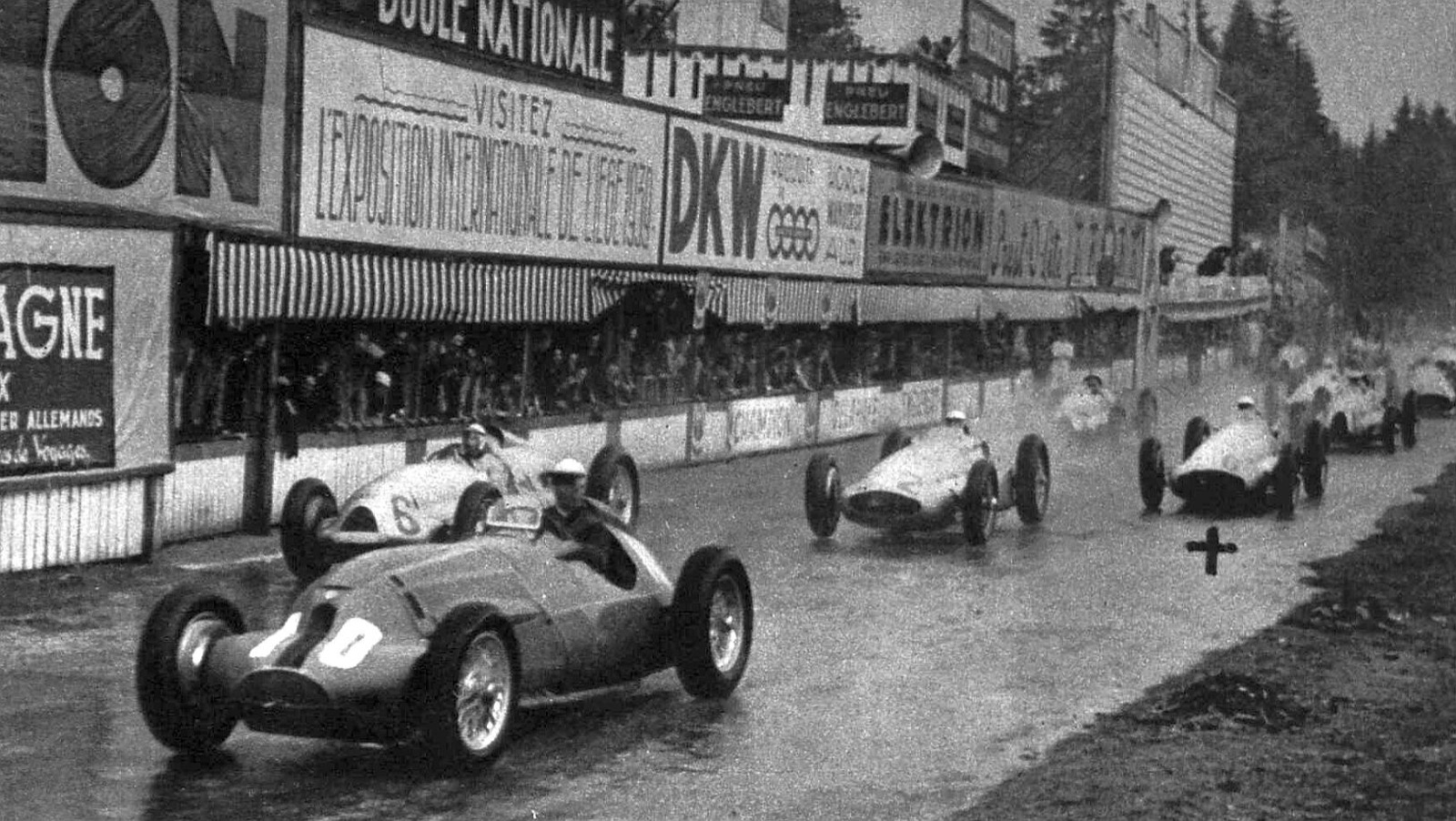
| 25 June 1939 | Belgian Grand Prix, Spa-Francorchamps (EC) | Hasse 2nd | Lang (Mercedes-Benz) |
| 9 July 1939 | French Grand Prix, Reims (EC) | Müller 1st, Meier 2nd, Stuck 6th | Müller |
| 23 July 1939 | German Grand Prix, Nürburgring (EC) | Müller 2nd | Caracciola (Mercedes-Benz) |
| 20 August 1939 | Swiss Grand Prix, Bremgarten (EC) | Müller 4th, Nuvolari 5th | Lang (Mercedes-Benz) |
| 3 September 1939 | Yugoslav Grand Prix, Belgrade | Nuvolari 1st, Müller 3rd | Nuvolari |
Dates, placings and championship rounds from the Motor Sport database's race pages, read 31 October 2026.
1938: a late start at Reims
Only two Type Ds started their first race, the French Grand Prix at Reims on 3 July 1938, because Müller had crashed in practice and hurt his spine, by Motor Sport's report of July 1938. Both were out after one lap. Christian Kautz hit the wall at Gueux and came round with a rear wheel wobbling, and Rudolf Hasse spun three times at Thillois and went off the road. Hans Stuck came out of retirement to join the team for the German Grand Prix. There Nuvolari ran off the road on the first lap and later took over Müller's car to finish fourth, as told in Motor Sport's August 1938 report.
Nuvolari's first wins: Monza and Donington
The Auto Union Type D won for the first time in the Italian Grand Prix at Monza on 11 September 1938, with Nuvolari driving, at 90.76 mph, in Motor Sport's report of October 1938. The Auto Unions had looked slow in practice, but Müller and Nuvolari chased Lang from the start; the Mercedes cars then failed, a failure put down afterwards to the changing weather. Giuseppe Farina's Alfa Romeo was second, about three and a half minutes behind. The reporter concluded that "Nuvolari has now mastered the different feel of the car".
At Donington Park on 22 October 1938 Nuvolari led from the start, lost the lead with a 53-second stop for a plug change, and fell to fourth. He then passed Lang's Mercedes on lap 67 and won by 1 min 38 sec at 80.49 mph, with the fastest lap at 83.71 mph, by the November 1938 report. Hasse crashed on oil dropped at the hairpin, and Müller led at half distance before finishing fourth. The race had been postponed from 1 October by the Munich crisis.
1939: a one-two at Reims and Hasse at Spa
Auto Union's 1939 season opened with Nuvolari second to Lang in the Eifelrennen on 21 May, 11.2 seconds behind by the database's times. At Spa on 25 June Rudolf Hasse finished second, 16.8 seconds behind Lang. Richard Seaman crashed while leading that race and died of his injuries; Motor Sport's August 1939 bulletin blamed the road, slippery from "a deluge of rain".
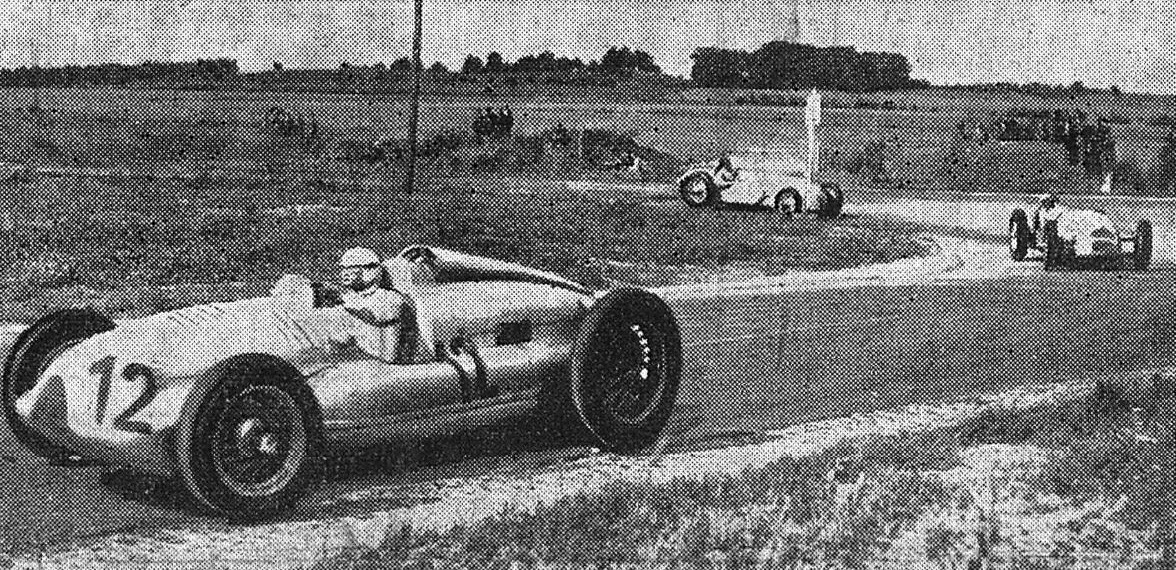
At Reims on 9 July every Mercedes retired, and Müller won the French Grand Prix from his team-mate Meier, as Motor Sport reported in August 1939. Nuvolari had led the early laps and broken the lap record before he retired. Meier's overalls caught fire at his refuelling stop, when the mechanics forgot to shut off the hose, but he went on to finish second. At the Nürburgring two weeks later Hasse led the German Grand Prix at half distance, then ran off the road in a shower, and Müller finished second to Caracciola, by Motor Sport's report of that race.
The Belgrade Grand Prix, 3 September 1939
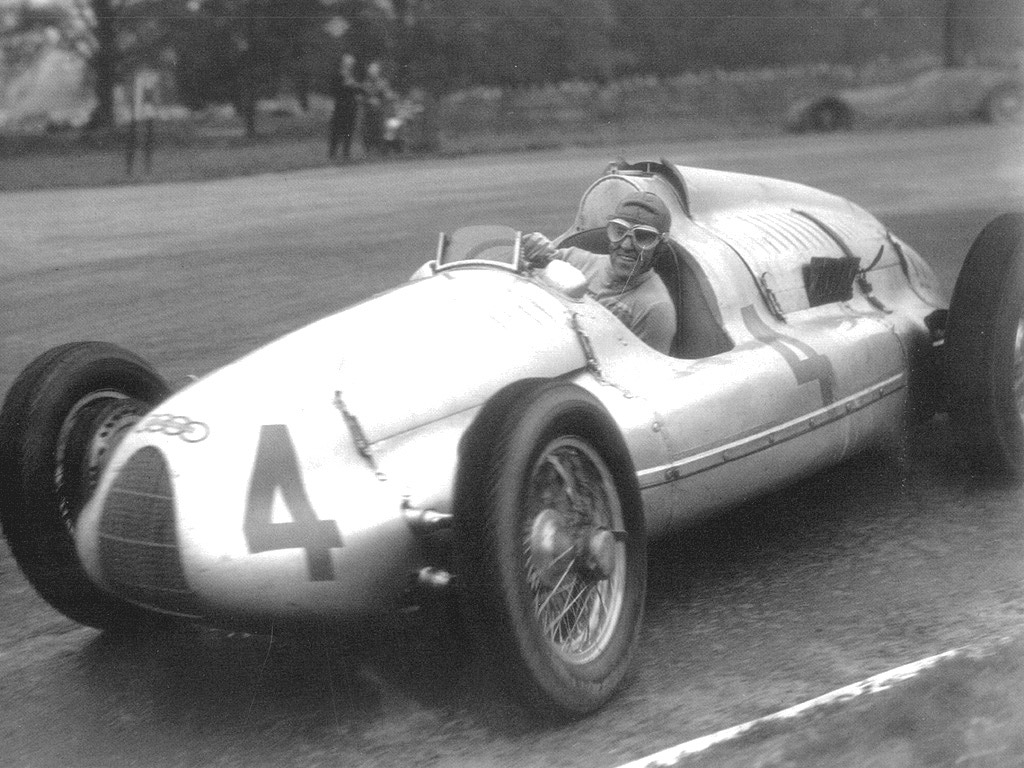
The Auto Union Type D's last race was the Belgrade Grand Prix, run on a street circuit around the Kalemegdan fortress on 3 September 1939, the day Britain and France declared war on Germany, with five starters, by Bancroft's account. Nuvolari arrived late and started his Type D from the back after a last-minute engine change. Manfred von Brauchitsch's Mercedes spun out of an early lead, and Walter Bäumer, standing in for the injured Lang, hit a tree. Nuvolari won by 7.6 seconds from von Brauchitsch, with Müller third, according to the database's race page.
Who won the 1939 European Championship?
Hermann Paul Müller, in an Auto Union Type D, would have won the championship under the points system of the time, although Lang was declared champion. The database's summary says the German authorities declared Lang champion and that later research showed Müller had won under that system. Nye wrote in Motor Sport in July 2014 that the decision was made by Adolf Hühnlein, head of the Nazi state's motor sport programme, "for reasons of political expediency". Lang had won most races, while Müller had gathered his points mainly with minor placings.
Who drove the Auto Union Type D?
The Auto Union Type D's drivers were Tazio Nuvolari, Hermann Paul Müller, Hans Stuck, Rudolf Hasse, Christian Kautz and Georg Meier, with Ulrich Bigalke as reserve, by the Motor Sport database's entries.
Tazio Nuvolari
Nuvolari left Alfa Romeo after his car caught fire in practice at Pau in April 1938, by the database's 1938 championship summary. He had beaten the German teams at the Nürburgring in 1935, winning the German Grand Prix in an Alfa Romeo P3 from Stuck's Auto Union. He had driven an Auto Union once before, at Bremgarten in 1937, and "was quite unable to cope with the unfamiliar layout", Motor Sport's December 1938 review recalled.
Hermann Paul Müller
Müller came to the car team from motorcycle racing and was still a cadet in 1937, by Motor Sport's December 1938 review. He won the 1939 French Grand Prix, his "first big victory", and was second in the German Grand Prix, fourth in the Swiss and third at Belgrade.
Hans Stuck, Rudolf Hasse, Christian Kautz and Georg Meier
Stuck, "already a veteran" by Motor Sport's account, was third in the 1938 German Grand Prix and fourth at Bremgarten; Audi Tradition counts "Stuck's hill-climb successes" among the highlights of the Type D years. Hasse, who had won the 1937 Belgian Grand Prix in a Type C, was second at Spa in 1939. Kautz raced the Type D in 1938. Meier, the BMW motorcycle racer who won the 1939 Senior TT, joined after the November 1938 tests and was second at Reims in his first season.
What happened to the Auto Union Type Ds after the war?
The Auto Union Type Ds went to the Soviet Union. Audi's 2012 release on the last twin-supercharged Type D says the Soviet Army occupied Zwickau, found the racing cars stored in a mine building and carried them off as reparations, after which "all trace of them was soon lost". Jenkinson wrote that in the West they were long assumed to have been destroyed in the bombing of Zwickau and Chemnitz.
Bonhams' 2009 sale announcement, reprinted by Sports Car Market, traces three V12 Grand Prix cars and a V16 streamliner to the GAZ factory at Gorky. Parts from them went into Soviet competition cars, and one stripped frame was cut in half to make a trailer. Around 1950 two open-wheeled cars went to the engineer Vladimir Nikitin in Kharkov, Ukraine. One complete chassis, the trailer frame and major mechanical parts survived.
How many Auto Union Type Ds were built, and how many survive?
Auto Union ran 11 Type D chassis in the 1939 season, by Bonhams' 2009 count. Three Type Ds came back from behind the Iron Curtain: a 1938 car found in Czechoslovakia and the two cars Paul Karassik recovered from Russia and Ukraine. The V16 hill-climb car known as the Type C/D, rebuilt in 1939 around a Type D chassis, also survives (Richardson, 1997).
| Car | Found | Restored | Owner, as last recorded |
|---|---|---|---|
| Chassis 4, a 1938 exhibition car, later fitted with a 1939 engine | Czechoslovakia, early 1970s (Jenkinson, 1982) | Antique Automobiles, then Crosthwaite & Gardiner, by 1982 | Neil Corner in 1982 (Jenkinson); sold by Christie's at Pebble Beach in 1990 and kept in a warehouse near Frankfurt, by 8W's account of 2003 to 2007 |
| The Karassik 1938 car, rebuilt to 1938 single-supercharger form | Russia or Ukraine, by Paul Karassik (Audi, 2012) | Crosthwaite & Gardiner, finished August 1993 | Audi, bought July 1998 (Audi, 2012) |
| Chassis 19, the Karassik 1939 car, two-stage supercharged | Russia or Ukraine, by Paul Karassik (Audi, 2012; Bonhams, 2009) | Crosthwaite & Gardiner, finished 1994 | Audi, bought back in 2012 (Audi, 2012) |
Chassis 4, the car from Czechoslovakia
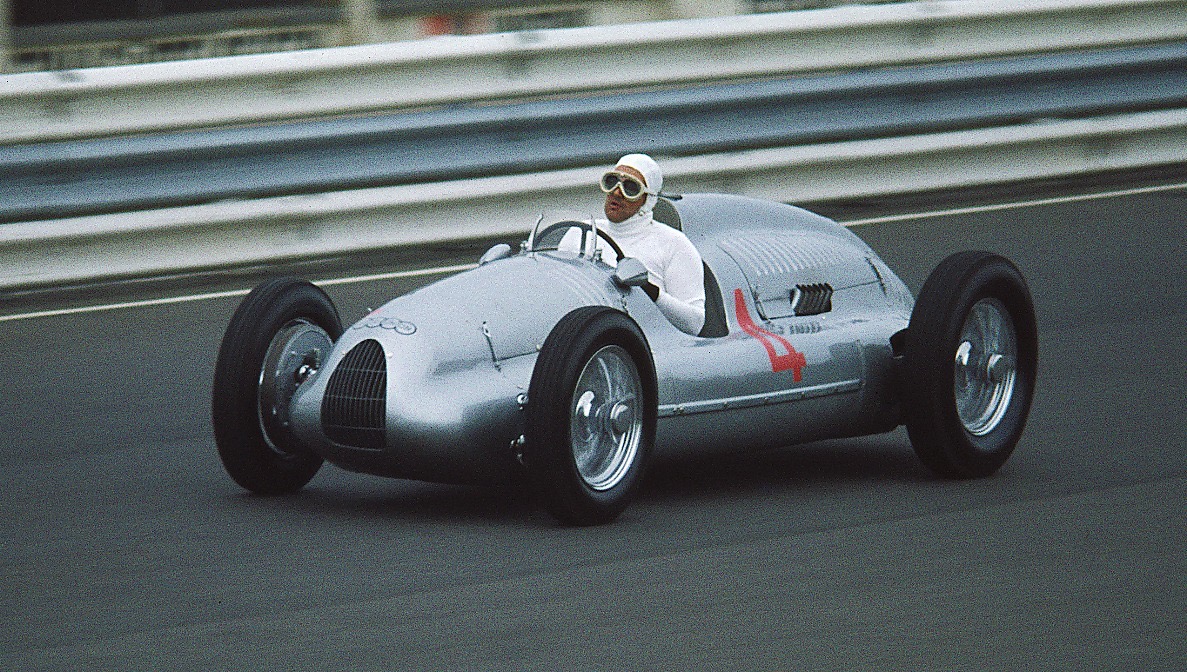
Jenkinson's 1982 article records the first Type D to reappear as chassis 4, engine number "July 1939". Count Hubertus Donhof, as Jenkinson spells the name, acquired it in Czechoslovakia ahead of Tom Wheatcroft, and showed it at Dijon in 1974. It had been built up at the end of the 1938 season for exhibition, so the engine and gearbox were empty. The American collector Kerry Payne had Antique Automobiles of Lincolnshire fit a working 1939 two-stage engine and a Hewland gearbox, and Colin Crabbe demonstrated it at a historic meeting at the Nürburgring. Neil Corner then bought it, and Crosthwaite & Gardiner rebuilt it; he took it up Shelsley Walsh in the 1980s, Motor Sport recorded in 2000. Jeroen Bruintjes's survey of Auto Union survivors for 8W, last updated in March 2007, says Christie's sold the car at Pebble Beach in 1990. He adds that it was then kept in a warehouse near Frankfurt and that he believed its owner was from Asia.
The Karassik cars
Paul Karassik, a collector who as a boy had watched the Belgrade race, spent more than ten years and many visits to the Soviet Union tracking down two dismantled Type Ds, by Audi's 2012 account. No original body survived, so Rod Jolley Coachbuilding made new ones, and Crosthwaite & Gardiner rebuilt one car to 1938 single-supercharger form and one to 1939 twin-supercharger form. Audi showed the 1938 car in the following years and bought it in July 1998, by its own account; Clive Richardson had already described it as "now owned by Audi" in a letter to Motor Sport in July 1997. Karassik sold the 1939 car to a private collector in the spring of 2000; in 2012 it joined the 1938 car and the Type C/D in Audi's collection.
Chassis 19: Nuvolari's car or Hasse's?
Christie's offered the Karassik 1939 car at Rétromobile in Paris on 17 February 2007 as the car in which Nuvolari won at Belgrade, as Sports Car Market reported. A week before the sale Christie's withdrew it. Its statement of 28 February, published by Sports Car Digest, said joint research with Audi had shown the frame to be chassis 19, "and not 21, the chassis of the 1939 French Grand Prix winner". Hasse raced chassis 19 to fifth in the 1939 Eifelrennen, which Christie's dated 20 May (the database gives 21 May), and Stuck to sixth in the French Grand Prix.
What is an Auto Union Type D worth?
The highest figure on record for an Auto Union Type D is a bid of $6,000,000, at which chassis 19 failed to sell in 2009. Chassis 19 was offered three times from 2007 to 2009 without selling, and Audi bought it privately in 2012 without publishing a price. Chassis 4 was sold by Christie's at Pebble Beach in 1990, by 8W's account.
| Date | Car | Sale | Result |
|---|---|---|---|
| 1990 | Chassis 4 | Christie's, Pebble Beach | Sold, price not given (8W) |
| July 1998 | Karassik 1938 car | Private sale to Audi | Price not published (Audi, 2012) |
| Spring 2000 | Chassis 19 | Private sale by Karassik | Price not published (Audi, 2012) |
| 17 February 2007 | Chassis 19 | Christie's, Rétromobile, Paris | Withdrawn a week before the sale (Christie's statement) |
| 7 March 2007 | Chassis 19 | Christie's sealed tender | Not sold (Autosport, 28 March 2007) |
| 14 August 2009 | Chassis 19 | Bonhams & Butterfields, Quail Lodge, Carmel | Not sold at a high bid of $6,000,000 against an estimate of $8,000,000 to $10,000,000 (Sports Car Digest) |
| 2012 | Chassis 19 | Private sale to Audi | Price not published (Audi, 2012) |
Christie's had expected the car to set a record for any car at auction. After the Rétromobile withdrawal it invited sealed bids by 7 March 2007, and the car had not sold by that route, Thomas O'Keefe reported in Autosport on 28 March 2007. The Bonhams result is from Sports Car Digest's report of the Quail Lodge sale.
Auto Union Type D replicas and recreations
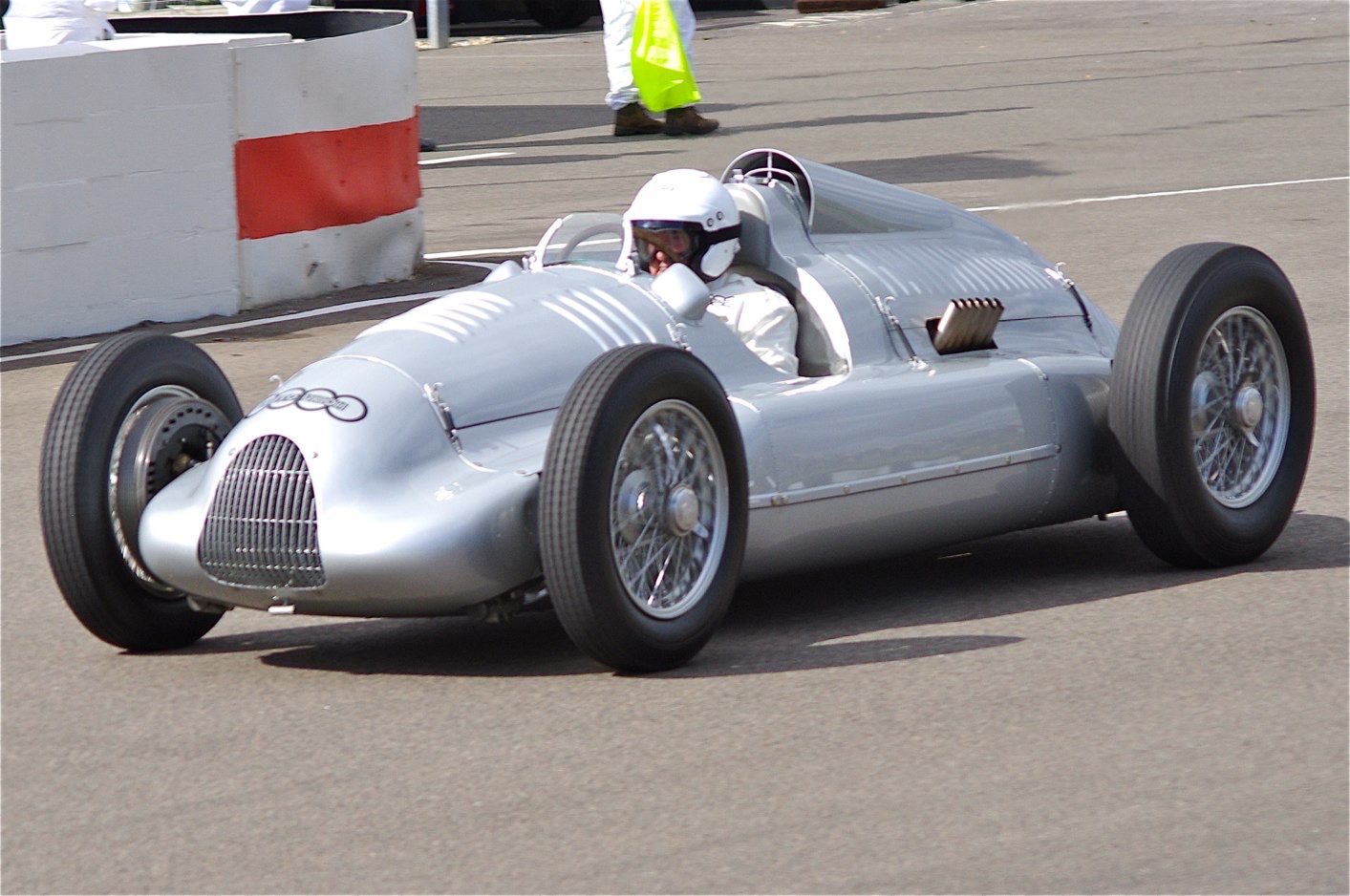
Crosthwaite & Gardiner, of Buxted, was in 2007 the only firm sanctioned by Audi to build Auto Union replicas, Keith Howard reported in Motor Sport in March 2007. Dick Crosthwaite said then that the firm had "just built" its first V12 replica, with plain bearings throughout in place of the original roller bearings because of the use it would get. The bodies of both Karassik cars are new as well (Audi, 2012).
Auto Union Type D rivals and successor
The Auto Union Type D's chief rival was the Mercedes-Benz W154, which won six races in 1938 to the Type D's two, by Motor Sport's December 1938 review. Fearnley put its 1939 engine five horsepower below the Type D's. Delahaye's unsupercharged 4½-litre V12 won at Pau in 1938, against Alfa Romeo's eight-cylinder Tipo 308, by Mercedes-Benz Classic's W 154 entry, and Alfa Romeo also raced its Tipo 312 and Tipo 316, by the database's 1938 championship summary.
No successor raced. Motor Sport reported "talk of a 1½-litre Auto-Union" in February 1940, when a 1½-litre formula was expected to govern Grand Prix racing from 1940. That was the size of the Mercedes-Benz W165 and of the Alfa Romeo 158, the 1½-litre Alfa to which the same article gave 195 to 210 bhp. Fearnley judged that formula would have "played right into" the mid-engined Auto Union's hands.
Questions and answers
What happened to Auto Union's racing department after 1939?
Its racing team was never re-formed, Denis Jenkinson wrote in Motor Sport in 1982. Audi's company history says the Second World War brought Auto Union's development to an abrupt halt, and that Auto Union AG was deleted from the commercial register in Chemnitz in 1948. The new Auto Union GmbH, today's AUDI AG, was founded in Ingolstadt in 1949, Audi's 2012 release records.
Why is it called the Type D?
It followed the Types A, B and C, the V16 cars of 1934 to 1937; Audi Tradition says the names of the model generations "progressed through the alphabet". Bonhams' 2009 sale announcement says the V12 car was "retrospectively classified postwar" as the D-Type.
Was the Auto Union Type D faster than the Type C?
Round a circuit, potentially, yes: Denis Jenkinson called the V12 car "potentially much faster round circuits than the previous V16 Auto Union" in Motor Sport in December 1982. At Donington in 1938, Paul Fearnley wrote in 2003, Nuvolari and von Brauchitsch came within half a second of the previous year's pole time in cars of half the engine size.
What fuel did the Auto Union Type D use?
A special alcohol fuel, by Jenkinson's account. Paul Fearnley's 2003 specification gives its consumption as 2.75 mpg.
Where can you see an Auto Union Type D?
Audi owns two of the surviving cars and said in 2012 that it planned to show the twin-supercharged 1939 car at its museum in Ingolstadt, the museum mobile, where its V16 Type C/D hill-climb car is also shown. Audi showed both of its Type Ds at the Goodwood Revival in September 2012.
Did the Auto Union Type D race in Britain?
Yes. Nuvolari won the Donington Grand Prix on 22 October 1938 in a Type D, before a crowd estimated at 60,000 (Motor Sport, November 1938). After the war Neil Corner took his Type D up Shelsley Walsh in the 1980s, Motor Sport recorded in 2000.
Sources
- Audi Tradition, The age of the Silver Arrows (undated, read 31 October 2026): Eberan von Eberhorst's V12, Porsche's absence, Nuvolari's wins, Stuck's hill climbs, Belgrade.
- Audi, How the "Silver Arrow" legend was born, press release, 2009: Porsche's contract ended; Eberan von Eberhorst's design.
- Audi, History of the Four Rings, 2014: the 485 hp V12; Nuvolari as Rosemeyer's successor.
- Audi Tradition, Company history (read 31 October 2026): the end of Auto Union AG in 1948.
- Audi, Home again: the last Auto Union Type D twin-supercharger Silver Arrow returns to Audi, press release, August 2012: the cars taken to the Soviet Union; Karassik's search; the 1993 and 1994 rebuilds; the 1998, 2000 and 2012 sales; the Goodwood Revival of 2012.
- Mercedes-Benz Classic, Mercedes-Benz Grand-Prix racing car W 154, 1938 (read 31 October 2026): the formula's announcement; Delahaye and the Tipo 308 at Pau.
- Motor Sport database: the 1938 and 1939 European Championship overviews and the race page for each race in the results table, read 31 October 2026: Alfa Romeo's 308, 312 and 316; dates, entries, placings, times, Nuvolari's move from Alfa Romeo, the 1939 title.
- Motor Sport, Mercedes-Benz walk-over, July 1938: the Type D's first race, at Reims.
- Motor Sport, Heil, Seaman! Heil, Mercedes!, August 1938: the 1938 German Grand Prix; Stuck's return.
- Motor Sport, Three races at Berne, September 1938: Stuck fourth in the Swiss Grand Prix.
- Motor Sport, Auto-Unions' first 1938 win, October 1938: the Italian Grand Prix.
- Motor Sport, Tazio Nuvolari wins Donington's great race for Auto-Union, November 1938: the race, the engine and chassis described, practice times, the crowd.
- Motor Sport, The Grand Prix races of 1938, December 1938: the formula, the season's score, Nuvolari's and Müller's backgrounds.
- Motor Sport, Europe's fastest road race, August 1939: the 1939 French Grand Prix, speeds at Reims, Meier's fire.
- Motor Sport, Monthly bulletin, August 1939: Seaman's crash at Spa.
- Motor Sport, Caracciola completes Mercedes' hat trick, August 1939: the 1939 German Grand Prix.
- Motor Sport, The trend of racing-car design, February 1940: 190 mph at Reims, the 1939 front suspension, the 1½-litre Auto Union.
- Denis Jenkinson, Motor Sport, Historic Grand Prix Cars, December 1982: the layout, about 500 bhp, Rosemeyer, the history of chassis 4.
- Clive Richardson, letter to Motor Sport, Those new Auto Unions, July 1997: the Karassik 1938 car as Audi's; the Type C/D rebuilt around a Type D chassis in 1939.
- Marcus Pye, Motor Sport, Auto Union to race at Donington, May 2000: the Karassik car's new owner; Corner at Shelsley Walsh.
- Paul Fearnley, Motor Sport, Art of the state, December 2003: the design, Eberan von Eberhorst, Meier's test, the driving, the specification of the Karassik 1939 car.
- Keith Howard, Motor Sport, Auto Union D-Type: under the skin of Nuvolari's last winner, March 2007: Crosthwaite on the engine, brakes, driving and replicas.
- Doug Nye, Motor Sport, A nation divided, July 2014: the 1937 cars, the 1939 title, Phil Hill's drive.
- Ian Bancroft, Motor Sport, The forgotten 1939 Belgrade Grand Prix, February 2025: the Belgrade race.
- Bonhams & Butterfields, sale announcement of 12 March 2009, as reprinted by Sports Car Market: chassis 19's history, the formula weight, power, 11 chassis in 1939, the cars in the Soviet Union.
- Jeroen Bruintjes, 8W (Forix), What's left of the Auto Unions?, 4 November 2003, updated 1 March 2007: chassis 4's sale by Christie's at Pebble Beach in 1990 and its later storage near Frankfurt.
- Thomas O'Keefe, Autosport, The importance of being earnest, 28 March 2007: Christie's sealed tender for chassis 19 and its outcome.
- Sports Car Market, Auto Union D-Type slated for Christie's Rétromobile sale, 2007: the sale and its Belgrade claim.
- Sports Car Digest, Auto Union controversy resolved, 2007: Christie's statement of 28 February 2007 on chassis 19.
- Sports Car Digest, Quail Lodge auction results: Bonhams, August 2009: the high bid and estimate.