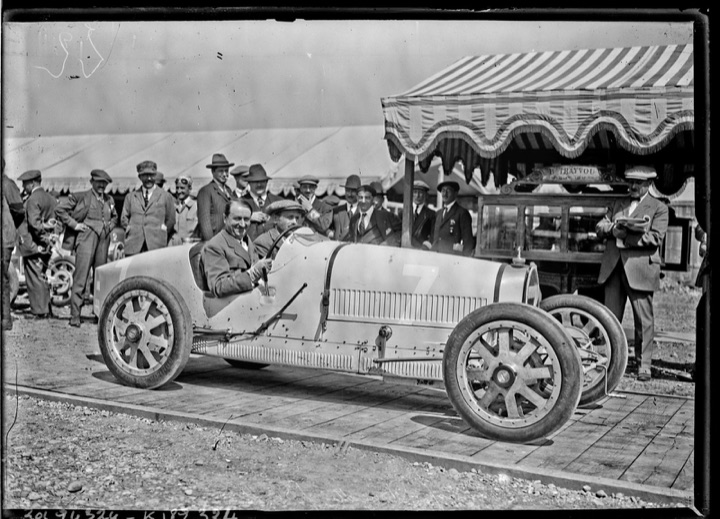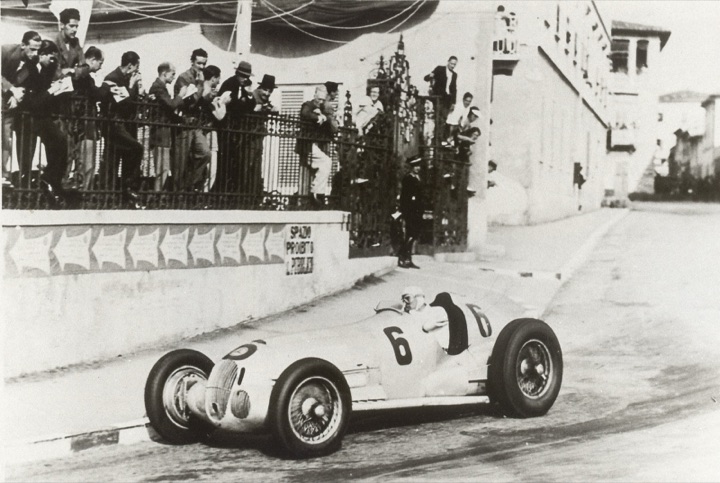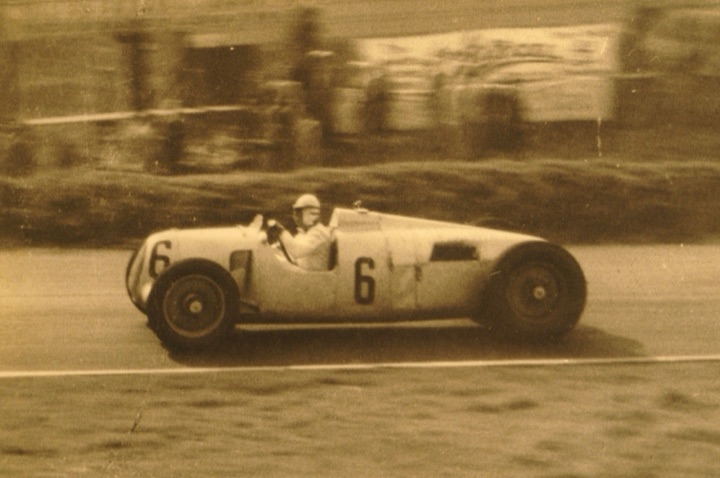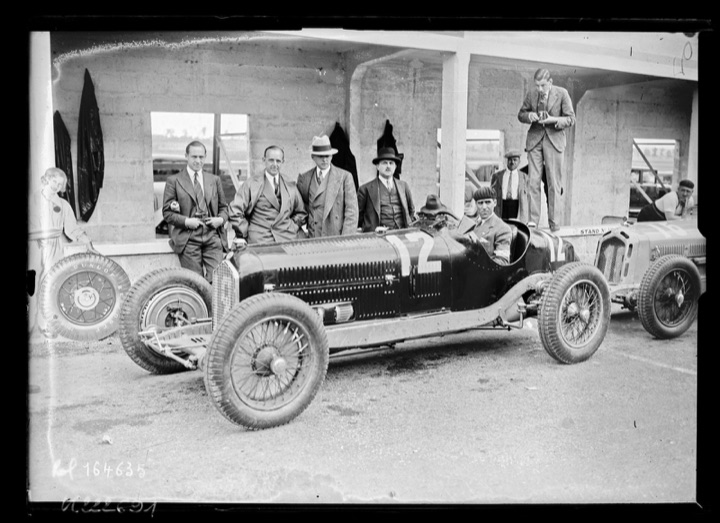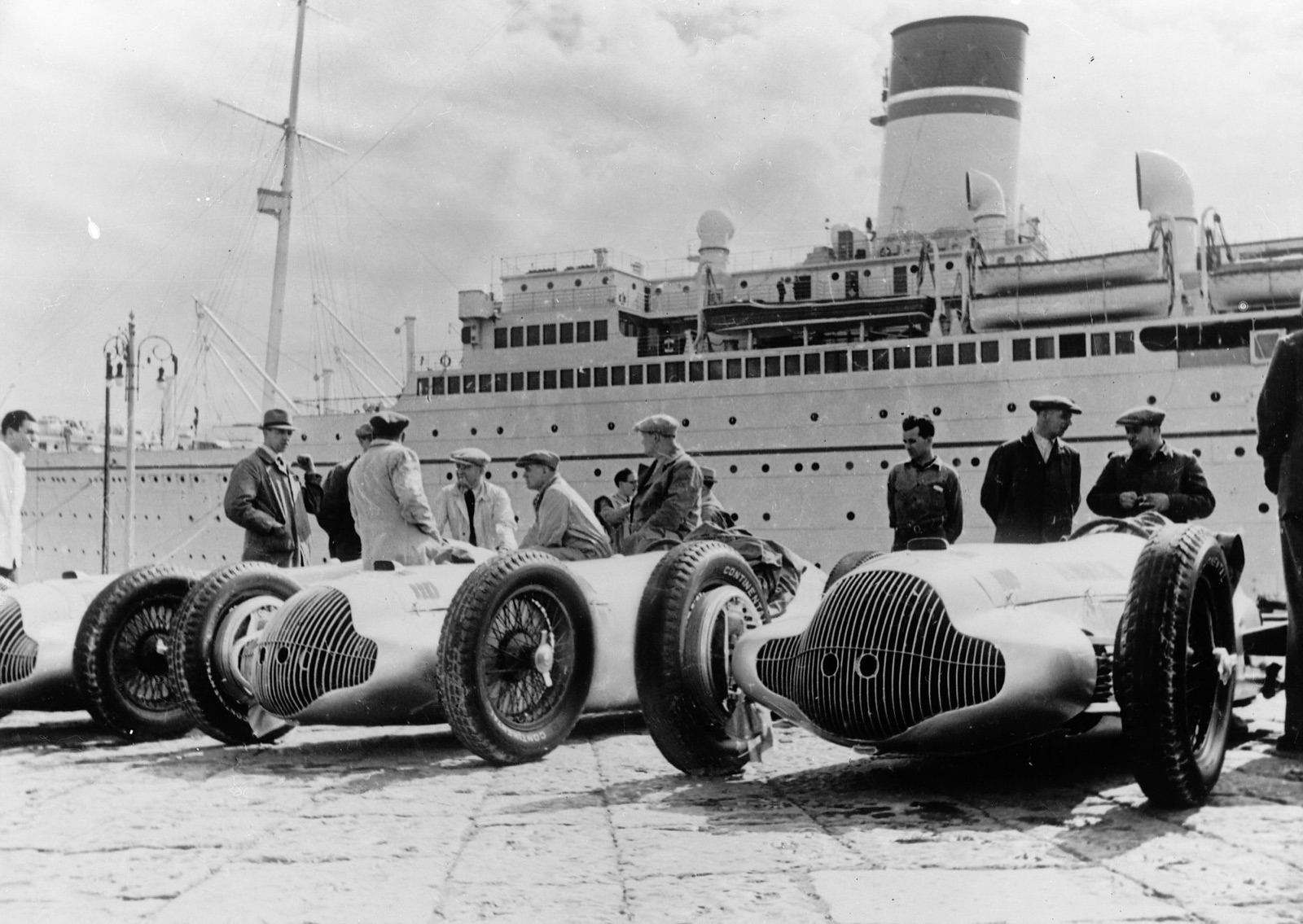
The Mercedes W154 (Mercedes-Benz W154, written W 154 by the factory) is the Grand Prix racing car Daimler-Benz built for the three-litre formula of 1938 and raced again in 1939, with a supercharged 60-degree V12 of 2,963 cc and a five-speed gearbox. In the Motor Sport database's results it won six races in 1938, when Rudolf Caracciola took his third European Championship, and five more in 1939, four of them for Hermann Lang. For 1939 it gained a two-stage supercharger and, in some cars, the revised M163 engine; the database lists the 1939 car as the W163, while Mercedes-Benz Classic records that the designation stayed W 154.
Who designed the Mercedes W154, and why?
The Mercedes W154 was designed at Untertürkheim because a rule change for 1938 left the 5.66-litre W125 ineligible. It came from the independent racing department that Daimler-Benz had set up in 1936 under the engineer Rudolf Uhlenhaut, whose method rested on his own driving tests, according to Mercedes-Benz Classic's entry for the W125. The data sheet for the W154 credits the design to "O. Wagner and H. Heess under the direction of Dir. Max Sailer", the racing chief; a Mercedes-Benz Classic press release of 10 May 2012 names the engineer as Max Wagner and says he carried the W125's frame design over to the W154.
The three-litre formula of 1938
The new rules limited the displacement of supercharged engines to 3,000 cc and of unsupercharged ones to 4,500 cc, with a minimum weight that rose with engine size. Mercedes-Benz Classic's archive entry for the 1938 W 154 says the AIACR, the sport's governing body, announced them in October 1936 (the 2012 Goodwood Revival press release says September), and meant them to slow the cars down after the 750 kg formula of 1934 to 1937 had let power climb. A three-litre supercharged car had to weigh at least 850 kg without fuel. The formula set no limit on the number of cylinders or the choice of fuel.
Why a V12?
Mercedes-Benz Classic's archive entry records that before deciding, the Untertürkheim engineers looked at outside ideas from the Porsche design office, among them a mid-engined car with a three-litre V12 and an unsupercharged 4.5-litre engine with three banks of eight cylinders. At the end of July 1937 the Daimler-Benz board chose to build the car in-house around a twin-supercharged V12, the M154, drawing on the company's experience of V12 aero engines and of the 5.7-litre DAB V12 used in record cars. Fuel injection was considered and set aside for lack of development time.
Mercedes W154 design and engineering
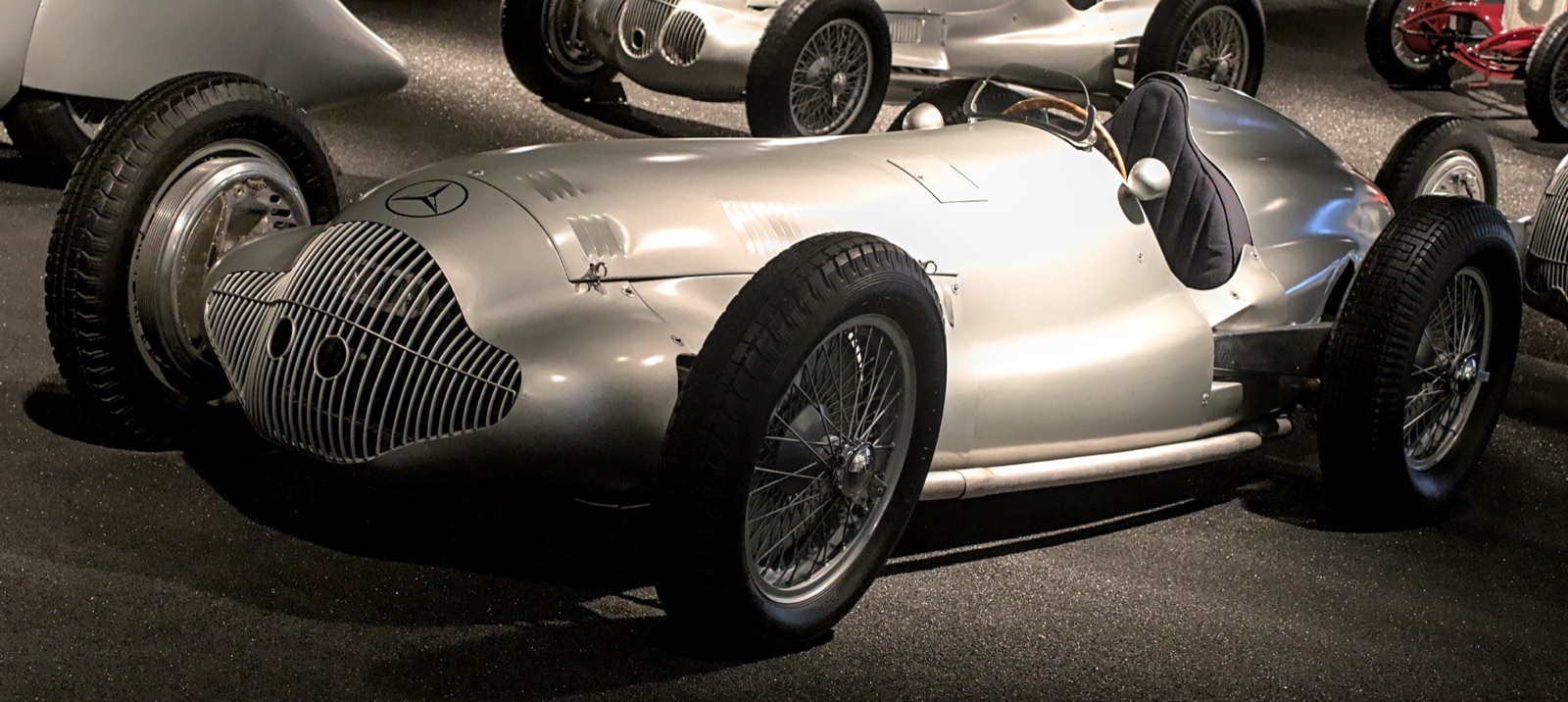
The Mercedes W154, which Mercedes-Benz Classic calls the Silver Arrow W 154, kept the W125's layout of a front engine driving the rear wheels through a transaxle, on an oval-tube ladder frame with double wishbones and coil springs at the front and a de Dion axle on torsion bars at the rear. What changed was the engine, its position in the frame and the fuel tanks, all set out in the archive entry for the 1938 car.
The M154 V12 engine
The M154 is a 60-degree V12 of 67 mm bore and 70 mm stroke, 2,963 cc, built the traditional Daimler-Benz way: steel cylinders in blocks of three, welded to the heads, with welded-on sheet-steel water jackets. Each cylinder has four valves (the archive notes that they were mercury-cooled) worked by two overhead camshafts per bank, driven by gears. The data sheet lists a seven-bearing crankshaft on roller bearings, dry-sump lubrication through nine pumps and two Bosch magnetos. In 1938 a twin-choke carburettor and an extra slide carburettor fed two upright Roots superchargers, so the blowers compressed a ready-made mixture, as on the W125 from mid-1937.
The archive gives the M154 about 160 hp per litre against about 100 hp per litre for the old straight-eights, at 7,800 to 8,000 rpm instead of 5,800. The price was fuel: the alcohol-rich mixture went through the carburettors at up to 150 litres per 100 km of racing. The data sheet lists the Standard Oil fuel used as 88 per cent methyl alcohol, with acetone, nitrobenzene and ether.
Chassis, suspension and the offset drive line
Extra plates welded into the rear of the frame raised its torsional stiffness by about 30 per cent over the W125's. The V12 sat at an angle, tilted 6.5 degrees to the right and slightly towards the rear, so the propeller shaft ran to the left of the driver and the seat went very low; this lowered the centre of gravity and shifted the weight distribution towards the rear axle, for traction. The wheelbase, at 2,730 mm, is 68 mm shorter than the W125's. The archive says the handling delighted the drivers "right from the start".
Fuel tanks, brakes and gearbox
The tanks gave the designers the most trouble. A Grand Prix needed about 400 litres, so the team put a saddle tank between engine and driver and a second tank in the tail, and tried the split between them in testing. Lang and Manfred von Brauchitsch preferred a small saddle tank and a large rear tank, because the car oversteered less; Caracciola, who could catch a sliding tail, sometimes ran a large saddle tank as well, for 475 litres in all. The W154 was the first racing car from Mercedes-Benz with a five-speed gearbox, needed to keep the high-revving V12 in its narrow power band. Its four 400 mm brake drums reached their limit on a car almost 120 kg heavier than the W125, and for some races the rear drums were enlarged to 470 mm.
Mercedes W154 specifications
The Mercedes W154 is a single-seater 4,250 mm long on a 2,730 mm wheelbase, with a 2,963 cc twin-supercharged V12 that Mercedes-Benz Classic's data sheet rates at 468 hp at 7,800 rpm in 1938 form and 483 hp in 1939 form.
| Item | 1938 (M154 engine) | 1939 (M163 engine) |
|---|---|---|
| Engine | 60-degree V12, front, four valves per cylinder | The same, with a wider crankcase |
| Bore and stroke, capacity | 67 × 70 mm, 2,963 cc | 67 × 70 mm, 2,963 cc |
| Compression ratio | 7.5:1 | 7.5:1 |
| Supercharging | Two Roots blowers | One two-stage Roots blower |
| Power (data sheet) | 468 hp at 7,800 rpm; 454 hp at 7,500 rpm | 483 hp at 7,800 rpm; 470 hp at 7,500 rpm |
| Torque | 50 mkg at 5,000 rpm | 50 mkg at 5,000 rpm |
| Transmission | Five-speed gearbox, in unit with the rear axle | The same |
| Front suspension | Double wishbones, coil springs, hydraulic dampers | The same |
| Rear suspension | De Dion axle, longitudinal torsion bars, hydraulic dampers | The same |
| Brakes | Hydraulic, finned light-alloy drums, 400 mm | Hydraulic, "turbo" finned drums, 400 mm |
| Tyres, front and rear | 5.50 × 19 and 7.00 × 19; 6.50 × 19 and 7.00 × 22 above 270 km/h | The same |
| Wheelbase | 2,730 mm | 2,730 mm |
| Track, front and rear | 1,475 mm and 1,412 mm | The same |
| Length, width, height | 4,250 mm, 1,750 mm, 1,010 mm | The same |
| Weight at formula weighing | 981 kg | 859 kg |
| Fuel tanks | About 400 litres, split by race | 420 litres: 235 saddle, 185 rear |
| Maximum speed (data sheet) | 330 km/h | 330 km/h |
Sources: Mercedes-Benz Classic's data sheets and archive entries for the 1938 and 1939 W 154. The archive's 1939 data sheet repeats the 981 kg of 1938; the 859 kg comes from its text on the 1939 car. The tank figures are from the archive's text; both data sheets list a tank capacity of 233 litres and a fuel consumption of about 180 litres.
How much horsepower did the Mercedes W154 have?
The Mercedes W154's V12 gave between 397 and 483 hp, depending on the engine, its compression ratio and its supercharger, according to Mercedes-Benz Classic. No single figure covers every car, and the published ones differ by source:
| Source | Figure | What it describes |
|---|---|---|
| 1938 archive entry | 397 to 483 hp at 7,800 to 8,000 rpm | The range of M154 engines, 1938 |
| Archive summary, 3-litre formula races | Up to 433 hp | At the start of the 1938 season |
| 1938 data sheet | 468 hp at 7,800 rpm | Engine M 154/8 |
| September 2012 press release | More than 468 CV (344 kW) | Available to the drivers in races |
| 1939 archive entry | 450 to 483 hp at 7,500 to 7,800 rpm | M154 with the two-stage supercharger |
| 1939 archive entry | 417 to 477 hp at 7,500 rpm | M163 engines |
| 1939 data sheet | 483 hp at 7,800 rpm | M163 |
| Gordon Kirby, Motor Sport, September 2009 | 485 bhp at 8,000 rpm | M163 |
By the archive's account, the M163 was "by no means superior" in peak power to an M154 with the two-stage blower; it was built for oil tightness and a stiffer crankcase.
How fast was the Mercedes W154?
The data sheet gives the Mercedes W154 a maximum speed of 330 km/h (205 mph). Motor Sport's reporter at the 1939 French Grand Prix at Reims saw Lang's Mercedes-Benz and Tazio Nuvolari's Auto Union "streaking down towards Thillois at 185 m.p.h. neck and neck", and Lang lapped the circuit at 114.8 mph before his engine failed. The formula did little to cut speeds: at Bremgarten in 1939 Caracciola lapped in 2 min 36 sec (104.32 mph) in a heat of the Swiss Grand Prix, as Motor Sport reported in September 1939, against Bernd Rosemeyer's lap record of 2 min 34.5 sec, set in a 750 kg formula Auto Union in 1936 and given as 105.42 mph in Motor Sport's report of that race.
The 1939 W154: two-stage supercharger and M163 engine
The 1939 version of the W154 differs from the 1938 car in its supercharging, its engine, its weight and its nose, as Mercedes-Benz Classic's entry for the 1939 car sets out. The company kept the designation W 154, but the Motor Sport database lists the 1939 cars as W163, after the engine.
Two-stage supercharging
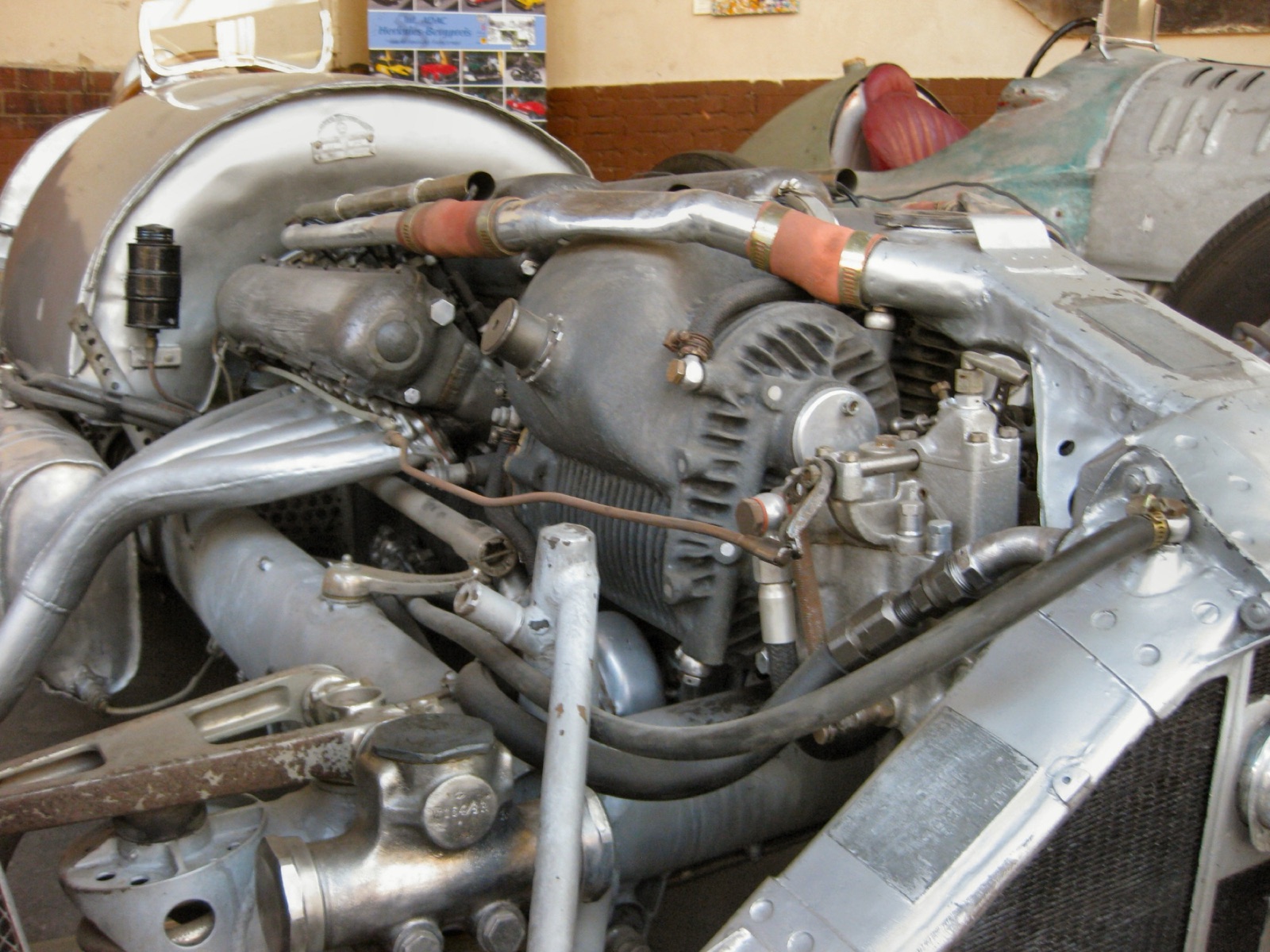
A single two-stage Roots supercharger, a large and a smaller blower in series, took less power to drive than two single-stage blowers, so peak output rose by 5 to 15 per cent and the torque curve flattened. It lay flat in front of the engine, where the 1938 blowers had stood upright. It first raced on Lang's and Hans-Hugo Hartmann's cars in the Eifelrennen of 21 May 1939, which Lang won (the same entry, describing the Belgian Grand Prix five weeks later, calls Lang's car there the first with it). Tests with other superchargers went on into the spring of 1940.
The M163 engine
The M163 is the M154 with a wider, stiffer crankcase and changes to the valve covers, timing cases and sump to stop the oil leaks that had made consumption, in the archive's word, "astronomical". The shaft for a planned fuel-injection pump was removed. It first raced in the Belgian Grand Prix of 25 June 1939, in von Brauchitsch's and Richard Seaman's cars; Lang won that race with an M154. Motor Sport did not know it at the time: writing in February 1940, it doubted that Mercedes were using two-stage boost.
Lighter, with a new nose
Lighter materials took the weight, measured as the regulations defined it, down from 981 kg to 859 kg, close to the 850 kg minimum. The tanks were standardised at 420 litres and now emptied together, so the handling no longer changed as they drained. The radiator moved forward, which gave the 1939 body its rounder, higher nose, and the drums gained radial and axial cooling fins, which the archive calls the "turbo brake".
Record cars and the hill-climb W154
In February 1939, on the Dessau to Bitterfeld section of the Berlin to Leipzig autobahn, Caracciola set records in Class D, for engines of two to three litres, in two W154-engined cars. Chassis 11, a light frame built for hill climbs, was given wheel fairings and ice cooling for the standing-start records: 175.097 km/h for the kilometre and 204.578 km/h for the mile on 8 February, and 177.427 km/h for the kilometre on 14 February, according to Mercedes-Benz Classic's entry for that car. On 9 February the 1938 W125 record car, fitted with an M154, averaged 398.23 km/h over the flying kilometre and 399.56 km/h over the mile, with a best one-way speed of 400.112 km/h, according to its entry. Motor Sport noted in February 1940 that the standing-start car had wheel spats and an open cockpit, where the 1938 record car had a fully enclosed body. A hill-climb W154 won the Vienna Höhenstrasse climb for Lang in June 1939; at the Grossglockner in August the more powerful W125 ran instead.
Mercedes W154 racing history
The Mercedes W154 won eleven of the sixteen circuit races Daimler-Benz entered it for in 1938 and 1939, by the Motor Sport database's results; it lost at Pau to a Delahaye in its first race, and to Auto Union's Type D four times.
| Race | Date | W154 placings | Winner |
|---|---|---|---|
| Pau Grand Prix | 10 April 1938 | Caracciola and Lang, sharing, 2nd | Dreyfus (Delahaye) |
| Tripoli Grand Prix | 15 May 1938 | Lang 1st, von Brauchitsch 2nd, Caracciola 3rd | Lang |
| French Grand Prix, Reims (EC) | 3 July 1938 | Von Brauchitsch 1st, Caracciola 2nd, Lang 3rd | Von Brauchitsch |
| German Grand Prix, Nürburgring (EC) | 24 July 1938 | Seaman 1st, Caracciola and Lang, sharing, 2nd | Seaman |
| Coppa Ciano, Livorno | 7 August 1938 | Lang 1st; von Brauchitsch disqualified | Lang |
| Coppa Acerbo, Pescara | 14 August 1938 | Caracciola 1st | Caracciola |
| Swiss Grand Prix, Bremgarten (EC) | 21 August 1938 | Caracciola 1st, Seaman 2nd, von Brauchitsch 3rd | Caracciola |
| Italian Grand Prix, Monza (EC) | 11 September 1938 | Caracciola and von Brauchitsch, sharing, 3rd | Nuvolari (Auto Union) |
| Donington Grand Prix | 22 October 1938 | Lang 2nd, Seaman 3rd, von Brauchitsch 5th | Nuvolari (Auto Union) |
| Pau Grand Prix | 2 April 1939 | Lang 1st, von Brauchitsch 2nd | Lang |
| Eifelrennen, Nürburgring | 21 May 1939 | Lang 1st, Caracciola 3rd, von Brauchitsch 4th | Lang |
| Belgian Grand Prix, Spa-Francorchamps (EC) | 25 June 1939 | Lang 1st, von Brauchitsch 3rd | Lang |
| French Grand Prix, Reims (EC) | 9 July 1939 | All three retired | Müller (Auto Union) |
| German Grand Prix, Nürburgring (EC) | 23 July 1939 | Caracciola 1st | Caracciola |
| Swiss Grand Prix, Bremgarten (EC) | 20 August 1939 | Lang 1st, Caracciola 2nd, von Brauchitsch 3rd | Lang |
| Yugoslav Grand Prix, Belgrade | 3 September 1939 | Von Brauchitsch 2nd | Nuvolari (Auto Union) |
Results and dates from Motor Sport's database: the 1938 and 1939 European Championship pages and their race pages. Mercedes-Benz Classic's archive dates the 1939 German Grand Prix 26 July; the database gives Sunday 23 July. The Tripoli Grand Prix of 1939 was run for 1.5-litre cars and won by the W165.
1938: defeat at Pau, then six wins
The W154's first race, at Pau on 10 April 1938, went to René Dreyfus's unsupercharged 4.5-litre Delahaye, which needed no fuel stop. Lang's car was withdrawn before the start with no oil pressure, and Caracciola, who had stopped for fuel on lap 52 with slightly scorched feet, handed his W154 to Lang, who finished second, as Motor Sport reported in May 1938. The team then won at Tripoli with a one-two-three.
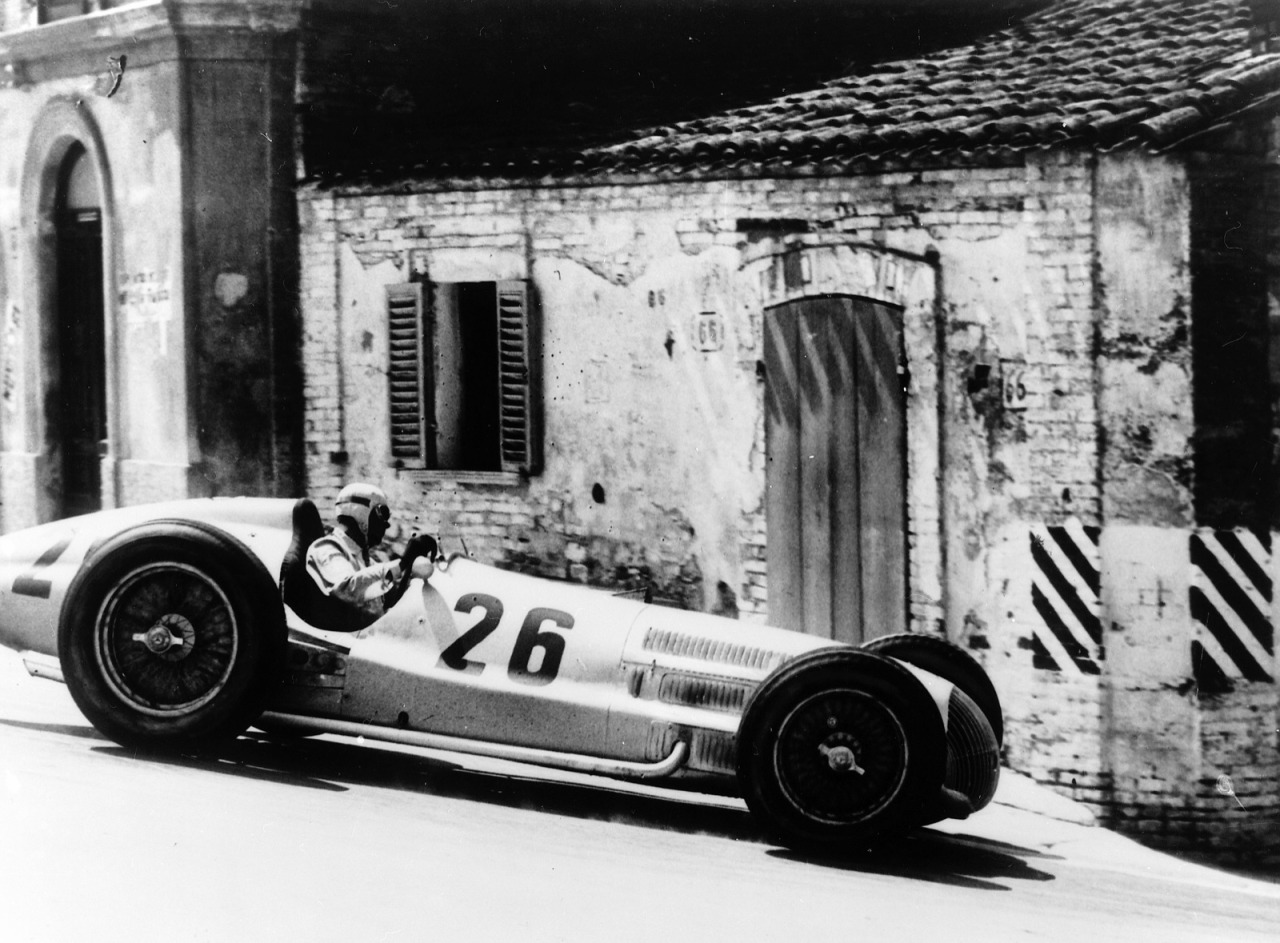
At Reims on 3 July only nine cars started, and both new Auto Union Type Ds went out on the first lap. Von Brauchitsch won at 101.07 mph from Caracciola and Lang; the three broke the lap record seven times in the first seventeen laps, and Lang left it at 105.97 mph on lap 58, according to Motor Sport's report. The archive counts the leaders' margin over the fourth-placed Talbot at ten laps.
The German Grand Prix on 24 July went to Seaman. Von Brauchitsch, leading at his second stop at the end of lap 16, saw his car catch fire as it was refuelled; Neubauer pulled him clear, and he rejoined, then ran off the road. Caracciola, unwell, handed his car to Lang, who finished second; the reserve Walter Bäumer took over Lang's first car, as told in Motor Sport's report of August 1938, which put the crowd at 350,000. In Italy von Brauchitsch crossed the line first in the Coppa Ciano but was disqualified for being pushed off by spectators after he skidded into the palisades, so the victory went to Lang. Caracciola won the Coppa Acerbo a week later.
In heavy rain at Bremgarten on 21 August Caracciola, Seaman and von Brauchitsch finished one, two, three, and Seaman set the fastest lap at 95.9 mph, as Motor Sport reported. Lang, hit over the eye by a stone, had handed his car to Bäumer. The title was Caracciola's before the last round. At Monza on 11 September Nuvolari gave the Type D its first win, and Motor Sport's report blamed changeable weather and carburation for the Mercedes-Benz failures; Caracciola, sharing his car with von Brauchitsch, was third with a burnt foot. Nuvolari won again at Donington on 22 October, in a race delayed by the Munich crisis, after taking the lead from Lang "40 miles from the finish", as Bill Boddy recalled in Motor Sport in January 2004. Motor Sport's review of the season credited Mercedes-Benz with six wins to Auto Union's two.
1939: Lang's season and Seaman's death
By Mercedes-Benz Classic's 1939 entry, Lang won the first two races of the year, at Pau, where Auto Union did not run, and in the Eifelrennen, where he beat Nuvolari by about 11 seconds. In the Belgian Grand Prix at Spa on 25 June, the first championship round, run in pouring rain, Seaman was leading when he crashed on lap 22; he died of his injuries that night, and Lang won from Rudolf Hasse's Auto Union. Motor Sport's bulletin of August 1939 put the crash down to "the slippery state of the road owing to a deluge of rain".
At Reims on 9 July every W154 retired: Caracciola hit a wall on the first lap and von Brauchitsch and Lang lost their engines, and Hermann Paul Müller and Georg Meier gave Auto Union a one-two, as told in Motor Sport's report. Caracciola won the German Grand Prix on 23 July in mixed rain at 75.14 mph after his three team-mates had dropped out, among them the cadet Heinz Brendel, who failed to come in to hand his car to Lang and went off the road, as Motor Sport reported in August 1939. At Bremgarten on 20 August Lang beat Caracciola by about three seconds, with von Brauchitsch third.
The Belgrade Grand Prix, 3 September 1939
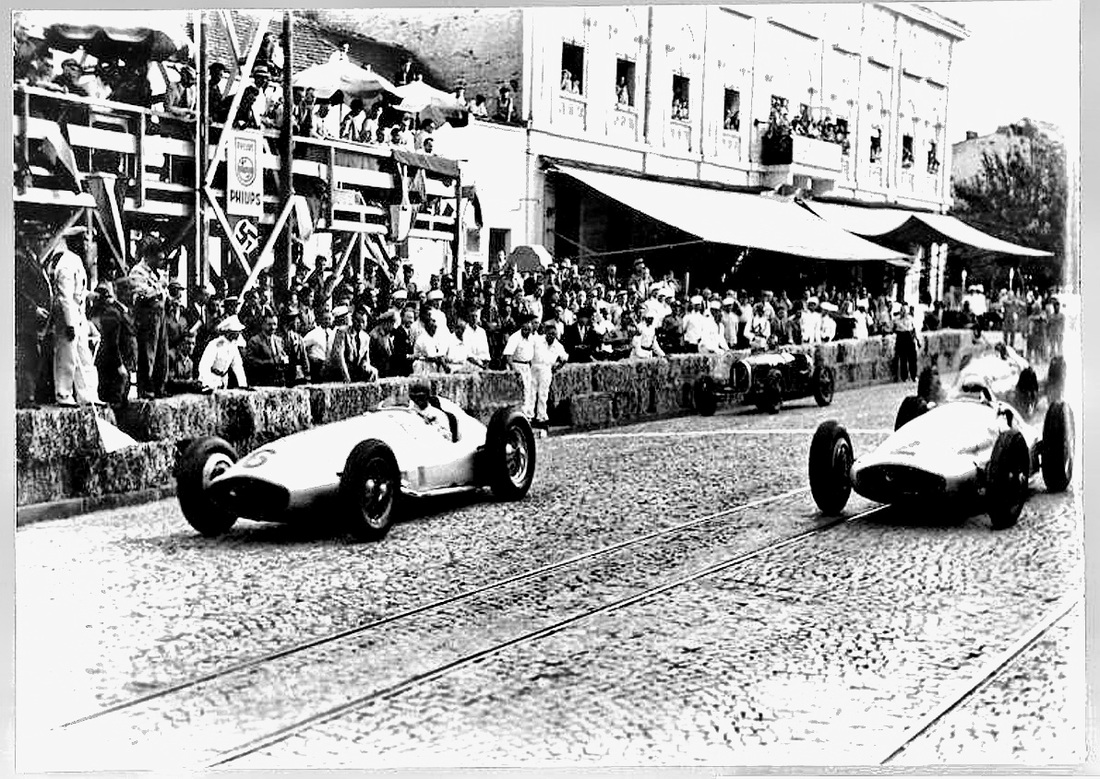
The W154's last pre-war race was run in Belgrade on 3 September 1939, two days after Germany had started World War II, with five cars: two W154s, two Auto Unions and a private Bugatti. Nuvolari won by 7.6 seconds from von Brauchitsch, and the database records Lang's car out after 15 laps with accident damage. The archive passes on the story that the team's trucks were requisitioned by the army as soon as they reached the factory, and calls it the end of "the unrivalled success story of the Silver Arrows" in its summary of the three-litre races.
Who won the 1939 European Championship?
No European champion was officially crowned for 1939. The four rounds were run, but the AIACR stopped work during the year and published no points table; the German authorities declared Lang champion, although under the scoring used until then he did not have the most points, according to Mercedes-Benz Classic. The Motor Sport database's summary is that later study showed Müller had won under the points system of the time, and Doug Nye wrote in Motor Sport in July 2014 that Lang and Mercedes-Benz had been declared "de facto" champions "despite Auto Union's Müller actually scoring more points".
Who drove the Mercedes W154?
Rudolf Caracciola, Hermann Lang, Manfred von Brauchitsch and Richard Seaman were the Mercedes W154's regular drivers, with Walter Bäumer, Hans-Hugo Hartmann and Heinz Brendel in reserve, all under the team manager Alfred Neubauer. Frank Dernie, the Formula 1 designer, said in Motor Sport in October 2000 that he had never had the chance to test his own designs "as Rudolf Uhlenhaut did with the W154".
Rudolf Caracciola
Caracciola won the Coppa Acerbo and the Swiss Grand Prix in 1938 and became European champion for the third time, after 1935 and 1937. In 1939 he won the German Grand Prix, his sixth win in that race by the Motor Sport database's count, and Motor Sport called him "the acknowledged Regenmeister" in an article on racing in the rain that September. He also drove both record cars at Dessau in February 1939.
Hermann Lang
Lang won at Tripoli and in the Coppa Ciano in 1938, and in 1939 at Pau, the Eifelrennen, Spa and Bremgarten, which Mercedes-Benz Classic counts as four victories, the most of any driver that season. Nye, in Motor Sport, describes a former motorcycle racer who joined Mercedes-Benz as an engine fitter and racing mechanic; he counted five wins from Lang's eight Grand Prix formula races in 1939, and recorded that in 1938 Lang's income of 70,000 Reichsmarks already matched von Brauchitsch's.
Manfred von Brauchitsch
Von Brauchitsch's one W154 win that stood was the 1938 French Grand Prix, and he lost the Coppa Ciano to disqualification. Alan Henry counted only "three major international races" won by him from 1934 to 1939 in Motor Sport in March 2000, the French Grand Prix among them. He finished second in Belgrade on 3 September 1939, the day Britain and France declared war on Germany.
Richard Seaman
Seaman's win in the 1938 German Grand Prix was the first in a full-scale Grand Prix by a British driver for fifteen years, Motor Sport wrote at the time, and the British Racing Drivers' Club gave him a special Gold Star for it. He was second in the Swiss Grand Prix, with the fastest lap, and third at Donington. He died after his crash at Spa on 25 June 1939, aged 26.
The W154 after the war: Indianapolis and Buenos Aires
The Mercedes W154 raced twice at Indianapolis in private hands and twice in Argentina for the factory in 1951, its last races for Daimler-Benz.
Indianapolis 500, 1947 and 1948
Don Lee's W154, chassis 9, started the Indianapolis 500 of 1947 with Duke Nalon, who retired with a broken piston after 119 laps, and of 1948 with Chet Miller, relieved by Ken Fowler and Louis Tomei, which went out with an oil leak after 108 laps, according to the database's pages for the 1947 and 1948 races. Its route there is told two ways. Tony Watson, in Motor Sport in February 2005, traced it from Czechoslovakia through RC Rowland Motors near Brooklands and the hold of the Queen Mary; a vendor's note in a Bonhams lot description of 2008 says it was found in Romania in 1946 and brought to Britain by Reg Parnell before going to Lee. The same note says the car ran at Indianapolis for several seasons and was eventually fitted with a Jaguar engine; the database lists Danny Kladis as a non-qualifier for the 1957 race in James E Shreve's "Mercedes-Benz-Jaguar". The vendor bought the rolling chassis, without engine or body, in 1969 and sold it to Bob Roberts of the Midland Motor Museum, and it was later restored.
Buenos Aires, 1951
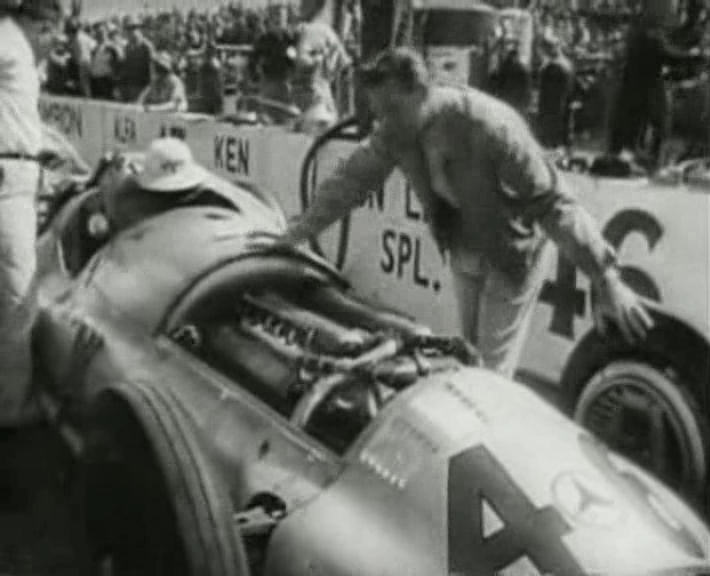
In February 1951 Mercedes-Benz took three W154s to two Formula Libre races on the Costanera circuit in Buenos Aires, its first international racing after the war; the cars finished second and third in both, and a planned entry at Indianapolis was dropped, according to Mercedes-Benz Classic's entry for the 1951 car. Giuseppe Farina had been chosen to drive with Lang and Karl Kling, but the organisers insisted on Juan Manuel Fangio, and Farina protested to the FIA, as told in Motor Sport's report of April 1951.
José Froilán González won both races in a two-litre supercharged Ferrari 166. In the first, on 18 February, he beat Lang by 16.4 seconds, with Fangio third; in the second Kling was second, 2 minutes 12.5 seconds behind, and Lang third, while Fangio retired after 16 laps by Watson's count (17 by Motor Sport's in 1951). Motor Sport dated the second race 25 February; Watson gives Saturday 24 February. Nye wrote in Motor Sport in May 2009 that Lang drove chassis 12 there, a car fitted with steerable wheel fairings for a 1940 season that never came.
How many Mercedes W154s were built, and where are they now?
Mercedes-Benz Classic records fourteen W154 chassis built for 1938 and 1939 and a fifteenth assembled from parts after the war; other accounts differ. Nye wrote that fifteen chassis were planned for 1938, Motor Sport called chassis 15 "the 15th and last to be built" in November 2009, and RM Auctions, offering that car, wrote of "the original 10 examples". The sources below place surviving W154s with Mercedes-Benz, in the museums at Mulhouse and Prague, in the Collier Collection and with private owners, and name chassis 7, 9, 12 and 15.
The cars Mercedes-Benz kept
Mercedes-Benz Classic took a 1939 W154 to the Goodwood Revival in 2012 with a W25, a W125 and a W165, and said in its press release that these racing cars had always belonged to the company. Nye recorded that chassis 12, the car with faired wheels, stayed at the Stuttgart factory until at least 1942 and was found in Hamburg in March 1946; Uhlenhaut showed it to the photographer George Monkhouse in the factory's parts store in 1948, and in 1978 Nye ran it with Phil Hill on the Nürburgring's south loop for Road & Track.
Mulhouse and Prague
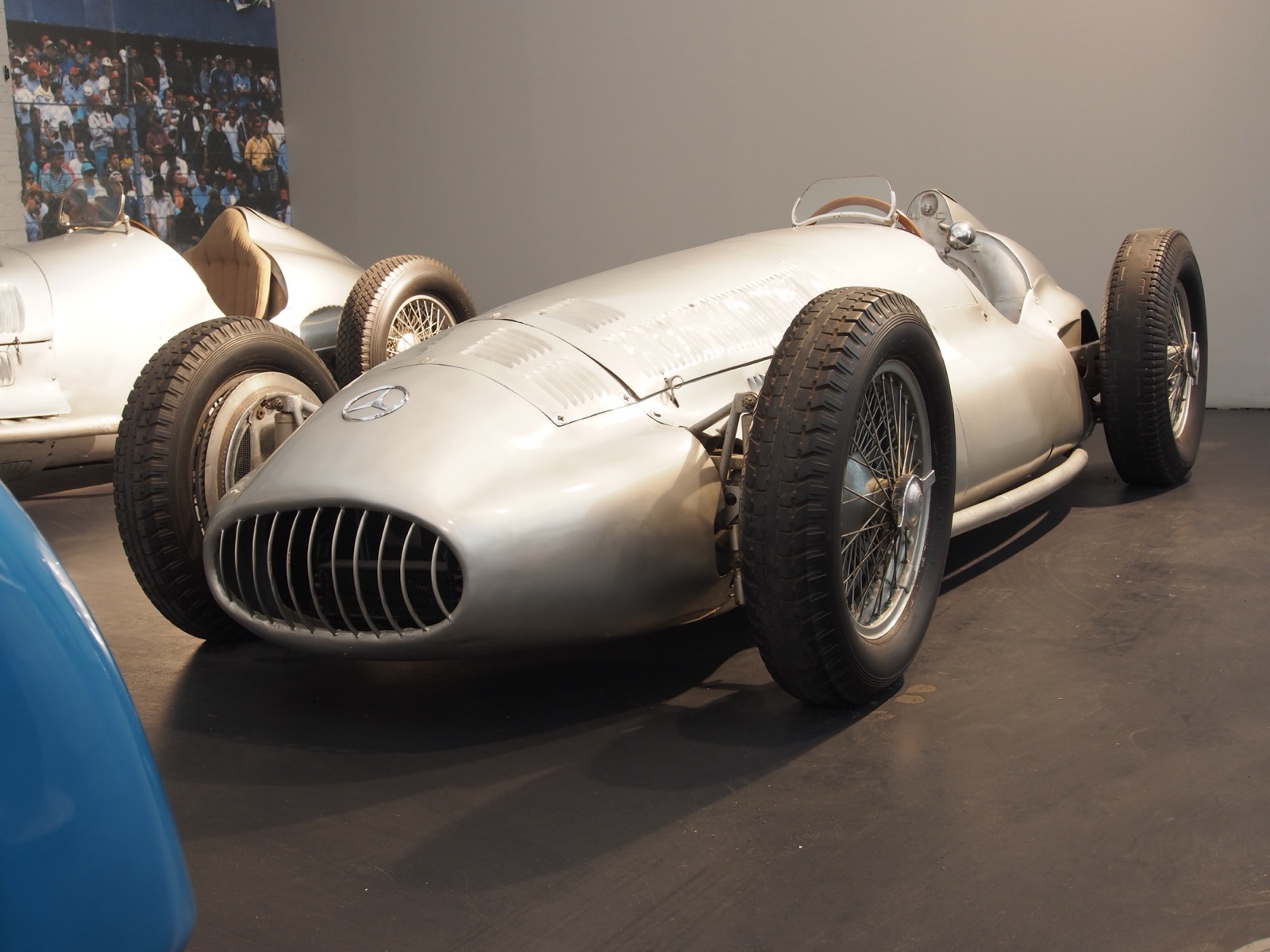
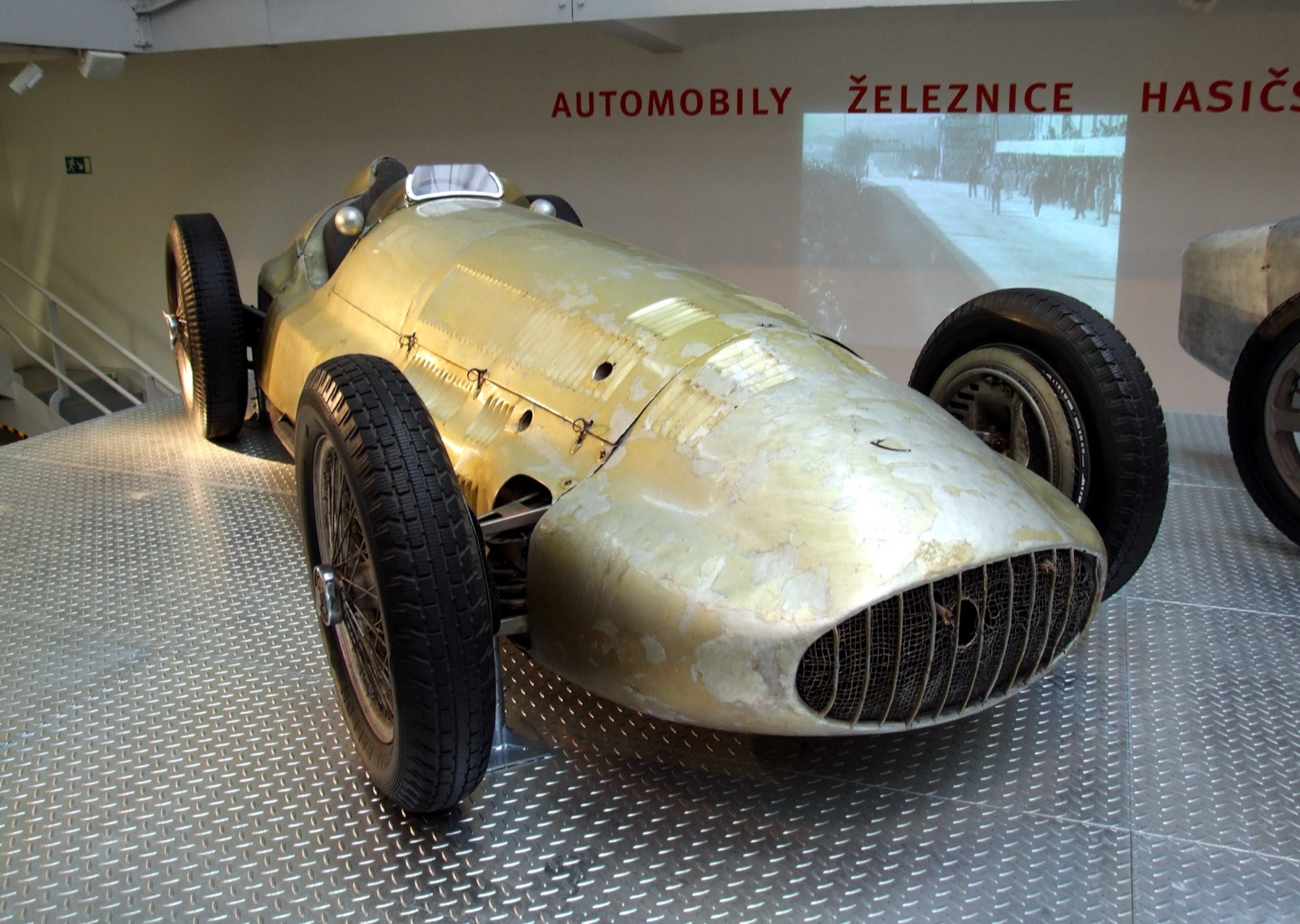
The national motor museum in Mulhouse has two 1939 W154s from the Schlumpf collection, classified as historic objects by the French state on 14 April 1978: the W 154 II numbered MNA 1601, chassis 189436, and MNA 1602, recorded as "n° châssis 227 (189 443 ?)", according to the Ministry of Culture's records for MNA 1601 and MNA 1602. The National Technical Museum in Prague has a W154 from the late 1930s in its collection, as the Czech news agency ČTK reported in August 2023.
Chassis 7 and chassis 15, from Romania
Two W154s, chassis 7 and 15, spent decades in Romania. Nye set out their history in Motor Sport in February 2013: Jozsef Roman of Cluj found them in a scrapyard at Braila around 1946, his family bought the pair from the state in 1965, and chassis 7 went in 1971 to Dieter Holterbosch of New York. Chassis 15, von Brauchitsch's Belgrade car, left for Hungary and Switzerland in 1988, was restored with Daimler-Benz's help amid court cases over who owned it, and joined the Collier Collection in Naples, Florida, now shown to the public as the Revs Institute, where Doug Switzer saw a W154 for Provinz in 2017; it ran on a race track, Lime Rock Park, in September 2009 for the first time since 1939, driven by Murray Smith and the Mercedes-Benz test driver Gert Staub. According to Central European Autoclassic, chassis 7 is the car in which Seaman won the 1938 German Grand Prix and Lang raced in 1939; it went to Joel Finn in 1980 and is in Arturo Keller's collection in California.
What is a Mercedes W154 worth?
The prices on record for complete Mercedes W154s come from private sales, set down by Nye in Motor Sport in February 2013:
| Date | Car | Price | Buyer |
|---|---|---|---|
| 14 April 1965 | Chassis 7 and 15 | 2,000 lei for the pair | Jozsef and Tibor Roman, from Romania's Ministry of Culture and Sport |
| 1971 | Chassis 7 | A reputed $80,000 paid to the Romanian government, plus two new Mercedes and a Volkswagen Beetle | Dieter Holterbosch, through Dr Georg Ott of Munich |
| 10 September 1988 | Chassis 15 | DM400,000 plus a Volkswagen Golf, as Nye believed | Dr Andre Bilciurescu |
| 6 September 2000 | Chassis 15 | Not given | Yoshiyuki Hayashi, through the Symbolic Motor Car Co |
| "After five years or so" (Nye) | Chassis 15 | "A more modest price" than the $10 million a buyer had considered | The Collier Collection |
No complete W154 has been sold at public auction. The last change of hands on record is chassis 15's move to the Collier Collection, "after five years or so" in Nye's words, at a price he did not give. RM Auctions offered the same car by private treaty, without a published price, in an undated announcement, reprinted by Sports Car Digest. Parts have gone to auction: Bonhams offered the scuttle fuel tank made for the restoration of chassis 9 at Goodwood on 11 July 2008, estimated at £800 to £1,200.
Rivals, predecessor and successor
The Mercedes W154's main rival was the Auto Union Type D. Mercedes-Benz Classic names Delahaye as the one other maker to build a car for the formula, with French government money behind it, and Alfa Romeo and Maserati raced three-litre cars too.
Auto Union Type D
Audi's history of the Silver Arrows records that Robert Eberan von Eberhorst designed the Type D's supercharged three-litre V12, which sat behind the driver as in the earlier Auto Unions, and Audi's History of the Four Rings gives it 485 hp. It beat the W154 four times: Nuvolari at Monza and Donington in 1938 and at Belgrade in 1939, and Müller at Reims in 1939.
Delahaye, Alfa Romeo and Maserati
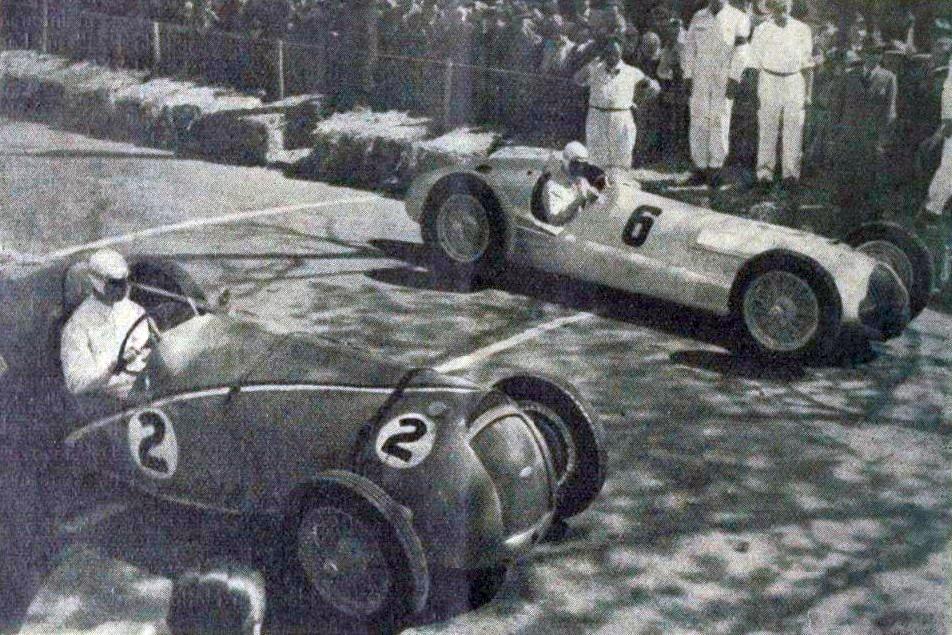
The Delahaye 145, with an unsupercharged 4.5-litre V12, beat the W154 only at Pau in 1938, where its lower fuel use let Dreyfus run without a stop. Alfa Romeo's Tipo 312 and V16 Tipo 316 took second places with Giuseppe Farina at Livorno, Pescara and Monza in 1938, and Maserati's 8CTF set the fastest lap of the Coppa Acerbo with Luigi Villoresi, as Motor Sport's review of 1938 recorded; Mercedes-Benz Classic's 1938 entry has Carlo Felice Trossi fastest in practice for the Coppa Ciano in an 8CTF. In 1939 Paul Pietsch's Maserati led the German Grand Prix on the second lap and finished third.
From the W125 to the W165
The W154 replaced the W125, the 750 kg formula car of 1937, and shared its frame design and suspension. Its smaller sibling, the 1.5-litre V8 W165, used the W154's frame and suspension layout, according to the September 2012 press release, and won its only race, at Tripoli on 7 May 1939, with Lang ahead of Caracciola, according to Mercedes-Benz Classic's entry for the W 165. Mercedes-Benz did not race in Grands Prix again until 1954, fifteen years later, by the archive's account.
Questions and answers
What does W154 stand for?
In Daimler-Benz type numbers W stands for Wagen (car) and M for Motor, so the W154 car had the M154 engine, as Denis Jenkinson explained in Motor Sport in August 1968. The 1939 engine, the M163, kept the car's W154 number.
What fuel did the Mercedes W154 run on?
An alcohol-based racing fuel: Mercedes-Benz Classic's data sheet lists 88 per cent methyl alcohol, with acetone, nitrobenzene and ether. The archive says the V12 used up to 150 litres per 100 km in a race, which is why the cars carried 400 litres or more.
Who won the 1938 European Championship?
Rudolf Caracciola, in a Mercedes W154, his third European title after 1935 and 1937. W154s won three of the four rounds: von Brauchitsch the French Grand Prix, Seaman the German and Caracciola the Swiss; Nuvolari's Auto Union won the Italian.
Did Fangio drive the Mercedes W154?
Yes, in the two Formula Libre races at Buenos Aires in February 1951: he was third in the first and retired from the second. Motor Sport reported in April 1951 that Mercedes-Benz had sold one of the three-litre cars to him.
How many races did the Mercedes W154 win?
Eleven of the sixteen races Daimler-Benz entered it for in 1938 and 1939, by the Motor Sport database's results: six in 1938 and five in 1939. A hill-climb W154 also won the Vienna Höhenstrasse climb for Lang in June 1939, according to Mercedes-Benz Classic.
When did Mercedes-Benz next race in Grands Prix after the W154?
In 1954, fifteen years after the last pre-war race, according to Mercedes-Benz Classic. In between, the company raced three W154s in Argentina in 1951 and the 300 SL sports car in 1952.
Sources
- Mercedes-Benz Classic, "Mercedes-Benz W 165 racing car, 1939", archive entry: the W165's one-two at Tripoli.
- Mercedes-Benz Classic, archive entries: "Mercedes-Benz Grand-Prix racing car W 125, 1937" (Uhlenhaut's racing department); "Mercedes-Benz Grand-Prix racing car W 154, 1938" (formula, design, engine, chassis, tanks, fourteen chassis, the 1938 season, data sheet); "Mercedes-Benz Grand-Prix racing car W 154, 1939" (two-stage supercharger, M163, weight, tanks, brakes, the 1939 season and championship, hill-climb car, data sheet); "Mercedes-Benz Grand-Prix racing car W 154, 1951" (Argentina); "W 154 3-litre record car with covered wheels, 1939" and "Mercedes-Benz W 154 3-litre fully streamlined record car, 1939" (the Dessau records); "3-litre formula races, 1938 – 1939" (433 hp in early 1938). Read 31 October 2026.
- Mercedes-Benz Classic, press release (in Italian), "Una Mercedes-Benz W 125 originale del 1937 protagonista al Goodwood Revival 2012", 10 May 2012 (Max Wagner and the W125 frame).
- Mercedes-Benz Classic, press release (in Italian), "Goodwood Revival 2012", 13 September 2012 (the formula date, 468 CV, the company's own 1939 W154, the W165).
- Motor Sport database: 1938 European Championship, 1939 European Championship and their race pages, and the 1947, 1948 and 1957 Indianapolis 500 pages (results, dates, the W163 name, the 1939 title).
- Motor Sport, "Good racing in Switzerland", September 1936 (Rosemeyer's Bremgarten lap record).
- Motor Sport, "That Delahaye victory at Pau", May 1938.
- Motor Sport, "Mercedes-Benz walk-over", July 1938 (the French Grand Prix).
- Motor Sport, "Heil, Seaman! Heil, Mercedes!", August 1938 (the German Grand Prix).
- Motor Sport, "Three races at Berne", September 1938 (the Swiss Grand Prix).
- Motor Sport, "Auto-Unions' first 1938 win", October 1938 (the Italian Grand Prix).
- Motor Sport, "The Grand Prix races of 1938", December 1938 (the season, the Coppa Ciano, Maserati).
- Motor Sport, "Caracciola completes Mercedes' hat trick", August 1939 (the German Grand Prix).
- Motor Sport, "Monthly bulletin", August 1939 (Seaman's career and death).
- Motor Sport, "Racing in the rain", September 1939.
- Motor Sport, "Europe's fastest road race", August 1939 (the French Grand Prix).
- Motor Sport, "Mercedes-Benz one, two, three at Berne", September 1939 (lap speeds).
- Motor Sport, "The trend of racing-car design", February 1940.
- Motor Sport, "Pre-war W163 Mercedes-Benz twice beaten by 2-litre Ferrari at Buenos Aires", April 1951.
- Motor Sport, Denis Jenkinson, "Letter from Europe", August 1968 (W and M type letters).
- Motor Sport, Alan Henry, "Manfred von Brauchitsch: Mercedes' sole survivor", March 2000.
- Motor Sport, Frank Dernie talking to David Malsher, "I wish I'd designed… Mercedes-Benz W154", October 2000.
- Motor Sport, Bill Boddy, "The day the Germans came", January 2004 (Donington, 1938).
- Motor Sport, Tony Watson, "Temporada hitch", February 2005 (Buenos Aires 1951, Indianapolis).
- Motor Sport, Doug Nye, "Uncovering the family silver", May 2009 (chassis 11 and 12).
- Motor Sport, Gordon Kirby, "W154 back on track after 70 years", 4 September 2009 (chassis 15 at Lime Rock, 485 bhp).
- Motor Sport, "Mercedes makes track return", November 2009.
- Motor Sport, Doug Nye, "The arrow that pierced the iron curtain", February 2013 (chassis 7 and 15, prices).
- Motor Sport, Doug Nye, "Mercedes and Auto Union: a nation divided", July 2014 (Lang, the 1939 title).
- Bonhams, "A Mercedes-Benz W154 scuttle fuel tank, 1930s", lot 240, Goodwood, 11 July 2008 (chassis 9, its Jaguar engine and its later owners).
- RM Auctions, "Ultra-rare Mercedes W154 to be offered for sale", undated, as reprinted by Sports Car Digest (chassis 15).
- Ministère de la Culture, Plateforme ouverte du patrimoine, PM68001858 and PM68001859 (the two Mulhouse cars).
- ČTK, via České noviny, Mercedes-Benz club anniversary at the National Technical Museum, 5 August 2023 (the Prague car).
- Provinz (Porsche Club of America, Upper Canada Region), Doug Switzer, "The Collier Collection revs it up", April 2017 (the W154 at the Revs Institute).
- Central European Autoclassic, "The story of two Mercedes W154 Silver Arrow racing cars in Romania" (chassis 7 today).
- Audi, "The age of the Silver Arrows" and "History of the Four Rings" (the Auto Union Type D).